


.avif)

Arten von Trainingsmodalitäten und wie man die richtige für die Mitarbeiterleistung auswählt


Zusammenfassung
Der Erfolg von Schulungen hängt nicht nur davon ab, was Mitarbeiter lernen, sondern auch davon, wie das Lernen vermittelt wird. Die Wahl der richtigen Trainingsmodalität – sei es Präsenzschulung, virtuell, digital, am Arbeitsplatz oder als Blended Learning – trägt dazu bei, das Engagement zu verbessern, die Behaltensleistung zu stärken und das Gelernte in messbare Arbeitsplatzleistung umzusetzen.
Training often falls short not because the content is weak, but because the delivery method doesn’t match how employees actually learn and work. You’ve likely seen it: a well-constructed program that still results in low engagement, minimal retention, or teams slipping back into old habits. In many cases, the question isn’t “what did we teach?” but “how did we teach it?”
Choosing the right training mode, such as face-to-face, virtual, microlearning, blended, or on-the-job, can remove barriers, increase participation, and drive actual behavior change.
In this blog, we’ll explore the key training modalities, when each works best, and how to make modality decisions that help your people learn how to use them and perform with confidence.
Let’s get started.
TL;DR
- Training succeeds when the delivery method aligns with how employees work, learn, and apply skills, not just with the content itself.
- No single training modality fits every situation; context, audience, and goals should drive the choice.
- Core modalities include ILT, virtual training, eLearning, on-the-job learning, and blended learning, each with clear strengths and limitations.
- Effective training strategies often combine modalities to balance flexibility, engagement, and real-world application.
- Choosing the right modality improves engagement, retention, and on-the-job performance, and reduces wasted training efforts.
What Are Training Modalities?
Training modalities are the different methods or formats used to deliver learning experiences. They determine how employees receive information, practice skills, and apply knowledge, not just what they learn.
Even though the concept has been around for decades (popularized by models like VARK), today’s use isn’t about labeling people as “visual” or “auditory” learners. It’s about selecting delivery formats that match:
- The skills you’re building
- The work environment learners operate in
- The time and attention they realistically have
- And the outcomes the business needs
When the modality fits the context, training becomes easier to absorb, more relevant, and more likely to translate into real performance.
Why Training Modalities Matter
Choosing the right training modality isn’t just an instructional design decision; it directly affects performance, engagement, and business outcomes. When training feels irrelevant, overwhelming, or disconnected from daily work, employees tune out. But when the delivery format matches the complexity of the skill, the learner’s environment, and the desired behavior change, training becomes easier to absorb and apply.
The proper modality can help you:
- Make complex skills easier to practice and retain
- Reduce time away from work
- Deliver consistent learning across distributed teams
- Personalize learning without increasing development load
- Improve completion rates and real-world application
In short, modalities shape how well employees learn and how effectively they apply skills.
Before exploring the specific modalities, it helps to understand what each method is designed to achieve.
Also Read: Building a Strong L&D Strategy That Actually Drives Business Growth
Types of Training Modalities
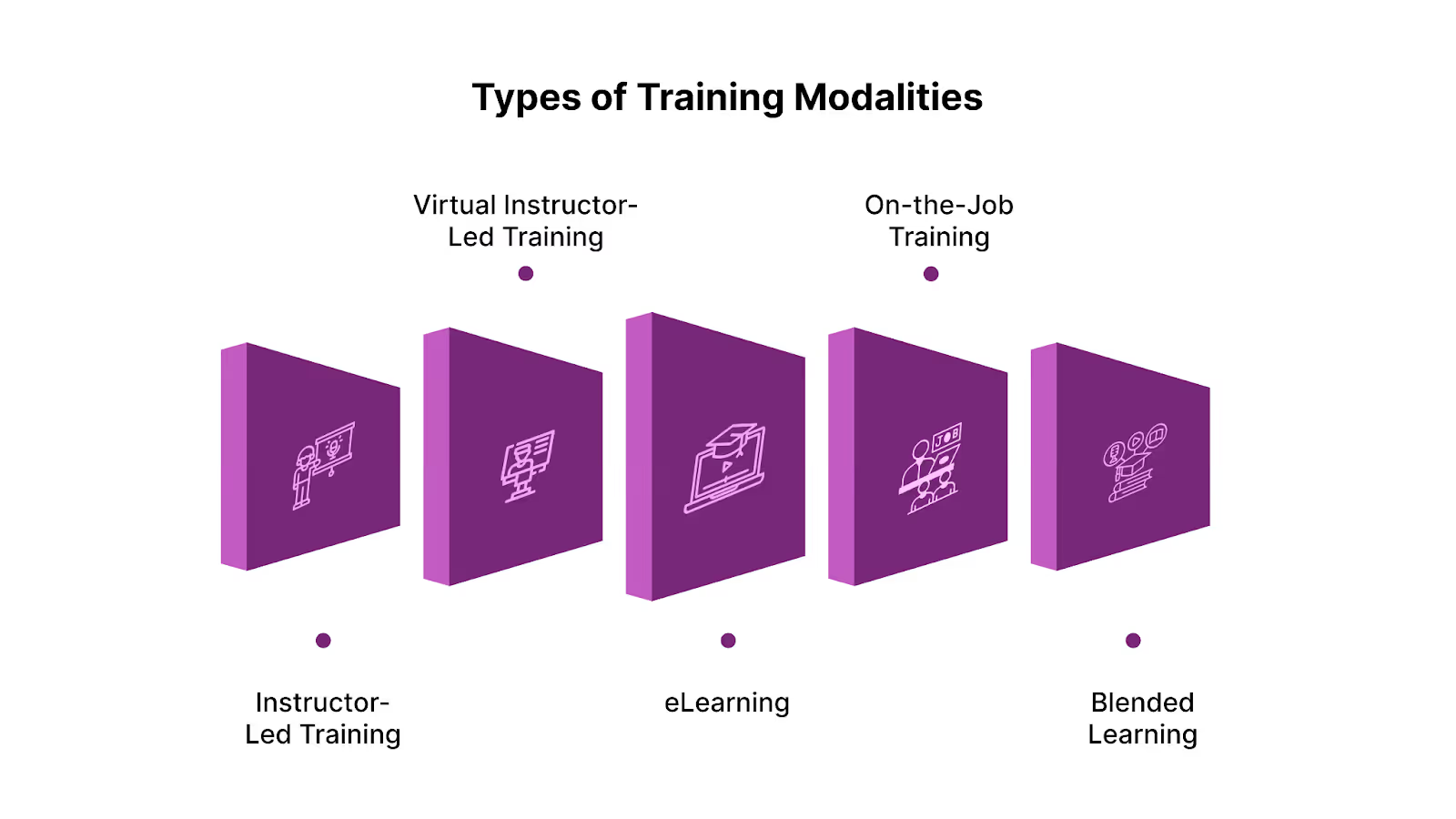
Organizations have more training options today than ever before. Each modality supports different needs, levels of complexity, and work environments, so the key is choosing the one that aligns with the outcome you’re trying to drive. Below are the most commonly used and widely effective modalities in corporate learning.
1. Instructor-Led Training (ILT)
Instructor-led training is the traditional classroom-style format led by a facilitator, either in person or on-site. It allows for discussion, real-time feedback, peer interaction, and guided practice.
Best for:
- Complex skills requiring explanation or supervision
- Team-based learning and collaboration
- Behavior change initiatives that rely on discussion and reflection
- Leadership development and cross-functional workshops
Why It Works: ILT provides space for deep exploration, peer learning, and hands-on guidance, making it ideal for topics that benefit from human connection and immediate support.
2. Virtual Instructor-Led Training (VILT)
VILT delivers live training via platforms like Zoom or Teams. It maintains the real-time interaction of ILT while adding flexibility for distributed teams.
Best for:
- Remote or hybrid workforces
- Scalable facilitation without travel
- Shorter, focused learning bursts
- Collaborative practice using breakout rooms, polls, and digital whiteboards
Why It Works: It balances convenience with human interaction, making it easier to bring teams together without logistical friction.
3. eLearning (Self-Paced Digital Training)
This modality includes modules, microlearning, simulations, and interactive content that learners complete on their own time. It’s scalable, consistent, and accessible anywhere.
Best for:
- Compliance and policy training
- Product knowledge
- Microlearning and skill refreshers
- Distributed teams needing on-demand access
Why It Works: Digital learning allows employees to move at their own pace, ideal for busy schedules and roles requiring frequent reinforcement.
But not all learning happens behind a screen; some skills require hands-on, real-world practice.
4. On-the-Job Training (OJT)
OJT involves learning directly in the flow of work through demonstrations, shadowing, supervised practice, or structured workplace learning (like AFEST).
Best for:
- Technical, procedural, or operational tasks
- Roles that require real-world practice
- Building habit-based skills
- Situations where immediate application matters
Why It Works: Employees learn by doing, which shortens the gap between training and performance and boosts confidence faster.
Of course, many organizations benefit most from combining two or more of these methods, leading us to the next modality.
5. Blended Learning
Blended learning mixes live sessions (ILT or VILT) with digital modules, practice activities, coaching, or on-the-job components. It offers structure without sacrificing flexibility.
Best for:
- Multi-week or multi-month training journeys
- Leadership and soft skills development
- Any program that requires reinforcement
- Scenarios where theory + application must work together
Why It Works: Blended learning mirrors how people learn in real life, through a mix of instruction, practice, reflection, and repetition.
With the modalities now defined, the next step is choosing which one fits your specific goals.
How to Choose the Right Training Modality
Choosing a training modality isn’t about what’s trending; it’s about what drives performance. When the wrong method is used, learning feels disconnected from real work, engagement drops, and the training fails to create a measurable impact. The right modality, however, aligns with your business goals, audience needs, and the realities of your workplace.
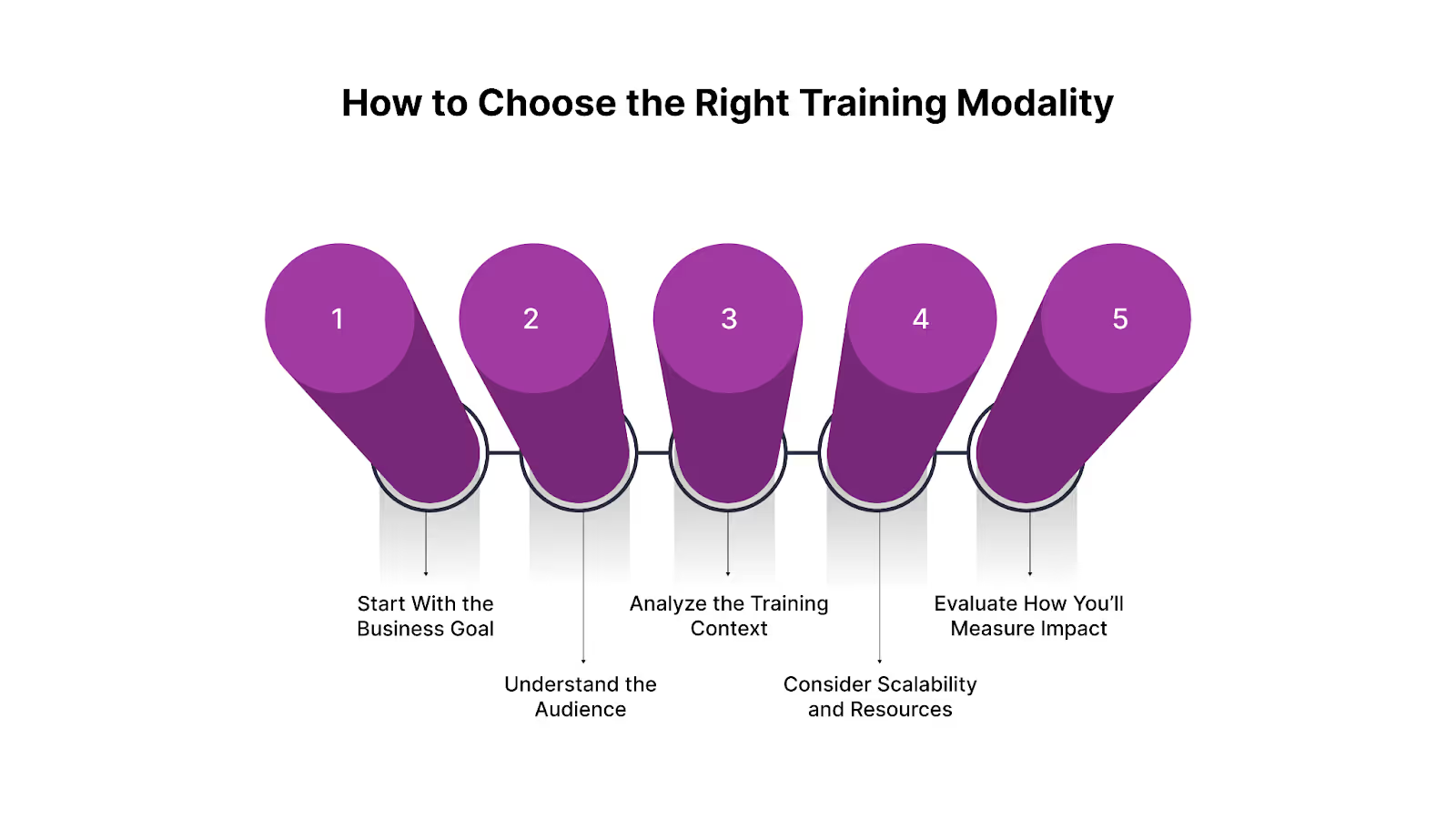
Here’s how to make that decision with clarity and confidence:
1. Start With the Business Goal
Every modality choice should begin with the outcome you’re trying to influence. Are you aiming to build awareness, develop a skill, shift a behavior, or improve on-the-job performance?
- Awareness-level goals may only require microlearning or video-based training.
- Skill-building or behavior change may demand instructor-led, hands-on, or blended experiences.
- Performance transformation often needs a mix of experiential learning, coaching, and real-time support.
The clearer the goal, the easier the choice of modality becomes.
2. Understand the Audience
Your employees don’t all learn the same way, and they don’t all need to.
Consider:
- Location (onsite, hybrid, remote, frontline)
- Work environment constraints (deskless, shift-based, travel-heavy)
- Digital fluency
- Existing skill gaps
- Motivation levels and time availability
This prevents you from choosing a modality that learners can’t realistically adopt.
3. Analyze the Training Context
Some skills simply cannot be taught effectively through specific methods.
For example:
- Compliance awareness training ➝ digital formats work well
- High-risk operations ➝ simulations or hands-on practice
- Leadership development ➝ ILT, coaching, and experiential learning
- Systems onboarding ➝ video walkthroughs + performance support
Not all modalities fit all contexts—and picking the wrong one leads to wasted effort.
4. Consider Scalability and Resources
Your choice must match what your organization can support.
- Limited budgets? ➝ Lean on eLearning and microlearning.
- Distributed teams? ➝ Virtual sessions or self-paced formats.
- Need consistency? ➝ Digital-first, standardized learning journeys.
- Rapid rollout? ➝ Video, microlearning, or short virtual sessions.
The best modality is both effective and feasible.
5. Evaluate How You’ll Measure Impact
If you can’t measure it, you can’t improve it.
Define:
- Performance metrics
- Engagement indicators
- Knowledge application checkpoints
- On-the-job behavior expectations
This ensures that the chosen modality can produce measurable, business-aligned outcomes.
Also Read: 5 Examples of Virtual Reality in Corporate Learning
Measuring the Effectiveness of Training Methods
Choosing the right training modality is only half the job. The real impact comes from measuring whether your preferred methods are actually improving performance, reducing errors, enhancing productivity, and enabling employees to apply what they’ve learned in real work situations. Without measurement, even the most polished program becomes guesswork.
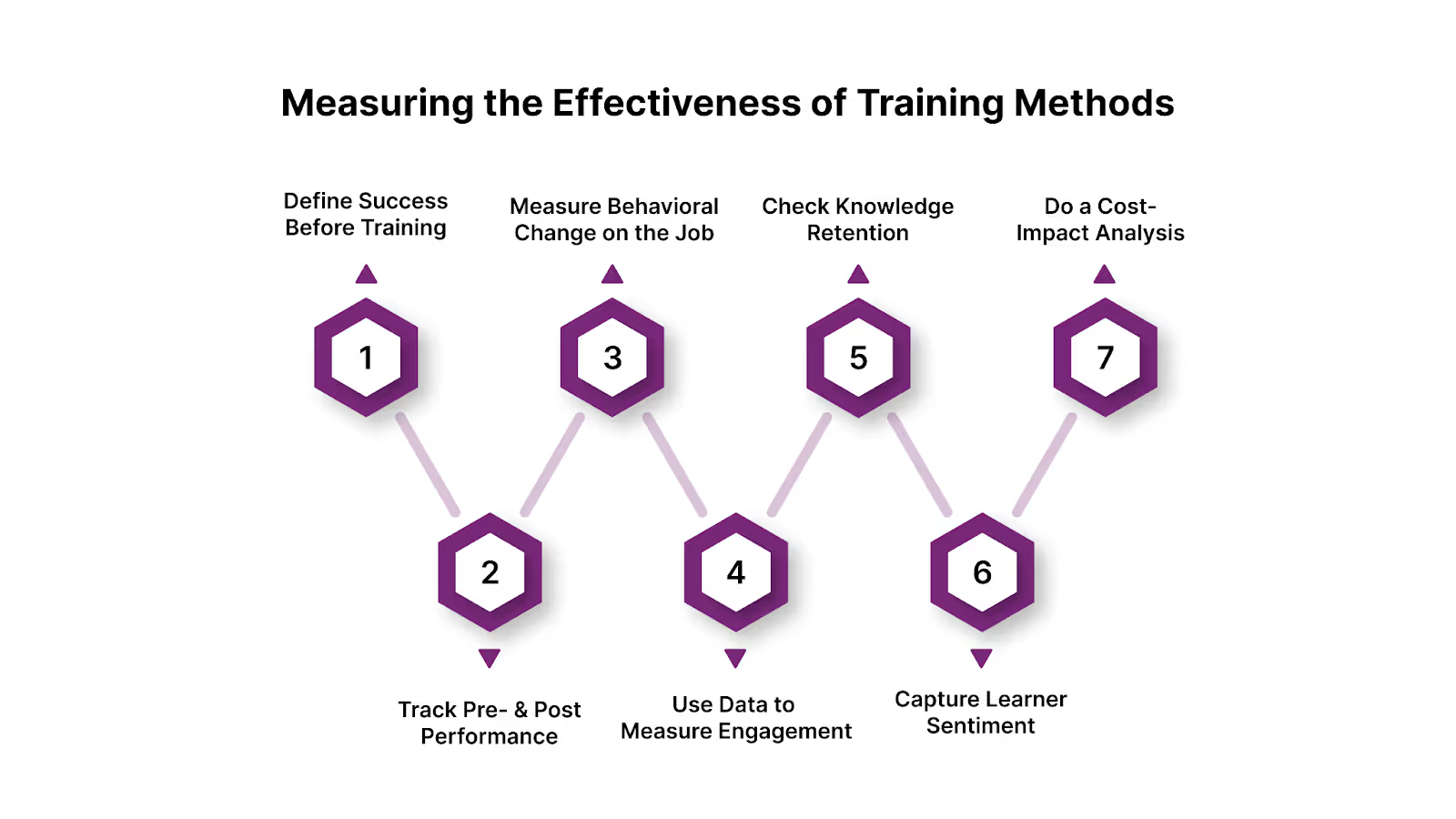
Below are the key ways organizations can evaluate the effectiveness of their training methods, without over-engineering the process.
1. Define Success Before Training Begins
Start with a simple question: What does good look like after this training? This gives your team a benchmark. Depending on your goal, success could mean:
- Faster task completion times
- Higher customer satisfaction
- Fewer compliance errors
- Increased sales numbers
- More confident decision-making
- Reduced support tickets or rework
Clear goals ensure you’re not measuring everything, just what moves the business forward.
2. Track Pre- and Post-Training Performance
A baseline is essential. Record relevant metrics right before the training starts, then again 30–60 days after the program ends.
Common performance measures include:
- Productivity trends
- Error rates or quality scores
- System usage behavior
- Customer experience metrics
- Time-to-proficiency for new hires
Even small deltas can reveal whether the modality supported meaningful skill adoption.
3. Measure Behavioral Change on the Job
Skills don’t matter unless they show up in real work. You can assess behavior change through:
- Manager observations
- Peer feedback
- Self-assessments
- Workflow audits
- Call or chat quality checks
- Digital task completion analytics
This is especially crucial for modalities like simulations, ILT, blended learning, and hands-on training, where real-world application is the goal.
4. Use Learner Data to Assess Engagement
Engagement is a strong predictor of completion and retention. Proper engagement signals include:
- Time spent in modules
- Replays of key lessons or videos
- Heatmaps of clicks or drop-offs
- Quiz attempts and scores
- Interaction rates with activities or scenarios
- Completion of optional content
If the learning format is interactive, adaptive, or gamified, these patterns become even more insightful.
5. Check Knowledge Retention Over Time
Knowledge decay is real. Retention checks at structured intervals, for example, after 2 weeks, 30 days, and 90 days, indicate whether the training modality created a lasting understanding.
You can measure retention via:
- Short refresh quizzes
- Micro-assessments
- Scenario challenges
- Knowledge checks embedded in workflow tools
This is where modalities like microlearning, simulations, and blended learning typically outperform one-off ILT sessions.
6. Capture Learner Sentiment
While not a sole indicator of effectiveness, qualitative insights uncover hidden friction points.
Ask learners:
- Was the training modality easy to navigate?
- Did the format help you apply the concepts?
- What felt unclear or unnecessary?
- What would have improved the experience?
This feedback helps determine whether you should scale, adapt, or replace a modality.
7. Conduct a Simple Cost-to-Impact Analysis
Especially important for L&D leaders reporting to business heads. Compare:
- Total investment
- Hours spent
- Verwendete Tools
- Die Zeit, die Mitarbeitende in Schulungen verbracht haben
Dagegen:
- Leistungsverbesserungen
- Reduzierung von Fehlern oder Nacharbeit
- Schnelleres Onboarding oder Einarbeitung
- Höhere Kundenbewertungen
- Bessere Compliance-Ergebnisse
Dies zeigt, ob eine Modalität nicht nur effektiv, sondern auch effizient ist.
Sobald Sie wissen, wie man Effektivität misst, stellt sich die Frage, wo man anfangen soll. Erfahren Sie, wie Liberate Sie bei der Gestaltung von Modalitäten unterstützen kann, die messbare Leistungen fördern.
Fazit
Wenn Formate auf grundlegende Rollen, echte Herausforderungen und reale Geschäftsziele abgestimmt sind, wird Lernen mehr als nur ein Ereignis. Es wird zu einem Leistungsförderer.
Hier kann Liberate helfen.
Mit unserem menschenzentrierten Lerndesign, unserer Expertise in multimodalen Trainings und unserer bewährten Kompetenz in eLearning, Microlearning, Simulationen, Gamification, virtuellen Klassenzimmern und Blended-Learning-Ökosystemen unterstützen wir Unternehmen dabei, Trainings zu entwickeln, die in der Praxis funktionieren und messbare Ergebnisse liefern.
Wenn Sie Ihre Trainingsstrategie modernisieren, Ihren Modalitäten-Mix optimieren oder Lerninhalte erstellen möchten, die tatsächlich die Leistung steigern:
Kontaktieren Sie die Lern- und Leistungsexperten von EI. Lassen Sie uns Trainingserlebnisse gestalten, die Menschen dort abholen, wo sie stehen, und Ihr Unternehmen dorthin bringen, wo es hin muss.
FAQs
1. Was sind Trainingsmodalitäten?
Trainingsmodalitäten sind die verschiedenen Arten, wie Lerninhalte vermittelt werden können – wie z.B. eLearning, Präsenzschulungen, virtuelle Klassenzimmer, Microlearning, Simulationen und On-the-Job-Methoden. Sie helfen dabei, die Schulung an die Anforderungen der jeweiligen Fähigkeit, des Publikums und des Geschäftskontextes anzupassen.
2. Wie wähle ich die richtige Trainingsmodalität aus?
Definieren Sie zunächst Ihre Leistungsziele, die Komplexität der Fähigkeit, den Standort Ihrer Lernenden und die Ihnen zur Verfügung stehenden Ressourcen. Die meisten Organisationen profitieren von einem Blended-Learning-Ansatz, der Modalitäten je nach Zweck kombiniert.
3. Eignen sich manche Modalitäten besser für die Einbindung?
Ja. Modalitäten wie Microlearning, Simulationen, szenariobasiertes Lernen und gamifiziertes eLearning fördern oft das Engagement, da sie interaktiv und praxisnah sind. Die „beste“ Modalität hängt jedoch immer von der Aufgabe und dem Publikum ab.
4. Können mehrere Trainingsmodalitäten zusammen verwendet werden?
Absolut. Blended Learning ist einer der effektivsten Ansätze. Die Kombination von Modalitäten hilft, das Lernen zu festigen, die Behaltensleistung zu verbessern und Lernende in verschiedenen Phasen – vor, während und nach der Schulung – zu unterstützen.
5. Wie kann Liberate Global helfen, die Effektivität unserer Schulungen zu verbessern?
Liberate unterstützt Organisationen bei der End-to-End-Lernstrategie, der Auswahl von Modalitäten, maßgeschneidertem eLearning, Microlearning, erlebnisorientiertem Design und KI-gestützten Lernlösungen. Jedes Programm ist auf reale Leistungsanforderungen zugeschnitten, wodurch sichergestellt wird, dass Ihre Investition zu messbaren Ergebnissen führt.

Ihre Anmeldung!
Verwandte Artikel
.jpg)