






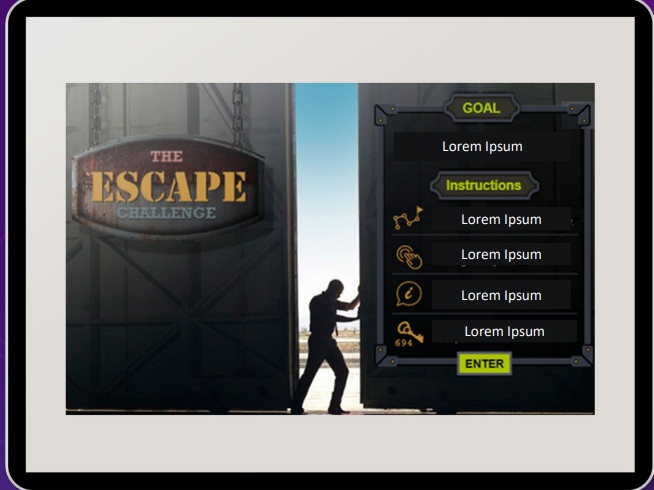

.avif)

Wie ein Einzelhandelsunternehmen durch eindrucksvolle Geschichten ein Sensibilisierungstraining zum Schutz von Waren entwickelte


Product loss in a warehouse is rarely the result of one dramatic decision. It accumulates through small moments that nobody registers as significant at the time, which is exactly why awareness training on the subject is so easy to sit through and so hard to act on.
A major retail organization came to our team with this problem across its globally distributed warehouses. It wanted to reduce potential product loss and to ease the frustration that builds up among vendors, associates, and customers when goods are lost or damaged.
The Challenge
The task was to develop training that would genuinely land, helping associates recognize situations where product loss indicators are present and understand how to navigate those situations when they encounter them.
The difficulty is that indicators of this kind are contextual. They do not announce themselves, and a list of them memorized in advance is close to useless without the situational awareness to notice one in progress. That points away from a rules-based course and toward something that puts learners inside the moments where the indicators appear.
How the Solution Was Built
Designing for the people on the floor
The target audience was primarily ground level staff, and the problem they faced sat inside their daily working life rather than above it. That shaped every subsequent decision. Training aimed at people doing physical work across shifts has to be relevant immediately, because a warehouse associate has no patience for a program that takes ten minutes to establish why it exists.
Showing who the loss actually affects
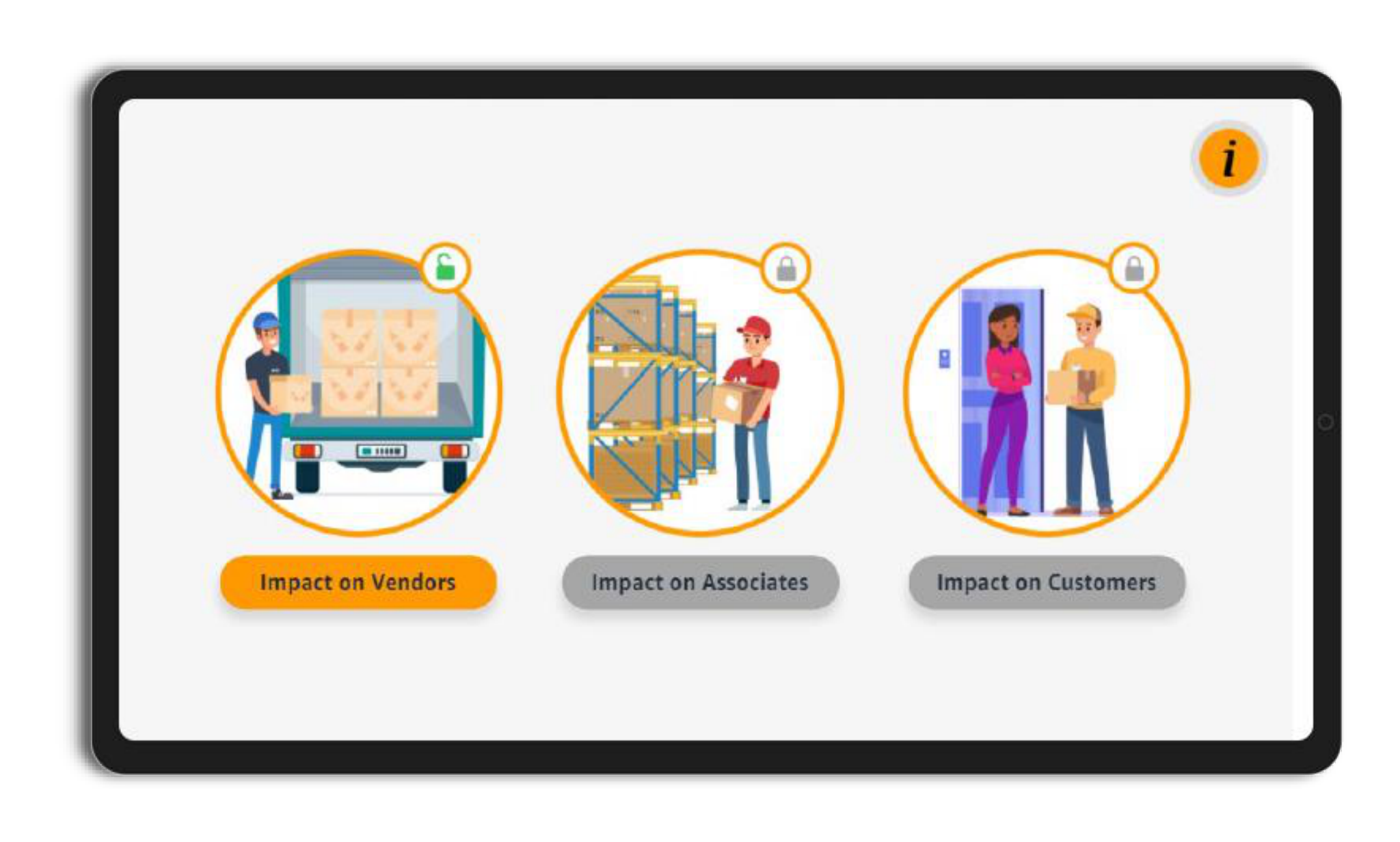
The program opens by making the consequences visible, taking learners through the impact on vendors, on associates, and on customers as three separate perspectives they unlock in sequence. Framing it this way answers the question that undermines most awareness training, which is why any of this should matter to the person taking it. Seeing the effect land on a colleague and on a customer at the door is more persuasive than being told that losses are costly.
Storytelling built on real situations
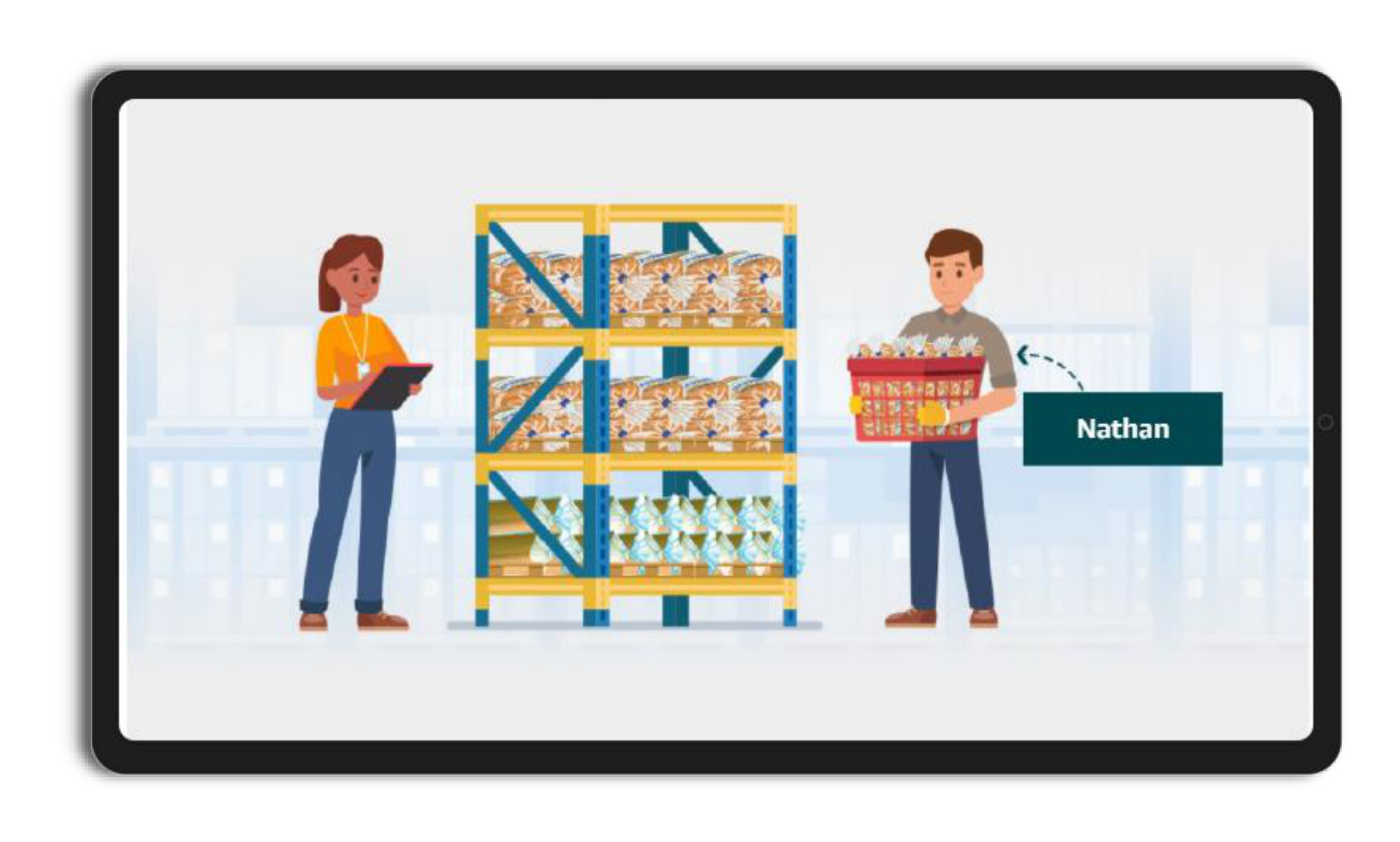
To make the training relevant we adopted a storytelling approach and took learners through real-life scenarios that would help them relate to different situations and apply what they learned at work. The scenarios play out in the warehouse itself, with named characters handling stock in the settings learners recognize from their own shifts.
Visuals and navigation that stay out of the way
A modern illustrative visual approach and intuitive navigation helped learners focus on the core content rather than on working out how the course operates. Illustration was the right choice for this audience for a practical reason as well. It depicts warehouse situations clearly without photographing real employees or real sites, which keeps the material usable across every location.
Pointing learners toward the resources that already exist
The narrative also directs learners to useful information available on the organization internal websites and shares practical tips that help them stay more vigilant. Connecting the training to resources the company already maintains means the program does not have to carry every detail itself, and it leaves associates knowing where to look after the course is finished.
The Strategies Behind the Design
Six strategies power the solution.
- Scenario Based Learning
- Storytelling
- Mentor Driven Learning
- Intuitive Navigation
- Experiential Learning
- Immersive Learning
Performance support tools accompany the program, and delivery combines microlearning with personalized learning served through the client LMS and LXP.
The Impact
Learners responded overwhelmingly positively, and the reason given was specific. They were able to relate to the problems and situations covered in the training straight away, and they took the learning home with them rather than leaving it behind at the end of the session.
The organization also saw employees become eager to enroll in similar virtual training programs. That is a useful signal for any learning team, since willingness to take the next course voluntarily says something about the first one that a completion rate cannot.
Make Awareness Training Land With Frontline Teams
Awareness training fails most often when it is written for the people commissioning it rather than the people taking it. This program worked because it was built around the working day of warehouse associates, showed them who the consequences fall on, and used scenarios they recognized instead of policy they would forget. If you need frontline training that changes what people notice on shift, Liberate can help you build it. Get in touch to talk it through.

Ihre Anmeldung!
