






.avif)

Die Umwandlung einer einfachen Anwendungsschulung in eine geführte, auf Erkundung basierende Lernerfahrung zur Verbesserung der Kompetenzen der Lernenden


Turning Application Training Into Guided Exploration: A Case Study
Application training fails in a distinctive way. Employees finish it able to describe the software and unable to use it, because watching someone else navigate an interface builds recognition rather than capability. The gap only becomes visible once people are working in the live system and getting things wrong.
A leading IT company came to our team with exactly that problem. Its existing application training was poorly designed, and the shortcoming was specific. Employees were not getting enough hands-on practice with the tool before they had to work in it, and in some cases they were getting none at all.
The Challenge
The consequence was that employees failed to deliver to the standard the company expected. The learning and development team was given a mandate to create effective, immersive training that would raise efficiency.
The diagnosis here was unusually clear, which made the design problem clear as well. The training did not need better explanation. It needed practice, and practice in software training means letting people operate the interface rather than watch it being operated.
How the Solution Was Built
We started with a ground-up approach and designed an interactive, guided simulation covering the various features of the tool. Rebuilding rather than revising was the right call, because a program whose central weakness is the absence of practice cannot be fixed by improving what is already there.
A learning path learners can see
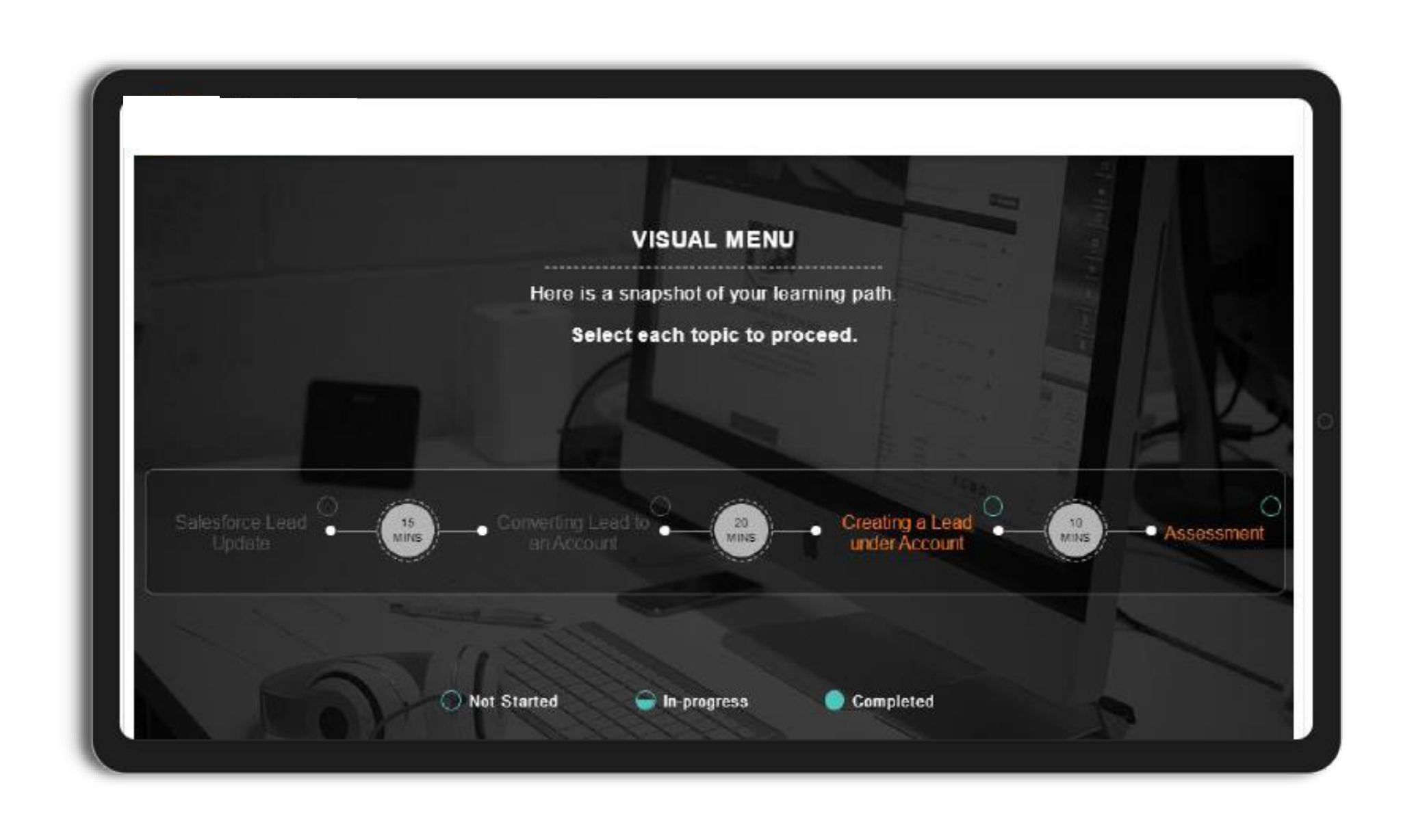
The program opens with a visual menu that lays out the whole path in sequence, with a time estimate against each topic and a status marker showing what has been started, what is in progress, and what is complete.
Publishing the time cost of each unit is a small decision that matters for software training. An employee deciding whether to work through a topic between tasks needs to know whether it will take ten minutes or thirty, and hiding that answer is a reliable way to have them postpone it indefinitely.
Guided simulation of the actual interface
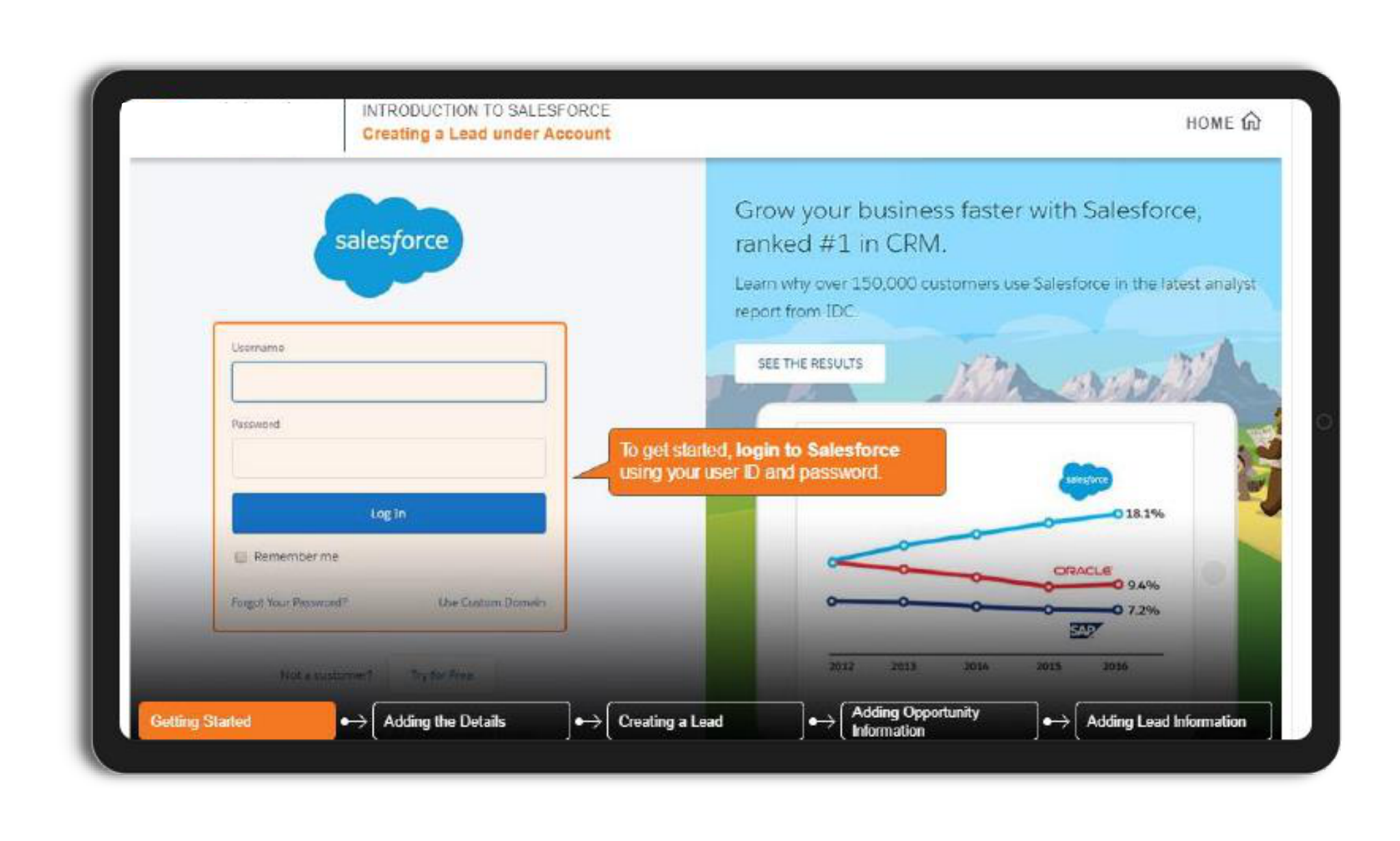
The simulations place learners in a replica of the interface itself, prompting them through each action in sequence. A breadcrumb across the bottom shows the steps in the task, from getting started through adding the details, creating a lead, and adding opportunity and lead information, so learners always know where they are inside the process.
Simulation-based learning gave instant engagement, and the real-life scenarios provided experiential learning with enough opportunity for hands-on practice. This is what the original training lacked. A learner who has already clicked through the task in a safe replica arrives at the live system having done it before rather than having seen it done.
Mini assessments and points along the way
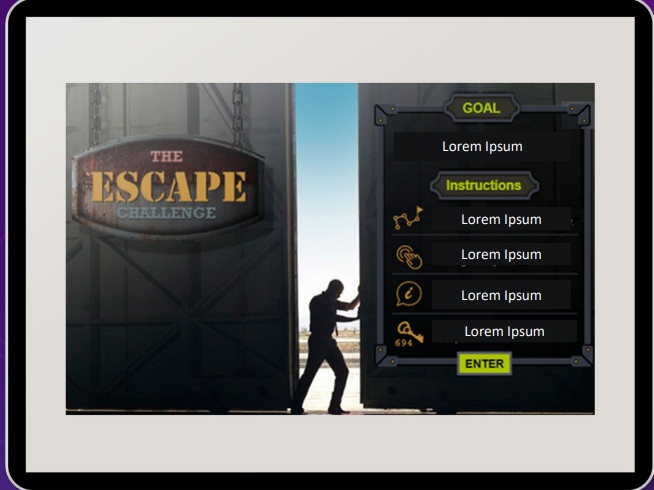
To lift engagement further, learners were challenged with mini assessments as they moved from one topic to the next. Points earned for clearing those challenges added to a sense of accomplishment while gauging how well the concepts had landed.
Placing the checks between topics rather than at the end serves a practical purpose in application training. A misunderstanding about how one feature works will compound through everything built on top of it, so catching it before the next topic begins is worth more than catching it in a final assessment.
The Strategies Behind the Design
Five strategies power the solution.
- Gamification
- Video Based Learning
- Personalized Learning
- Scenario Based Learning
- Learning Journey
Guided simulation underpins the whole program, and delivery combines mobile learning with microlearning through a learning portal.
The Impact
Learners found the training extremely engaging, and the reason they gave was the chance to explore and practice in real time rather than read about the tool.
They were also able to relate to the training, because real simulations were used to meet the learning objectives instead of descriptions of what the interface does.
The organization then saw increased efficiency among employees using the tool, and better performance results as a consequence. Efficiency in the application is the measure this project existed to move, so reaching it is the result that matters rather than the engagement figures that preceded it.
Build Software Training That Produces Capability
Software training earns its cost when people can operate the system afterward, and that only comes from practice in something that behaves like the real interface. This program worked by rebuilding from the ground up, showing learners the full path and what each part would cost them in time, and letting them work through the actual tasks before facing them live. If your application training is producing recognition rather than capability, Liberate can help you rebuild it. Get in touch to talk it through.

Ihre Anmeldung!
