


.avif)

Entwicklung einer wirkungsvollen Studie zur medizinischen Hochschulbildung unter Einsatz eines Blended-Learning-Ansatzes

Medical education resisted digitization longer than most fields, and for good reasons. Anatomy is learned in a laboratory, clinical judgment is learned by observing clinicians, and both have traditionally depended on being physically present. When the pandemic removed that option, medical schools had to answer a question they had been able to postpone.
A well-known medical college and hospital in India asked our team to develop thirty hours of rich digital learning assets covering the MBBS first professional year curriculum, with the aim of replacing face-to-face lectures for prospective students.
The Challenge
The task was to transform conventional classroom teaching and laboratory practicals into blended learning built on a microlearning base, with a curriculum engaging enough to secure real participation and understanding from students rather than passive attendance.
Medical content is both technical and sensitive, which narrows the margin for error considerably. An approximation that would pass unnoticed in a corporate course is unacceptable in material that first-year medical students will carry into clinical practice. The work therefore had to run alongside medical professionals throughout, analyzing the content, building the design packs and tool kits, and applying the instructional design approaches suited to each part of the curriculum.
How the Solution Was Built
Our primary focus was on delivering an immersive learning experience that would keep the next generation of doctors engaged across thirty hours of material. We partnered closely with the subject matter experts at the medical institution to build that experience.
Anatomy students can explore
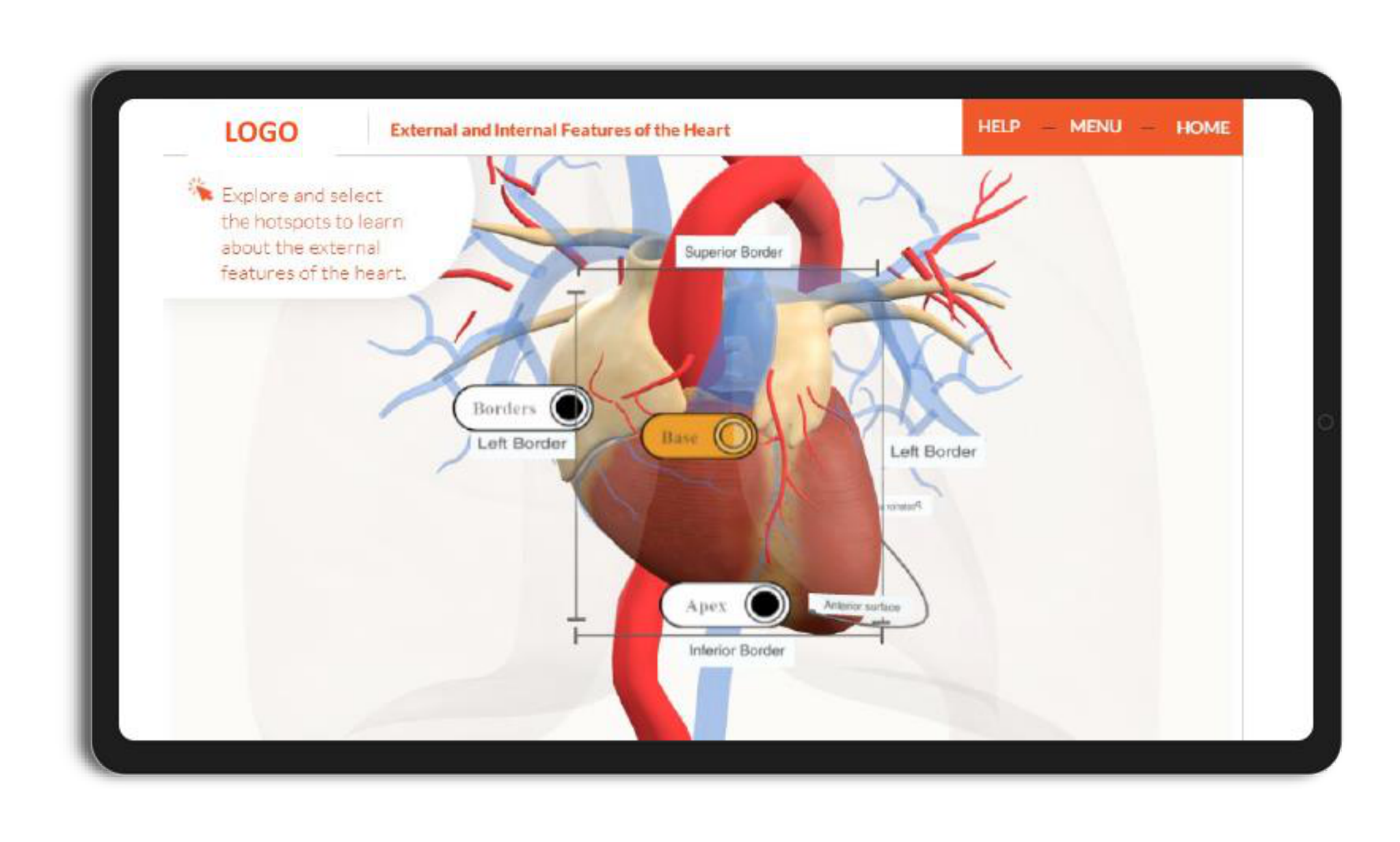
The anatomy modules open by placing the structure in the body before isolating it. A module on the external and internal features of the heart begins with the organ shown in the context of the circulatory system as a whole.
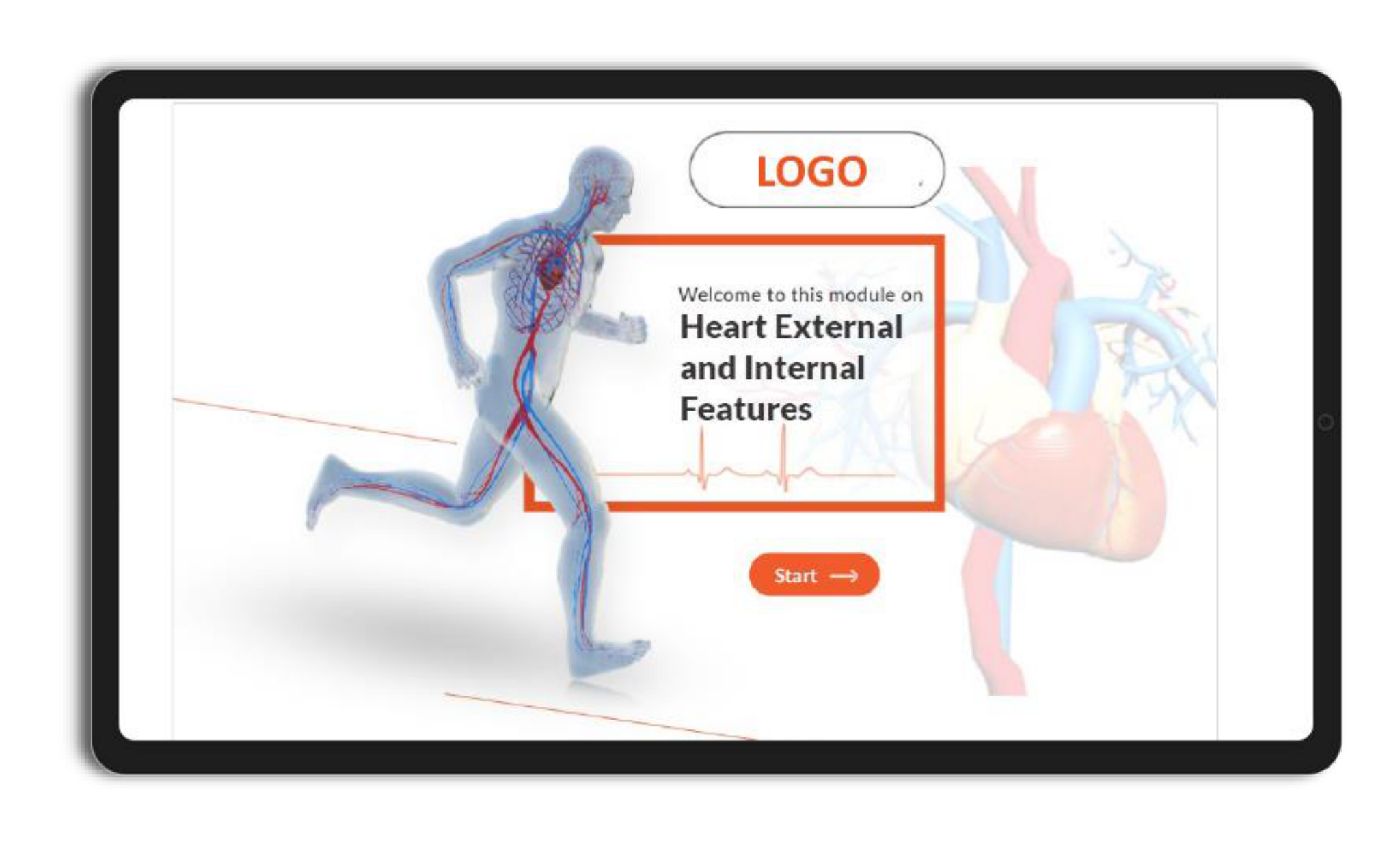
Students then work through the anatomy by selecting hotspots on a detailed rendering, examining the borders, the base, the apex, and the surfaces in whatever order they choose.
This is the closest a screen can come to what the laboratory provides. A student examining a specimen learns by moving around it and returning to the same structure repeatedly, and an explorable rendering preserves that pattern in a way a labeled diagram does not.
A mixed library rather than a single format
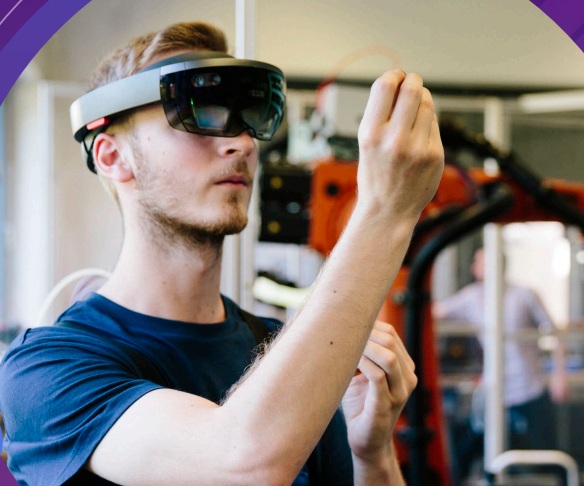
The curriculum was built from animated videos, scenario-based activities, AR and VR components, clinical videos, assessments, and eBooks. Using a range of formats was a curriculum decision rather than a variety decision, since anatomy, clinical reasoning, and procedural knowledge each demand something different. Catchy visual design and rich animation carry the material throughout.
Available on any device, and on paper
Mobile-compatible design made the curriculum available on smartphones, desktops, and tablets. Downloadable eBooks were also provided, which students could print or keep for reference.
The printable eBooks are a practical concession worth noting. Medical students annotate heavily and revise from paper, and a program that insisted on being screen-only would have been working against how this particular audience actually studies.
The Strategies Behind the Design
Five strategies power the solution.
- Interactive Video
- Gamification
- Animations
- Activity Based Learning
- Video Based Learning
Alongside these, the program uses scenario-based learning, performance support tools, and gamified assessments, delivered as mobile learning and microlearning through the institution LMS.
The Impact
Students responded positively, reporting that they were able to assimilate the concepts, the scenario-based situations, and the activities in the program without difficulty. For a cohort that had expected laboratory and lecture hall teaching, finding the digital version workable is a meaningful result rather than a routine one.
The institution also continued to partner with us on further programs aimed at giving its students more empowering roles in their education.
Bring Technical Curriculum Into Digital Learning
Technical and clinical content is the hardest material to move online, because accuracy cannot be traded for engagement and the practical element cannot simply be dropped. This program worked by building alongside the faculty rather than adapting their notes, choosing a format for each part of the curriculum rather than one for all of it, and letting students explore anatomy the way they would in a laboratory. If you have technical or clinical curriculum to bring into digital learning, Liberate can help you design it. Get in touch to talk it through.

Ihre Anmeldung!
Verwandte Fallstudien