


.avif)

Wie ein Pharmariese die Sicherheit am Arbeitsplatz durch Gamification verbessert hat


Gamified PPE Safety Training for a Global Biopharma Organization
Personal protective equipment training has a peculiar failure mode. Almost nobody gets the knowledge check wrong. Ask a laboratory scientist which glove grade belongs with which reagent and they will usually answer correctly. The gap is between knowing and doing, on a day when the task is routine and the correct gear is one cupboard further away than the convenient gear.
This case study covers how a global biopharma organization moved a face-to-face PPE activity into an on-demand game, why the design put consequences ahead of correct answers, and what changed once the program could be tracked across locations.
The background
A global biopharma market leader needed every employee working in laboratories and R&D areas to know which PPE was right for which situation. The organization already had something in place. It ran a "how to dress for your workday" activity on site, and it worked well enough as an activity. What it could not do was scale. Managing the sessions across locations, and tracking them well enough to say whether they were actually working, had become a problem.
So the mandate changed. The company asked for on-demand training that did more than raise awareness. It had to give employees somewhere to learn if they got it wrong, rather than simply recording a failure and moving on.
The design problem
The obvious route would have been to convert the activity into a compliance module with a checklist and a final quiz. Our team argued against it, for two reasons.
First, the existing activity had something worth protecting. Employees were used to it and they enjoyed it. Rebuilding it as a formal course would have thrown away the one thing that already had engagement behind it.
Second, PPE is a subject where the consequence is the lesson. A quiz can confirm that a learner recognizes the right respirator. It cannot show what happens when the wrong one is worn. Any design that stopped at right and wrong answers would have taught the easy half of the subject.
How our team approached the solution
A short game built on an activity people already knew
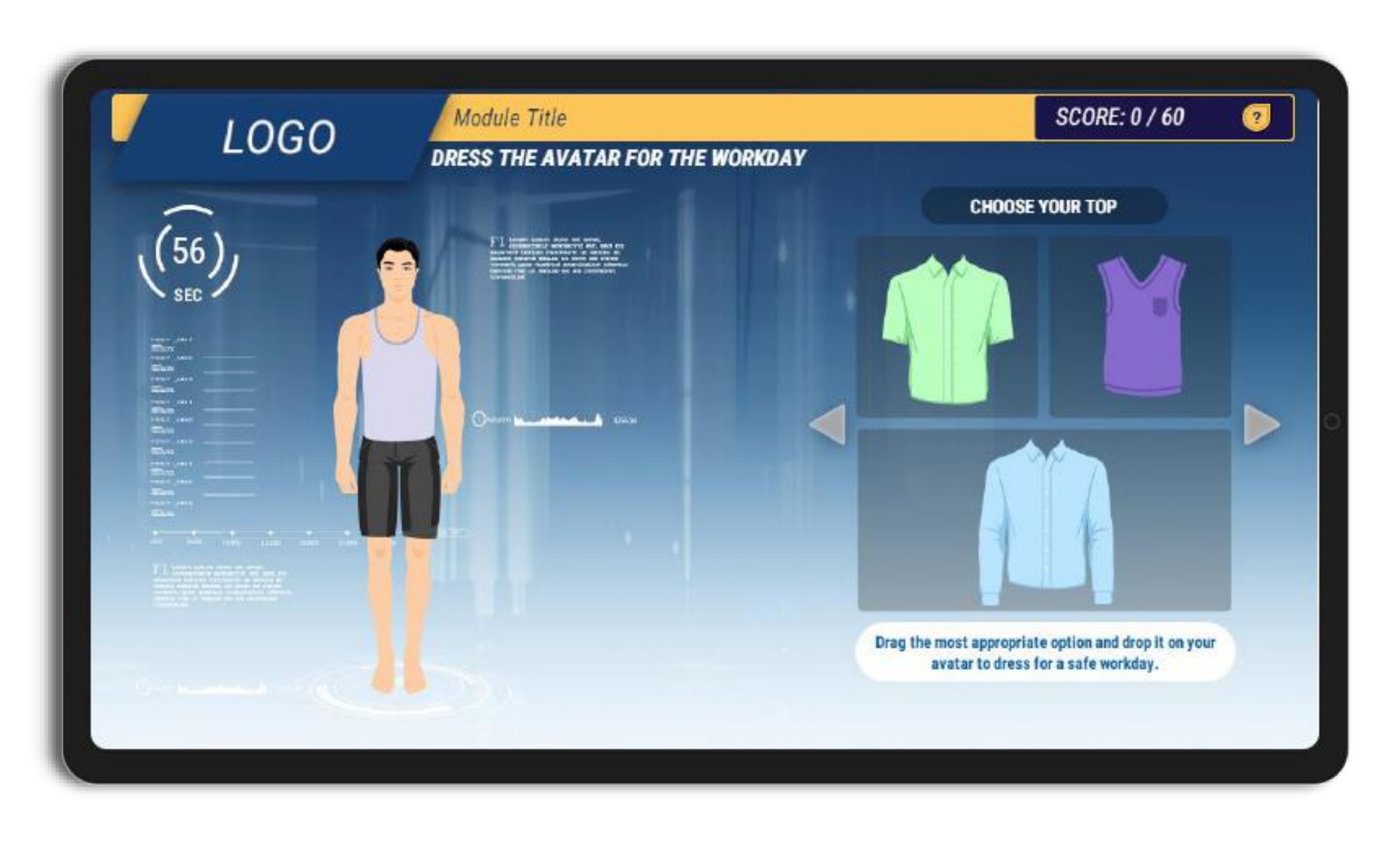
Working with the client’s subject matter experts, we built a short game that kept the flavor of the original in-office activity. The learner dresses an avatar for a workday, choosing each item against a countdown, with a running score in the corner of the screen. The mechanic is familiar enough to need almost no instruction, which matters when the audience is scientists who have a bench to get back to.
Underneath the simplicity, the game covered the where, why, what, and how of using the right PPE, not just which item to select.
Showing the consequence, not just marking the answer
The design point that mattered most was demonstrating what follows from incorrect PPE. A wrong choice does not simply lose points. It plays out, so the learner sees the outcome the equipment exists to prevent. That is the part a classroom demonstration can convey and a checklist cannot, and it is why the brief asked for learning opportunities rather than pass or fail results.
Personalization through avatar selection
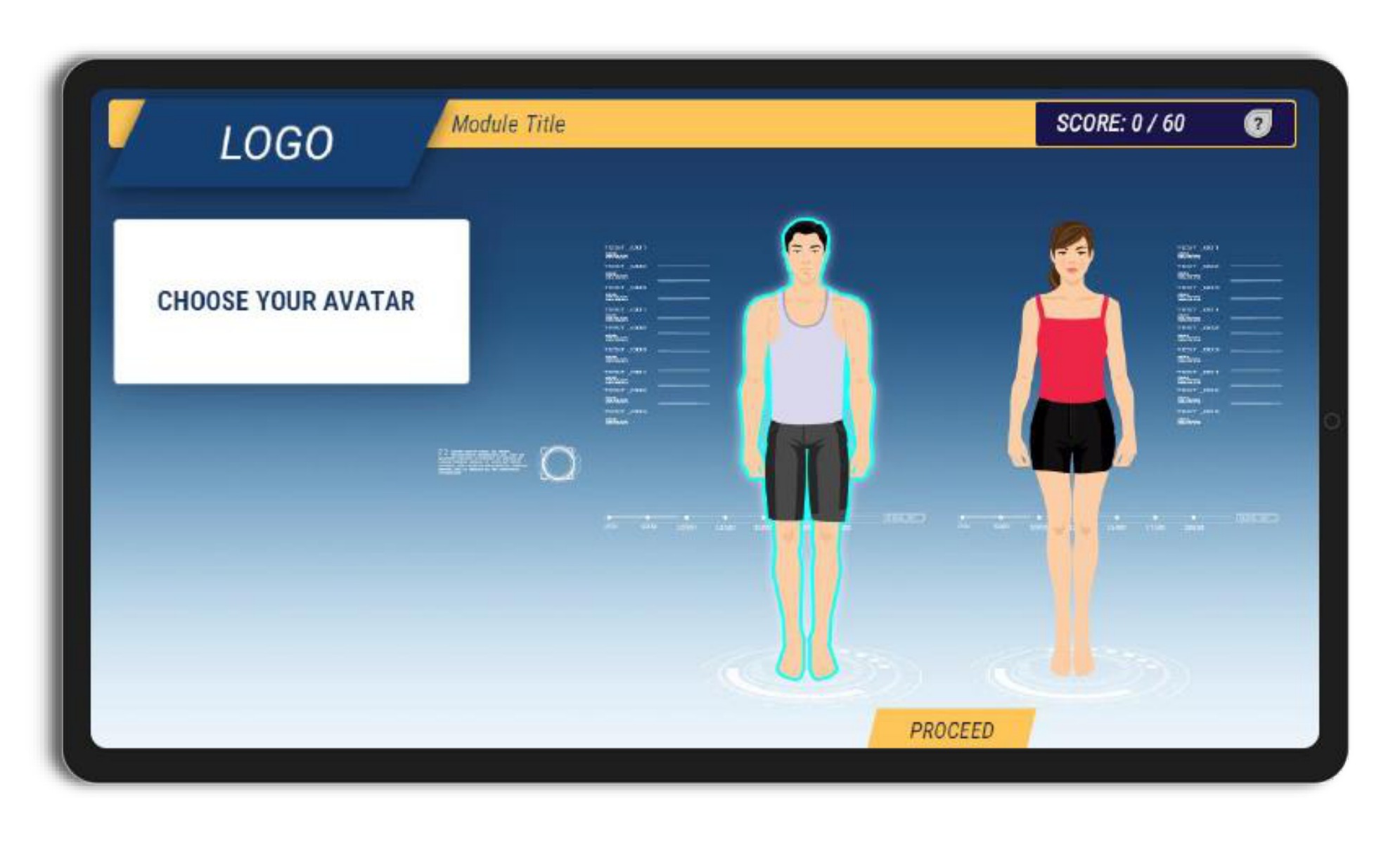
Learners choose their avatar before they begin. It is easy to dismiss as decoration, but dressing a figure you have chosen to represent yourself is a different act from dressing a generic mannequin, and that shift toward first person is worth having in safety training.
Diagnostic feedback and an intuitive score
Feedback was placed at logical junctures rather than saved for the end, so a learner who has misunderstood something finds out while the decision is still fresh. The scoring feature gave the progress signal that keeps a short game moving and gave the organization a measure that means something more than completion.
Mobile responsive, delivered through the LMS and LXP
The output was fully mobile responsive and delivered as personalized learning through the existing LMS and LXP. That combination solved the original tracking problem. The same activity now runs anywhere, and the data comes back in one place instead of being held in session registers across sites.
The impact
- Employees demonstrated increased engagement and participation compared with the previous activity conducted in the workplace.
- Employees were able to implement the PPE safety norms easily in the actual work environment.
- Laboratory safety reporting improved against the pre-training baseline.
- The organization found the program straightforward to track, with logistics and cost both reduced.
The engagement result is the one that carries the rest. This audience was being asked to repeat, on a screen, something they had previously done in a room with colleagues. Participation going up rather than down is not the usual outcome when an activity is digitized, and it is the best evidence that keeping the original mechanic was the right call.
What this case study shows
When an in-person activity is working, the job is not to replace it with a course. It is to find what made it work and rebuild that at scale. Here the answer was the activity itself, so the design kept the dressing mechanic, kept it short, and put the effort into the parts a room full of colleagues could not provide: consequence modeling, feedback at the point of the decision, and a record that tracks across every location.
It also shows what gamification is for in a compliance context. Not points for their own sake, but a way to let someone make an unsafe choice and see where it leads, in the only setting where that is safe to do.
If you have a safety or compliance activity that works in person but will not scale, Liberate can help you rebuild it as an on-demand program without losing what made it work.

Ihre Anmeldung!
Verwandte Fallstudien