



.avif)

Wie ein IT-Riese durch die Schaffung eines intensiven Lernerlebnisses die Unternehmenskultur unter seinen Mitarbeitern weltweit förderte


Microlearning That Carried Organizational Culture Across a Global IT Workforce
Culture is the hardest thing an organization tries to teach. Vision, mission, and values are written to be memorable rather than instructive, and a training program built on them tends to produce employees who can recite the words without behaving any differently. The gap between knowing the values and demonstrating them is where most culture programs quietly fail.
A multinational IT giant asked our team to close that gap across its entire workforce. Employees in every location needed to be familiarized with the organization culture, vision, mission, and values in a consistent and impactful way, and the objective was a steady behavioral change driven through learning that people found genuinely enjoyable.
The Challenge
The scale made the requirement difficult in two separate ways. More than 30 modules were needed to cover the material, and all of them had to be accessible to every employee on a smartphone, which ruled out anything that assumed a desk, a browser window, or an uninterrupted hour.
Consistency across locations added a further constraint. A culture program that is delivered differently in different regions produces exactly the variation it was built to remove, so the same content had to reach a globally distributed workforce in the same form.
How the Solution Was Built
Our team analyzed the requirement and crafted a portal-based microlearning approach so that every learning nugget was easy to reach during an employee moment of need. Building the program as a portal rather than a course was the decision that made the rest of it work, because 30 modules delivered as a sequence become a commitment, while 30 modules held in a portal become a resource.
Variety as an answer to mundane content
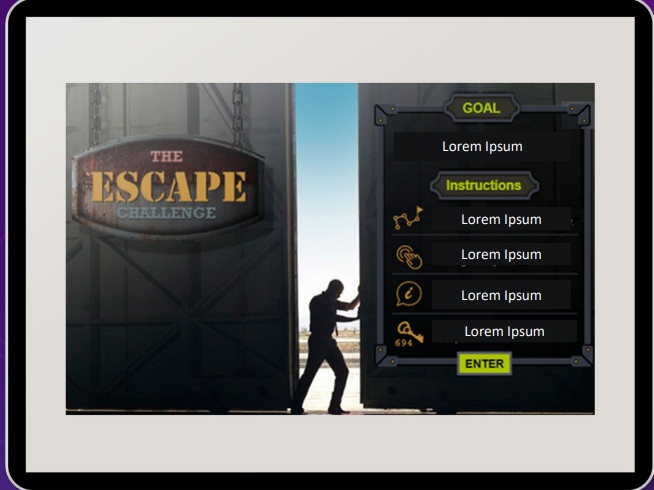
To do justice to content that would otherwise be mundane, several microlearning formats were used to push the learning rather than a single template repeated 30 times. Scenario based learning, video, and performance support material each carry different parts of the program, so the format changes as the learner moves between topics.
This matters more on a culture curriculum than on a technical one. Values content repeats by nature, since the same handful of ideas recur across every module, and varying the format is what prevents the repetition from becoming obvious.
Activities that ask the learner to interpret behavior
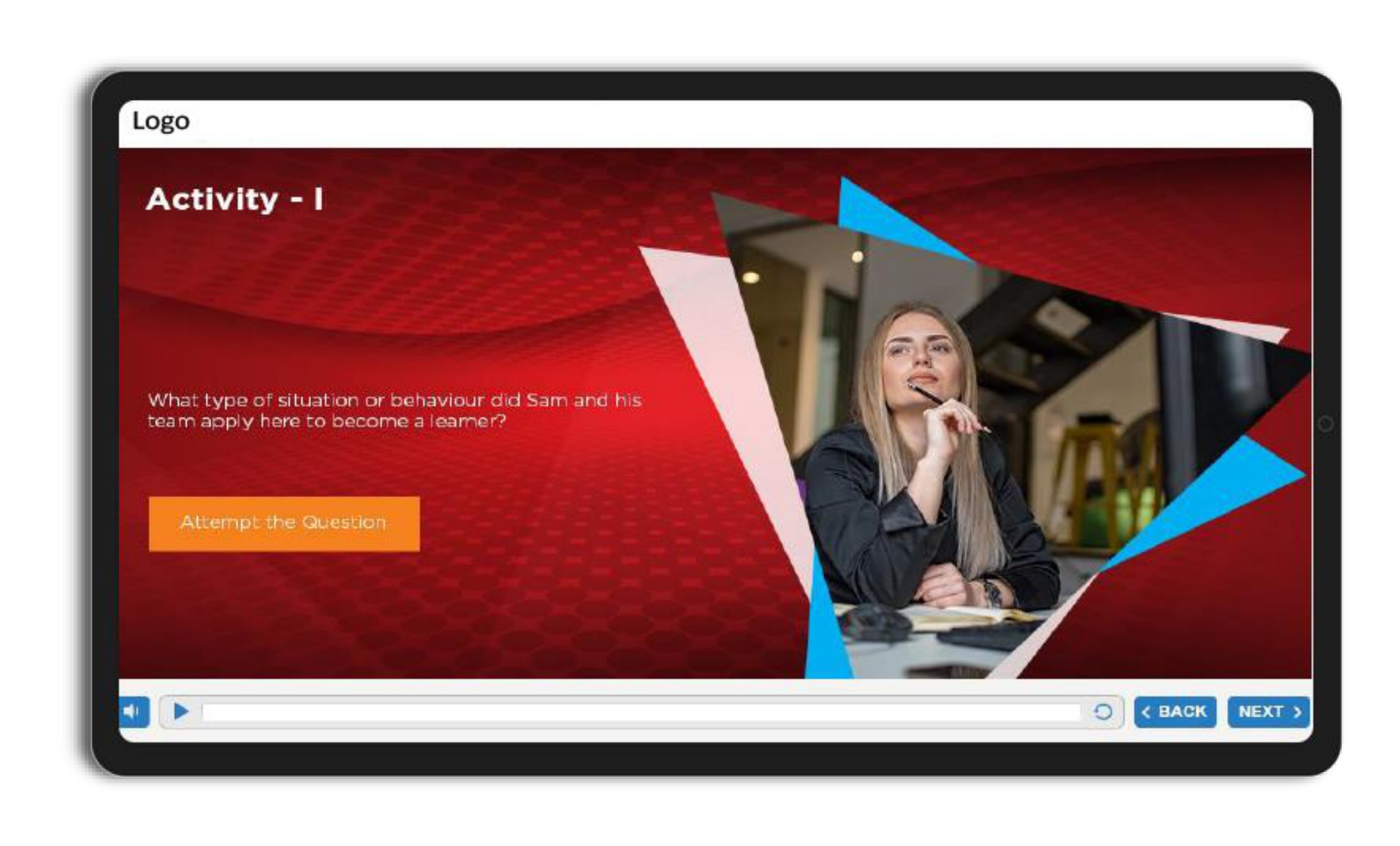
The modules turn the values into situations and then ask the learner to read them. One activity presents a scenario and asks what kind of situation or behavior a named colleague and his team applied in order to become a learner, with the question held behind a deliberate prompt so the learner commits to attempting it.
Framing a value as something a person did, and then asking the learner to name it, is a more demanding task than recognizing a definition. It is also much closer to what the organization actually wanted, which was employees who could identify the behavior in their own work.
A personal action plan at the end of each module
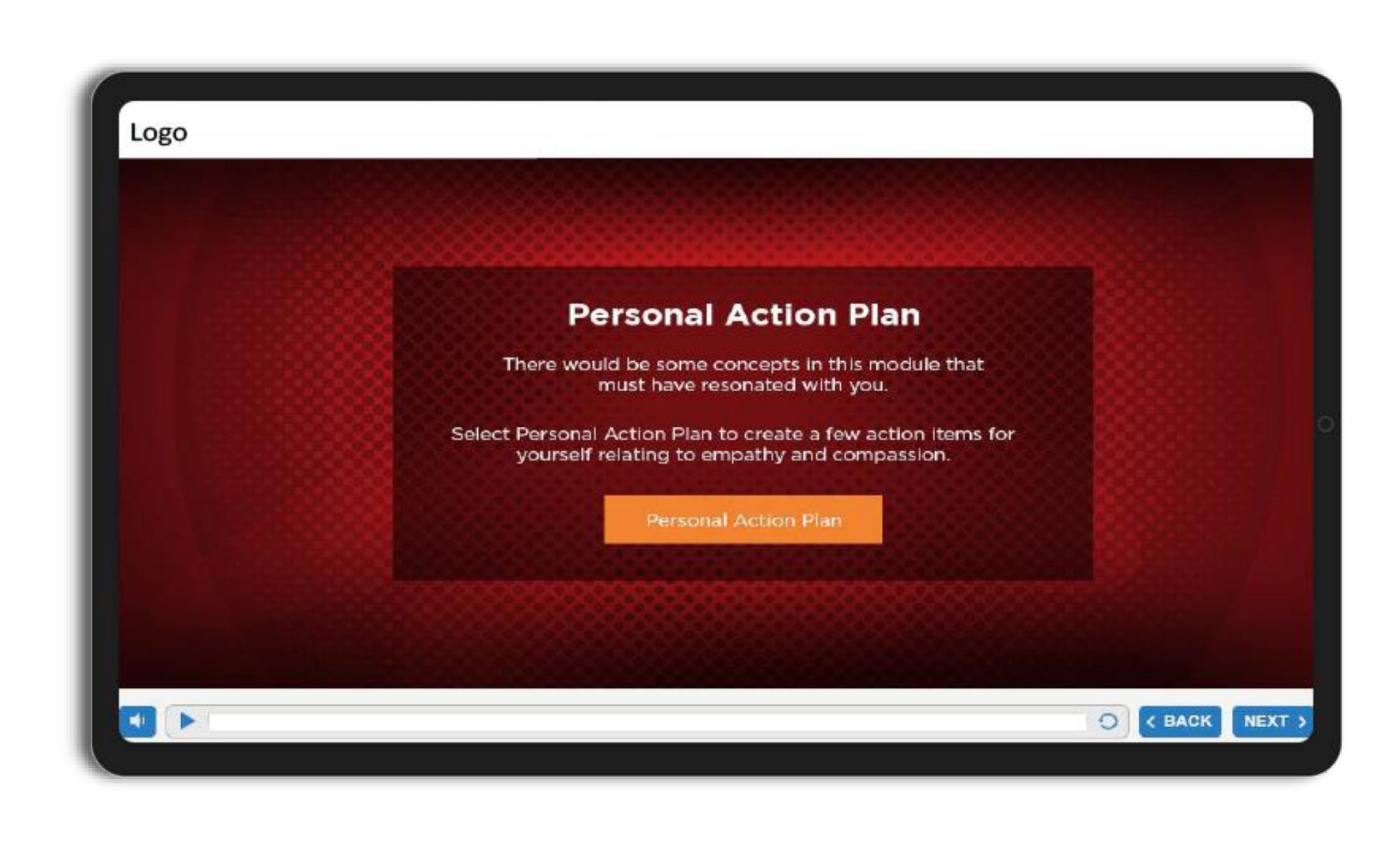
Modules close by inviting the learner to build a personal action plan. The screen acknowledges that some concepts in the module will have resonated more than others, and asks the learner to create a few action items for themselves relating to the theme they have just covered, such as empathy and compassion.
This is the mechanism that connects a culture module to behavior. A learner who writes down two things they intend to do differently has converted an abstract value into a commitment in their own words, which is a far better predictor of change than a passing score.
Assessment that measures movement rather than completion
Short gamified micro assessments run through the program to provide cognition checks that stay light enough not to interrupt the flow. Around them sits a comprehensive pre-assessment and post-assessment designed to gauge progress and proficiency, so the program measures what changed rather than only who finished.
Everything was delivered through a fully mobile responsive output, which is what allowed a 30 module curriculum to be consumed by a global workforce on their own devices at whatever moment suited them.
The Strategies Behind the Design
Eight strategies power the solution.
- Gamification
- Microlearning
- mLearning
- Learning Journey
- Learning Portals
- Just-in-time Learning
- Experiential Learning
- Responsive Designs
Scenario based learning, video based learning, and performance support tools sit behind these, with delivery combining microlearning and mobile learning served through a learning portal.
The Impact
Learners reported a sense of increased engagement and participation in their post-training feedback, which is the necessary starting point for a program whose subject employees usually treat as an obligation.
Employees were able to demonstrate the behavioral aspects of the organization culture as a result of the training. That is the outcome the client asked for at the outset, and it is a materially different claim from employees being able to describe the values.
The L&D teams also witnessed unprecedented registration and completion rates compared with similar previous trainings. Registration is the more interesting half of that pair, since it indicates employees choosing to start a culture program rather than being pushed into it, which is unusual for this kind of content.
Make Culture Training Something People Act On
Values programs fail when they ask employees to remember words instead of practice behavior. This one worked because the material was held in a portal people could reach at any moment, varied enough in format to survive 30 modules, built around situations that asked learners to interpret behavior, and closed with an action plan the learner wrote in their own words. If you need a culture program that changes what people do, Liberate can help you design it. Get in touch to talk it through.

Ihre Anmeldung!
Verwandte Fallstudien