






.avif)

Gamification That Drives Engagement and Performance
Transform mandatory training into engaging experiences that learners actually want to complete. Boost motivation, retention, and skill application through game mechanics.

Why Traditional Training Struggles to Hold Attention
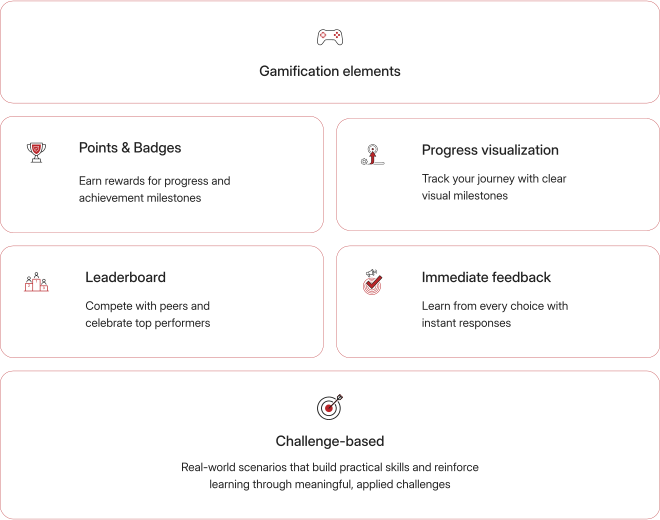
Traditional courses face low completion rates, poor retention, and minimal behavior change. Learners disengage from passive content that lacks challenge or relevance. Gamification in learning changes this by tapping into intrinsic motivation through game mechanics, progress tracking, and immediate feedback that makes learning engaging and memorable.
Why Organizations Choose Gamified Learning
Gamification addresses the engagement challenges of traditional training and delivers measurable improvements in learning outcomes.

Increased Engagement
Interactive game elements maintain learner involvement and motivate completion of training programs.

Improved Retention
Spaced repetition and interactive challenges create sticky learning that improves long-term recall.

Higher Completion Rates
Engaging game mechanics reduce dropout rates and encourage learners to finish courses.

Behavioral Change
Repeated practice in game-based scenarios helps transform knowledge into lasting behavior change.

Safe Practice Environment
Learners can experiment, make mistakes, and learn consequences without real-world risk.

Better Knowledge Application
Active participation and scenario-based challenges improve transfer of learning to job performance.

Motivation Boost
Elements like achievements, rewards, and recognition tap into intrinsic and extrinsic motivation.

Measurable Progress
Analytics and tracking provide clear data on learner engagement, performance, and skill development.
Increased Engagement
Interactive game elements maintain learner involvement and motivate completion of training programs.
Improved Retention
Spaced repetition and interactive challenges create sticky learning that improves long-term recall.
Higher Completion Rates
Engaging game mechanics reduce dropout rates and encourage learners to finish courses.
Behavioral Change
Repeated practice in game-based scenarios helps transform knowledge into lasting behavior change.
Safe Practice Environment
Learners can experiment, make mistakes, and learn consequences without real-world risk.
Better Knowledge Application
Active participation and scenario-based challenges improve transfer of learning to job performance.
Motivation Boost
Elements like achievements, rewards, and recognition tap into intrinsic and extrinsic motivation.
Measurable Progress
Analytics and tracking provide clear data on learner engagement, performance, and skill development.

Flexible Formats for Every Learning Need
Adaptive formats for every learner, every environment. From micro learning to AI-powered simulations, gamification scales across contexts.





Strategic Elements That Drive Engagement
From onboarding to leadership development, we tailor proven game mechanics to each learning need.

Levels & Progress Trackers
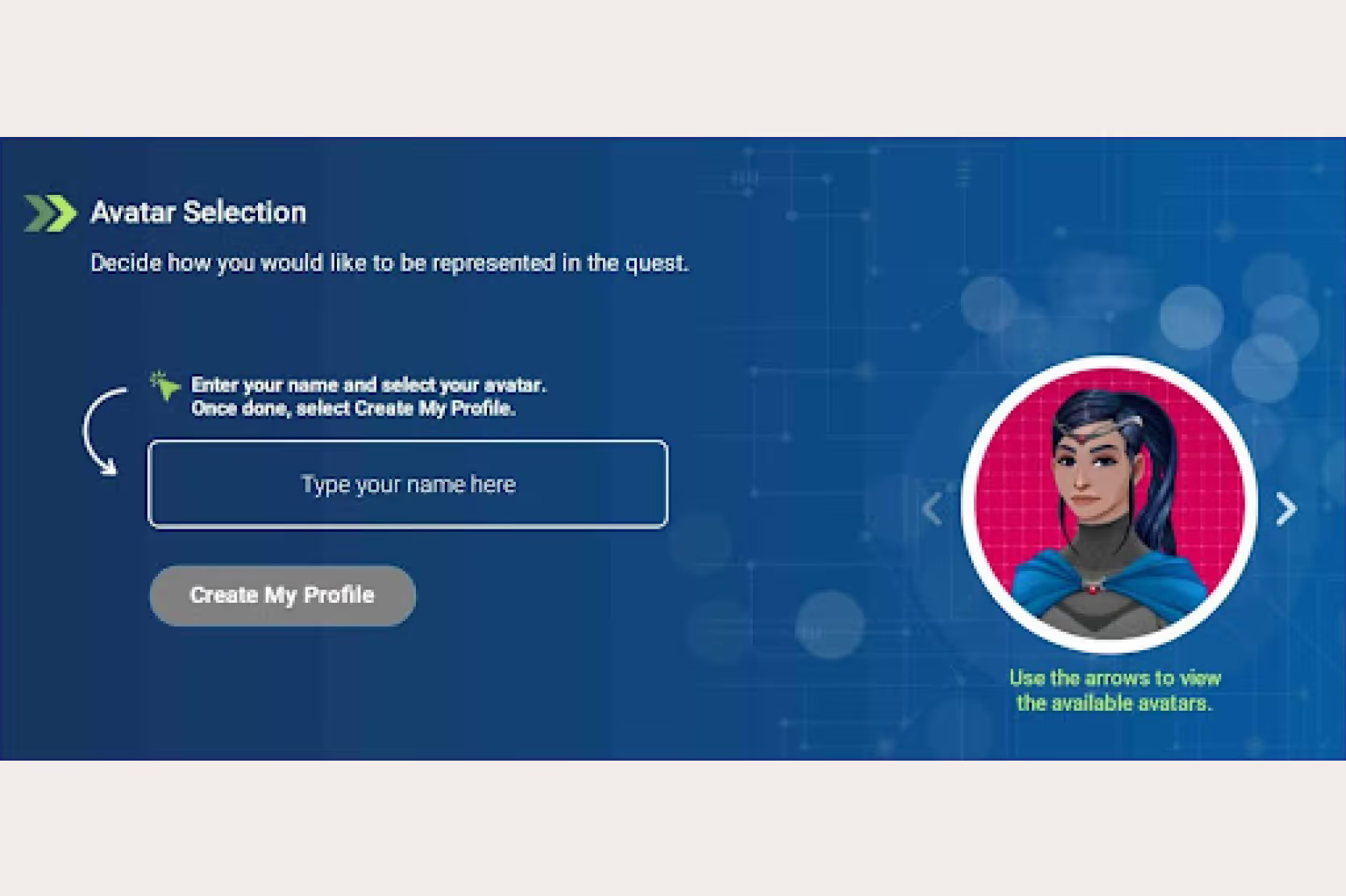
Visual progression systems that show learners their journey and motivate completion.

Missions & Quests
Goal-oriented challenges that guide learners through structured learning paths.

Scoreboards & Badges
Recognition systems tied to meaningful achievements, not just completion.

Peer Challenges & Leaderboards
Social competition and collaboration that foster healthy rivalry and team learning.

Role-Based Simulations
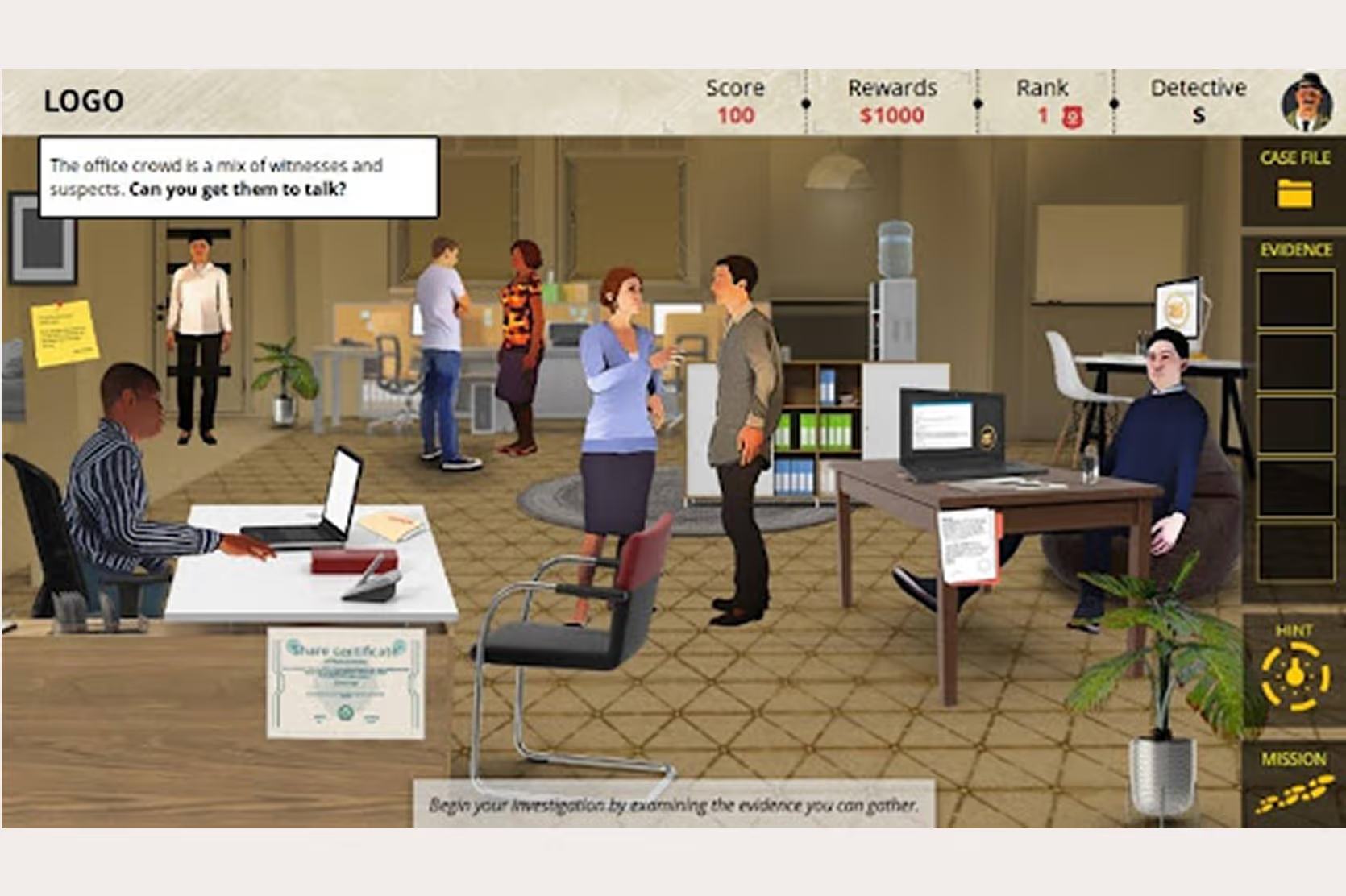
Decision-making scenarios that mirror actual job contexts and responsibilities.

Adaptive Learning Paths
Personalized difficulty levels that respond to learner performance and maintain flow.

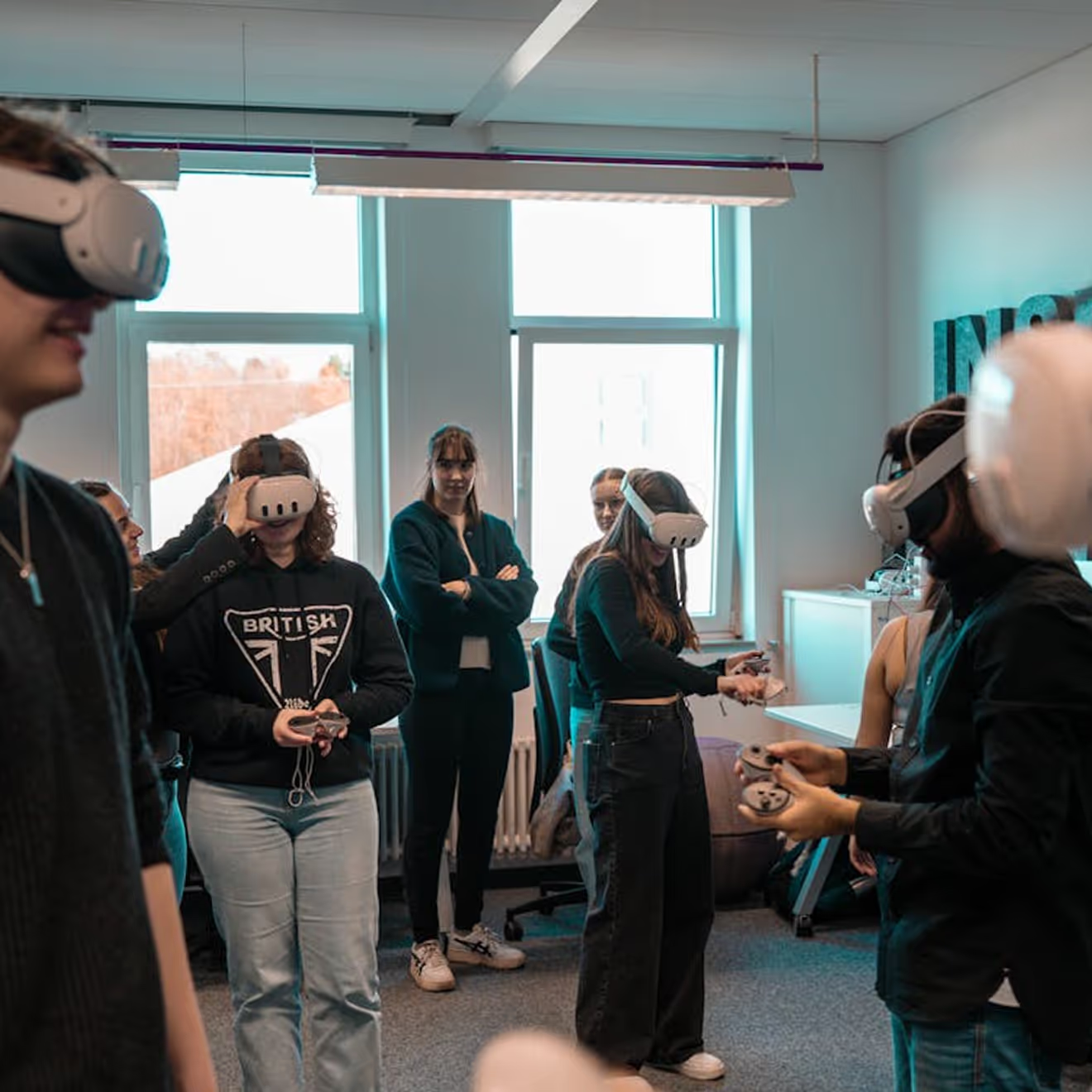
AR/VR-Based Gamified Tasks
Immersive spatial experiences for hands-on technical, safety, or equipment training.

AI-Powered Conversation Simulators
Real-time AI-driven roleplay for soft skills, negotiation, and communication practice.
Levels & Progress Trackers
Visual progression systems that show learners their journey and motivate completion.
Missions & Quests
Goal-oriented challenges that guide learners through structured learning paths.
Scoreboards & Badges
Recognition systems tied to meaningful achievements, not just completion.
Peer Challenges & Leaderboards
Social competition and collaboration that foster healthy rivalry and team learning.
Role-Based Simulations
Decision-making scenarios that mirror actual job contexts and responsibilities.
Adaptive Learning Paths
Personalized difficulty levels that respond to learner performance and maintain flow.
AR/VR-Based Gamified Tasks
Immersive spatial experiences for hands-on technical, safety, or equipment training.
AI-Powered Conversation Simulators
Real-time AI-driven roleplay for soft skills, negotiation, and communication practice.
Measurable Results from
Gamified Learning
Organizations using gamification see significant improvements in engagement, completion, and performance.


Gamified Learning in Action
Real examples transforming complex training into engaging simulations with proven business impact.
We’ve Helped Grow Hundreds of Companies.
Case studies from organizations building capability and performance with us.





FAQs
What is gamification in learning?
Gamification in learning is the integration of game mechanics and elements like points, badges, leaderboards, challenges, and progress tracking into training programs to increase engagement and motivation. Unlike game-based learning where content is delivered through actual games, gamification applies game principles to traditional learning activities. The goal is to make training more interactive, enjoyable, and effective by tapping into the psychological drivers that make games compelling, such as achievement, competition, collaboration, and immediate feedback.
Does gamification work for serious topics like compliance?
Yes. This approach is particularly effective for mandatory topics that traditionally have low engagement. Compliance, safety, and ethics training see significant improvements when gamified because game mechanics make the content more engaging and memorable. Risk-based scenarios and decision-making challenges help learners understand consequences in a safe environment, leading to better retention and application of policies and procedures.
How does gamified learning integrate with existing LMS platforms?
Gamified content integrates through standard eLearning formats like SCORM, xAPI, or LTI. This ensures seamless tracking of learner progress, scores, achievements, and completion within existing learning management systems. Game mechanics can also be embedded directly into LMS platforms through plugins or custom development, creating a unified learning experience without requiring separate systems.
Can game-based learning scale for global audiences?
Yes. Game mechanics can be localized for different languages, cultures, and regional preferences while maintaining core objectives. Points systems, challenges, and progress tracking work across cultures, though specific elements like competition versus collaboration may be adjusted based on cultural norms. Content, characters, and scenarios are adapted to ensure relevance for local audiences.
What makes gamification effective versus just adding points and badges?
Effective game design goes beyond superficial rewards. It requires meaningful mechanics tied directly to learning objectives, appropriate challenge levels that maintain engagement, immediate feedback that guides improvement, and progression systems that build mastery over time. Poorly designed systems that only add cosmetic badges without strategic purpose can actually decrease motivation. The key is designing game elements that support intrinsic motivation and genuine skill development.
Which training topics benefit most from gamification?
Topics requiring high engagement, repeated practice, or behavioral change benefit most. This includes compliance and safety training, sales and customer service skills, onboarding and induction programs, leadership development, product knowledge, soft skills training, and any mandatory training with traditionally low completion rates. Game mechanics work particularly well when content involves decision-making, problem-solving, or skills that improve with practice.


