






.avif)

Performance Support Tools (PSTs)
Deliver just-in-time, on-the-job guidance enabling employees to complete tasks confidently without extensive training while reducing errors and improving productivity.

Bridging Training Gaps Through Continuous PSTs
Modern organizations recognize formal training addresses only a fraction of workplace learning needs following the 70:20:10 framework where employees acquire a majority of knowledge through on-the-job experiences. Performance Support Tools bridge this gap providing immediate assistance enabling employees to perform tasks effectively without extensive prior training. These PST solutions deliver granular, task-specific guidance precisely when needed eliminating delays caused by searching for information. PSTs reduce reliance on formal training programs while improving productivity, accuracy, and decision-making capabilities. Organizations implementing Performance Support Tools experience reduced training costs, faster employee onboarding, enhanced knowledge retention, and improved task completion rates. A comprehensive PST approach integrates digital job aids, interactive guides, mobile applications, video tutorials, decision-support resources creating a continuous learning ecosystem where information access seamlessly supports workflow execution systematically.

Core Performance Support Capabilities
Essential capabilities delivering immediate guidance, contextual assistance, and continuous learning support for workplace performance excellence.
Just-In-Time Access
On-demand delivery of precise information exactly when employees need it eliminating delays and enabling instant task completion without logging into LMS.
Context-Sensitive Guidance
Relevant assistance integrated directly into work applications delivering information based on current task, user role, and specific work challenges.
Multi-Format Delivery
Diverse performance support formats including mobile apps, videos, PDFs, infographics, and interactive guides accessible across devices.
Asynchronous Knowledge Sharing
PSTs enabling subject matter experts to contribute knowledge to job aids bank where employees tap into peer experience asynchronously, benefiting from collective expertise without scheduled collaboration.
Continuous Reinforcement
Post-training support reinforcing formal learning through ongoing access ensuring knowledge retention and skill development beyond one-time training events.
Versatile Performance Support Tool Formats
Flexible delivery formats addressing diverse learning needs, task complexities, and workplace contexts for maximum effectiveness.

Mobile PST Applications
Native mobile applications enabling field employees and remote workers to access procedures, troubleshooting guides, and reference information instantly on smartphones and tablets.

Interactive Video Job Aids
Engaging video-based support with interactive elements, decision points, and branching scenarios enabling visualization, practice, and immediate feedback for complex procedures.

Quick Reference Guides
Concise checklists, tip sheets, and procedure summaries providing fast access to essential information in scannable, printable formats accessible offline.

Digital Infographics
Visually engaging resources presenting workflows, process maps, and decision trees as interactive or static graphics serving as ready references.

Interactive PDFs and eBooks
Searchable documents with embedded videos, hyperlinks, and navigation features converting static content into dynamic, user-friendly digital resources.

Scenario Simulations
Practice environments simulating workplace situations helping employees navigate complex decisions, understand consequences, and develop problem-solving skills safely.
Mobile PST Applications
Native mobile applications enabling field employees and remote workers to access procedures, troubleshooting guides, and reference information instantly on smartphones and tablets.
Interactive Video Job Aids
Engaging video-based support with interactive elements, decision points, and branching scenarios enabling visualization, practice, and immediate feedback for complex procedures.
Quick Reference Guides
Concise checklists, tip sheets, and procedure summaries providing fast access to essential information in scannable, printable formats accessible offline.
Digital Infographics
Visually engaging resources presenting workflows, process maps, and decision trees as interactive or static graphics serving as ready references.
Interactive PDFs and eBooks
Searchable documents with embedded videos, hyperlinks, and navigation features converting static content into dynamic, user-friendly digital resources.
Scenario Simulations
Practice environments simulating workplace situations helping employees navigate complex decisions, understand consequences, and develop problem-solving skills safely.

Our Approach to Performance Support
Six proven methodologies delivering immediate assistance, continuous learning, and performance improvement throughout the workday.






Quantifiable PST Return on Investment
Measurable improvements in productivity, training efficiency, and employee performance across organizational operations.


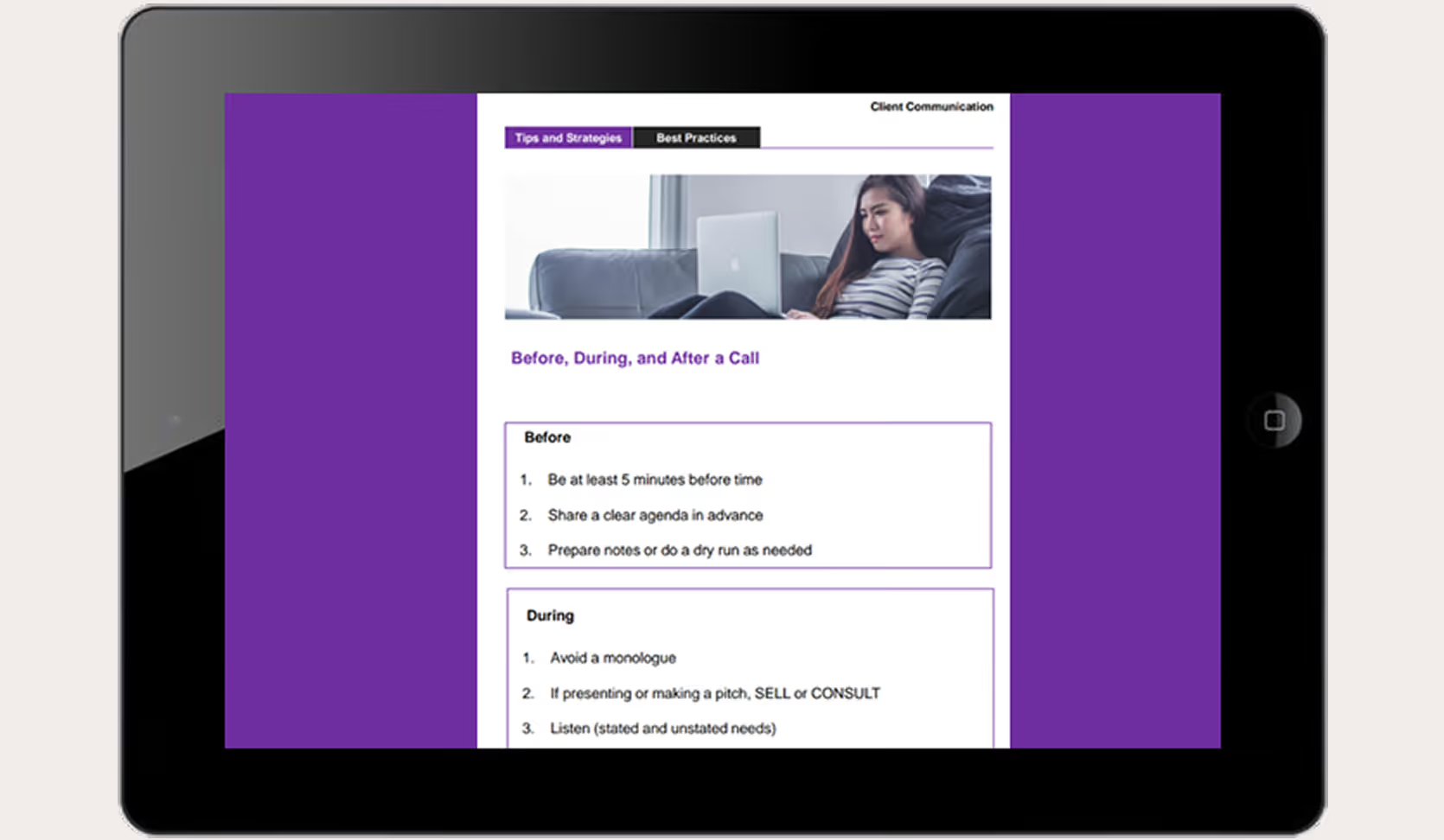
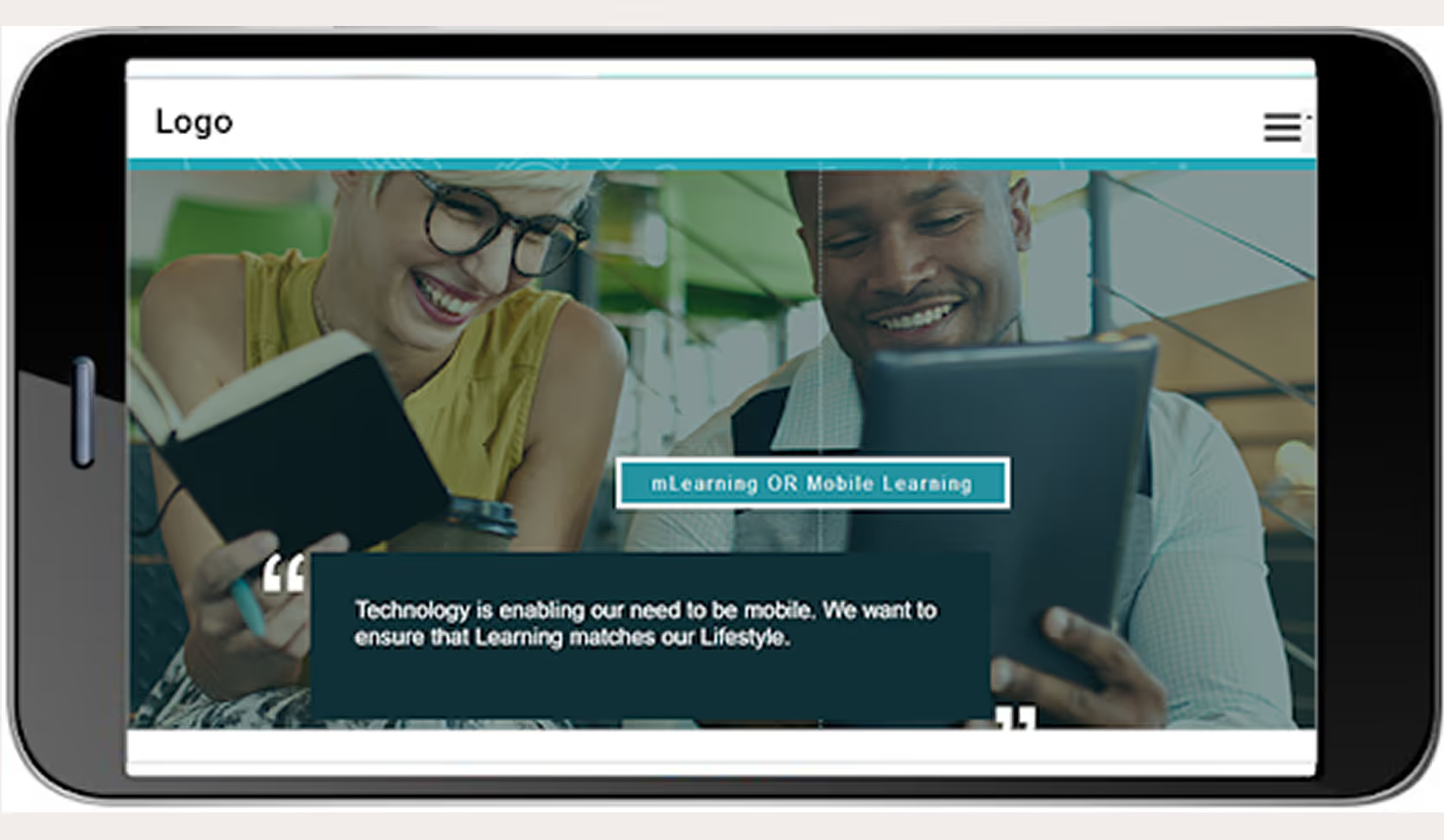
Performance Support Tools in Action
Practical examples demonstrating immediate workplace assistance enabling confident execution of complex tasks through intuitive digital job aids.
We’ve Helped Grow Hundreds of Companies.
Case studies from organizations building capability and performance with us.











FAQs
What are Performance Support Tools?
Performance support tools provide on-demand, context-specific assistance enabling employees to complete tasks without extensive prior training. Unlike traditional training delivered as separate events, these digital job aids embed guidance directly within workflows delivering information precisely when needed. Electronic performance support systems eliminate retention challenges by making information instantly accessible during task execution. This approach includes quick reference guides, mobile apps, interactive videos, infographics, and scenario simulations accessed at the moment of need reducing formal training costs while improving knowledge application rates.
How do performance support tools differ from traditional training?
Traditional training assumes employees will retain information until application while performance support provides information at the exact moment it's needed. Training occurs as scheduled events separate from work whereas performance support integrates into daily workflow. Formal programs teach broad concepts while performance support tools deliver task-specific, actionable guidance. Electronic performance support systems offer continuous access enabling learning in the flow of work rather than interrupting productivity for classroom sessions. This just-in-time approach reduces time spent searching for information and minimizes errors through precise, contextual guidance.
What types of organizations benefit most from Performance Support Tools?
Organizations with complex software systems, frequent process changes, high employee turnover, geographically dispersed workforces benefit significantly from PST implementation. Industries including healthcare, financial services, manufacturing, technology, retail leverage Performance Support Tools for compliance training, software adoption, operational procedures, customer service protocols. Companies implementing new enterprise systems realize substantial returns through reduced training time, improved user adoption, decreased support calls. Organizations requiring consistent execution across locations achieve standardization through centralized PST access.
How do you integrate PSTs into existing training programs?
Effective PST integration identifies formal training content suitable for on-demand reference, creating complementary job aids reinforcing key concepts. Strategic approach includes determining what employees must know before system release versus what can be supported through PST System access. Implementation involves mapping critical workflows, identifying decision points requiring guidance, developing relevant support resources. Post-training reinforcement through Performance Support Tools ensures knowledge retention, provides ongoing assistance as employees apply learning. Organizations typically reduce formal training duration while improving application outcomes through an integrated PST approach systematically.
What formats work best for PST delivery?
Optimal PST formats depend on task complexity, user context, device availability, organizational constraints. Simple procedural tasks benefit from quick reference guides, checklists, interactive PDFs. Complex decision-making requires scenario-based simulations, expert video guidance, branching decision trees. Mobile workers need offline-capable apps while desk-based employees access embedded support within applications. Video works well for demonstrating physical procedures while infographics excel at presenting relationships, workflows visually. Effective PSTs typically combine multiple formats addressing diverse learning preferences, task requirements, accessibility needs comprehensively.
How do you measure the effectiveness of Performance Support Tools?
PST effectiveness measured through task completion time reduction, error rate decreases, support call volume declines, training cost savings, employee satisfaction improvements. Organizations track job aid usage frequency, time-to-proficiency for new employees, productivity metrics comparing supported versus unsupported workers. User analytics reveal which PST System resources prove most valuable, identifying gaps requiring additional support. Business impact assessment includes reduced training delivery costs, faster system adoption rates, improved compliance rates. Regular feedback collection from employees ensures PSTs remain relevant, accessible, effective meeting evolving organizational needs continuously.


