






.avif)

Blended Learning Programs Delivering Flexible Training
Mix self-paced online learning, live virtual instruction, and on-the-job practice to deliver flexible training that meets learners where they are without compromising effectiveness.

When One Training Method Isn't Enough
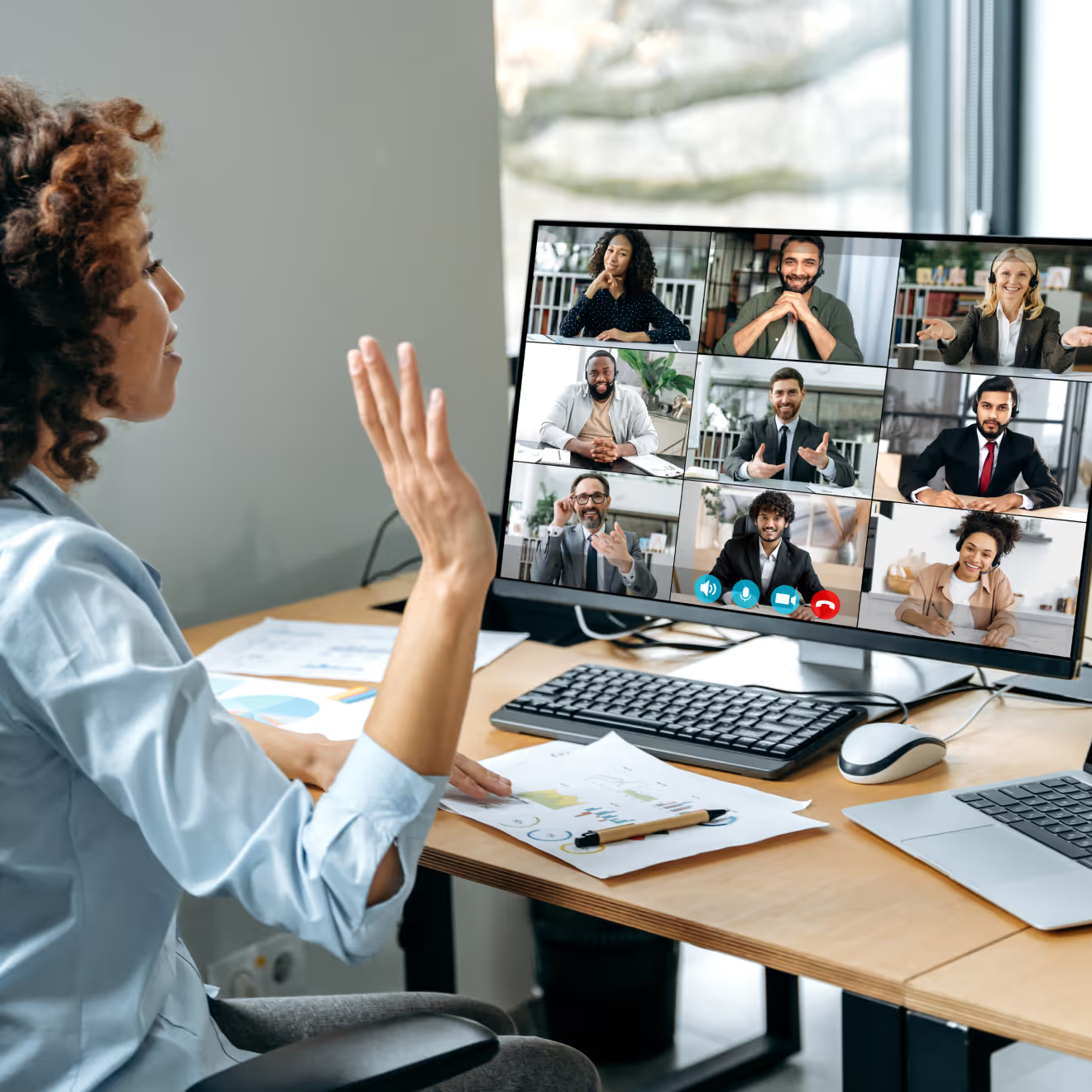
Organizations face a challenge: remote teams need flexibility, complex skills need guided practice, and busy schedules demand convenience. Pure eLearning lacks human interaction. Classroom-only training can't scale globally. Blended learning solves this by strategically combining online self-paced modules for foundational knowledge, live virtual sessions for guided practice and discussion, and performance support tools for on-the-job application. This approach delivers the flexibility of digital learning with the engagement of instructor-led training, creating comprehensive experiences that improve knowledge retention, skill application, and learner satisfaction across distributed workforces.
Expertise
Served
Served
Experts
Essential Components of Effective Blended Learning
Four core elements working together to create comprehensive learning experiences that stick and drive behavior change.
Self-Paced Online Learning
Video-based modules, interactive eLearning, and microlearning for foundational knowledge learners complete on their schedule before live sessions.
Live Virtual Instruction
Instructor-led sessions for guided practice, complex problem-solving, Q&A, and peer discussions building on pre-learned foundations.
Hands-On Practice
Real projects, simulations, role-plays, and on-the-job assignments applying learning to actual work situations with feedback.
Performance Support
Job aids, quick reference guides, video tutorials, and mobile tools providing just-in-time help at moment of need.

Four Proven Blended Learning Models
Different approaches for different training needs. Choose the model that matches your learning objectives and organizational constraints.



Advanced Strategies Maximizing Blended Learning Impact
Six approaches enhancing program effectiveness beyond basic format mixing creating truly transformative learning experiences.

Adaptive Learning Paths
Personalized journeys adjusting content difficulty and sequence based on learner performance enabling efficient skill development.

Gamification Integration
Game mechanics including points, badges, leaderboards, and challenges motivating participation and increasing engagement across all modalities.

Social Learning Integration
Peer collaboration through discussion forums, group projects, knowledge sharing, and community building extending learning beyond formal sessions.

Microlearning Reinforcement
Bite-sized content chunks delivered continuously after main training preventing knowledge decay through spaced repetition.

Real-World Application Projects
Authentic work projects applying learning directly to job responsibilities with feedback and coaching ensuring transfer.

Performance Analytics
Comprehensive tracking across all modalities measuring engagement, completion, assessment performance, and on-the-job application.
Adaptive Learning Paths
Personalized journeys adjusting content difficulty and sequence based on learner performance enabling efficient skill development.
Gamification Integration
Game mechanics including points, badges, leaderboards, and challenges motivating participation and increasing engagement across all modalities.
Social Learning Integration
Peer collaboration through discussion forums, group projects, knowledge sharing, and community building extending learning beyond formal sessions.
Microlearning Reinforcement
Bite-sized content chunks delivered continuously after main training preventing knowledge decay through spaced repetition.
Real-World Application Projects
Authentic work projects applying learning directly to job responsibilities with feedback and coaching ensuring transfer.
Performance Analytics
Comprehensive tracking across all modalities measuring engagement, completion, assessment performance, and on-the-job application.
Quantifiable Business and Learner Outcomes
Strategic blended learning implementation delivering improvements across training effectiveness and learner performance.


We’ve Helped Grow Hundreds of Companies.
Case studies from organizations building capability and performance with us.










FAQs
What is blended learning?
Blended learning combines multiple delivery methods including online self-paced modules, live instructor-led sessions, hands-on practice, and performance support tools into cohesive training programs. Unlike traditional single-format training, blended approaches strategically leverage each method's strengths: online modules for flexible foundational learning, live sessions for guided practice and clarification, hands-on practice for skill application, and job aids for on-the-job support. The key is strategic design: deciding which content works best in which format based on learning objectives, not just mixing formats randomly. Effective blended programs create seamless journeys where each component builds on previous learning, maximizing both efficiency and engagement across distributed workforces.
What are the most effective blended models for corporate training?
Effective models include flipped classroom, rotation model, flex model, and enriched virtual model. Model selection depends on training objectives, learner characteristics, and organizational constraints. Organizations typically pilot multiple approaches, gather feedback, and assess outcomes before standardization, ensuring each component serves specific learning objectives.
How do you design effective blended programs?
Effective design begins with analyzing learning objectives to determine which outcomes require live instruction versus self-paced study. The process involves mapping the learner journey, identifying optimal modality sequences, and incorporating pre-training awareness, immersive delivery, performance support, and post-training reinforcement systematically.
What technology platforms support blended programs delivery?
Comprehensive platforms include learning management systems for content delivery and tracking, virtual classroom tools for synchronous sessions, mobile applications for performance support, and collaboration platforms for social learning. Optimal solutions provide seamless experiences, single sign-on access, and comprehensive analytics.
How do you measure blended learning program effectiveness?
Measurement approaches include Kirkpatrick evaluation models, completion rates, assessment performance, time-to-proficiency metrics, and learner satisfaction surveys. Organizations compare these outcomes against traditional training to establish ROI and effectiveness improvements, enabling continuous program refinement.
What are common blended learning programs implementation challenges?
Common challenges include technology access barriers, learner time management, instructor preparation, and organizational change resistance. Successful implementation requires comprehensive change management, stakeholder communication, technical support, and phased rollout strategies. Proper planning and resource allocation mitigate implementation risks.


