






.avif)

Simulation Training for High-Stakes Decision-Making
Build critical judgment and skills through branching scenarios that replicate job challenges without real-world risk.

When Theoretical Training Leaves Teams Unprepared for Real Decisions
Lectures and manuals explain what to do, but they don't build the judgment needed when situations deviate from the script. Research shows hands-on practice in realistic environments enhances knowledge retention and accelerates skill mastery compared to passive learning methods. Simulation training creates controlled spaces where employees make decisions under pressure, see immediate consequences, and develop the pattern recognition that drives confident performance when facing actual workplace challenges.

Core Elements of Effective Simulation Training
Branching decision paths, immediate feedback, and consequence-based learning build job-ready skills.
Branching Decision Pathways
Multiple paths unfold based on learner choices, mirroring job complexity and decision consequences.
Realistic Scenario Design
Authentic workplace challenges with relatable characters, contexts, and situations build immediate relevance.
Intelligent Feedback Systems
Diagnostic feedback at decision points guides learners toward correct approaches and identifies improvement areas.
Risk-Free Practice Environment
Employees experiment, fail, and learn from mistakes without job consequences or customer impact.
Performance Benchmarking
Decision-making paths tie to skill sets, revealing proficiency gaps and areas for focused development.
Immersive Technology Integration
VR, AR, and interactive video frameworks enhance engagement and application to job tasks.
Nine Proven Simulation Approaches for Different Learning Objectives
Each simulation type addresses specific training needs, from emergency preparedness to technical mastery and strategic decision-making.

Live Simulations
Real-time, interactive scenarios replicating actual work situations where learners make decisions and respond to dynamic challenges as events unfold.

Computer-Based Simulations
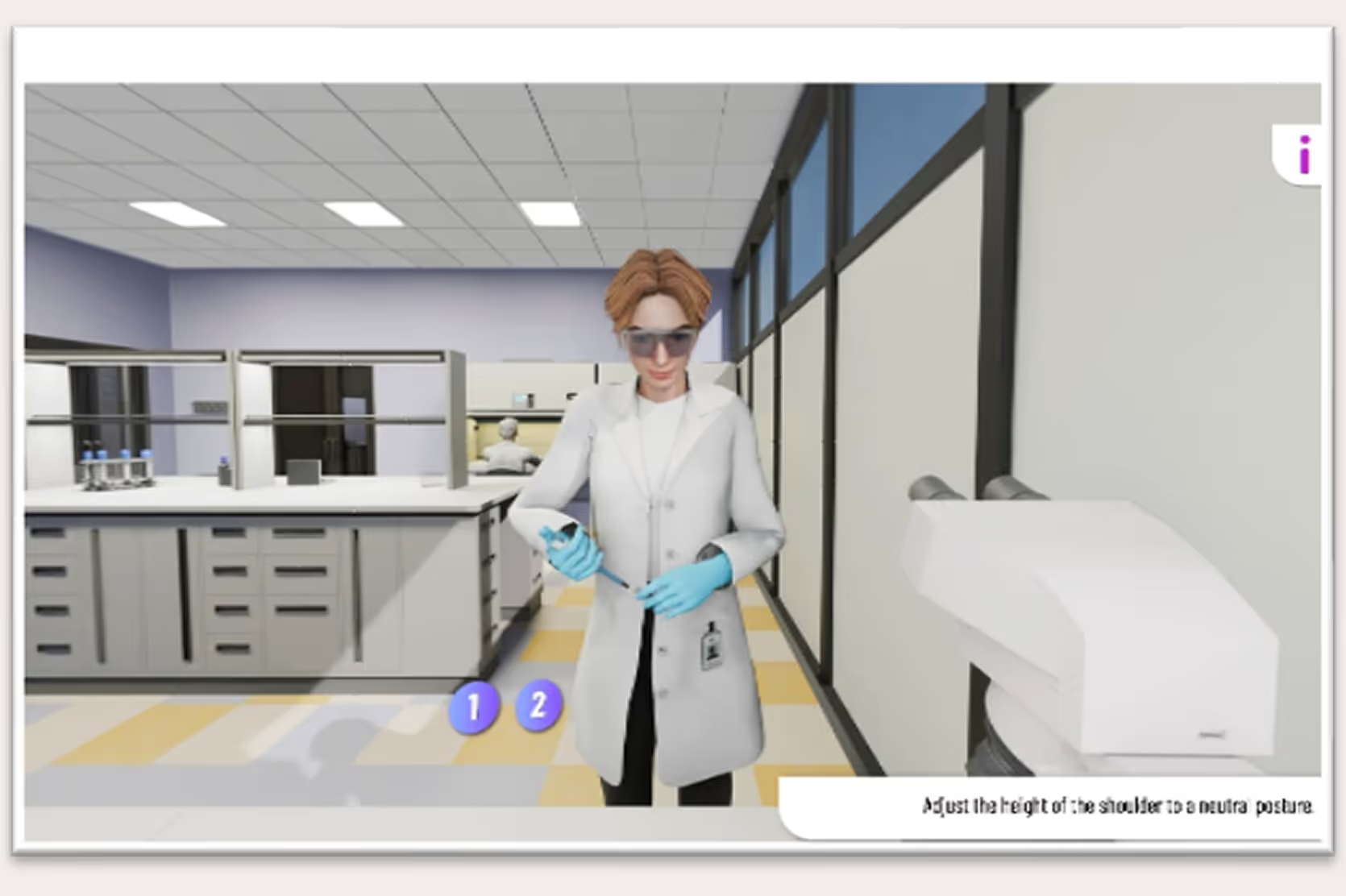
Digital environments allowing interaction with virtual scenarios, ranging from basic programs to sophisticated 3D simulations for procedural training.
%20Simulations.svg)
Virtual Reality (VR) Simulations
Fully immersive environments using VR headsets where learners experience scenarios as if physically present in realistic conditions.
%20Simulations.svg)
Augmented Reality (AR) Simulations
Digital information overlays on real-world environments, enhancing situational perception and providing real-time on-the-job guidance.

Scenario-Based Simulations
Specific situations and challenges where learners navigate decision points, solve problems, and experience consequences of their choices.

Role-Playing Simulations
Participants assume specific roles to practice communication and interpersonal interactions in controlled settings for skill development.

Serious Games
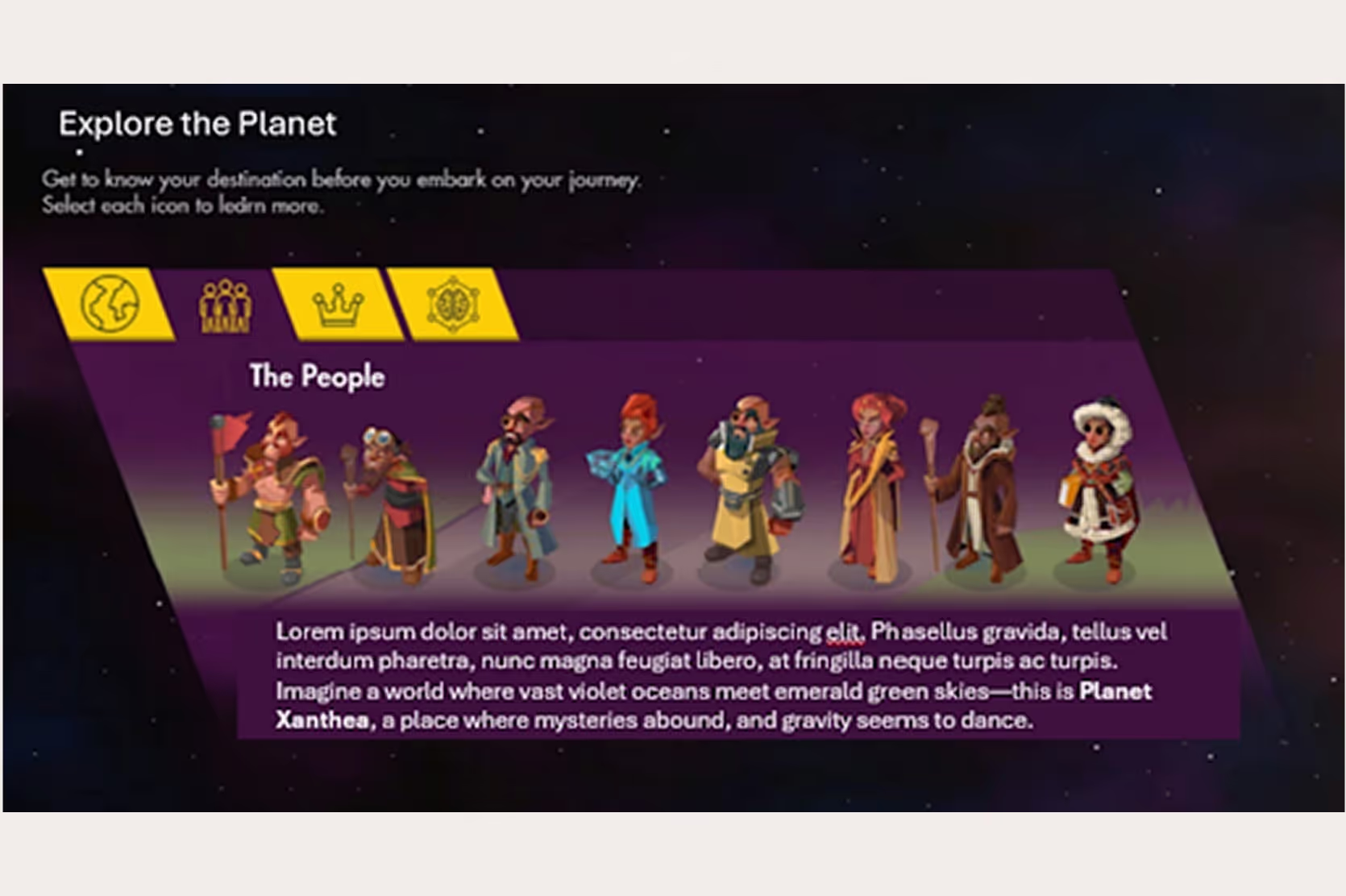
Interactive, engaging game environments incorporating competition, collaboration, and problem-solving with clear learning objectives and outcomes.

Hybrid Simulations
Combined approaches integrating multiple simulation types to create comprehensive learning experiences with both theoretical and practical elements.

Business Simulations
Strategic environments testing resource allocation, market dynamics, and operational decisions where participants experience complexity and choice consequences.
For comprehensive business strategy training, explore our TOPSIM business simulation solutions.
Live Simulations
Real-time, interactive scenarios replicating actual work situations where learners make decisions and respond to dynamic challenges as events unfold.
Computer-Based Simulations
Digital environments allowing interaction with virtual scenarios, ranging from basic programs to sophisticated 3D simulations for procedural training.
Virtual Reality (VR) Simulations
Fully immersive environments using VR headsets where learners experience scenarios as if physically present in realistic conditions.
Augmented Reality (AR) Simulations
Digital information overlays on real-world environments, enhancing situational perception and providing real-time on-the-job guidance.
Scenario-Based Simulations
Specific situations and challenges where learners navigate decision points, solve problems, and experience consequences of their choices.
Role-Playing Simulations
Participants assume specific roles to practice communication and interpersonal interactions in controlled settings for skill development.
Serious Games
Interactive, engaging game environments incorporating competition, collaboration, and problem-solving with clear learning objectives and outcomes.
Hybrid Simulations
Combined approaches integrating multiple simulation types to create comprehensive learning experiences with both theoretical and practical elements.
Business Simulations
Strategic environments testing resource allocation, market dynamics, and operational decisions where participants experience complexity and choice consequences.
For comprehensive business strategy training, explore our TOPSIM business simulation solutions.

How We Design Effective Simulation-based Learning
Expertise in branching logic, scenario design, and performance measurement creates impactful learning.





Measurable Results from Simulation Training
Organizations using simulation training see improvements in retention, confidence, and job performance.


See Simulation-based Learning Build Critical Skills
Branching scenarios and consequence-based learning that drive judgment and performance.
We’ve Helped Grow Hundreds of Companies.
Case studies from organizations building capability and performance with us.






FAQs
What is simulation training?
Simulation training is an experiential learning approach that replicates real-world scenarios for practice and skill development. Unlike passive instruction, simulations create interactive environments where learners make decisions, experience consequences, and build competence through hands-on practice. Research shows simulation training enhances knowledge retention, accelerates skill mastery, and reduces operational risks by allowing practice in controlled settings. The approach works across industries including healthcare, aviation, manufacturing, emergency response, and business management, addressing needs from technical procedures to strategic decision-making and interpersonal skills.
How do branching simulations work?
Learners face decisions with multiple response options, each leading to different paths and outcomes. Intelligent algorithms guide toward success while allowing exploration of failure consequences with immediate feedback.
What training needs benefit from simulation-based learning?
High-stakes decisions, complex procedures, customer interactions, conflict resolution, sales skills, compliance scenarios, and technical training. Any task requiring judgment, critical thinking, or adaptive responses benefits significantly.
How are simulations different from scenarios?
They create interactive environments where learners actively make decisions affecting outcomes through branching paths. Scenarios present situations for analysis but typically offer less interactivity and consequence-based learning.
How is simulation effectiveness measured?
Analytics track decision quality, path selection, completion rates, and performance benchmarks. Critical measures include skill acquisition speed, confidence improvements, and on-the-job application versus pre-training baselines.
Can simulations integrate with other learning formats?
Yes, they combine effectively with gamification, storytelling, video, VR/AR, and microlearning. Multi-format approaches maximize engagement and cater to diverse learning styles across global audiences.


