






.avif)

Informal Learning in the Workplace Enables Continuous Development
Spontaneous, self-directed learning solutions enabling knowledge sharing, peer collaboration, and just-in-time support through digital social spaces driving performance, engagement, and continuous improvement.

From Structured Training to Continuous Learning Culture
Organizations struggle capturing valuable learning happening outside formal training programs limiting knowledge transfer, collaboration, and continuous improvement. Informal learning in the workplace harnesses spontaneous learning through daily experiences, peer interactions, and self-directed exploration. Our informal learning at work solutions create digital social spaces, knowledge repositories, and collaborative platforms enabling employees to learn on-demand, share insights, and access just-in-time support. It complements formal training within 70:20:10 model where 70% learning is experiential, 20% social, and only 10% formal. Strategic approach transforms scattered learning moments into systematic capability building fostering culture where learning becomes continuous, embedded in daily work, accessible to all.

Key Learning Formats to Foster Informal Learning in the Workplace
Learning formats addressing collaboration, knowledge sharing, and continuous development for engaged, high-performing workforces.
Digital Social Learning Spaces
Create platforms where employees ask questions, share feedback, curate content, and collaborate enabling continuous knowledge exchange beyond formal training boundaries.
Just-in-Time Learning Aids
Provide on-demand access to performance support tools, job aids, quick reference guides, and interactive PDFs enabling learners to access knowledge exactly when needed.
Peer Collaboration & Mentoring
Facilitate informal mentoring relationships, peer learning circles, cross-functional interactions enabling knowledge transfer through observation, discussion, and shared experiences.
Knowledge Curation & Sharing
Enable learners to curate, contribute, share learning materials, insights, and best practices building collaborative knowledge base owned by employees themselves.
Extended Learning Solutions
Provide ongoing practice, evaluation, follow-up opportunities beyond moment-in-time training enabling continuous skill development through workplace application.

How We Enable Informal Learning Success
Expert implementation helping social learning enhance teamwork, enable knowledge exchange, and promote ongoing improvement establishing vibrant learning cultures and performance gains.




Why Organizations Choose Informal Learning
Measurable improvements in engagement, collaboration, and knowledge retention when deploying learning solutions.


See Informal Learning Through Technology in Action
Discover how informal learning strategies enable spontaneous, on-demand knowledge access supporting employees in the flow of work.
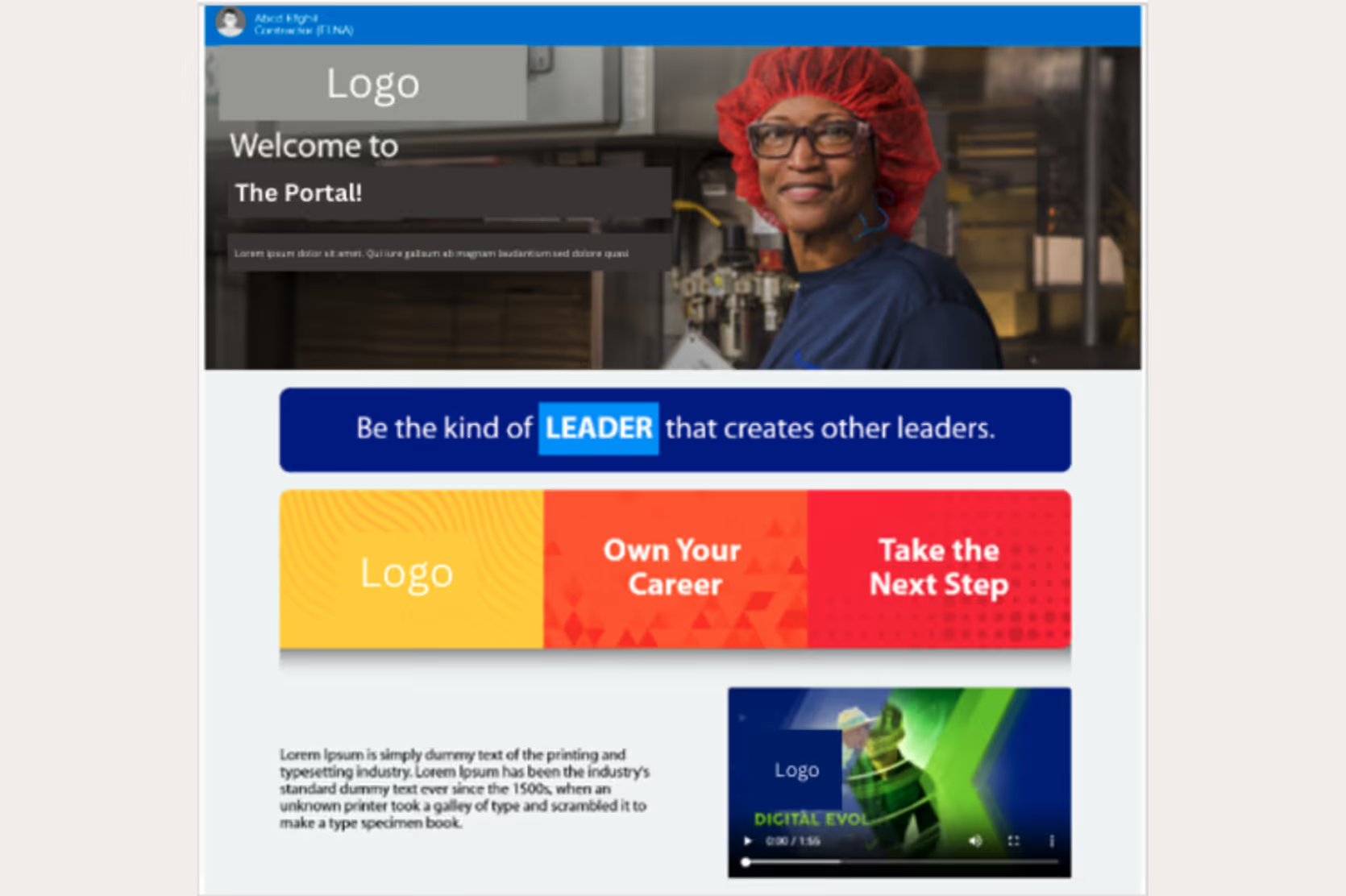
We’ve Helped Grow Hundreds of Companies.
Case studies from organizations building capability and performance with us.










FAQs
What is informal learning in the workplace?
Informal learning in the workplace is spontaneous, self-directed learning occurring outside formal training frameworks through daily experiences, peer interactions, and workplace activities. Unlike structured formal learning, this format of learning at work is driven by learners' intrinsic motivation, happening organically through observation, collaboration, and problem-solving enabling employees to acquire knowledge, skills at their own pace based on immediate needs and interests.
How does it differ from formal learning?
Formal learning is structured, curriculum-based, and managed by L&D teams with defined outcomes and assessments. This form of learning in the workplace is spontaneous, learner-driven, happening through daily interactions, peer collaboration, and self-exploration. Formal comprises 10% of learning in 70:20:10 model while informal supports the experiential 70% and social 20%, making it vital for continuous professional development.
How can organizations support this form of learning in the workplace?
Organizations support this form at work by creating digital social learning spaces, providing knowledge repositories, and facilitating peer mentoring, enabling content curation platforms. Establish forums for knowledge exchange, offer just-in-time learning aids, recognize knowledge sharing in performance reviews, and highlight success stories through newsletters ensuring it becomes embedded in organizational culture and daily workflows.
What role does informal learning play in the 70:20:10 model?
It comprises the majority of the 70:20:10 model: 70% experiential learning through on-job experiences and 20% social learning from peers. Only 10% is formal training. This form of learning finds space in experiential, social components making it essential for supporting formal training, enhancing effectiveness, and driving continuous skill development across organizations.
Can it be measured or tracked?
Yes, though differently than formal training. Measure this form of learning in the workplace through engagement in social platforms, knowledge base contributions, peer feedback frequency, problem resolution speed, and innovation metrics. L&D teams track participation in forums, content curation activities, peer mentoring relationships, and application of shared knowledge providing insights into impact.
How does technology enable this type of learning at work?
Technology enables it through learning portals, collaboration platforms, social networks, and mobile apps providing on-demand access to knowledge. Digital tools facilitate forums, content sharing, virtual mentoring, and communities of practice. Cloud-based platforms enable asynchronous collaboration, just-in-time learning aids, and knowledge curation ensuring it scales across distributed workforces effectively.


