





.avif)

Immersive Virtual Tours
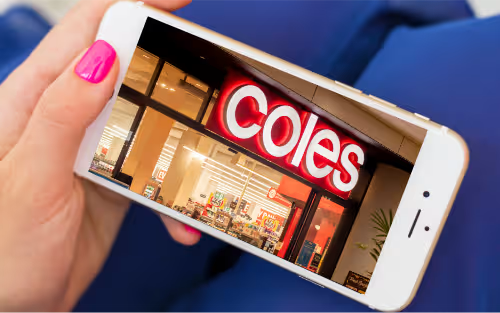
360-degree virtual tours enabling immersive exploration of physical locations, retail environments, facilities, and museums through 3D virtual tours accessible from anywhere on any device.

From Costly Site Visits to Scalable Virtual Exploration
Organizations struggle with high costs, time constraints, geographic limitations of physical site visits restricting employee training, onboarding, and knowledge transfer. Virtual Tours eliminate barriers through immersive 360 virtual tours enabling employees to explore retail stores, manufacturing facilities, museums, campuses, and job sites from anywhere. Our 3D tours capture complete environments using specialized 360-degree cameras creating seamless, interactive experiences with guided navigation, video hotspots, and text annotations. World tours support distributed teams, accelerate onboarding, and reduce travel expenses while delivering engaging virtual visit 360 experiences. Whether virtual tours for cultural training or retail store explorations for sales teams, tours provide cost-effective, scalable, and accessible learning solutions ensuring employees gain essential knowledge without physical presence requirements.
Expertise
Served
Served
Experts
Core Features of Virtual Tours
Comprehensive 360 tours features addressing remote exploration, training accessibility, and knowledge transfer through immersive, interactive 3D experiences.
360-Degree Immersive Capture
Specialized cameras capture complete environments from multiple angles creating seamless 360 tours enabling exploration from any viewing position.
Guided Navigation Paths
Pre-defined routes guide learners through key areas highlighting important locations, products, and equipment ensuring structured learning while allowing self-directed exploration.
Interactive Hotspots & Media
Video, text, and image hotspots strategically placed providing additional insights, expert guidance, and detailed information enhancing learning through contextual multimedia content.
Multi-Device Accessibility
Access tours on desktop, laptop, tablet, smartphone, and VR headsets ensuring flexible learning experiences across devices for distributed workforces.
Interactive Layouts & Maps
Comprehensive layout maps show physical arrangements, highlight key departments, and enable direct navigation to specific sections supporting structured, efficient exploration.
SCORM-Enabled LMS Integration
Virtual training delivered through LMS platforms via SCORM packages enabling tracking, reporting, and seamless integration with existing learning management systems.

Some Use Cases of Virtual Tours in L&D
Flexible deployment approaches from web-based tours to VR immersive experiences supporting diverse organizational training needs across industries.




Why Organizations Choose Immersive Training
Measurable improvements in training accessibility, cost reduction, and knowledge retention when deploying immersive 360 virtual training solutions.


See Virtual Tours in Action
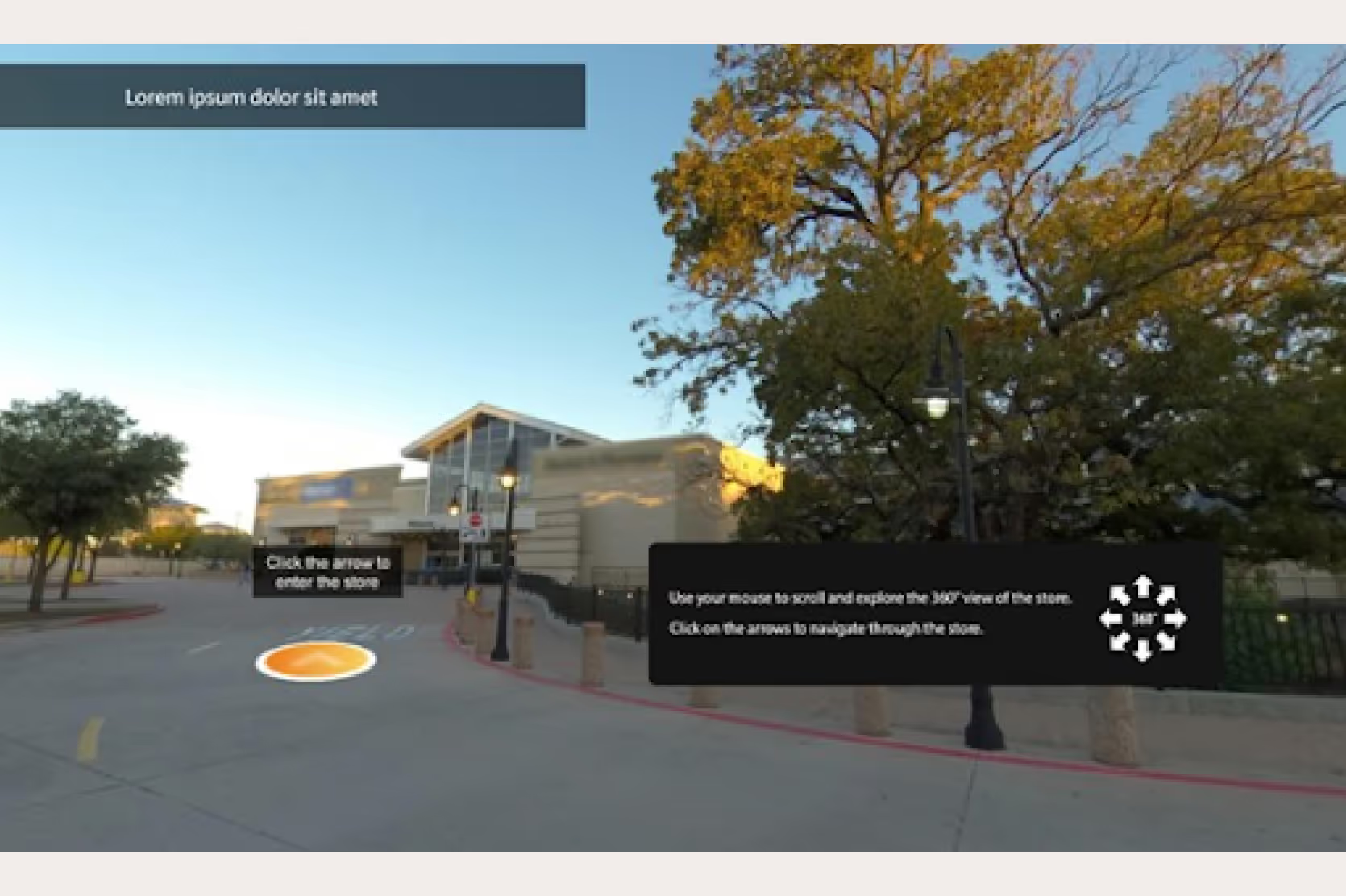
Explore how 360 virtual tours deliver immersive learning experiences in a retail environment.


FAQs
What are virtual tours?
Virtual tours are immersive 360-degree digital experiences enabling the remote exploration of physical locations through specialized camera captures. These 3D tours allow users to navigate environments as if physically present, accessing spaces, viewing details, and exploring layouts from any device. World tours support training, onboarding, and site familiarization without travel requirements making learning accessible, cost-effective, and scalable.
How do these tours benefit employee training?
These tours eliminate travel costs, time constraints, and geographic barriers enabling distributed teams to access training. Employees gain an understanding of retail stores, manufacturing facilities, and office campuses without physical visits. 360 tours accelerate onboarding, improve knowledge retention through immersive experiences, and provide flexible learning accessible anytime, anywhere. Organizations achieve faster training deployment, reduced expenses, and consistent learning experiences across global workforces.
What technology is required to access these tours?
These tours are accessible through standard web browsers on desktop, laptop, tablet, and smartphone devices requiring no special software. For enhanced immersion, VR headsets like Oculus provide fully immersive experiences. Tours can be delivered via SCORM packages through LMS platforms enabling tracking and reporting. This multi-platform accessibility ensures all employees can access training regardless of device availability or technical constraints.
How are these tours created?
These tours are created using specialized 360-degree cameras capturing complete environments from multiple angles. Images are stitched together creating seamless navigable experiences. Navigation arrows enable movement between locations while interactive hotspots provide videos, text annotations, and additional information. Guided paths highlight key areas ensuring structured learning. The entire process ensures immersive, intuitive, and engaging virtual visit 360 experiences optimized for learning outcomes.
What types of environments work best for these tours?
These tours excel for retail stores, manufacturing facilities, office campuses, museums, job sites, warehouses, showrooms, and educational institutions. Any physical environment requiring employee familiarization, safety training, operational understanding, or cultural awareness benefits from 360 tours. Ideal applications include sales training, onboarding, compliance training, equipment familiarization, and process understanding where physical site access is costly, impractical, or impossibl
Can these tours track learner progress and engagement?
Yes, these tours delivered through SCORM packages integrate with LMS platforms enabling comprehensive tracking of learner progress, completion rates, time spent, and hotspot interactions. Analytics provide insights into engagement patterns, knowledge gaps, and learning behaviors. Organizations measure training effectiveness, identify areas needing additional support, and demonstrate ROI. Reporting capabilities ensure accountability while supporting continuous improvement of virtual tour learning experiences and training programs.


