






.avif)

Immersive Learning Experiences Through VR
Experience reality before it happens. Complete VR immersion for employees to practice complex situations safely through virtual training solutions.

From Viewing to Experiencing
Immersive learning experiences place employees inside realistic virtual environments where they practice skills through complete engagement. VR learning transforms passive presentations into emotional experiences through full immersion. Employees navigate virtual spaces with real spatial awareness, solve problems interactively, and experience consequences of decisions without real-world risks. VR employee training works on headsets, smartphones, tablets, and desktops. Accessible anywhere without app installation. Virtual training solutions for high-risk scenarios, technical procedures, soft skills practice, and compliance training.

How Immersive Learning Experiences Work
Flexible VR learning technology that adapts to training requirements and devices.
Universal Device Access
Works on VR headsets, smartphones, tablets, and desktops. Employees access virtual training solutions anywhere without app installation.
Real 360° Environments
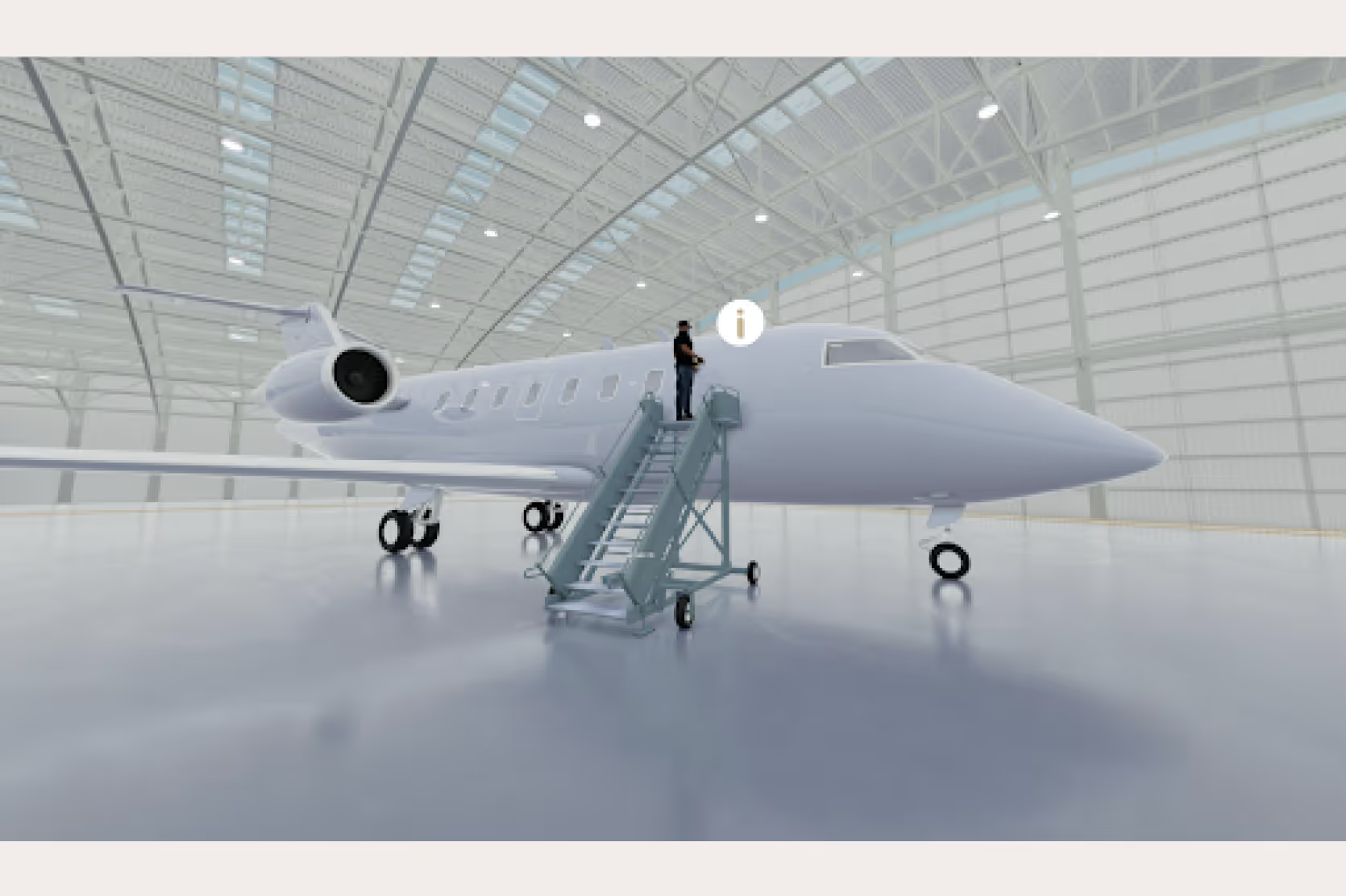
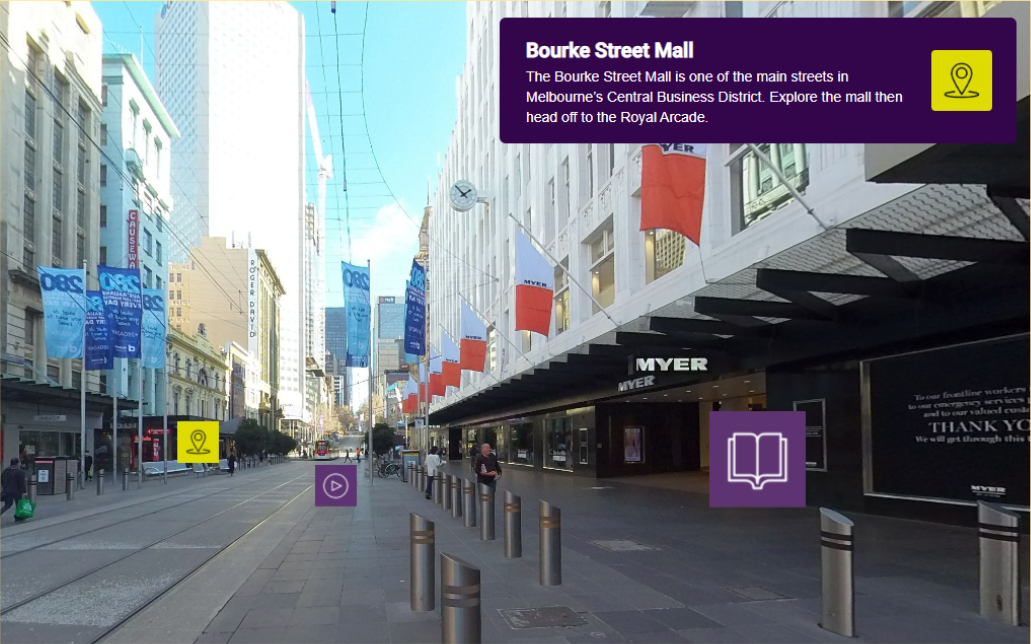
Complete immersion through 360° recordings of real environments or digital 3D models for maximum realism and engagement.
Interactive Navigation
Choose between passive video experiences or interactive tours with free navigation, controlling difficulty and engagement depth.
Customizable Scenarios
Tailored VR training programs matching specific industry needs, company processes, and learning objectives.
Performance Analytics
Track employee progress, measure skill development, identify improvement areas, and demonstrate VR learning effectiveness.
VR Training Programs Across Skills
From technical procedures to soft skills, practice critical scenarios through immersive learning experiences.

High-Risk Safety Scenarios
Practice emergency procedures, hazardous situations, evacuation protocols, and crisis responses in safe virtual environments.

Technical Skills & Procedures
Train on equipment operation, maintenance protocols, assembly processes, and complex procedures through VR learning.

Soft Skills Development
Practice presentations, difficult conversations, customer interactions, conflict resolution, and leadership scenarios.

Compliance & Regulatory Training
Experience workplace safety protocols, regulatory procedures, ethical scenarios, and compliance requirements immersively.

Customer Service Excellence
Handle complaints, practice empathy, manage difficult customers, and refine service techniques through VR employee training.

Medical & Healthcare Training
Practice patient interactions, emergency procedures, diagnostic protocols, and treatment techniques safely.
High-Risk Safety Scenarios
Practice emergency procedures, hazardous situations, evacuation protocols, and crisis responses in safe virtual environments.
Technical Skills & Procedures
Train on equipment operation, maintenance protocols, assembly processes, and complex procedures through VR learning.
Soft Skills Development
Practice presentations, difficult conversations, customer interactions, conflict resolution, and leadership scenarios.
Compliance & Regulatory Training
Experience workplace safety protocols, regulatory procedures, ethical scenarios, and compliance requirements immersively.
Customer Service Excellence
Handle complaints, practice empathy, manage difficult customers, and refine service techniques through VR employee training.
Medical & Healthcare Training
Practice patient interactions, emergency procedures, diagnostic protocols, and treatment techniques safely.
Why Organizations Choose Immersive Learning Experiences
Measurable improvements in focus, retention, performance, and confidence through VR employee training.


Immersive Learning Experiences in Action
Organizations improving safety, competency, and performance through virtual training solutions.

We’ve Helped Grow Hundreds of Companies.
Case studies from organizations building capability and performance with us.



FAQs
What are immersive learning experiences?
Immersive learning experiences use VR learning technology to place employees inside realistic virtual environments where they practice skills through complete sensory engagement. Unlike traditional training that relies on passive observation, virtual training solutions provide hands-on experiences through VR headsets or mobile devices. Employees navigate 360° environments, interact with objects, make decisions, and experience consequences safely. VR employee training works for high-risk scenarios impossible to practice otherwise, technical procedures requiring repetition, soft skills needing realistic interactions, and compliance training requiring experiential understanding. Research shows immersive learning experiences create 4x more focus than e-learning and 40% performance improvement compared to traditional methods.
How is VR learning different from traditional training?
VR learning provides experiential practice through complete immersion rather than passive information delivery. Employees physically engage with virtual environments through spatial awareness and interactive navigation. Virtual training solutions allow unlimited practice of dangerous scenarios without risks, expensive procedures without equipment costs, and rare situations without waiting for real occurrences. Traditional training relies on lectures, videos, or classroom exercises that don't replicate real emotional engagement or muscle memory development. Immersive learning experiences engage multiple senses simultaneously, creating stronger memory associations and better skill transfer. Research shows VR employee training delivers 75% knowledge retention compared to 10% from reading and 5% from lectures.
What types of skills work best for VR training programs?
VR training programs excel for skills requiring spatial awareness, procedural repetition, emotional engagement, or risk-free practice. Technical skills like equipment operation, maintenance procedures, and assembly processes benefit from hands-on virtual practice. Safety training for emergency responses, hazardous situations, and evacuation procedures works well through immersive learning experiences. Soft skills including presentations, difficult conversations, customer service, and leadership scenarios require realistic interactions VR provides. Medical training for surgeries, patient interactions, and diagnostic procedures benefits from consequence-free practice. Compliance training becomes experiential rather than theoretical. Any skill where traditional training lacks realism, carries risks, or requires expensive equipment benefits from virtual training solutions.
Do employees need special equipment for VR employee training?
No, virtual training solutions work across devices. Full immersion requires VR headsets providing complete spatial awareness and physical engagement. However, VR learning also works on smartphones, tablets, and desktops for broader accessibility. Organizations choose device approaches based on training intensity needs and budget. High-risk technical training typically uses headsets for maximum immersion. Soft skills and compliance training may work effectively on mobile devices. Most platforms don't require app installation. Employees access through browsers. This flexibility allows organizations to start VR training programs with existing devices before investing in headsets. As comfort and results grow, many expand to dedicated VR hardware for specific applications.
Can VR training programs work for remote employees?
Yes, immersive learning experiences are ideal for distributed workforces. Employees access virtual training solutions from any location with internet connectivity. VR learning eliminates travel requirements for centralized training facilities while maintaining consistent quality across locations. Remote workers practice procedures in virtual replicas of actual work environments. Cloud-based platforms enable simultaneous global training deployments. This approach became especially valuable as remote work increased, allowing organizations to maintain experiential training effectiveness without in-person sessions. VR employee training provides standardized experiences whether employees work from home offices, field locations, or international sites. Organizations report faster onboarding and competency development for remote teams through virtual training solutions.


