






.avif)


When Real-World Training Is Too Risky or Expensive
Some skills can't be taught in classrooms. Equipment operators need to practice on machinery without risking damage. Healthcare workers must rehearse procedures without endangering patients. Field technicians require guidance while working on live equipment. Virtual reality learning and immersive learning uses AR, VR, and 360° environments to give employees the hands-on practice they need when real-world training is too risky, costly, or logistically impossible.
Proven Impact
Served
Served
Experts
Comprehensive Immersive Learning Portfolio
From AR and VR to full metaverse environments, our immersive learning solutions address different training challenges.
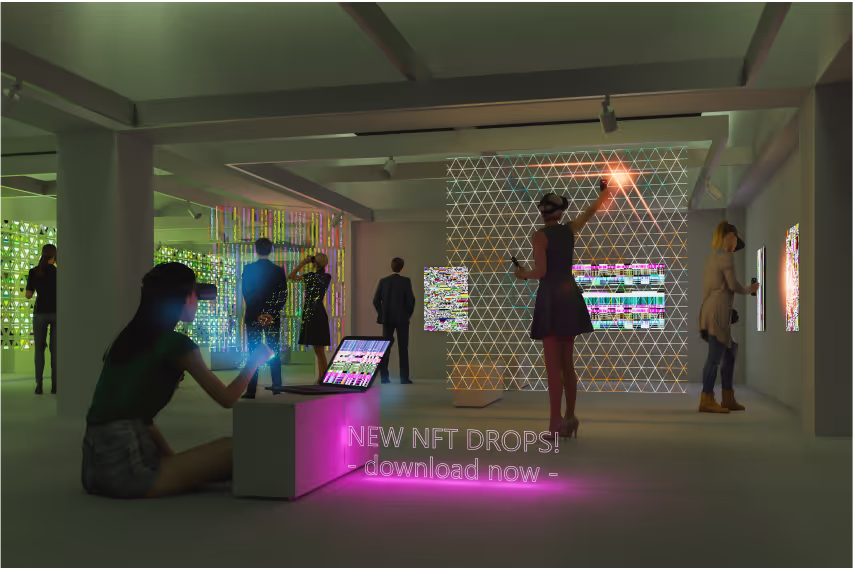
Core Elements of Effective Immersive Learning
VR, AR, and MR technologies that replicate workplace scenarios for safer, faster skill development.

Risk-Free Simulations
Practice dangerous procedures in safe virtual environments without real-world consequences.

Interactive 360° Environments
Explore realistic spaces with embedded hotspots, quizzes, and decision points.

Real-Time Feedback
Immediate responses to learner actions and decisions during simulations.

Multi-Device Access
Works on smartphones, tablets, desktops, and VR headsets without specialized hardware requirements.

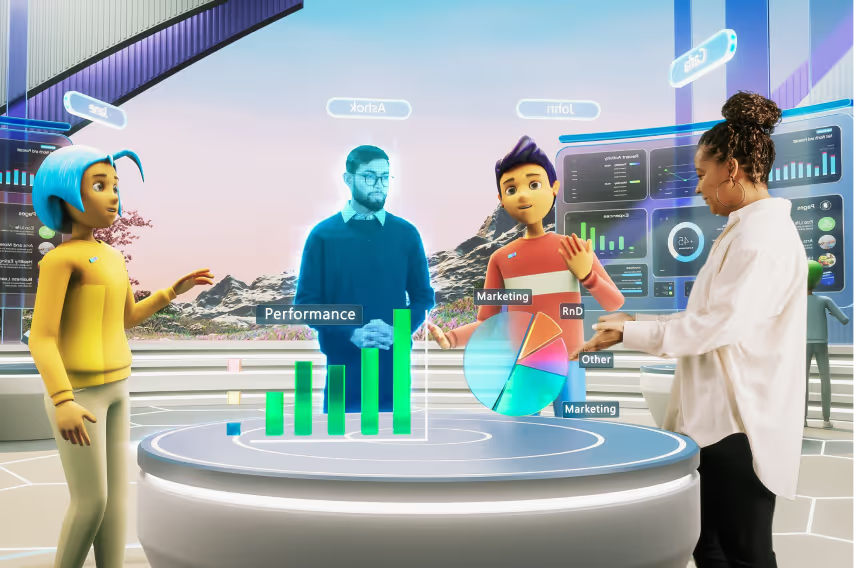
Avatar-Based Collaboration
Digital representations enable team training across distributed locations.

Performance Analytics
Virtual reality learning analytics offer insights into learner behavior and skill mastery.

AI-Powered Adaptive Learning
Intelligent systems adjust difficulty, provide personalized feedback, and create dynamic conversation scenarios.
Risk-Free Simulations
Practice dangerous procedures in safe virtual environments without real-world consequences.
Interactive 360° Environments
Explore realistic spaces with embedded hotspots, quizzes, and decision points.
Real-Time Feedback
Immediate responses to learner actions and decisions during simulations.
Multi-Device Access
Works on smartphones, tablets, desktops, and VR headsets without specialized hardware requirements.
Avatar-Based Collaboration
Digital representations enable team training across distributed locations.
Performance Analytics
Virtual reality learning analytics offer insights into learner behavior and skill mastery.
AI-Powered Adaptive Learning
Intelligent systems adjust difficulty, provide personalized feedback, and create dynamic conversation scenarios.

How We Design Immersive Learning Solutions
Proven methodology combining technology expertise with learning science.

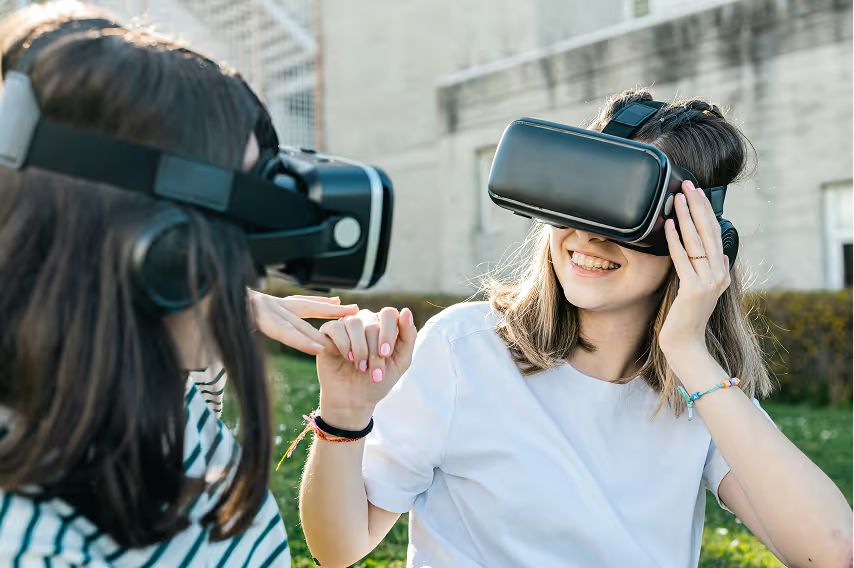



Flexible Delivery Across Devices
Choose solutions based on your hardware availability and deployment needs.
No Wearables Required
Browser-Based
Access VR, AR, and 360° experiences through standard web browsers on any device without installation.
Mobile Devices
Smartphone and tablet-ready AR and 360° content without app downloads or specialized equipment.
Wearables Available
VR Headsets
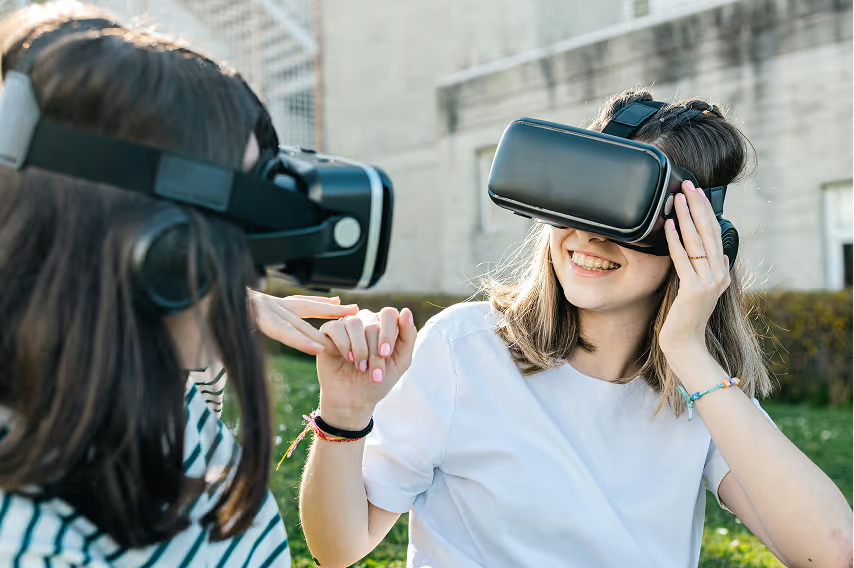
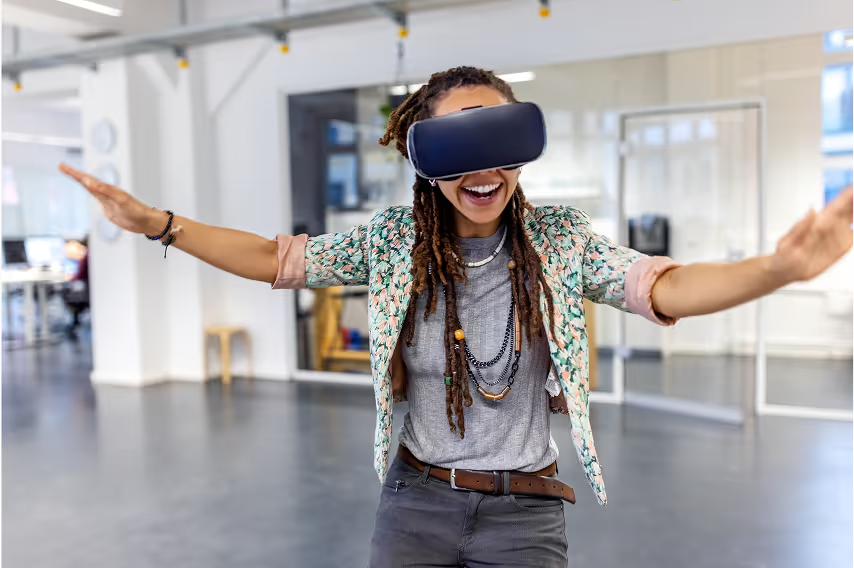
Full immersion experiences on Meta Quest, HTC Vive, and enterprise VR platforms for high-stakes training.
AR Glasses
Hands-free AR overlays on smart glasses for on-the-job guidance while working.
Haptic Controllers and Gloves
Touch feedback devices that simulate physical sensations for equipment operation and assembly training.
Sensory Devices
Advanced setups with motion tracking, spatial audio, and environmental effects for maximum realism.
Measurable Results from Immersive Training
Organizations using immersive training see significant improvements in safety, productivity, and business performance.





FAQs
What is immersive learning?
Immersive learning uses extended reality (XR) technologies including virtual reality (VR), augmented reality (AR), and mixed reality (MR) to create realistic simulated environments for training. Learners practice skills, make decisions, and experience consequences in risk-free settings that replicate real workplace scenarios. This experiential approach drives higher engagement, better retention, and lasting behavioral change compared to traditional training methods.
What's the difference between VR, AR, and MR?
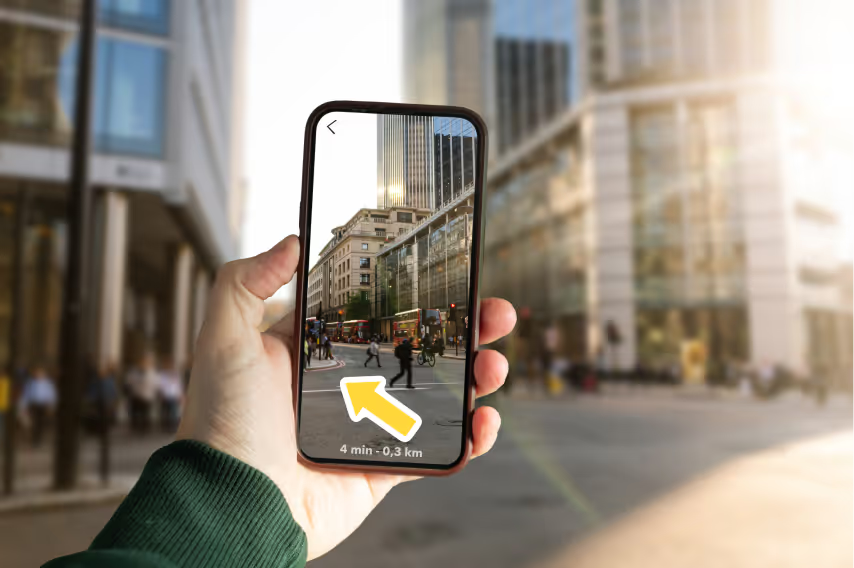
VR creates fully digital environments, AR overlays digital content onto reality, and MR combines both. Each serves different training purposes based on learning objectives and workplace requirements.
Which immersive solution is right for my organization?
Solution selection depends on learning objectives, risk levels, and deployment requirements. AR/MR works best for on-the-job guidance and equipment training. Virtual reality learning suits high-risk procedures and complex simulations. Virtual tours excel for facility familiarization and remote inspections. Learning metaverse enables collaborative global training. Experience centers showcase capabilities at scale. Organizations often combine multiple immersive training approaches for comprehensive training ecosystems.
What training benefits most from immersive training?
Safety protocols, equipment operation, technical procedures, emergency response, and soft skills training. Healthcare, manufacturing, aviation, and logistics industries see exceptional results.
Do learners need expensive VR headsets?
Not necessarily. Browser-based immersive solutions work on standard smartphones, tablets, and computers without specialized hardware or installation. Mobile AR leverages existing devices for accessible, scalable deployment. Full VR headsets are reserved for scenarios requiring complete immersion, such as safety training or complex technical procedures. Organizations typically start with browser-based and mobile solutions before investing in headset infrastructure.
How is effectiveness measured?
Analytics track simulation performance, decision quality, and knowledge retention. Job metrics show error reduction, fewer safety incidents, and productivity improvements versus traditional training.


