






.avif)

Compliance Training That Builds Culture
Move beyond click-through modules. Deliver workplace compliance training that employees remember, apply, and connect to real risks through engaging online formats.

When Training Becomes a Checkbox Exercise
Research shows most employees forget compliance content within weeks of completion. Generic click-through slides fail to prepare teams for real risks like phishing attacks, harassment situations, data breaches, or AI misuse. Employees see outdated scenarios disconnected from their actual work and disengage. Meanwhile, compliance requirements grow more complex. Effective training for employees addresses this gap through role-specific scenarios, embedded learning in workflows, continuous reinforcement beyond annual sessions, and engaging formats that connect policies to actual workplace situations.

What Makes Compliance Training Effective
Capabilities that drive behavior change and build culture beyond check-the-box completion.
Role-Specific Risk Scenarios
Tailor workplace training to actual situations employees face in their jobs.
Consequence-Based Learning
Practice decision-making through realistic scenarios where choices have outcomes.
Point-of-Need Reinforcement
Embed compliance reminders within workflows at critical moments.
Continuous Knowledge Updates
Push timely updates on new requirements without waiting for annual training cycles.
Behavioral Analytics
Track not just completion but actual understanding, decision patterns, and application in scenarios.
Cultural Integration
Connect compliance requirements to organizational values and ethical principles.
Comprehensive Workplace Compliance Training Coverage
Addressing the full spectrum of regulatory requirements and risk areas.

Anti-Harassment & Discrimination
Prevention training on sexual harassment, workplace discrimination, retaliation, and creating inclusive environments. State-mandated and best-practice programs.

Data Privacy & Protection
GDPR, CCPA, and industry-specific data regulations. Training on handling sensitive information, consent protocols, breach response, and privacy rights.

Cybersecurity Awareness
Phishing detection, password security, social engineering, remote work safety, and protecting company assets from cyber threats through employee vigilance.

Ethics & Code of Conduct
Organizational values, ethical decision-making, conflicts of interest, gifts and entertainment policies, and maintaining integrity in business practices.

Financial Compliance
Anti-bribery, anti-money laundering (AML), know-your-customer (KYC), expense reporting, and financial controls for regulated industries.

AI & Technology Use
Responsible AI usage, copyright risks, data leakage prevention, bias mitigation, and ethical considerations for generative AI tools in the workplace.

Health & Safety
Workplace safety protocols, hazard identification, emergency procedures, and OSHA requirements for maintaining safe work environments.

Third-Party Risk
Vendor compliance, supply chain ethics, contractor oversight, and managing risks introduced by external business relationships and partnerships.
Anti-Harassment & Discrimination
Prevention training on sexual harassment, workplace discrimination, retaliation, and creating inclusive environments. State-mandated and best-practice programs.
Data Privacy & Protection
GDPR, CCPA, and industry-specific data regulations. Training on handling sensitive information, consent protocols, breach response, and privacy rights.
Cybersecurity Awareness
Phishing detection, password security, social engineering, remote work safety, and protecting company assets from cyber threats through employee vigilance.
Ethics & Code of Conduct
Organizational values, ethical decision-making, conflicts of interest, gifts and entertainment policies, and maintaining integrity in business practices.
Financial Compliance
Anti-bribery, anti-money laundering (AML), know-your-customer (KYC), expense reporting, and financial controls for regulated industries.
AI & Technology Use
Responsible AI usage, copyright risks, data leakage prevention, bias mitigation, and ethical considerations for generative AI tools in the workplace.
Health & Safety
Workplace safety protocols, hazard identification, emergency procedures, and OSHA requirements for maintaining safe work environments.
Third-Party Risk
Vendor compliance, supply chain ethics, contractor oversight, and managing risks introduced by external business relationships and partnerships.

Learning Strategy Options
Flexible approaches matching content complexity, organizational needs, and learner preferences for impact.






Impact That Matters
Full coverage across Anti-Harassment, Data Privacy, Ethics, Safety, Anti-Bribery, Financial, Environmental, and Industry regulations.


Measurable Program Impact from Compliance Training
Our clients see tangible improvements in regulatory adherence and reduced organizational risk.
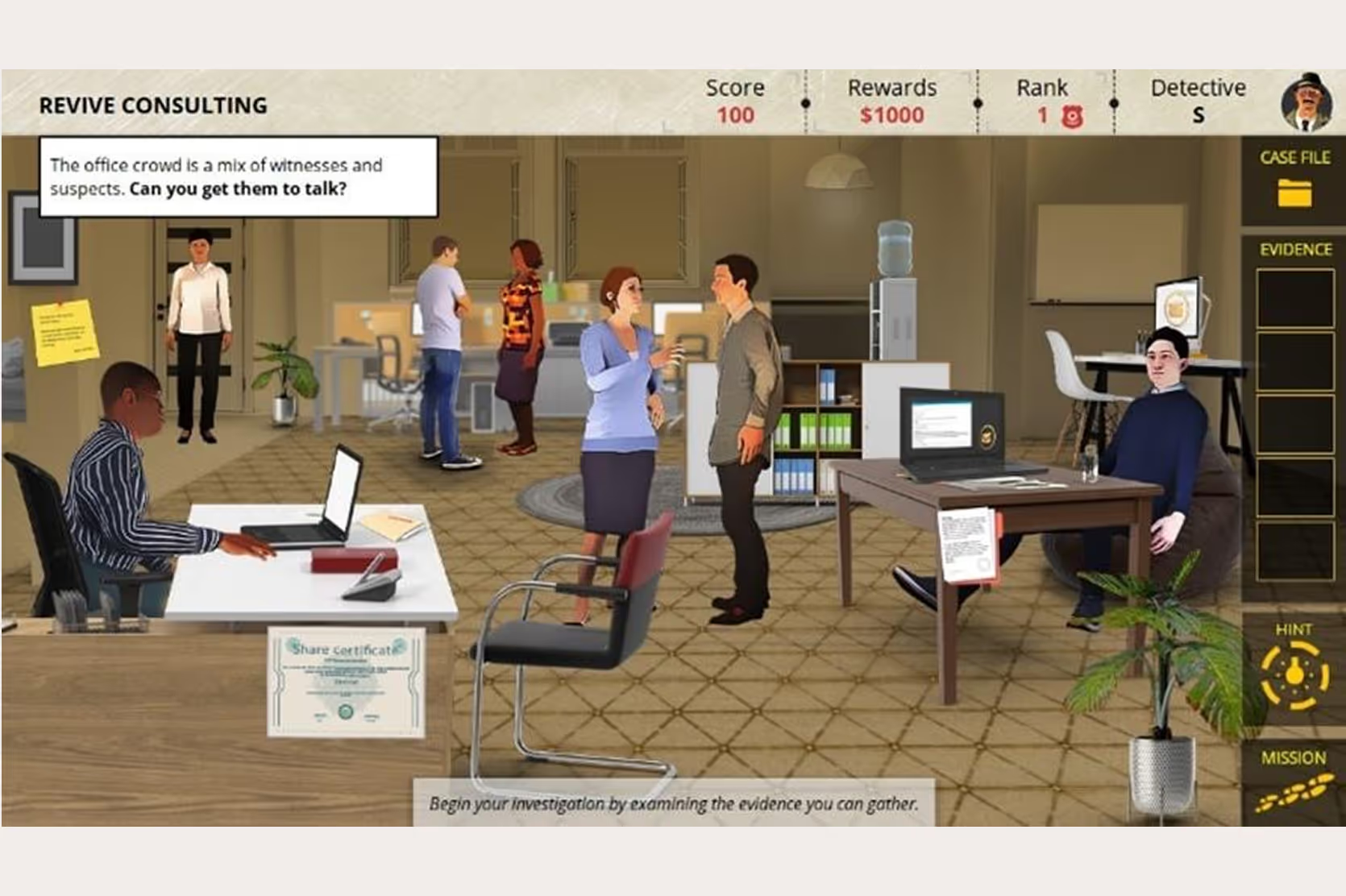

We’ve Helped Grow Hundreds of Companies.
Case studies from organizations building capability and performance with us.





FAQs
What is compliance training for employees?
Compliance training educates employees on laws, regulations, policies, and ethical standards governing their work. Effective programs go beyond legal requirements to build culture where employees understand why rules exist and how to apply them in real situations. Workplace compliance training covers areas like harassment prevention, data privacy, cybersecurity, ethics, financial regulations, and industry-specific requirements.
How is compliance training online different from traditional?
Digital delivery enables flexible access, consistent messaging, and comprehensive tracking at scale. Compliance training online leverages interactive scenarios and multimedia, analytics. Online programs reduce costs and scheduling challenges while ensuring employees receive consistent content regardless of location or timing.
What makes workplace training effective?
Engagement drives effectiveness. Successful workplace training uses realistic scenarios, clear consequences, interactive elements, and reinforcement beyond completion. Must connect policies to daily decisions, helping employees understand "why comply" and not just memorize rules.
How often should training be conducted?
Most organizations conduct annual refreshers with new hire onboarding. High-risk areas need quarterly updates. Policy changes trigger immediate sessions. Programs combine periodic courses with ongoing microlearning keeping mandates top-of-mind.


