






.avif)

In-Person ILT Building Skills Through Human Connection
Combine expert-led instruction, hands-on practice, and real-time interaction for skills that require live guidance, immediate feedback, and face-to-face collaboration.

When Skills Need More Than Screen Time
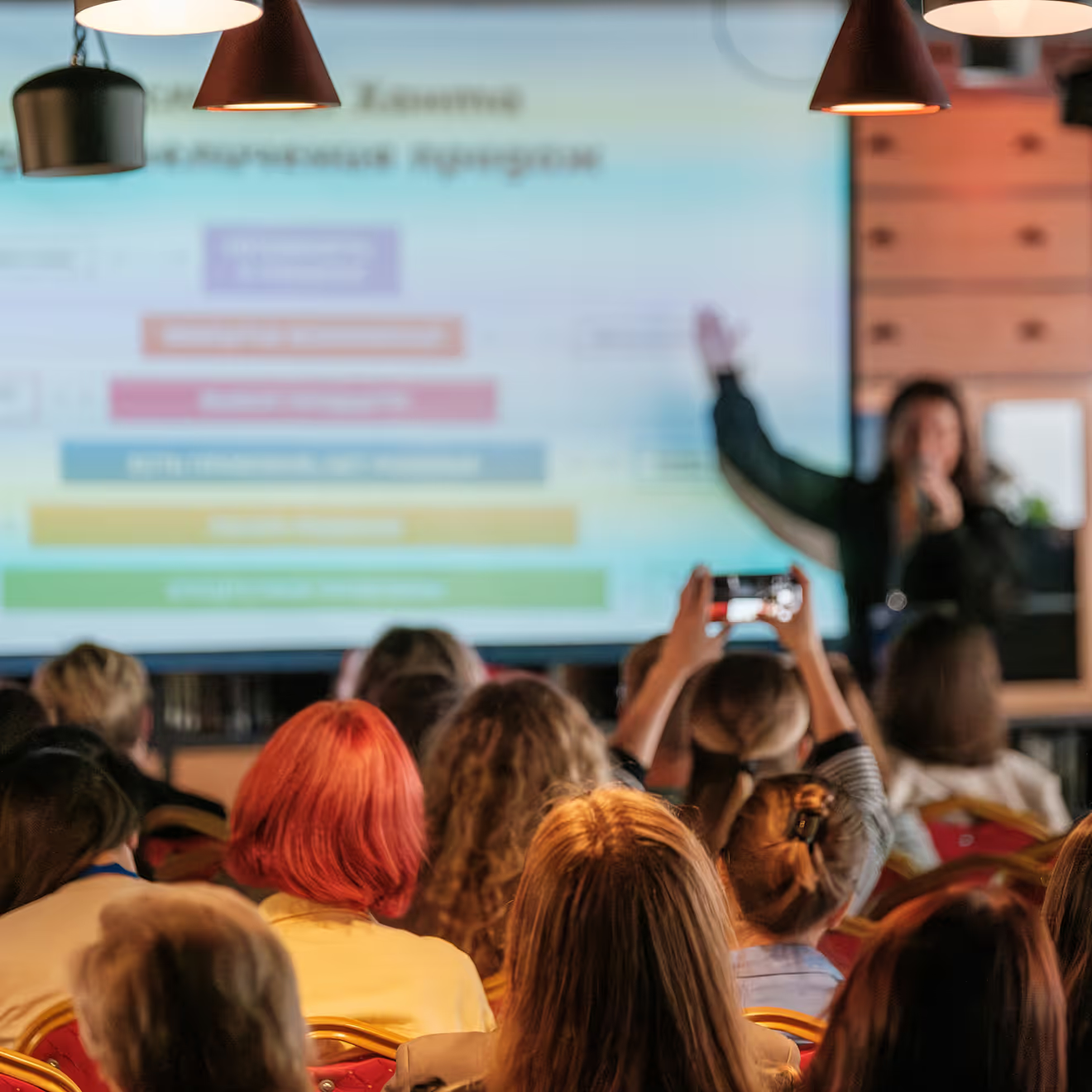
Some skills can't be fully developed through digital learning alone. Leadership presence, complex problem-solving, hands-on technical practice, and interpersonal effectiveness require human connection, immediate feedback, and collaborative learning. In-person ILT delivers expert-led instruction with real-time interaction enabling learners to practice skills, receive immediate correction, and build confidence through experiential learning. This approach excels for leadership development, technical training requiring equipment, compliance programs needing demonstration, and soft skills where peer interaction drives mastery. Organizations leverage classroom training to accelerate behavior change, strengthen team collaboration, and build capabilities requiring personalized attention and adaptive delivery.
Expertise
Served
Served
Experts
Essential Elements of Effective In-Person ILT
Five core components working together to create impactful learning experiences that drive skill mastery and behavior change.
Expert-Led Instruction
Experienced facilitators delivering structured content with practical insights, real-world examples, and subject matter expertise beyond theoretical knowledge.
Real-Time Interaction
Live Q&A, group discussions, spontaneous clarifications, and immediate feedback enabling learners to resolve confusion instantly.
Hands-On Practice
Role-plays, simulations, equipment operation, and experiential activities providing safe environments for skill application with immediate correction.
Peer Collaboration
Group exercises, team discussions, networking opportunities, and collaborative problem-solving fostering knowledge sharing and relationship building.
Personalized Attention
Adapted delivery based on learner needs, individualized coaching, differentiated support ensuring all participants achieve learning objectives.

Why Choose Liberate?
Five strategic advantages delivering effective classroom training from design through delivery and follow-up reinforcement.




Five Proven In-Person Training Formats
Different formats for different learning needs. Choose the approach
that matches your training objectives and participant requirements.

Classroom Workshops
Traditional face-to-face sessions in dedicated training rooms with structured content delivery, interactive instruction, group activities, and guided practice.

Small Group Coaching
Personalized instruction for small groups providing focused attention, customized skill development, and intensive practice with detailed feedback.

Technical Skills Labs
Hands-on equipment and software training in lab environments providing practical experience with tools, technology, and equipment operation.

On-Site Training
Training delivered at client locations enabling contextual learning within actual work environments using real equipment and familiar settings.

Intensive Boot Camps
Multi-day immersive programs with concentrated skill-building through extended practice, repeated application, and progressive complexity.
Classroom Workshops
Traditional face-to-face sessions in dedicated training rooms with structured content delivery, interactive instruction, group activities, and guided practice.
Small Group Coaching
Personalized instruction for small groups providing focused attention, customized skill development, and intensive practice with detailed feedback.
Technical Skills Labs
Hands-on equipment and software training in lab environments providing practical experience with tools, technology, and equipment operation.
On-Site Training
Training delivered at client locations enabling contextual learning within actual work environments using real equipment and familiar settings.
Intensive Boot Camps
Multi-day immersive programs with concentrated skill-building through extended practice, repeated application, and progressive complexity.
Measurable In-Person Training Outcomes
Strategic implementation delivering improved performance and organizational effectiveness.


We’ve Helped Grow Hundreds of Companies.
Case studies from organizations building capability and performance with us.










FAQs
What is in-person ILT?
In-person ILT (Instructor-Led Training) delivers live training where expert facilitators teach participants in the same physical space. Unlike self-paced eLearning or virtual sessions, in-person delivery enables hands-on practice with equipment, immediate feedback during skill application, rich body language and nonverbal communication, spontaneous collaboration and networking, and adaptive delivery responding to group dynamics. The approach combines structured content delivery with experiential learning activities including role-plays, simulations, group discussions, and hands-on exercises. Effective in-person ILT balances theory with practice ensuring participants don't just understand concepts but can apply them confidently in real work situations.
What are the key benefits of In-Person ILT Delivery?
Key benefits include real-time interaction, hands-on practice, expert guidance, social learning opportunities, and personalized attention. In-Person Delivery excels at building soft skills, fostering collaboration, creating lasting behavior change through experiential learning, and providing immediate feedback addressing individual challenges.
When is In-Person Delivery most effective?
ILT works best for leadership development, compliance training, technical skills requiring hands-on practice, programs needing collaboration, and situations where immediate feedback and human connection significantly enhance learning outcomes, skill application, and behavior change more effectively than digital alternatives.
How do you measure Instructor-Led Training ROI?
Measurement uses the Kirkpatrick evaluation model assessing reaction, learning, behavior, and results. Organizations track completion rates, assessment scores, competency improvements, on-the-job behavior changes, business impact metrics, and performance improvements linking training investments directly to measurable outcomes.
What are best practices for ILT facilitation?
Best practices include thorough pre-training preparation, engaging facilitation techniques, interactive exercises, varied activity formats, appropriate technology integration, continuous reinforcement through post-session resources, and comprehensive impact measurement ensuring sustained behavior change and demonstrating clear business value.
When is in-person ILT delivery most effective compared to virtual or eLearning?
In-person ILT works best in six key scenarios. First, hands-on technical skills requiring physical equipment operation, machinery handling, or tactile practice impossible virtually like equipment maintenance, medical procedures, or manufacturing operations. Second, complex interpersonal skills needing body language reading, presence building, or nuanced human interaction like executive presence, negotiation, or conflict resolution. Third, high-stakes competencies where performance gaps have serious consequences requiring intensive practice with expert feedback like emergency response or surgical techniques. Fourth, team building and culture programs aiming to strengthen relationships and trust through shared experiences. Fifth, skills needing extensive practice with varied scenarios and continuous real-time correction like sales techniques or presentation mastery. Sixth, training tied to specific physical equipment, facilities, or secure environments unavailable for remote access. Organizations choose in-person delivery when immediate tactile feedback matters, psychological safety for practice requires physical presence, or equipment access makes virtual delivery impossible.


