






.avif)

Story-Based Learning That Builds Better Judgment
When your workforce faces complex decisions that rules alone can't resolve, storytelling creates the judgment they need through realistic scenarios with real consequences.

When Long Manuals Can't Solve Your Team's Dilemmas
Traditional training tells people what to do but doesn't prepare them for workplace complexity. When teams face ethical dilemmas, customer conflicts, or leadership challenges, rule-based knowledge falls short. Story-based learning places learners in character-driven scenarios where choices have consequences, building the judgment and confidence needed when clear answers don't exist.

Core Elements of Effective Story-Based Learning
Narrative structures that build judgment, drive behavior change, and strengthen workplace skills.
Character-Driven Narratives
Learners connect with relatable characters facing realistic workplace challenges that mirror their own roles.
Branching Decision Paths
Interactive choices create personalized learning journeys that adapt to decisions and build critical thinking.
Consequence-Based Learning
Realistic outcomes show the impact of decisions, helping learners understand why actions matter.
Contextual Scenarios
Real workplace situations provide authentic context that enhances awareness of ethics, judgment, and social dynamics.
Emotional Engagement
Narratives create emotional anchors that drive reflection, attitude shifts, and lasting behavioral change.
Transferable Skill Building
Simulations mirror actual job tasks, making it easier for learners to apply learning on the job.
Flexible Formats for Every Learning Need
From microlearning to immersive VR, stories adapt to every context and scale across audiences.

Microlearning Modules
Bite-sized narratives perfect for reinforcement, spaced repetition, and on-the-go learning.

Branching Scenario Simulations
Complex decision trees for leadership, compliance, and high-stakes training where consequences matter.

Gamified Story Paths
Character-driven missions with meaningful choices that sustain motivation through emotional investment.

Scenario-Based Video Stories
Visual storytelling for compliance, DEI, and soft skills development across distributed teams.

Immersive VR/AR Narratives
First-person storytelling experiences in realistic environments for technical training and safety protocols.

AI-Powered Adaptive Stories
Intelligent narratives that adjust to learner roles, choices, and performance for personalized development.
Microlearning Modules
Bite-sized narratives perfect for reinforcement, spaced repetition, and on-the-go learning.
Branching Scenario Simulations
Complex decision trees for leadership, compliance, and high-stakes training where consequences matter.
Gamified Story Paths
Character-driven missions with meaningful choices that sustain motivation through emotional investment.
Scenario-Based Video Stories
Visual storytelling for compliance, DEI, and soft skills development across distributed teams.
Immersive VR/AR Narratives
First-person storytelling experiences in realistic environments for technical training and safety protocols.
AI-Powered Adaptive Stories
Intelligent narratives that adjust to learner roles, choices, and performance for personalized development.

What Stories Activate in Modern Learners
Why narrative-based training creates deeper understanding and lasting behavioral change.


Measurable Results from Story-Based Learning
Organizations using story-based learning see significant improvements in engagement, retention, and performance.


See How Storytelling Drives Measurable Results
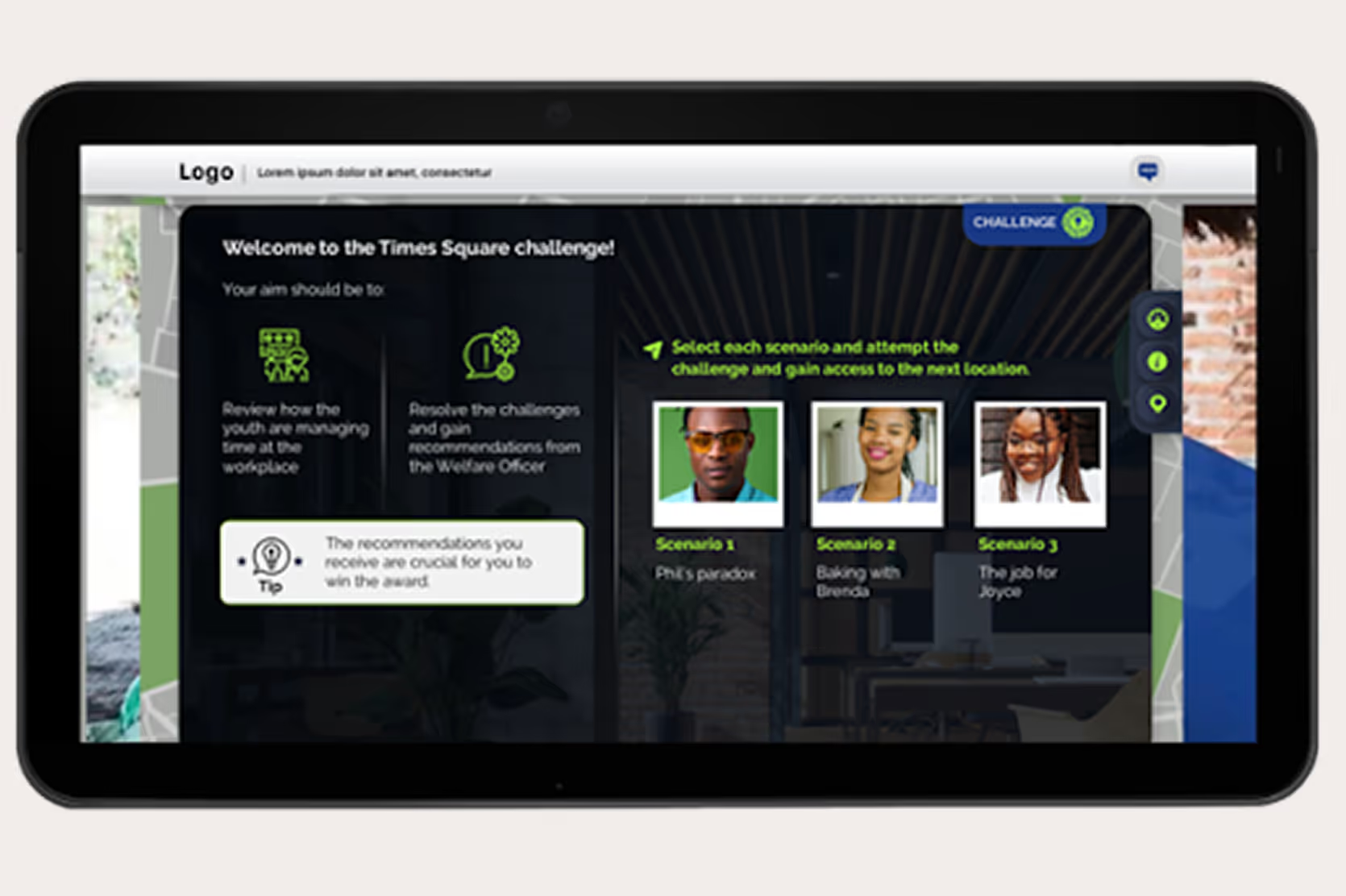
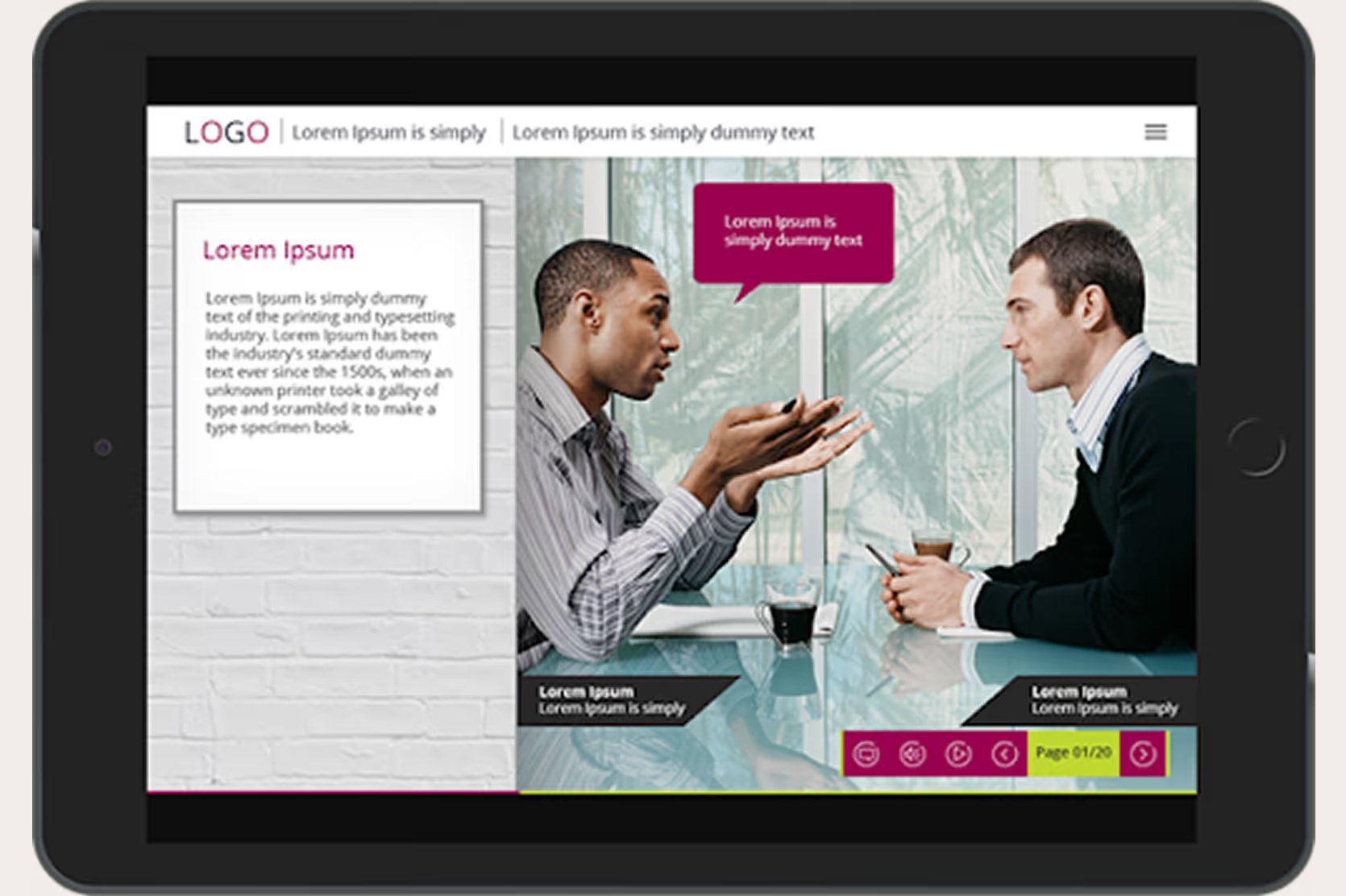
Character-driven narratives achieve record completion rates and behavior change.
We’ve Helped Grow Hundreds of Companies.
Case studies from organizations building capability and performance with us.











FAQs
What is story-based learning?
Story-based learning delivers training through character-driven scenarios with meaningful choices and consequences. Instead of passive information delivery, learners experience realistic workplace situations where decisions matter. Narratives create emotional connections that help people understand why actions matter and how to handle complex situations where rules don't provide clear answers. This approach builds judgment, critical thinking, and confidence for real-world application.
How is story-based learning different from scenario-based learning?
Story-based learning provides sustained narrative with character development and emotional arcs that create deeper engagement. While scenario-based learning focuses on discrete decision points, stories weave multiple scenarios into cohesive narratives that build progressive understanding. The emotional connection through characters drives higher retention and stronger behavioral change. Both use realistic situations, but stories add the power of narrative structure and character identification.
Can this type of learning scale across global organizations?
Yes, we modularize narratives to scale across roles and regions while maintaining cultural relevance. Universal workplace themes adapt to local contexts without losing effectiveness.
Which training topics benefit most from story-based approaches?
Compliance, ethics, DEI, leadership, soft skills, sales, and customer service benefit most. Any training requiring behavioral change or judgment development works well with stories.
How do you measure the effectiveness of story-based training?
Effectiveness is measured through engagement metrics, decision quality in simulations, retention rates, and manager feedback. On-the-job performance change and reduced workplace incidents are the most critical measures.
Is storytelling suitable for technical or compliance training?
Yes, stories simplify complexity and make technical topics relatable and memorable. Narrative context helps learners understand why compliance matters and how to apply knowledge.


