



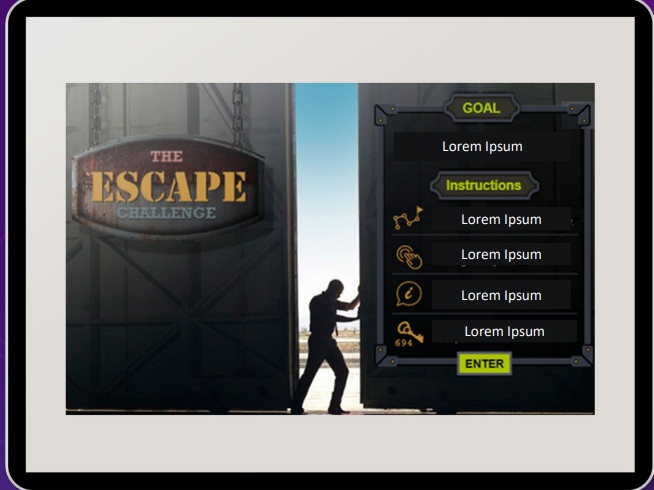

.avif)

Empowering New Managers of a Global Banking Giant to Transition to New Responsibilities by Enabling Learning in Their Workflow


The move into line management is the least supported promotion in most organizations. Someone good at the work is asked to stop doing the work and start being responsible for other people doing it, which is a different job with a different skill set, and the usual preparation is a congratulatory email and a calendar full of meetings they have never chaired before.
This case study covers how a global banking organization approached that transition for its new managers, and why the design gave them a map to explore rather than a course to complete.
The background
Transitioning new line managers into their roles smoothly, so they can actually meet the responsibilities they have taken on, is difficult almost everywhere. This bank found it no easier and wanted training that would build managers’ confidence while the transition was happening rather than after it.
The brief had two words in it that shaped everything. The learning had to be active and relatable, and it had to be completable inside the schedules of people who were already busy and had just become busier. New managers are the hardest audience in an organization to get into a training room, because the promotion itself is what removed their spare time.
The design problem
Management training has a habit of arriving as theory. Frameworks, models, and named approaches are easy to build a course around and easy to assess, and they leave a new manager holding a vocabulary rather than a way to handle the conversation they have at four o’clock.
The scheduling constraint makes the usual fix worse. Anything that requires an uninterrupted block gets deferred, and deferred training for a manager in their first months is training that arrives after the mistakes it was meant to prevent.
So the design had to do two things at once: put managers in decisions rather than concepts, and break the whole thing into pieces small enough to survive an unpredictable week.
How our team approached the solution
Simulating the environment rather than describing it
Keeping the focus on this specific audience, our team simulated the complete learning environment, so that leaders learned by doing and made active decisions as they went. The program sets a manager inside situations and asks what they would do, which is the only form of management training that tells a learner anything about their own judgment.
A visual journey the learner chooses their way through
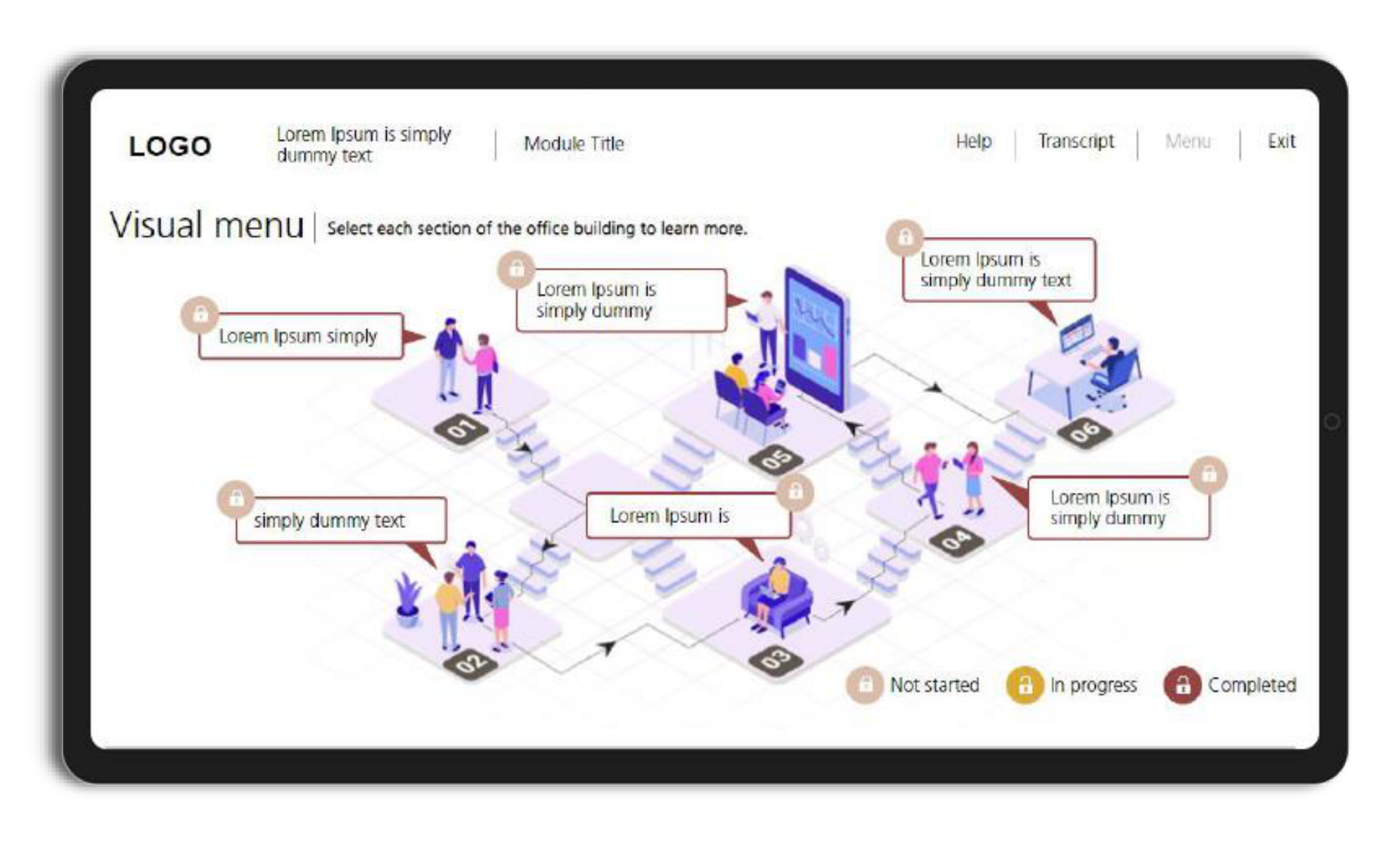
The learning was structured as an exploration-based journey rather than a fixed sequence. A visual menu lays out the areas of the role as places in a building, each one showing whether it has been started, is in progress, or is complete, so managers can see the whole territory and pick where to go next.
For a busy audience this does something a linear course cannot. A manager facing a difficult conversation this week can go straight to that area rather than working through three modules to reach it, and the progress states mean nothing gets lost when they step away for a fortnight.
Scenarios built from the organization’s own case studies
The scenarios were mapped to true case studies gathered from the organization itself. That is the detail that makes this program relatable in the way the brief asked for. A scenario drawn from a generic management textbook gets recognized as an exercise, while one a manager knows happened in their own business gets treated as a decision.
Strong visuals, meaningful interactivity, and sharp takeaways
The content used a blend of imagery and infographics, purposeful interactions, and sharp takeaways to keep the learning precise. Restraint matters in this material. A new manager does not need the full literature on delegation, they need the three things that change what they do on Monday, and the design was built to deliver that rather than completeness.
Microlearning on mobile through the LMS and LXP
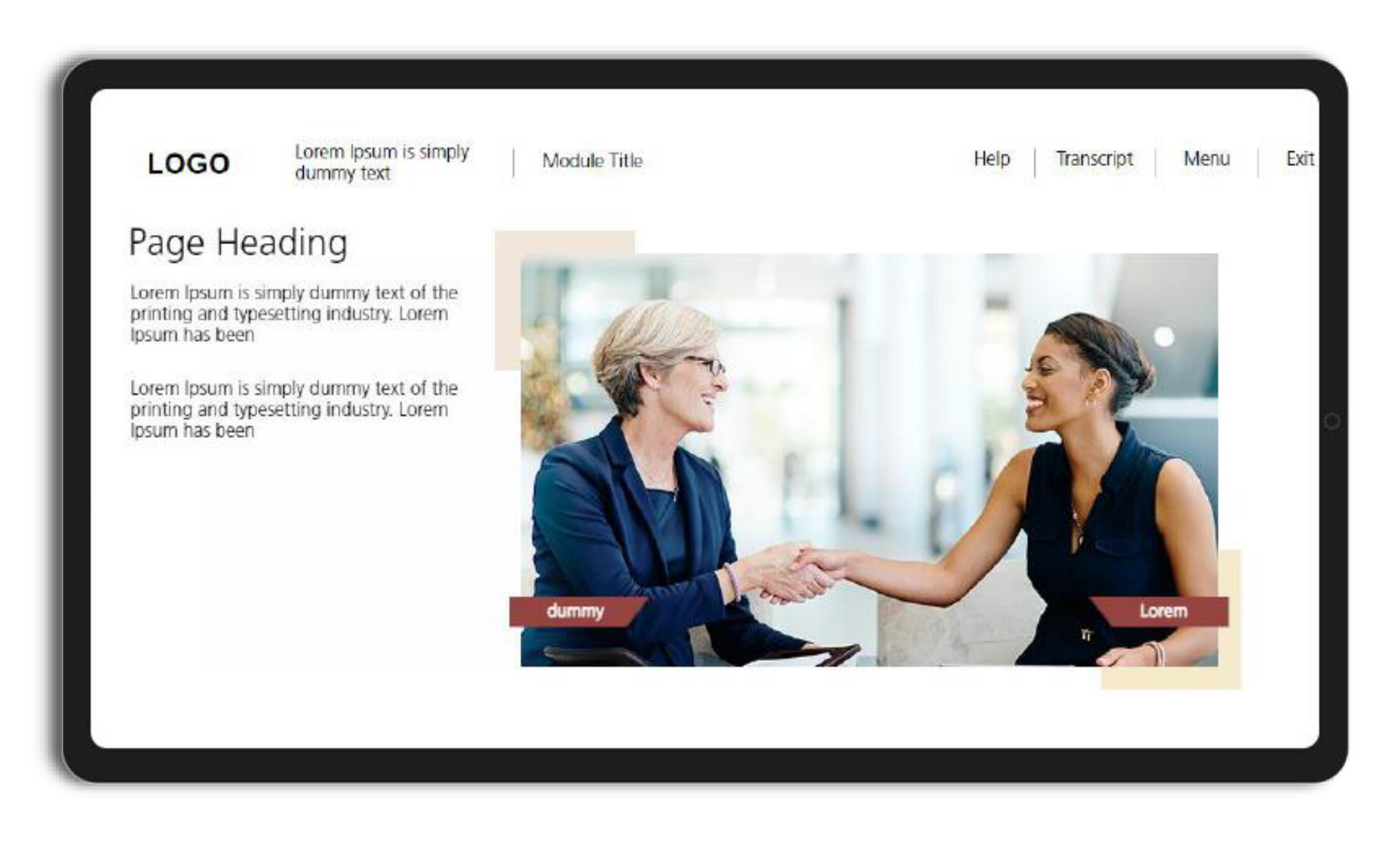
Delivery ran as microlearning and mobile learning through the LMS and LXP, so managers could fit the training into their schedules instead of scheduling around it. This is what the brief meant by learning in the workflow, and it is the practical reason the completion figures came out as they did.
The impact
- Leaders reported increased efficiency in their roles, applying the learning more effectively and making better informed decisions.
- The training achieved higher completion and participation rates thanks to the flexibility built into its design.
- The organization saw a higher proportion of successful transitions than it had recorded before the training.
The third result is the one that matters and the one most leadership programs never get near. Completion tells you the training was taken. A higher successful transition ratio tells you the people who took it went on to hold the role, which is the outcome the program existed to produce.
What this case study shows
Exploration suits management development better than sequence does. The order in which a new manager needs each capability is set by what happens to them in their first months, not by a curriculum, and a journey they navigate themselves matches that far better than a course that decides for them.
It is also a reminder of how much work the client’s own case studies did here. Gathering real situations from the business takes effort that generic scenarios avoid, and it is the difference between managers recognizing the material and merely understanding it.
If you are moving people into management and want them confident before the first hard conversation rather than after it, Liberate can help you build the transition into their working week.

subscribing!
Related Case Studies