


.avif)

How a Global Retail Giant Promoted Organizational Culture and Improved Time-to-productivity by Leveraging Virtual Reality


Remote hiring solved a staffing problem and created a cultural one. A new joiner who has never walked into the building learns the organization entirely through documents, calls, and a handbook. They pick up the rules quickly and the atmosphere slowly, if at all, and the gap between the two is what makes the first months longer than they need to be.
This case study covers how a global retail organization used virtual reality to close that gap for a group of customer care hires who were recruited to work remotely from different locations, and why the answer involved filming the headquarters rather than describing it.
The background
One of the biggest names in global retail needed to onboard the customer care team for one of its units. Every one of them had been hired to work remotely, from locations scattered across the map, and none of them would be attending an office induction.
The requirement went beyond familiarizing them with the organizational culture. It included the actual office space, the headquarters itself, on the view that knowing where you notionally belong is part of belonging. That made it a difficult brief, because the physical experience of working from the office had to be reproduced through the training, and the learners had to stay motivated while it happened.
The design problem
Culture is the hardest thing to put in a course. It lives in how a floor is laid out, what is written on the walls, where people gather, and how a place feels when you walk through it. Written down, it flattens into a values list that reads the same for every employer.
The second difficulty was that the audience would never verify any of it. A learner who visits the building can fill in what training leaves out. A remote hire cannot, so whatever impression the program creates is the only one they will have.
How our team approached the solution
360-degree capture of the actual headquarters
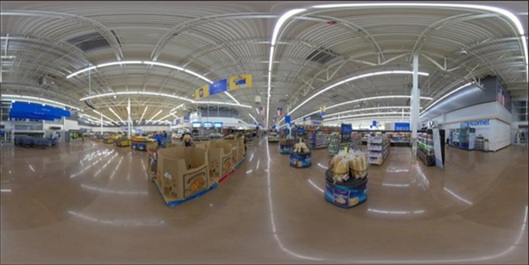
The brief called for replicating the office experience as closely as possible, so our team used a complete VR based learning approach. Working with the client’s L&D teams, we captured 360-degree video of the whole facility rather than building an approximation of it. The distinction matters. A modeled office communicates a designer’s idea of the workplace, while captured footage communicates the workplace, including the details nobody would have thought to specify.
Learning plugged into the VR framework
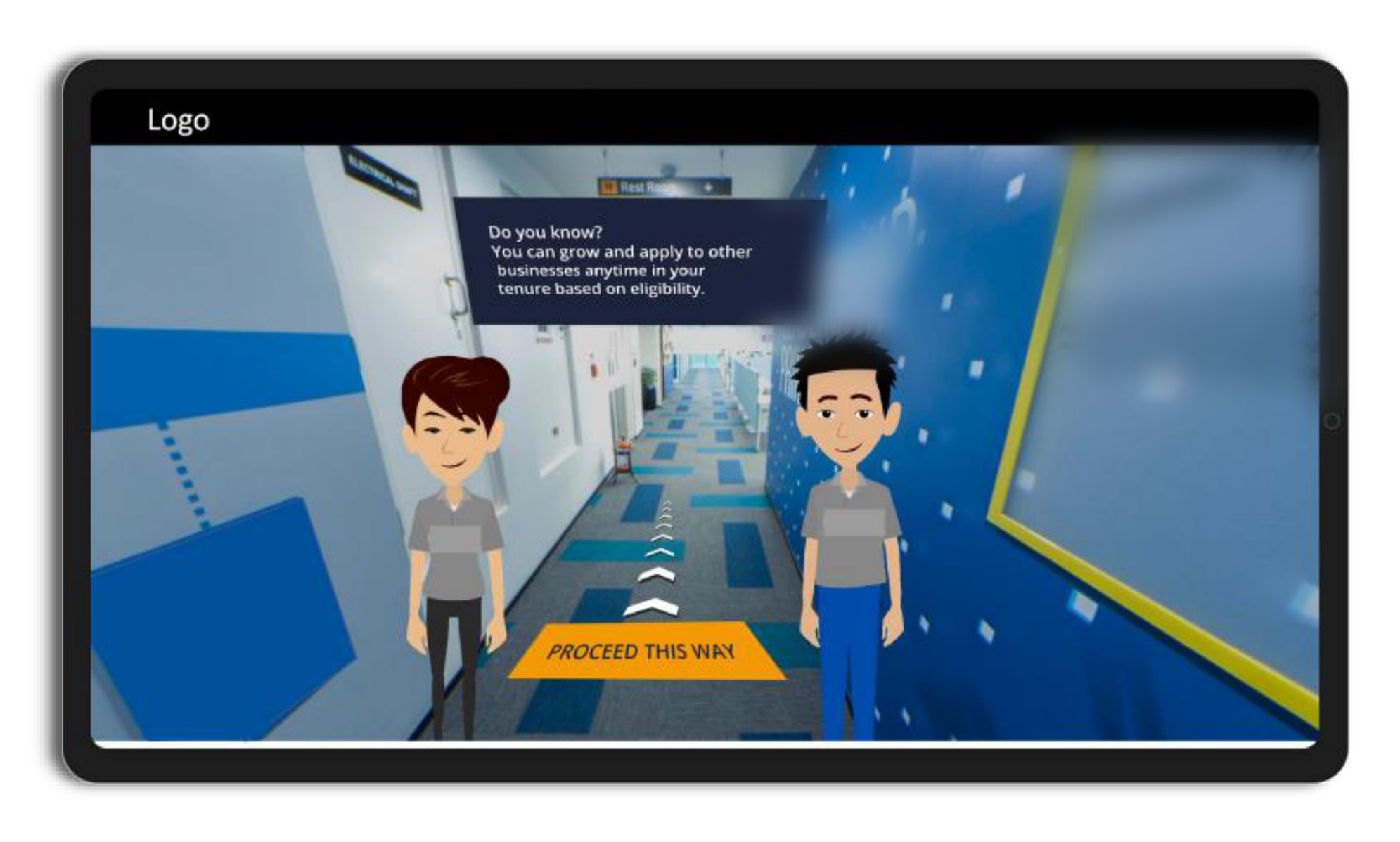
The learning content was then plugged into the VR framework rather than sitting alongside it. Moving through the building, learners encounter information at the point in the space where it belongs, with prompts appearing as they arrive and clear cues showing where to go next. Information about growth and mobility surfaces in a corridor rather than in a policy section, which is closer to how anyone actually learns what an employer offers.
Gamification and a leaderboard
The complete experience was gamified, with a comprehensive leaderboard tracking progress. A leaderboard does something specific for a remote cohort. It makes the other new joiners visible. Without it, each learner is alone with a headset, and the cohort effect that makes an in-person induction work disappears entirely.
Social learning for a group that never meets
Social learning features were enabled for the same reason. Part of what a new employee gets from an office induction is other new employees, the people they will later ask the questions they did not want to raise in the session. Building that into the program was not an enhancement. It was replacing something the remote model had removed.
Avatars to make it personal
The experience was personalized through relatable avatars, giving each learner a presence inside the space rather than a viewpoint floating through it. For a program whose purpose is helping someone feel they belong somewhere they have never been, having a self in the room is more than a cosmetic choice.
Delivered through a learning portal
Delivery ran as personalized and mobile learning through a learning portal, with responsive design so the supporting material stayed reachable outside the VR experience itself.
The impact
- Learners responded strongly to a training experience unlike anything they had encountered before.
- After the training, learners were able to demonstrate their understanding of the organizational nuances on various occasions.
- The program was one of the biggest successes the L&D team had recorded, particularly for its effect on time to productivity.
- Plans were made to scale the approach to other domains and divisions within the organization.
Time to productivity is the result worth holding onto. It is the number that turns a cultural onboarding program from a nice thing to do into a business case, because it converts belonging into weeks saved before a new hire is contributing fully.
What this case study shows
This is one of the few briefs where VR is the obvious answer rather than an expensive way to do something simpler. The requirement was to give people the experience of a building they could not visit. No other format does that, and a 360-degree capture of the real place does it better than any modeled environment would have.
It also points at a problem most organizations now have and few have addressed. Remote hiring removed the induction experience and replaced it with a document pack. Culture did not stop mattering when the office stopped being the default, and the organizations getting this right are rebuilding the experience deliberately rather than hoping it transmits over video calls.
If you are onboarding remote hires and losing the cultural half of induction, Liberate can help you rebuild it as something people actually experience.

subscribing!
Related Case Studies