


.avif)

How a Tobacco Market Frontrunner Created an Engaging Learning Journey for Retailers to Promote Product Awareness


Training an external audience is a different discipline from training an internal one, and the difference is leverage. An employee completes a program because their organization expects it. A retailer completes it only if the time spent is worth more to them than whatever else they could be doing with the same half hour, and no amount of internal sign-off changes that.
A tobacco market frontrunner came to our team needing a retailer engagement program that would reach the hearts and minds of their trade partners. The content had to be engaging and relevant to every retailer in the network, and it had to add up to a meaningful learning journey across the company products and categories.
The Challenge
The success criteria set in the brief are unusual and worth reading closely. The program had to be engaging and motivating enough that retailers would return to it, and that they would share it with their peers.
Neither of those can be mandated. Repeat visits and peer sharing are things an audience does voluntarily or not at all, which means the program had to be built to a standard that most corporate training never has to meet. It had to be worth someone recommending.
How the Solution Was Built
Our team converted the complete content into a gamified learning journey travelling across the company product facilities around the world. Real stories were drawn from the existing content, and animation and interactive video became the primary way that content was delivered.
A tour with locked levels and a clear direction
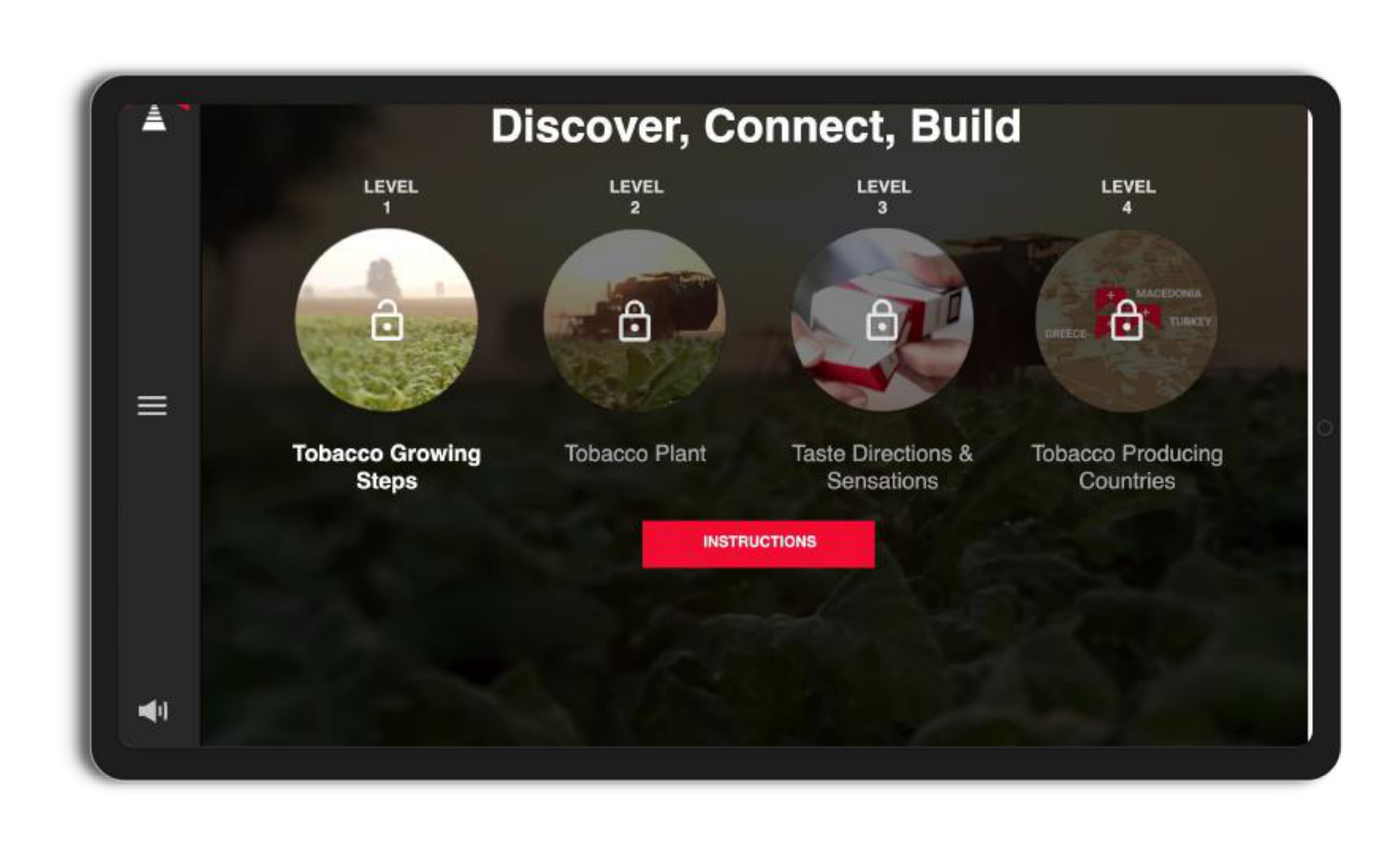
The journey is structured as four levels, opening on the growing process, then the plant, then taste and sensation, then the countries where production happens. Levels stay locked until the learner reaches them, and the invitation across the top is to discover, connect, and build.
Structuring product knowledge as a tour rather than a catalogue changes what the retailer is being asked to do. A catalogue of product information is a reference that gets consulted when needed. A tour has a beginning, a sequence, and somewhere to get to, which is what gives a voluntary audience a reason to come back for the next part.
Short pieces with people at the center
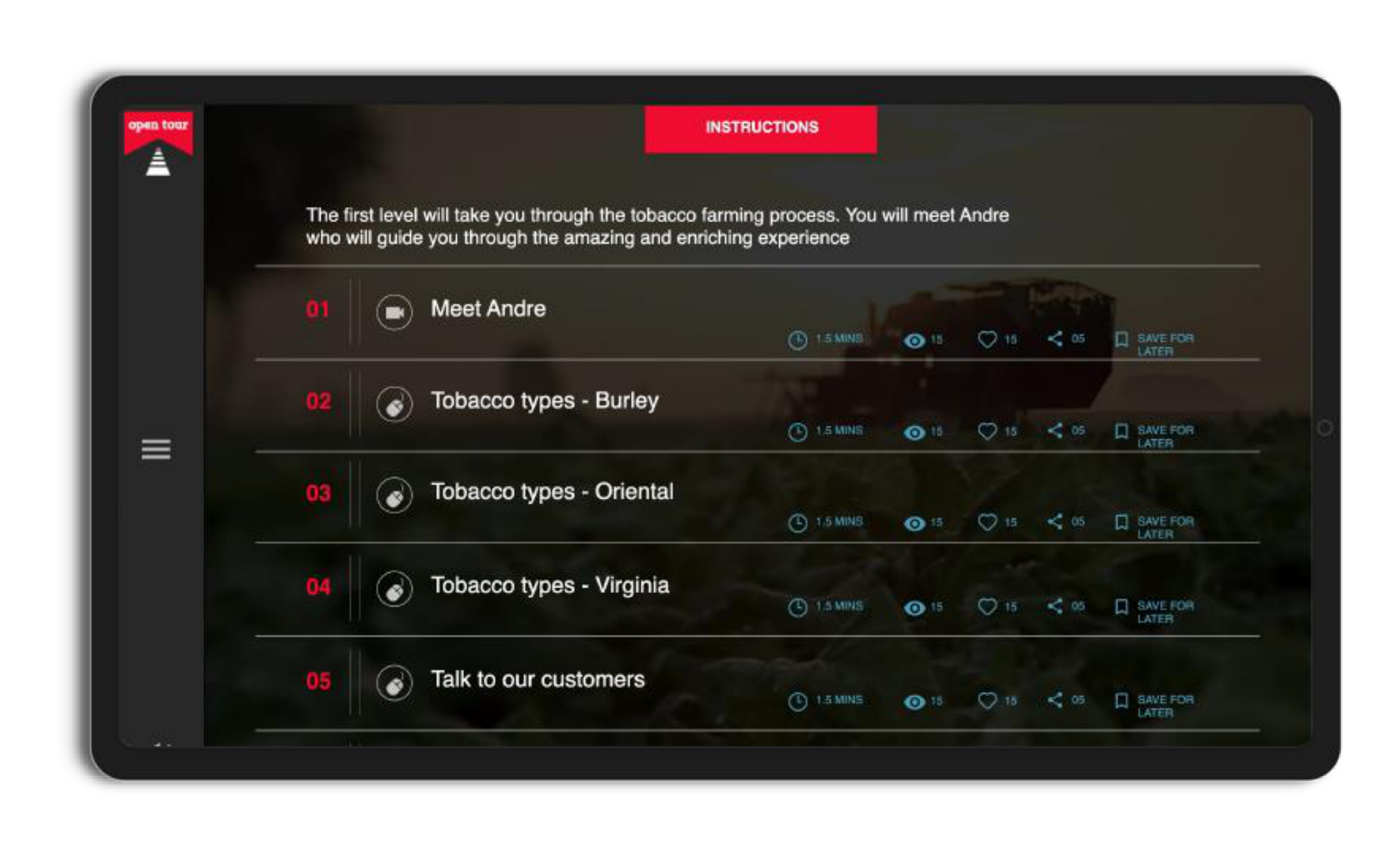
Inside a level the learner sees the run of short pieces that make it up, each around a minute and a half. The first level opens by introducing a guide who takes the learner through the farming process, then moves through the individual product types, and ends by talking to customers.
Storytelling runs through all of it, so the learner encounters employees, customers, and peers rather than reading descriptions of them. For a retailer, hearing how a customer talks about a product is directly useful in a way that a specification is not, and it is content they can put to work behind the counter the same week.
Social features that make sharing possible
Each item carries a view count, a like, a share control, and a save for later option. These are the mechanics that make the second success criterion achievable, because a program that expects to be passed between peers has to give people something to pass and a way to pass it.
Social learning was encouraged throughout to promote collaboration and to give retailers social recognition through intrinsic rewards and feedback, which for an audience of independent business owners is a more suitable motivator than anything an employer might use.
Gamification and analytics behind the experience
Gamification runs across the journey to keep retailers moving through it, and learner analytics feed feedback and recommendations back to each individual, so the experience adapts to what someone has already seen rather than presenting the same path to everyone. The whole program is accessible on a mobile phone, which matters for an audience who are working in their own premises rather than sitting at a desk.
The Strategies Behind the Design
Seven strategies power the solution.
- Gamification
- Video Based Learning
- Story Based Learning
- Social Learning
- Learner Analytics
- Personalized Learning
- mLearning
Delivery combined personalized learning and mobile learning served through a learning portal.
The Impact
The learning outcomes were delivered in accessible, interactive formats that improved retention, brand recognition, and engagement with the new program. Brand recognition is the telling item on that list, because it is a commercial outcome rather than a learning one and it is what the organization was buying.
The program also gave retailers tasks and challenges to work through and apply in a live environment, so the knowledge went into practice rather than staying with the course.
Taken together, the learning interventions and the tracking behind them produced higher engagement with both the people and the brand. For a trade partner program, engagement with the brand is the whole point, and reaching it through training that retailers chose to keep using is a stronger position than reaching it through promotion.
Build Programs an External Audience Will Come Back To
Training that cannot be mandated has to earn its audience, and that raises the design standard rather than lowering it. This program worked because product knowledge became a tour with somewhere to go, because short pieces were built around people rather than specifications, and because the social features gave retailers something worth passing on. If you need to reach partners, franchisees, or customers who are under no obligation to listen, Liberate can help you build it. Get in touch to talk it through.

subscribing!
Related Case Studies