




.avif)

Reinforcing the Code of Conduct Mandate Using an Immersive Game Based Learning Experience


Code of conduct training has a reputation problem that has very little to do with the subject matter. The policies themselves are consequential, but the training built around them is usually written to be defensible rather than useful, and employees learn to recognize that within the first screen. They complete it because they have to, and the organization records a completion rate rather than a change in behavior.
A leading management consulting and advisory services company came to our team with exactly that gap. Their people needed to be fully aware of the code of conduct, and the existing material was not getting them there.
The Challenge
The content was dry, carried a mandatory requirement, and followed a predictable approach. Because of that, it failed to engage audiences, and it did not instill the spirit of compliance or trigger the behavioral change the organization was looking for.
The distinction between awareness and spirit is the important one here. Employees could pass an assessment on the code without carrying any of it into the situations where it actually applies, which is what the organization needed to change. On top of that, the training had to be created urgently to secure appropriate participation and understanding within the required window.
How the Solution Was Built
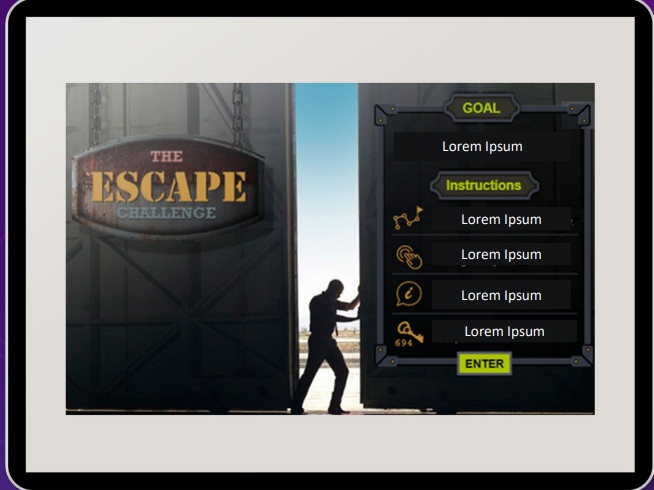
Our team designed a fun and immersive game based learning experience in which the learner explores a virtual city and searches for the key to the code document. At each stage of the training, learners face real-life situations and make decisions that earn them points and level up their expertise in the topics.
A city where each topic is a place you unlock
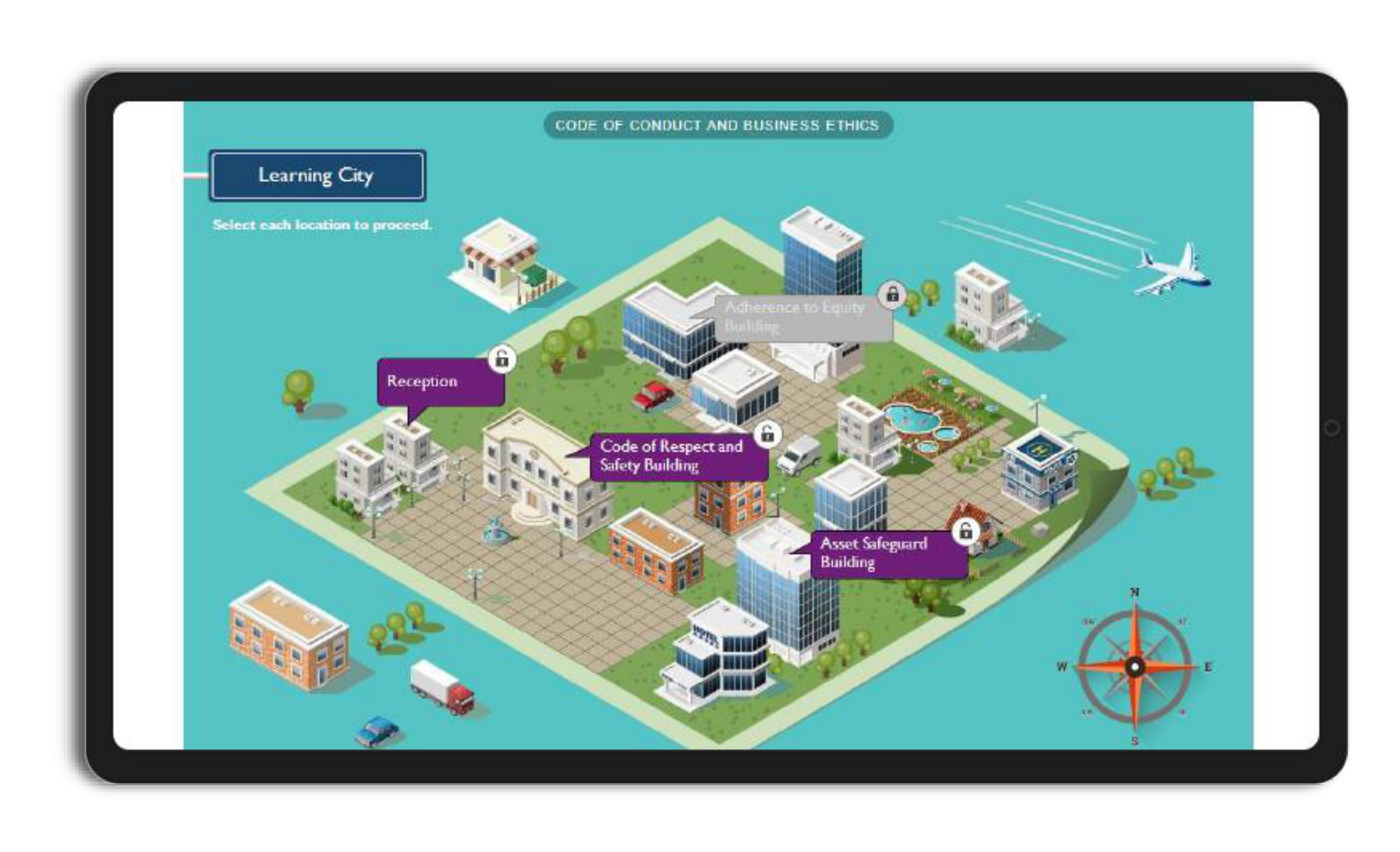
The learner opens onto a map of Learning City and selects locations to proceed. Each building corresponds to a section of the code, with names such as Reception, the Code of Respect and Safety Building, the Asset Safeguard Building, and the Adherence to Equity Building. Buildings that have not been reached yet appear locked, so progress through the material is visible on the map itself rather than in a percentage bar.
Structuring the curriculum as a place solves a problem that ordinary module lists create. A list of compliance topics tells the learner how much is left. A map tells them where they have been and what is still closed off, which is a more motivating way to look at the same information.
Characters who introduce the situations
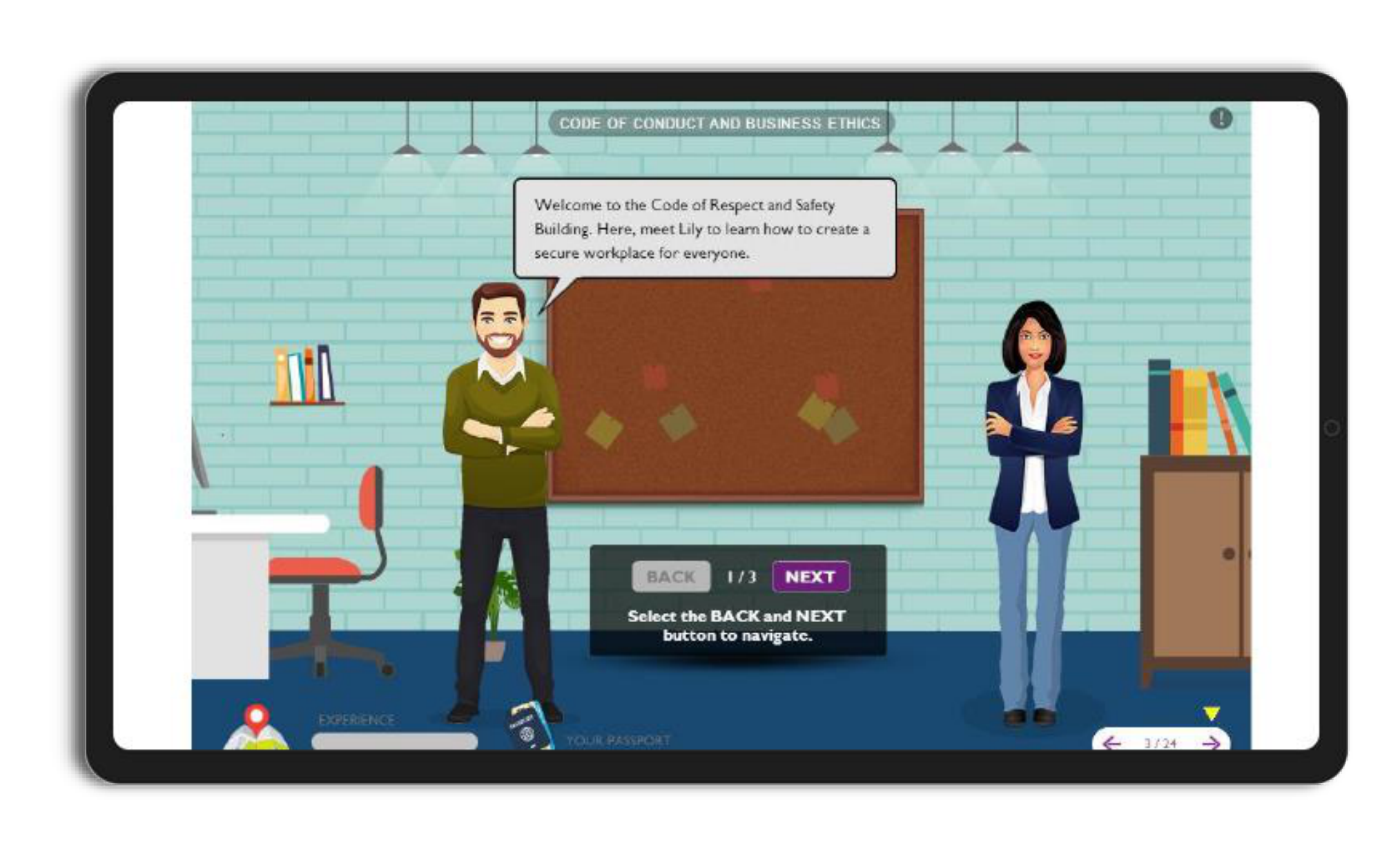
Inside each building, the learner is met by a character who frames what happens there. In the Code of Respect and Safety Building, a colleague welcomes the learner and introduces Lily, who guides them through creating a secure workplace for everyone. The scenes are set in ordinary workplace environments, which keeps the content anchored to the settings where these decisions get made.
Story based learning does the work that policy language cannot. A named colleague in a recognizable office carries a situation that a clause in a document only describes, and learners engage with the situation rather than with the clause.
Points, passports, and a reason to keep going
Learners collect points as they make decisions and level up their expertise across the topics. The interface carries an experience meter and a passport that travels with the learner through the city, so the accumulated progress stays visible while they work. This gamified engagement drove the behavioral change the client was after, because learners put in effort to overcome challenges through cognition of the concepts rather than through recall alone.
Personalization came through customized scorecards presented to learners at each stage. Rather than a single result at the end, learners saw how they were performing as they moved between locations, which is what allows a learner to correct course while the training is still in progress.
The Strategies Behind the Design
Four strategies power the solution.
- Gamification
- Personalized Learning
- Scenario Based Learning
- Story Based Learning
Delivery combined microlearning, mobile learning, and personalization, all served through a learning portal. Compliance training competes with everything else in a working week, so breaking it into short pieces that people can complete on the device in front of them removes most of the friction that pushes completion toward the deadline.
The Impact
Learners reported that the changed tone and approach of the compliance training increased their interest and their sense of participation. That result speaks directly to the original problem, since the tone was the barrier rather than the content.
The flexibility of learning on a device of choice contributed to higher engagement and better completion rates within the stipulated time, which matters for a mandatory program where the deadline is fixed and the audience is distributed.
These are engagement and perception outcomes rather than incident or reporting metrics, which is common for code of conduct programs where the desired result is the absence of a problem. What the feedback does establish is that the redesign changed how employees related to the mandate, which is the necessary first step toward the behavioral change the organization was seeking.
Make Compliance Training Worth Completing
Mandatory training only changes behavior when people engage with it as something other than an obligation to clear. This program achieved that by turning a code document into a city to explore, putting recognizable colleagues inside ordinary workplace situations, and giving learners points, scorecards, and a visible sense of progress along the way. If your compliance programs are being completed without being absorbed, Liberate can help you rebuild them. Get in touch to talk it through.

subscribing!
Related Case Studies