



.avif)

6 Benefits of Learning Management System for Corporate Training

Summary
A corporate Learning Management System helps organizations deliver scalable, consistent, and measurable training across teams and locations. This article highlights how LMS platforms improve employee performance, streamline compliance and onboarding, reduce training costs, and enable flexible, data-driven learning experiences.
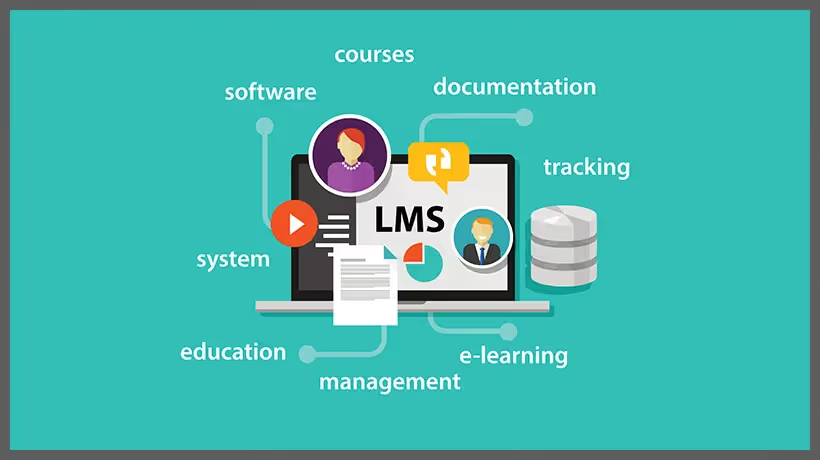
With a growing need to foster effective learning, organizations worldwide are banking on corporate training Learning Management Systems (LMSs) to establish a robust platform for corporate training and cater to the training needs of a wide learner demographic. In this article, we outline what an LMS can do to improve learning and the benefits it brings to organizations.What is a Learning Management System (LMS)? A Learning Management System (LMS) is a software application that can administer, regulate, track, and deliver learning. While LMSs are equipped with features that enable us to deliver fully automated online training, they also support hybrid training models such as blended learning and the flipped classroom approach. They are a one-stop solution that delivers training material to learners, administers tests and assignments, tracks the learners’ progress, manages record-keeping, and offers continuous support.What can a corporate training LMS do to improve learning? 1. Tracking the Learning: A corporate training LMS helps organizations foster continuous employee development and compliance by tracking who has taken the training and how they performed.2. Prompting for Retraining: An LMS can inform you when the last training was undertaken and when it must be retaken to promote continuous improvement and/or ensure the employee’s knowledge is up to date.3. Real-Time Audit Reporting: A Learning Management System can accurately track the learners’ progress and provide detailed reports in real time.4. Learning on Demand: A corporate training LMS offers 24/7 access so employees can learn at their own pace and revisit content when needed.5. Learning Anytime, Anywhere: The growing buzz on mLearning or Mobile Learning is prompting organizations to deliver their training on laptops, smartphones, and tablets. A device-responsive LMS can support adoption of mLearning by delivering eLearning (in the form of mobile apps, videos, and other formats) to mobile devices, paving the way for learning anytime, anywhere.What are the benefits of a Learning Management System for corporate training?1. Boost in Employee Performance: With eLearning courses available in the LMS on demand, any immediate training needs can be met quickly and effectively, thus laying a foundation for performance improvement.2. Accelerated Compliance Training: With a Learning Management System in place, induction of new recruits is much easier, regulated and faster. The sooner they align to your organization’s vision, mission and goals, the sooner they will start delivering high-quality services to both customers and the business.3. Reduced Training Costs: Delivering training through corporate training LMS cuts down on costs related to venues, travel, and instructor fees while allowing content reuse.4. Regulated Multiple Sites Deployment: A Learning Management System makes it easy for deploying the training in multiple sites by ensuring uniformity in learning and consistency in the message delivered across all locations.5. Improved Training Uptake: Employees can schedule learning at their convenience, while managers can track participation and encourage timely completion.6. Learning Aligned to Organization’s Needs: A corporate training LMS dynamically supports initiatives such as product launches or process rollouts, ensuring rapid and consistent delivery.Modern Learning Management Systems feature UIs that are built in alignment with the latest trends in eLearning, such as:
With all these features, you can deliver a highly engaging user experience and enhance the impact of your training.How does a corporate training LMS help in reducing corporate training costs? A corporate training LMS reduces the need for physical classrooms, printed materials, and instructor-led sessions. Instead of repeating the same training, organizations can create digital courses once and reuse them across departments and teams. Online delivery also eliminates costs associated with travel, venue bookings, catering, and instructor fees.In addition, automated tracking and reporting cut down on administrative overhead, allowing HR and L&D teams to focus more on strategic initiatives rather than manual record-keeping. Over time, these savings can be significant, especially for businesses with large or distributed workforces.How can a corporate training LMS ensure training is consistent across multiple locations? LMSs centralize training content, ensuring all employees receive the same materials, instructions, and assessments, regardless of geographic location. This uniformity is crucial for global organizations where consistency in policies, processes, and brand messaging matters.Standardized course updates can be rolled out instantly, reducing the risk of outdated or conflicting information. Reports and dashboards allow managers to track completion and compliance across sites, making it easier to identify gaps and ensure every employee gets the same quality of training experience.In what ways can a corporate training LMS make learning more flexible and accessible for employees?
- Mobile-friendly platforms enable employees to learn on laptops, tablets, or smartphones, making training accessible even for remote and frontline workers.
- Self-paced modules allow learners to schedule sessions at convenient times without disrupting their daily workflows.
- Microlearning modules break training into digestible chunks for easy absorption and better retention.
- 24/7 access to resources empowers employees to revisit content whenever they need a refresher, reinforcing knowledge beyond the initial training session.
How does a corporate training LMS support compliance training and onboarding?
- Automates mandatory compliance training by enrolling employees into required courses, sending reminders, and tracking completion for audit readiness.
- Standardizes onboarding processes by providing a structured learning path that introduces new hires to company policies, culture, tools, and job-specific training, ensuring consistency across departments.
- Provides real-time reports for managers and HR teams to monitor progress, flag overdue training, and ensure no employee misses essential regulatory or onboarding requirements.
- Accelerates time-to-productivity by helping new hires gain the knowledge they need faster, reducing ramp-up time and boosting confidence in their roles.
What modern features do current corporate training LMSs offer to enhance engagement?
- Gamification: Points, badges, and leaderboards drive healthy competition and motivation.
- Personalization: Adaptive learning paths tailor content to individual roles, skill levels, or career goals.
- Social Learning: Discussion forums, peer-to-peer collaboration, and knowledge sharing foster a culture of continuous learning.
- Mobile Learning: Device-responsive design and dedicated apps allow employees to learn anytime, anywhere.
- Microlearning: Bite-sized lessons improve engagement and retention by focusing on key concepts.
- Analytics & AI: Advanced tracking, recommendations, and predictive insights help optimize training effectiveness and personalize learning at scale.
Parting Thoughts
A corporate training LMS serves as a strategic enabler for workforce development. It empowers employees with continuous access to learning, helps organizations connect training with business priorities, and delivers measurable impact. By leveraging modern LMS features, companies can design engaging and accessible learning experiences that improve performance and support long-term growth.
FAQs
1. Can LMS content be updated easily?
Yes, LMSs allow rapid updates to courses, ensuring training remains relevant and accurate.
2. How do LMSs track employee progress?
Through dashboards, analytics, and reports that provide insights on course completion, assessment scores, and engagement.
3. Is an LMS suitable for all business sizes?
Absolutely. LMSs scale from small teams to large global enterprises, offering customizable features and pricing.
4. How does an LMS support continuous learning?
An LMS provides ongoing access to resources, refresher modules, and skill-based learning paths, helping employees continuously update their knowledge and stay aligned with evolving business needs.
5. Can an LMS integrate with other business tools?
Yes. Modern LMS platforms integrate with HR systems, performance management tools, and collaboration apps, making it easier to align training with workflows and business objectives.

subscribing!
Related articles


.jpg)
.jpg)





.jpg)