






.avif)

Impact of Gamification in Corporate Learning and Development


Summary
Explore how gamification transcends simple "fun" to become a data-driven engine for corporate performance. It outlines a 7-step strategic framework for designing game-based learning that triggers dopamine, builds emotional connections, and delivers measurable ROI through improved retention and behavioral change.
Traditional corporate training often struggles to hold attention—a Deloitte found that the average employee can devote only 1% of their workweek to formal learning. That’s a challenge in a world where continuous learning drives business growth.
To bridge this gap, organizations are turning to gamification in learning and development, an approach that transforms training into an engaging, goal-oriented experience.
When learning feels like a game, employees don’t just complete it; they enjoy it. Each challenge, reward, and level builds a sense of progress that fuels motivation and long-term retention.
In this post, we’ll explore how gamification is redefining corporate learning, why it works on a psychological level, and how it delivers measurable improvements in engagement, productivity, and performance outcomes.
What is Gamification in Learning and Development?
Gamification in learning and development applies game-based elements such as points, badges, levels, and leaderboards to corporate training programs. The goal is not to turn learning into a game but to use the psychology of games to make learning more engaging and effective.
At its core, gamification taps into intrinsic motivation—the natural human drive for achievement, recognition, and progress. It turns learning into an experience that feels rewarding, competitive, and meaningful.
Here’s how it works:
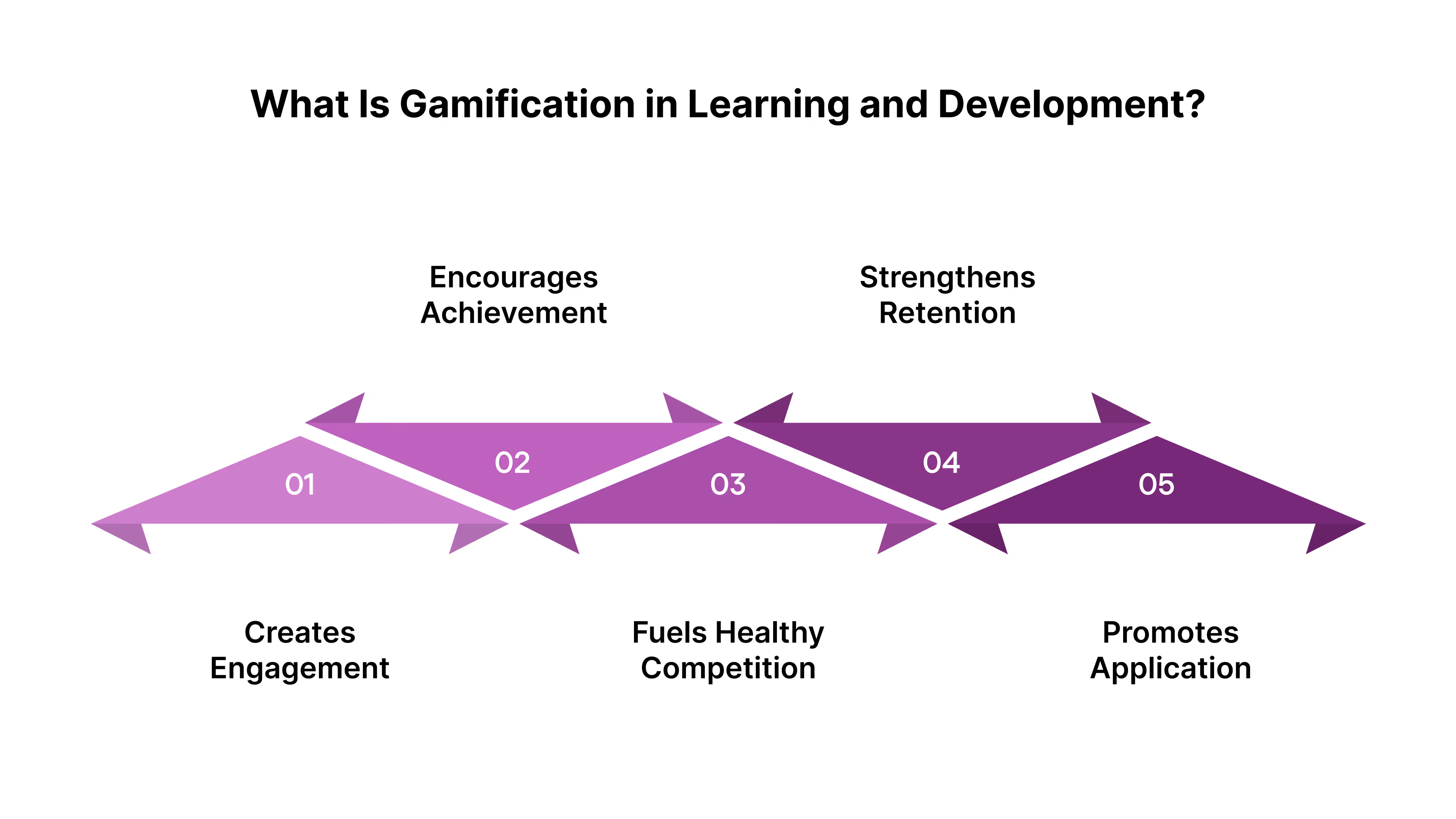
- Creates Engagement: Learners stay motivated through rewards, challenges, and progress tracking.
- Encourages Achievement: Points and badges provide a sense of accomplishment and measurable progress.
- Fuels Healthy Competition: Leaderboards drive participation and peer-to-peer motivation.
- Strengthens Retention: Repetition through interactive play enhances long-term memory.
- Promotes Application: Scenario-based learning allows employees to practice and apply new skills safely.
Unlike traditional training that focuses only on delivering information, gamified learning emphasizes behavioral change. It encourages employees to think, act, and make decisions in realistic situations, turning passive participation into active skill-building.
Why Gamification Works in Corporate Learning
Gamification works because it connects motivation, psychology, and performance. It triggers the brain’s natural reward system, making learning feel exciting and purposeful instead of routine.
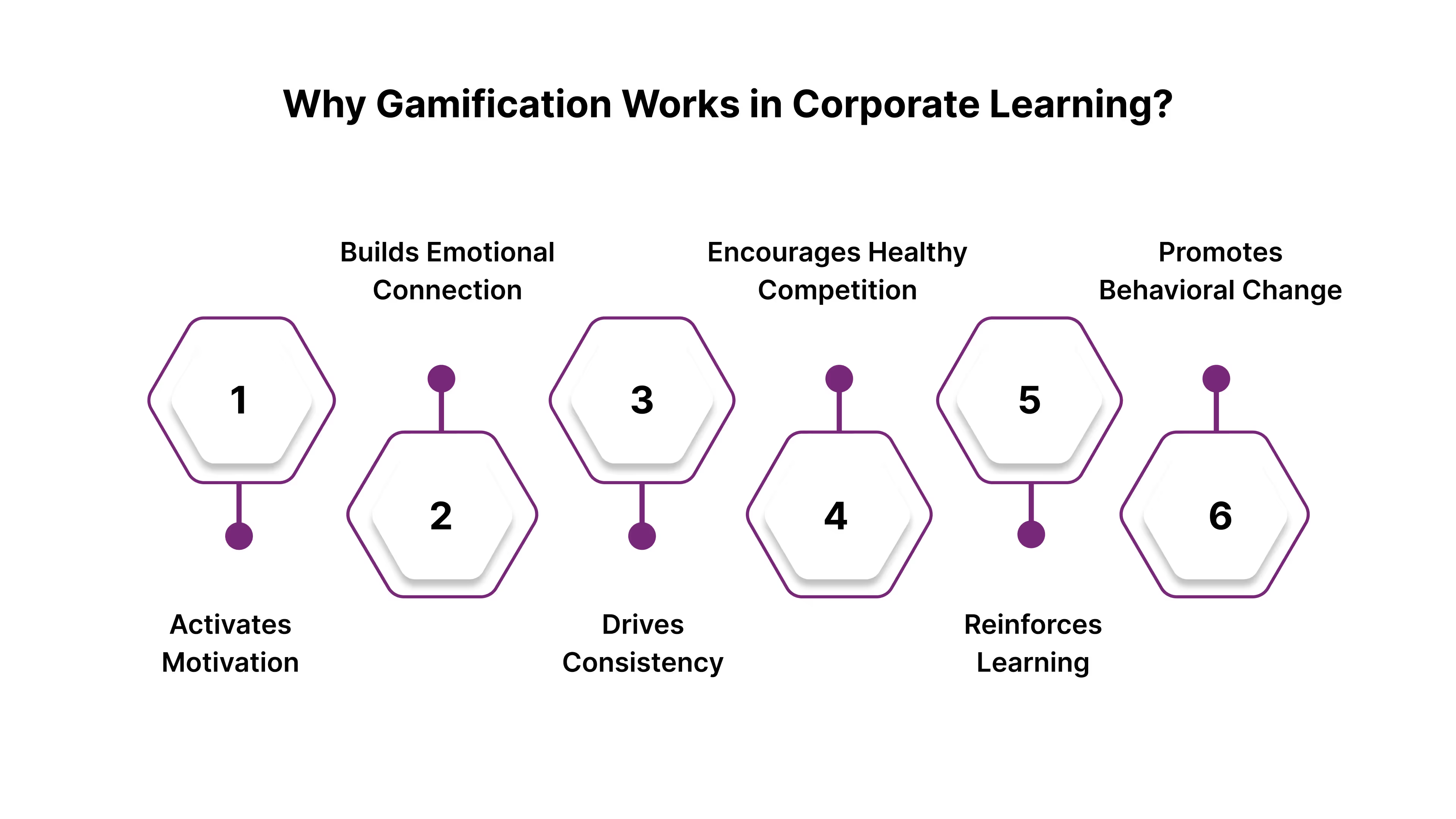
Here’s why it makes such a strong impact on learning outcomes:
- Activates Motivation: Game elements such as rewards, points, and feedback activate dopamine release, keeping learners curious and engaged.
- Builds Emotional Connection: Storylines and achievements create a sense of ownership, helping learners form emotional ties to the training.
- Drives Consistency: Progress tracking encourages regular participation and prevents drop-off.
- Encourages Healthy Competition: Leaderboards and peer challenges push learners to perform better without external pressure.
- Reinforces Learning: Quizzes, badges, and simulations strengthen knowledge retention through repetition and immediate feedback.
- Promotes Behavioral Change: Learners practice real-world decision-making in a safe, simulated environment that mirrors workplace challenges.
When designed strategically, gamification not only boosts engagement but also delivers measurable results in productivity, performance, and employee satisfaction.
How Gamification Transforms Corporate Training ROI
Gamification delivers more than engagement. It creates measurable improvements in how employees learn, perform, and apply knowledge on the job. By turning learning into a dynamic, data-driven experience, organizations can link participation directly to performance outcomes and business results.
Here’s how gamification enhances training ROI:
- Improves Retention and Recall: Interactive, reward-based learning helps employees retain knowledge longer and apply it confidently at work.
- Reduces Training Time: Short, goal-oriented challenges keep learners focused and help them acquire skills faster.
- Enhances Knowledge Application: Scenario-based games replicate real workplace situations, improving decision-making and problem-solving.
- Provides Actionable Analytics: Built-in tracking tools offer insights into learner progress, engagement, and skill gaps.
- Boosts Employee Performance: Continuous feedback loops and performance metrics translate learning achievements into measurable results.
When gamification aligns with business objectives, it transforms learning from a cost center into a strategic investment that drives organizational growth.
Designing Effective Gamified Learning Experiences
Creating impactful gamified learning experiences requires more than adding points or badges. It demands a structured approach that blends learning science, emotional engagement, and measurable business outcomes.

Here’s a step-by-step process to design gamified learning that truly drives performance.
Step 1: Define the Business Outcome
Every gamified solution must begin with a clear understanding of why it exists. The goal isn’t just engagement; it’s impact. Start by identifying the business metrics you want to influence.
Ask yourself:
- What behavior needs to change?
- What skill needs improvement?
- Which KPI will define success?
Examples:
- Reduce safety violations in manufacturing.
- Increase first-call resolution in customer support.
- Cut onboarding time from four weeks to two.
When you define the performance goal first, every design choice supports a measurable business result rather than “gamification for fun.”
Step 2: Map the Learner Journey
Once the goal is clear, structure the learner’s experience like a journey.
You:
- Break complex skills into smaller, achievable levels.
- Assign milestones that mark meaningful progress.
- Reward completion to reinforce a sense of achievement.
This roadmap helps learners visualize where they are, what they’ve accomplished, and what’s ahead. That visibility fuels momentum, turning training from a one-time event into a progressive learning experience.
Step 3: Build an Emotional Hook with Story
Facts inform, but stories connect. Storytelling transforms learning from a process into an experience. By weaving narrative into gamified learning, you engage both the heart and the mind, making the content memorable and meaningful.
Here’s how to build that emotional connection:
- Create relatable scenarios. Let learners see themselves in the story.
- Use characters with purpose. A mentor, a peer, or a competitor can create context and motivation.
- Add consequences and choices. Decision-based storytelling reinforces ownership and accountability.
For example:
- A sales representative “enters a live deal” and must respond to objections.
- A new manager “inherits a struggling team” and makes choices that affect morale and outcomes.
- A technician “prevents a system failure” by identifying and solving real-time challenges.
When learners are emotionally invested, they remember more, engage longer, and apply their learning faster.
Step 4: Use the Right Game Mechanics with Intention
Game mechanics are the engine behind engagement but they only work when used with purpose. Instead of adding random badges or points, align each element with the learning goal and desired behavior.
Here’s how to choose intentionally:
- Points reward consistent performance and reinforce progress.
- Badges recognize milestones, achievements, or specific competencies.
- Leaderboards create healthy competition and peer motivation.
- Timers or limited retries simulate real-world pressure, sharpening decision-making speed.
- Unlockable content provides an incentive for continued participation and mastery.
Each mechanic should serve one of three outcomes:
- Reinforce desired behavior.
- Encourage repetition and retention.
- Increase motivation through recognition.
When used strategically, game mechanics turn learning into a challenge learners want to conquer, not a task they have to complete.
Step 5: Add Practice Through Safe Simulation
Learning sticks when employees can practice what they’ve learned without the fear of failure. Simulations allow learners to make decisions, experience consequences, and build confidence in a risk-free environment.
Here’s how to integrate safe simulation into gamified learning:
- Use branching scenarios that adapt based on learner choices.
- Create realistic situations drawn from actual workplace challenges.
- Provide immediate feedback to help learners reflect and improve.
- Incorporate AR/VR environments for immersive, hands-on practice when applicable.
For example, a customer service representative might navigate a simulated complaint call, choosing responses that affect customer satisfaction. The learner sees the outcome instantly and understands how each decision impacts business performance.
By learning through experience, employees build competence and confidence, two essential ingredients for sustained behavior change.
Step 6: Personalize with Data and Feedback
Personalization is what keeps gamification effective beyond the first session. When data drives adaptation, learning becomes tailored, relevant, and motivating.
You can:
- Track real-time progress to identify skill gaps and adjust challenges.
- Use AI or analytics to recommend next steps or additional modules.
- Provide targeted feedback instead of generic “correct” or “wrong” messages.
- Reward consistent effort rather than just high performance to sustain motivation.
Personalized gamification keeps each learner in the optimal challenge zone where learning feels neither too easy nor too hard. This balance drives continuous engagement, faster mastery, and stronger performance outcomes.
Step 7: Integrate with the Learning Ecosystem
Gamification has the greatest impact when it seamlessly integrates with your existing learning ecosystem. Integration ensures every learning moment contributes to measurable organizational performance.
Here’s how to make it work:
- Connect with your LMS or LXP to track progress, badges, and completion data in one place.
- Feed performance insights into dashboards for managers and L&D leaders.
- Use analytics to correlate engagement data with business KPIs such as sales performance, compliance adherence, or customer satisfaction.
- Enable continuous feedback loops so training results inform future course design and workforce strategy.
When gamification becomes part of the enterprise learning fabric, it shifts from being a one-time engagement tool to a scalable system for growth and transformation.
The Future of Gamification in Corporate Learning: Where Engagement Meets Intelligence
As technology evolves, gamification is moving beyond points and leaderboards into a new era of intelligent, immersive learning. The future lies in combining emotional engagement with data-driven personalization, creating learning ecosystems that adapt, predict, and perform.
At Liberate Global, we’re leading this transformation by blending AI, data, and emotional intelligence to craft learning experiences that inspire, adapt, and deliver measurable business results.
Here’s how we’re driving the next evolution in gamified learning:
- AI-Powered Personalization: Adaptive algorithms tailor challenges, feedback, and learning paths to each individual, ensuring relevance and motivation.
- Immersive AR/VR Environments: Real-world simulations help learners practice complex decision-making safely and confidently.
- Emotionally Intelligent Design: Our learning experiences connect with learners on a human level, evoking empathy, curiosity, and sustained engagement.
- Data-Driven Insights: Integrated analytics measure engagement, retention, and skill growth, transforming learning data into actionable business intelligence.
- Continuous Learning Ecosystems: We integrate gamified learning into enterprise systems to ensure scalability, consistency, and long-term performance improvement.
Conclusion
Gamification has proven that learning doesn’t have to be passive—it can be purposeful, measurable, and deeply engaging. When designed with intention, it bridges the gap between employee motivation and business performance, turning learning into a strategic growth driver.
At Liberate Global, we bring this vision to life by merging learning science, human-centered design, and advanced technology. Our gamified learning solutions don’t just make training enjoyable—they make it effective, scalable, and aligned with your organization’s goals.
Whether you’re building a performance culture, enhancing engagement, or driving measurable ROI, Liberate Global helps you transform training into a competitive advantage. Contact Liberate Global today to discover how our gamified learning strategies can help you empower your teams and achieve lasting business impact.
FAQs
1. How does gamification improve employee engagement?
A: Gamification activates the brain’s reward system, encouraging participation through progress tracking, feedback, and recognition. It transforms routine training into interactive experiences that sustain learner interest and motivation.
2. What are the key benefits of gamification in corporate learning?
A: Gamification boosts engagement, knowledge retention, and performance. It creates measurable outcomes such as faster onboarding, higher course completion rates, and improved decision-making in real-world situations.
3. Is gamification suitable for all types of corporate training?
A: Absolutely. Gamification can enhance onboarding, compliance, leadership development, sales training, and performance coaching—anywhere engagement, retention, or skill transfer is essential.
4. What technologies power modern gamified learning?
A: Modern gamification uses AI for personalization, AR/VR for immersive practice, and analytics for real-time tracking, creating adaptive, data-driven learning environments.
5. How can organizations measure the success of gamified learning?
A: Success is measured through key metrics like completion rates, engagement levels, skill proficiency, and post-training performance data, all tracked through analytics and integrated dashboards.
6. What role does storytelling play in gamified learning?
A: Storytelling adds context, emotion, and relatability. It connects learners to the content through narrative-driven challenges that make learning more memorable and meaningful.
7. How can companies start implementing gamification in training?
A: Start by defining your business goals, identifying learner needs, and choosing game mechanics that align with desired outcomes. Partnering with an experienced learning design firm can ensure a strategic, measurable rollout.

subscribing!
Related articles


.jpg)
.jpg)






.jpg)
