






.avif)

How LMS Gamification Transforms Corporate Training: Benefits, Features, and Best Practices

Summary
Boost your LMS engagement with gamification. Enhance learning with points, badges, and challenges. Explore top tools and best practices now!|Boost your LMS engagement with gamification. Enhance learning with points, badges, and challenges. Explore top tools and best practices now!|Boost your LMS engagement with gamification. Enhance learning with points, badges, and challenges. Explore top tools and best practices now!
With remote and hybrid work now the norm, traditional training feels flat, slow, and forgettable. Learners skip modules, completion rates stall, and knowledge doesn’t stick, so business impact never follows. Gamification changes that: when design is purposeful, game mechanics (points, levels, badges, story) lift engagement and make learning repeatable and measurable.
In this blog, we’ll break down what LMS gamification is, where it works best, and how to use gamification strategically to boost engagement and performance.
TL;DR
- Helps counter low attention and disengagement, major barriers for hybrid and remote teams today.
- Includes progression mechanics, instant feedback, social elements, rewards, and robust analytics in a strong gamified LMS.
- Improves retention, boosts participation, and supports real performance outcomes when aligned with learning goals.
- Designs gamified learning experiences that go beyond badges and leaderboards, mapping every mechanic to real behavior change and business impact.
- Designing gamified learning experiences with Liberate Global goes beyond badges and leaderboards, mapping every mechanic to real behavior change and business impact.
What Is LMS Gamification?
LMS gamification adds game-like elements, such as points, badges, levels, leaderboards, and instant feedback, to a Learning Management System to make training more engaging and rewarding. Instead of passively completing modules, learners progress through challenges, track their growth, and receive recognition as they improve.
This approach works because it taps into basic motivators like progress, competition, and achievement, helping training feel less like a task and more like an experience. When applied with intention, it boosts participation, strengthens knowledge retention, and supports more consistent performance across teams.
Also Read: Gamification Strategies and Best Practices to Upskill Your Learners and Improve Business ROI
Why Gamification Matters in Corporate Learning
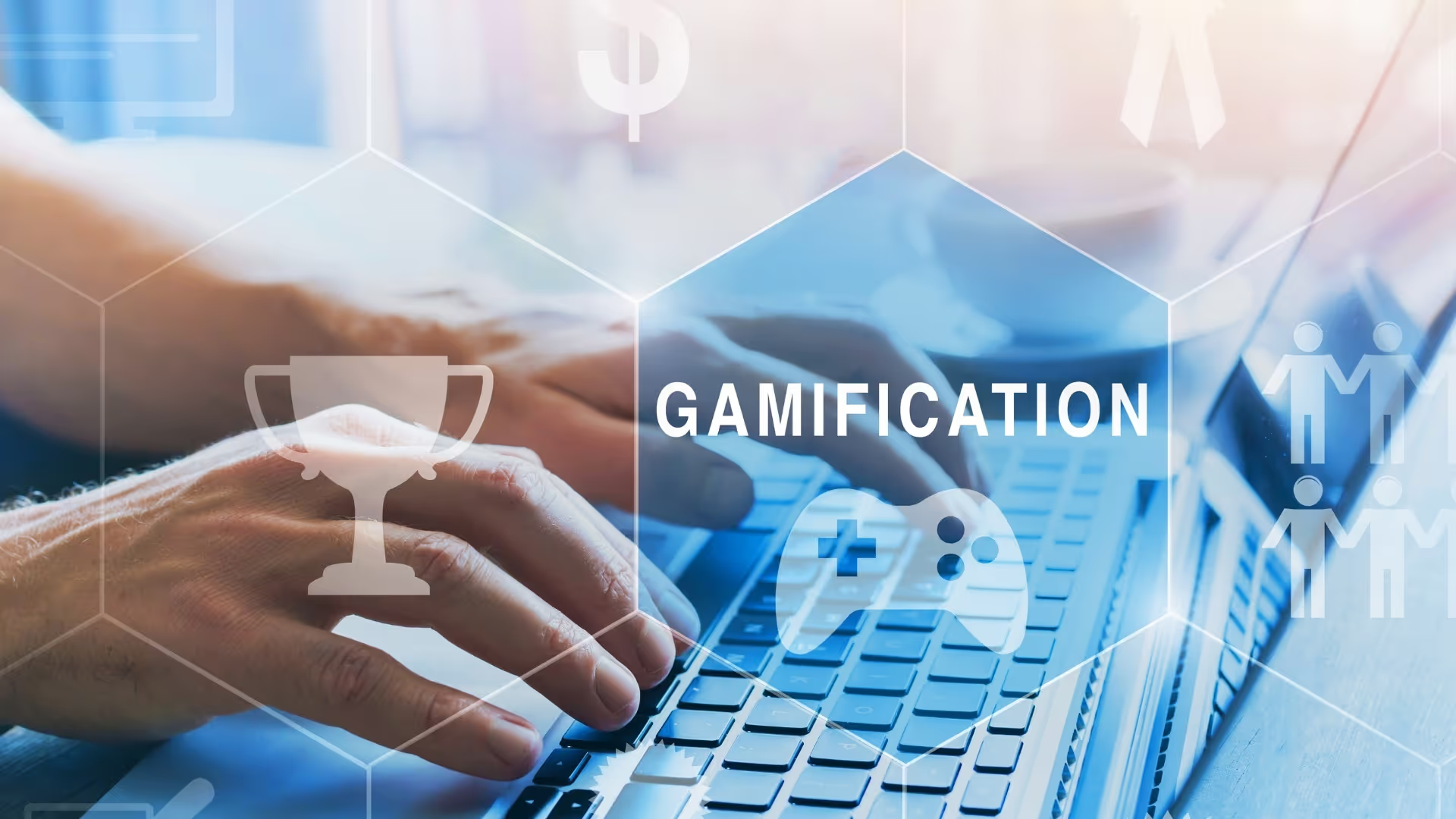
Gamification isn’t about turning training into a game; it’s about making learning meaningful enough that employees stay engaged, participate consistently, and actually retain what they learn. When the learning experience feels rewarding, and progress is visible, motivation naturally increases.
Here’s why it matters:
- Higher engagement: Points, levels, and leaderboards make learners more likely to start and finish training.
- Better retention: Interactive elements and instant feedback help information stick.
- Greater motivation: Recognition and rewards give learners a reason to keep progressing.
- Stronger performance: When learners practice, repeat, and stay engaged, skills translate into real behavior change.
- A healthier learning culture: Employees feel ownership over their development instead of treating training like a checkbox.
Gamification makes learning feel purposeful, and that’s what ultimately improves performance across the organization.
Also Read: Gamification Design Techniques to Engage and Energize Your Learners
Benefits of LMS Gamification for Employee Learning
Gamification can transform how employees experience training, turning passive participation into active, meaningful learning. When done well, it doesn’t just make training more enjoyable; it drives real improvements in performance, retention, and engagement.
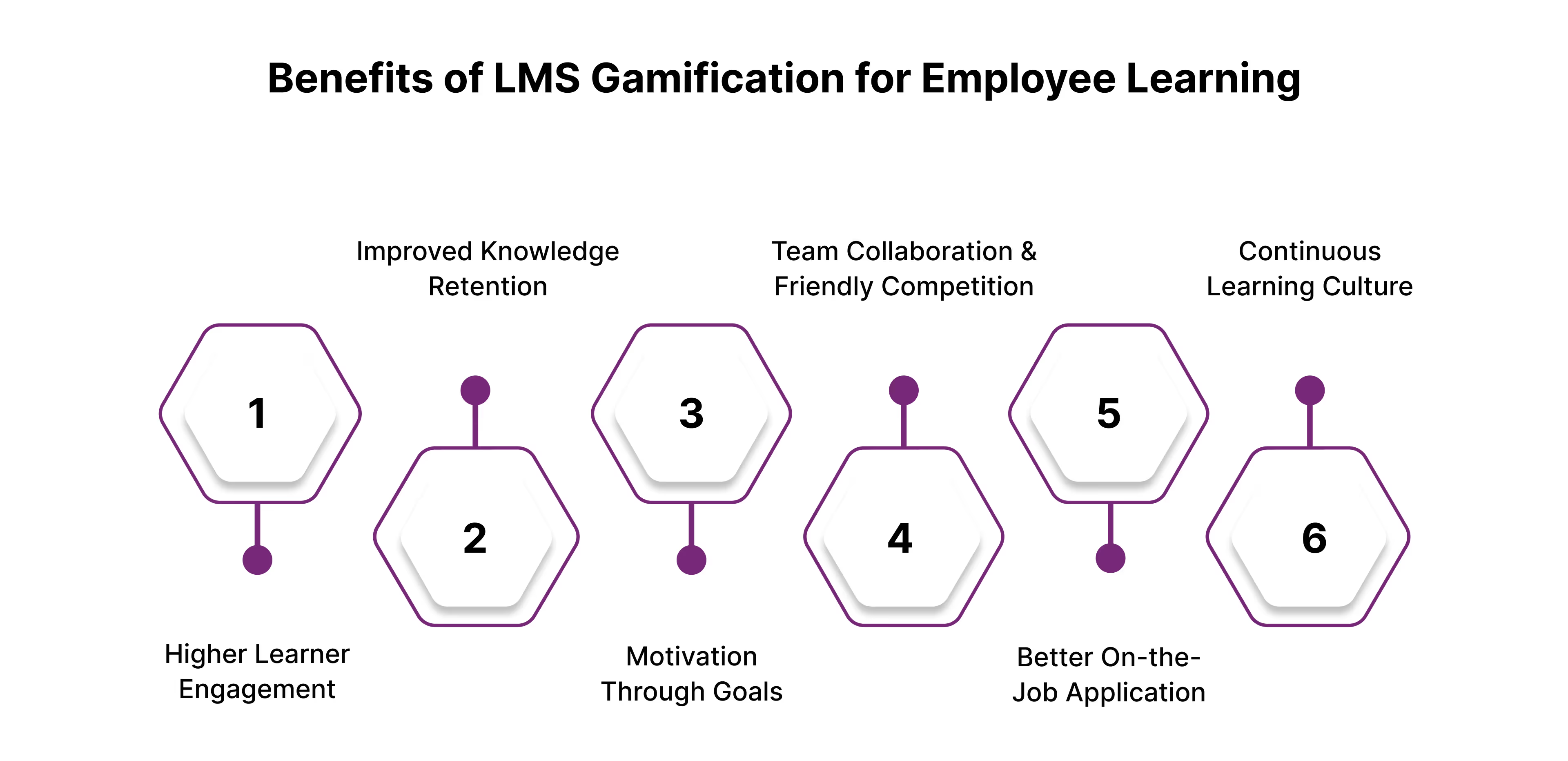
Higher Learner Engagement
Gamified elements like points, badges, and levels give learners a reason to log in, stay focused, and complete modules. When progress feels visible and rewarding, participation naturally increases.
Improved Knowledge Retention
Training becomes more memorable when learners interact with content rather than simply reading or watching. Quizzes, challenges, and scenario-based tasks encourage repeated practice, making information stick.
Motivation Through Goals and Progress Tracking
Clear goals and progress indicators give learners a sense of direction. They can see how far they've come and what’s left to achieve, reducing drop-offs and encouraging steady improvement.
Team Collaboration and Friendly Competition
Leaderboards and group challenges spark healthy competition. Teams motivate each other, share insights, and take greater ownership over the learning journey.
Better On-the-Job Application
Interactive, game-like activities mirror real work situations. This helps learners build confidence and apply new skills faster in day-to-day tasks.
Continuous Learning Culture
When training feels rewarding, employees keep coming back. Gamification signals that learning is an ongoing part of growth, not a one-time requirement.
Also Read: Impact of Gamification in Corporate Learning and Development
Key Gamification Elements That Actually Drive Learning Impact

Gamification works when it strengthens motivation, reinforces learning, and helps employees see progress, not when it adds noise or distractions. The following elements are the backbone of effective gamified learning across modern LMS platforms.
1. Points and Progress Tracking
Points give learners instant feedback. They confirm effort, signal progress, and make achievements visible. But the real value lies in how points guide behavior, especially when linked to specific skills, milestones, or desirable actions.
Why it works:
- Reinforces continuous learning
- Encourages repeat engagement
- Makes progress measurable and motivating
2. Badges and Achievement Milestones
Badges recognize meaningful accomplishments. When tied to real skills or performance outcomes, they create a sense of mastery rather than surface-level rewards.
Why it works:
- Builds confidence through visible achievements
- Helps learners track their growth
- Energizes participation and course completion
3. Levels and Learning Path Advancement
Levels help employees understand where they are in their learning journey and what’s coming next. Each level feels like unlocking a new capability, not just content.
Why it works:
- Creates forward momentum
- Makes complex learning paths feel manageable
- Helps L&D teams structure skills progression
4. Leaderboards and Healthy Competition
Leaderboards tap into social motivation. They encourage consistency, effort, and a sense of community, especially in distributed or remote teams.
Why it works:
- Increases learner participation
- Inspires friendly competition
- Builds team engagement and shared goals
5. Challenges, Quests, and Scenario-Based Missions
Instead of passively consuming content, learners actively do something. These immersive elements improve decision-making, problem-solving, and applied skills.
Why it works:
- Makes learning feel purposeful
- Strengthens practical understanding
- Boosts knowledge retention through doing
This is where Liberate Global's learning design elevates traditional LMS mechanics by designing challenges that mirror actual workplace decisions.
6. Rewards and Incentive Systems
From virtual rewards to real-world perks, incentives amplify motivation when they reinforce effort and tie back to business objectives.
Why it works:
- Boosts participation
- Encourages consistent learning behavior
- Helps employees link learning to personal value
7. Real-Time Feedback and Smart Nudges
Instant feedback helps learners adjust quickly. Smart nudges, reminders, encouragement, and tailored recommendations keep them moving forward without overwhelming them.
Why it works:
- Reduces drop-off
- Supports learners in the moment
- Builds self-awareness and accountability
How to Choose the Right Gamified LMS

Choosing the right LMS goes beyond comparing badges, points, or leaderboards. The real question is whether the platform will support the type of learning experience your organization wants to create, one that motivates employees, builds real capability, and ties back to business goals.
Here’s what to look for when evaluating a gamified LMS:
1. Alignment With Learning Goals
Gamification should strengthen skill development, not distract from it. The LMS should allow you to tie game mechanics to real performance outcomes, not just surface-level engagement.
Look for:
- Clear connection between features and learning objectives
- Ability to map challenges to job tasks
- Flexible rules for progression and rewards
2. Ease of Use for Learners and Administrators
If the platform feels confusing or requires heavy setup, adoption will drop, no matter how many game elements it offers.
Look for:
- Clean, intuitive learner experience
- Low admin overhead for configuring gamification
- Plug-and-play mechanics without long setup cycles
3. Personalization Capabilities
Employees learn at different speeds and through different modes. A strong gamified LMS adapts to these differences.
Look for:
- Personalized learning paths
- Adaptive rules for points or badges
- Tailored recommendations and nudges
4. Quality of Analytics and Reporting
Gamification produces valuable behavioral data, but only if the LMS turns it into insights you can act on.
Look for:
- Engagement and performance analytics
- Visibility into where learners struggle
- Reports that help managers track real progress
5. Integration With Your Existing Ecosystem
Your LMS should work with the systems you already use, not create another silo.
Look for:
- HRIS, CRM, and productivity tool integrations
- Compatibility with your existing content
- API support for deeper customization
6. Scalability Across Teams and Locations
If your workforce is distributed or growing, the LMS should scale gamification without losing quality.
Look for:
- Support for different branches or teams
- Multi-level leaderboards or competitions
- Consistent experience across devices
7. Flexibility for Custom Game Mechanics
Most LMS platforms offer standard gamification. The real differentiator is flexibility, the ability to design experiences that match your culture and performance goals.
Look for:
- Support for custom quests, badges, or pathways
- Conditional content release
- Ability to embed scenario-based challenges
Make Corporate Training More Impactful with Liberate Global
Most LMS platforms offer gamification features. Liberate Global focuses on gamification that actually changes behavior. Instead of relying on generic badges or points, Liberate Global builds emotionally intelligent, research-backed learning experiences that feel meaningful to employees, not gimmicky.
Where Liberate Global Stands Apart
Liberate Global treats gamification as part of a broader performance strategy, blending:
- Story-based learning that taps into intrinsic motivation
- Micro-challenges and quests tied to real tasks employees perform
- Branching scenarios that simulate workplace decisions
- Immersive AR/VR journeys for high-impact practice
- AI-driven reinforcement loops to reduce knowledge decay
- Analytics that link performance data to outcomes
This approach works across any LMS. Liberate Global's the experience, not just the mechanics, making gamified learning feel like progress, not play.
Best For: Organizations seeking strategic, behavior-changing gamification instead of surface-level game elements.
Conclusion: Build Learning Experiences That Motivate and Matter
Gamification can transform an LMS from a content library into a motivational learning ecosystem, but only when done with purpose. The right mix of points, challenges, rewards, and feedback helps employees stay engaged, retain information, and apply their skills confidently on the job.
This is where EI makes a measurable difference. Our human-centered approach ensures your gamification strategy aligns with real business outcomes, learner needs, and day-to-day performance demands. Whether you’re elevating onboarding, upskilling teams, or boosting engagement across your learning ecosystem, Liberate Global helps you design gamified learning that actually works.
Want to build learning experiences that employees enjoy and return to?
Book a call with Liberate’s Glolearning and performance experts and discover how gamified, emotionally intelligent learning can drive better performance across your organization.
FAQs
1. What is gamification in an LMS?
Gamification is the use of game elements, like points, badges, levels, and challenges, to enhance motivation and engagement within a learning management system.
2. Does gamification really improve learning outcomes?
Yes. Research consistently shows that repeat interactions, instant feedback, and visible progress significantly boost retention, motivation, and long-term behavior change.
3. What types of teams benefit most from gamified learning?
High-volume onboarding teams, customer-facing roles, sales groups, remote workers, and any audience that struggles with engagement benefit the most.
4. Can gamification work for compliance training?
Absolutely. Gamification can turn repetitive or mandatory content into interactive challenges that improve completion rates and reduce training fatigue.
5. How does Liberate Global support gamification implementation?
Liberate Global gamified learning experiences that are purposeful, emotionally engaging, and tied directly to performance goals, ensuring real impact, not just participation spikes.

subscribing!
Related articles


.jpg)
.jpg)





.jpg)
