






.avif)

Resource Augmentation: What It Is and How It Supports L&D


Summary
Resource augmentation helps L&D teams scale quickly by giving them flexible access to specialized talent without increasing headcount. It enables faster project delivery, stronger cost control, and consistent learning quality while keeping strategic ownership in-house. With the right model and governance, it becomes a scalable way to strengthen long-term learning capability.
As deadlines slip and skilled talent becomes harder to find, L&D teams are feeling the pressure. Budgets are tight, yet business leaders still expect faster and higher-quality learning delivery. For many L&D leaders, this constant tug between growing demand and limited capacity is part of how teams function today.
Traditional hiring takes too long to keep up with shifting priorities, while fully outsourcing projects often means losing creative control. That’s where resource augmentation plays a major role. It’s a smarter way to grow your team’s capabilities without increasing their payroll.
In this blog, you’ll learn how to make resource augmentation work for your L&D function, so you can improve efficiency, manage costs, and stay in control of every project.
Key Takeaways:
- Resource augmentation gives L&D teams flexible access to specialized talent, helping them scale instantly without increasing headcount.
- It bridges skill gaps, speeds up delivery, and keeps quality consistent across high-demand projects.
- A structured framework covering role definition, onboarding, governance, and performance tracking makes augmentation scalable and repeatable.
- Measuring outcomes through utilization, delivery speed, and cost-per-project ensures tangible business ROI.
- Emerging trends, such as hybrid collaboration models, analytics-driven resourcing, and long-term strategic partnerships, redefine how L&D teams expand their capacity.
What Is Resource Augmentation & What Does it Do?
Resource augmentation is a smart staffing approach that helps organizations strengthen their teams by bringing in external experts whenever needed. Instead of hiring full-time employees, companies add skilled professionals, like instructional designers, learning technologists, or project managers, to existing teams for specific projects or time periods.
This flexible setup enables businesses to stay agile, manage costs effectively, and maintain high-quality delivery without overextending their internal teams.
Once you understand resource augmentation, it’s easy to see why it’s such an effective model for L&D teams.
Resource Augmentation that Truly Supports L&D Teams
Resource augmentation matters because it gives L&D teams the freedom to scale up or down whenever needed, without increasing long-term costs or losing control over their work. Here’s how this approach helps L&D teams tackle real, day-to-day challenges:
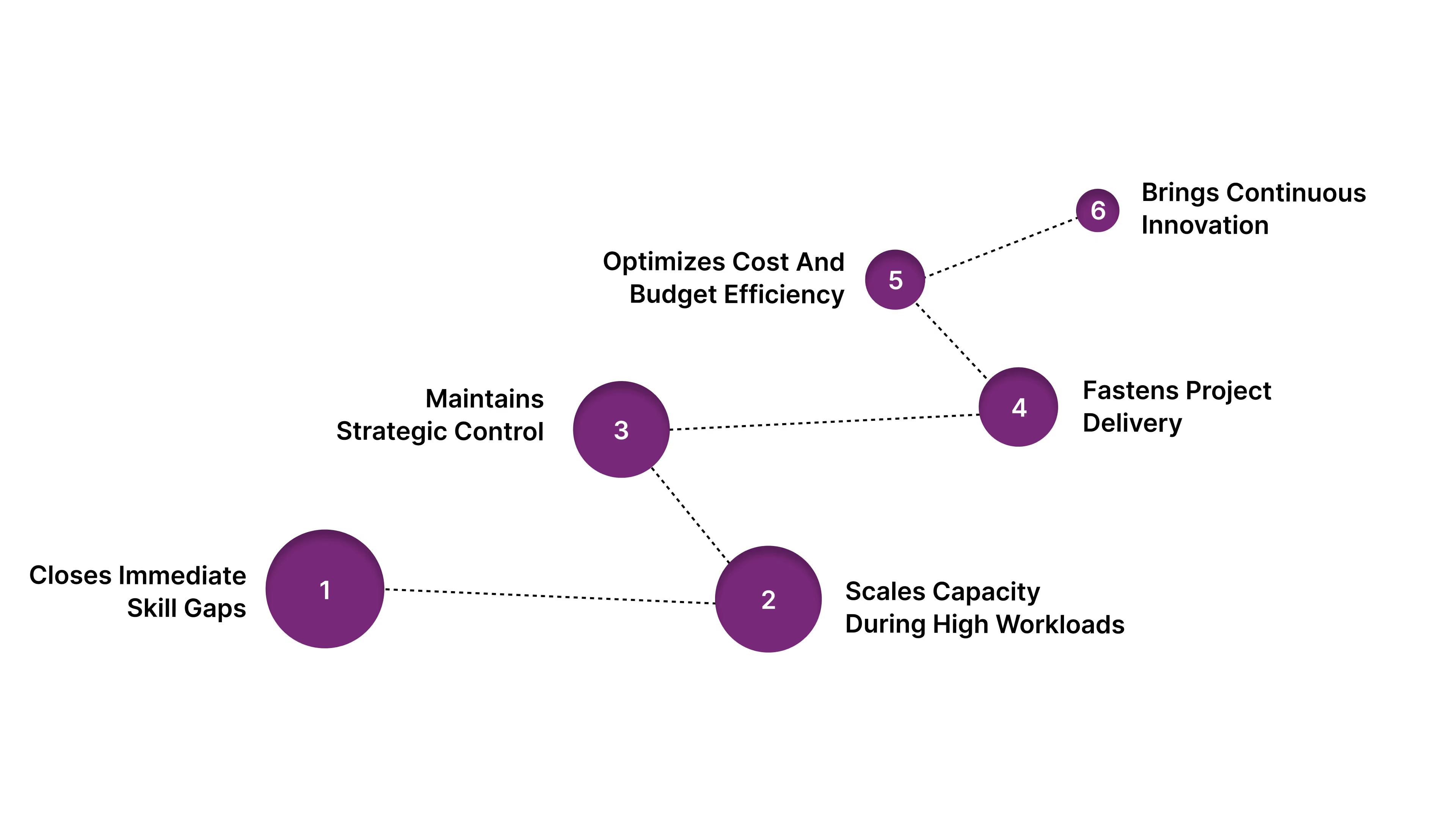
1. Closes Immediate Skill Gaps
Learning technologies and design trends evolve quickly. Hiring full-time experts for each niche skill can be time-consuming and budget-draining. Resource augmentation fixes this by connecting teams with experienced professionals who can jump in right away. It ensures projects move forward smoothly, without delays or compromises in quality.
2. Scales Capacity During High Workloads
Big rollouts, such as compliance training or global onboarding, often stretch internal teams thin. Temporary hiring or extra workloads can lead to burnout or missed deadlines.
With resource augmentation, teams can expand instantly when workloads peak and scale back once the workload settles.
3. Maintains Strategic Control
Outsourcing an entire project can sometimes limit visibility or creative control. In a resource augmentation setup, external experts work within the company’s own systems and brand guidelines. This keeps the organization in charge of decisions, quality, and timelines while still benefiting from outside expertise.
4. Fastens Project Delivery
When projects pile up, delivery timelines often suffer. Augmented resources, however, come ready to go. Their hands-on experience and familiarity with L&D tools enable them to integrate quickly and deliver results faster, with no lengthy onboarding required.
5. Optimizes Cost and Budget Efficiency
Hiring permanent employees to meet short-term needs can increase costs and limit flexibility. Salaries, benefits, and training expenses can accumulate quickly. Resource augmentation offers a smarter way. You pay only for the expertise you need and when you need it. This helps balance costs while maintaining consistent output.
6. Brings Continuous Innovation
Busy teams often struggle to explore new ideas or technologies while managing everyday tasks. By bringing in specialists skilled in areas such as VR learning, AI-driven content, or advanced analytics, L&D teams can experiment and innovate without overloading their internal staff.
Once you understand how resource augmentation benefits L&D teams, it is essential to be aware of the various models available to support them.
Suggested Read: Key Trends in Corporate Training and Development for 2025
Popular Resource Augmentation Models for L&D
Resource augmentation can look different for every organization. The right approach depends on how much control your team wants to retain, the scale of your projects, and the kind of expertise you need. Below are some of the top resource augmentation models for L&D.
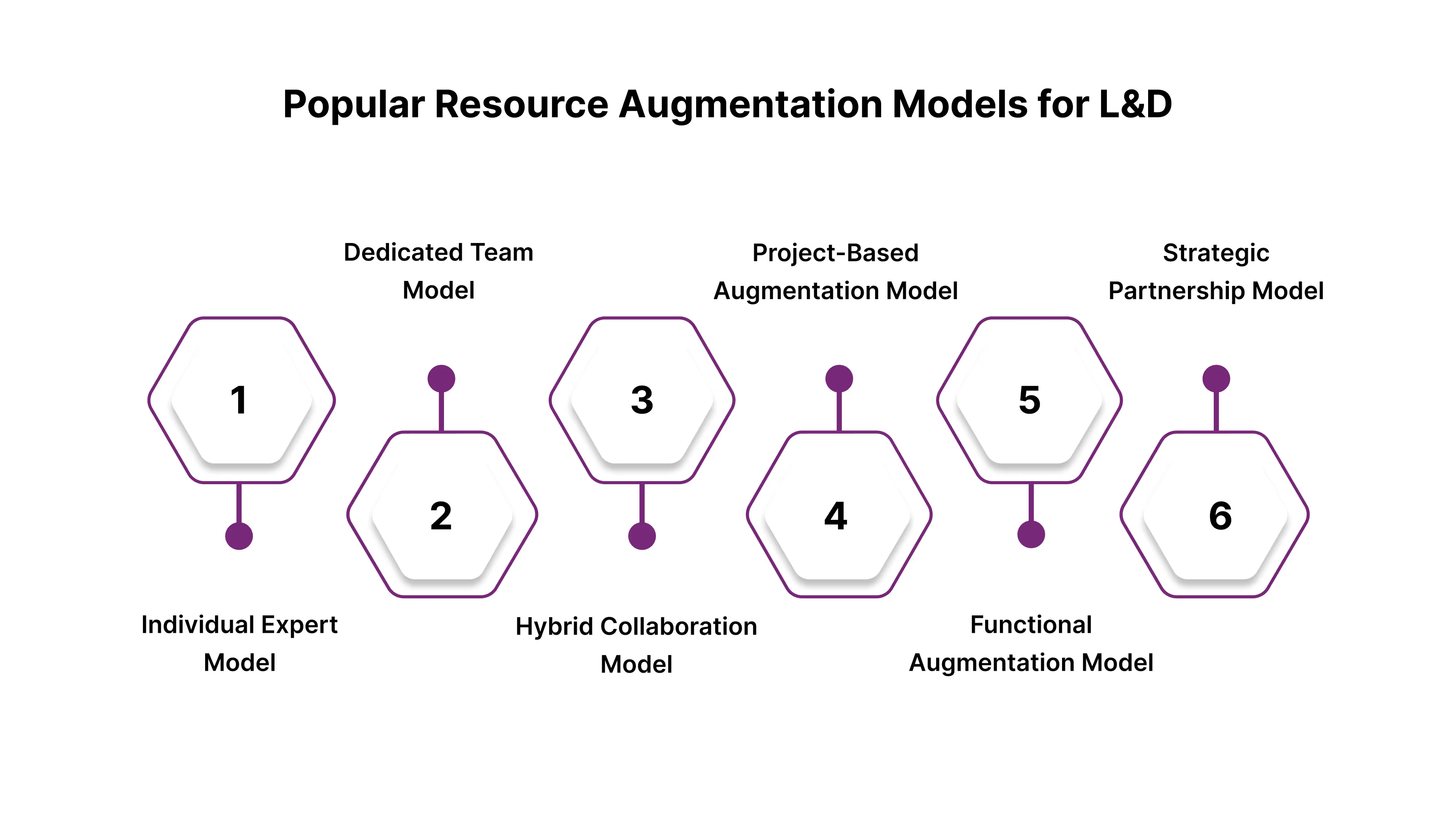
1. Individual Expert Model
In this setup, organizations bring in individual professionals with specialized skills, such as instructional designers, visual creators, or learning technologists, to strengthen their internal capabilities. These experts work within your systems and report directly to L&D leaders. Key highlights include:
- Brings in specific experts for short-term or project-based needs.
- Offers direct control and seamless integration with internal teams.
- Minimizes onboarding since professionals are already skilled.
- Ideal for targeted support such as content design, graphics, or learning analytics.
2. Dedicated Team Model
Here, an external vendor provides a full team, typically including designers, developers, and project managers, to deliver complete learning initiatives. The team functions as an extension of your L&D department, following your standards and workflows. Key highlights include:
- Exclusive team dedicated to your projects.
- Ensures consistency across multiple deliverables.
- Reduces management overhead for internal leaders.
- Perfect for large-scale initiatives like onboarding or compliance training.
3. Hybrid Collaboration Model
The hybrid model blends internal expertise with external talent. Your internal team leads strategy, stakeholder communication, and quality checks, while external professionals handle execution-heavy or technical tasks. Key highlights include:
- Combines internal oversight with external production support.
- Promotes transparency through shared tools and workflows.
- Balances innovation with governance in a single framework.
- Well-suited for digital transformation or blended learning projects.
4. Project-Based Augmentation Model
This model is designed for specific, time-bound projects. External professionals or teams are hired for a defined duration, and once the deliverables are complete, the engagement ends. Key highlights include:
- Defined timelines and deliverables.
- Fixed-cost or milestone-based structure.
- Simplifies budget management and forecasting.
- Ideal for temporary spikes in workload or skill requirements.
5. Functional Augmentation Model
Here, certain L&D functions, like LMS administration, content production, or analytics, are partially supported by external professionals. Your internal team retains control of overall strategy while external experts handle day-to-day execution. Key highlights include:
- Delegates repeatable or operational tasks to external teams.
- Maintains consistency across ongoing learning cycles.
- Offers long-term support for bandwidth-heavy functions.
- Best suited for organizations with steady delivery needs.
6. Strategic Partnership Model
This is a long-term, relationship-driven model where a trusted resource partner continuously provides skilled professionals across roles and technologies. Over time, the partner becomes deeply familiar with your culture, goals, and processes. Key highlights include:
- Provides continuous access to pre-vetted, role-ready experts.
- Simplifies workforce planning and capacity forecasting.
- Ensures cultural and process alignment.
- Enables rapid scaling across geographies and business units.
After knowing the different models of resource augmentation, it’s useful to understand how the overall framework operates in practice.
A Closer Look at How Resource Augmentation Really Works

The resource augmentation framework operates through a set of clear, repeatable steps that enable L&D teams to onboard external talent smoothly, maintaining control over project delivery quality. Here’s how the resource augmentation framework operates:
1. Identify Capability and Capacity Gaps
Start by reviewing your ongoing and upcoming projects to see where your team is stretched thin or missing specific skills. Review your learning roadmap, check for dependencies, and note areas where support is needed, such as content design, media development, or analytics.
2. Define Scope and Roles
Once you know the gaps, turn them into clear role definitions. Outline what each external professional will do, the outcomes you expect, and how long you’ll need them. Ensure everyone is aware of who’s responsible for what and how communication will flow.
3. Select the Right Resource Partner
Choose a partner with a solid track record in enterprise learning projects. Look for vendors who understand your domain, have skilled professionals ready to step in, and can respond quickly to project needs. The best partners are those who adapt easily to your tools, processes, and work culture.
4. Onboard and Integrate Augmented Talent
Treat your augmented professionals like an extension of your team. Provide them with access to tools, templates, and documentation from the outset. Walk them through your brand guidelines, communication channels, and review steps. Assign mentors or project leads who can guide them through the initial days.
5. Align on Governance and Communication
Set up a simple governance model that keeps everyone accountable and connected. Define how often reviews will occur, how approvals work, and who to contact for escalations. Shared dashboards or progress trackers can help you stay updated and maintain visibility across projects, teams, and time zones.
6. Monitor Performance and Delivery Quality
Monitor progress through clearly defined KPIs, such as turnaround time, content quality, or stakeholder satisfaction. Schedule short weekly check-ins to address any roadblocks early. Use feedback from both sides to fine-tune workflows and keep quality consistent across deliverables.
To make this process even more effective, EI helps teams monitor performance and delivery quality through clear KPIs, weekly check-ins, and continuous feedback loops. This ensures every learning initiative stays aligned with goals, maintains quality, and drives measurable impact.
7. Review, Scale, or Transition
After each project, take time to assess how well the augmentation worked. Compare results with your goals, timelines, and budgets. See where external talent added the most value. Then decide whether to extend, scale, or conclude the engagement. Finally, document the lessons learned so your next collaboration becomes even smoother.
EI ensures smooth integration of staff augmentation resources through structured onboarding kits, QA checklists, and shared dashboards. These tools help new professionals align quickly with client workflows, maintain consistent quality, and provide full visibility into project progress in real time.
Also Read: How to Use AI in Training for Personalized Learning and Measurable Results
Efficiency and Cost Savings through Resource Augmentation
Resource augmentation helps L&D teams manage costs more effectively by converting learning delivery expenses from fixed to flexible costs. Teams can bring in skilled professionals only when needed. This gives organizations tighter budget control and measurable efficiency gains.
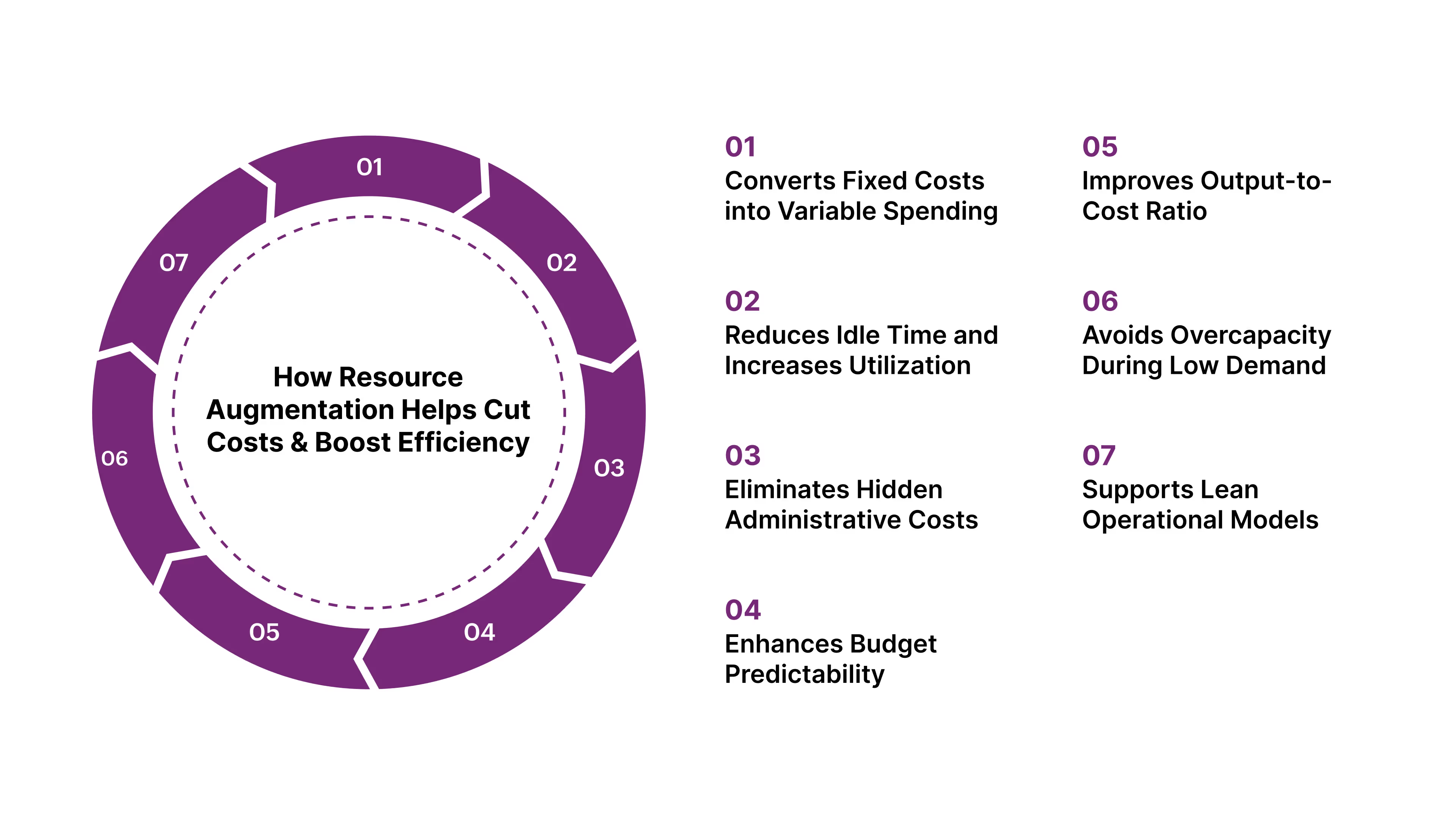
Here’s how it improves both financial and operational performance:
1. Converts Fixed Costs into Variable Spending
Hiring full-time employees often locks budgets into long-term expenses like salaries, benefits, and office costs. Resource augmentation replaces that with flexible, project-based spending. Budgets can then adjust easily to match business cycles, improving predictability and removing idle capacity between projects.
2. Reduces Idle Time and Increases Utilization
In-house teams may not always have full workloads, especially during project lulls. Augmented professionals, on the other hand, work only during active phases, so every rupee spent goes toward productive output. This approach keeps utilization rates high without paying for downtime.
3. Eliminates Hidden Administrative Costs
Full-time hiring brings along hidden costs, like recruitment efforts, onboarding hours, and management time. Augmented experts skip all that. They arrive ready to contribute, integrate quickly into systems, and start delivering right away. That means less administrative effort and faster value delivery.
4. Enhances Budget Predictability
Since augmented talent is usually billed by time, milestone, or deliverable, it’s easier to track and forecast expenses. L&D leaders can plan monthly or quarterly budgets with clarity, align spending with corporate goals, and maintain better financial accountability.
5. Improves Output-to-Cost Ratio
When skilled professionals step in and start contributing immediately, projects move faster, and output increases. The same budget produces more work of higher quality, improving cost-per-project metrics and overall ROI on learning investments.
6. Avoids Overcapacity During Low Demand
When project demand slows, in-house teams often sit underutilized, but the payroll costs remain. Resource augmentation solves this by letting organizations scale down easily when workloads drop. This keeps cost structures lean and efficient throughout the year.
7. Supports Lean Operational Models
Bringing in external professionals reduces the need for extra office space, equipment, and software licenses for new hires. It supports a leaner, more flexible operational model that keeps overheads low while maintaining consistent delivery performance.
Knowing how resource augmentation drives cost savings and efficiency sets the stage for finding smarter, more innovative ways to make it work even better.
Innovative Ways to Make Resource Augmentation Work Better
The success of resource augmentation is about how well it's managed. The real impact comes from disciplined execution: how external professionals are identified, onboarded, and guided throughout each project. Here are some practical strategies to make the model work effectively in your L&D strategy:
1. Build a Centralized Talent Pool
Keep a database of trusted professionals categorized by skill, experience, and past performance. Include details such as project history, feedback, and turnaround time, so you can quickly find and redeploy the right talent when new projects arise.
2. Use Skill-Based Assignment
Instead of matching people by job titles, map tasks to specific skills. Create a simple skill inventory that lists technical tools, design strengths, and delivery formats required for each project. This helps assign the right person to the right task, improving accuracy and output quality.
3. Involve External Experts from Day One
Bring augmented professionals into kickoff meetings and early planning discussions. Share your project roadmap, access permissions, and brand guidelines upfront. Clear roles and early alignment prevent confusion later and let them start contributing right away.
4. Set Up a Unified Collaboration Workspace
Use one shared platform for planning, communication, and file management. Keep folder structures and file names consistent across teams. Integrate automation tools for updates and time tracking so everyone stays informed without constant check-ins.
5. Standardize Onboarding Processes
Prepare a ready-to-use onboarding kit that includes all essential resources, such as templates, workflows, brand guidelines, and sample deliverables. Ensure that every new professional has access to the necessary tools, channels, and reference materials before they start work.
6. Establish Short Feedback Sprints
Don’t wait until the end of the project to review progress. Establish short feedback cycles every one to two weeks. Use sprint boards to track updates, blockers, and next steps. Document feedback directly in your project tracker so revisions are clear and visible to everyone.
7. Automate Administrative Tasks
Reduce manual work by automating tasks like progress reports, approvals, and timesheets. Set up rules that trigger reminders, generate reports, and archive completed files automatically. This saves time and ensures consistent reporting.
8. Maintain Long-Term Partnerships
Track vendor and individual performance using dashboards that monitor quality, responsiveness, and repeat engagement. Retain high-performing professionals through flexible contracts or retainers so they’re available when new projects begin.
9. Track Efficiency and Output Metrics
Use analytics to measure performance against key metrics like timelines, budgets, and rework rates. Compare actual results with planned goals to spot inefficiencies. These insights help refine resourcing plans and ensure future budgets deliver higher impact.
By translating data into clear, actionable outcomes, EI enables organizations to improve delivery efficiency, strengthen accountability, and drive measurable business impact.
Check Demo: Learner Analytics and Reporting
10. Keep Professionals Continuously Aligned
Hold monthly sync sessions to review updates, like new tools, workflows, or process improvements. Maintain a shared update log for everyone involved. These sessions help keep internal and external contributors aligned with your evolving learning strategy.
While innovative approaches can make resource augmentation more effective, it’s equally important to be aware of the common pitfalls that can hold your efforts back.
Common Pitfalls in Resource Augmentation (and How to Avoid Them)
Resource augmentation can greatly improve flexibility and output, but only when it’s managed the right way. Many organizations struggle with recurring challenges that affect coordination, accountability, or efficiency. Recognizing these issues early helps you avoid them before they disrupt delivery.
Must Read: AI and Human-Centric Leadership: Rethinking Leadership Training for the Future
EI That Fits Perfectly with Staff Augmentation
L&D teams today face a familiar challenge: growing project demands, new tools, and limited in-house capacity. Even high-performing teams can struggle to keep up when priorities shift or when specialized expertise is needed at short notice.
That’s where EI’s staff augmentation solutions come in. They’re built to give L&D leaders flexible access to skilled professionals who can plug into their teams without disrupting existing workflows.
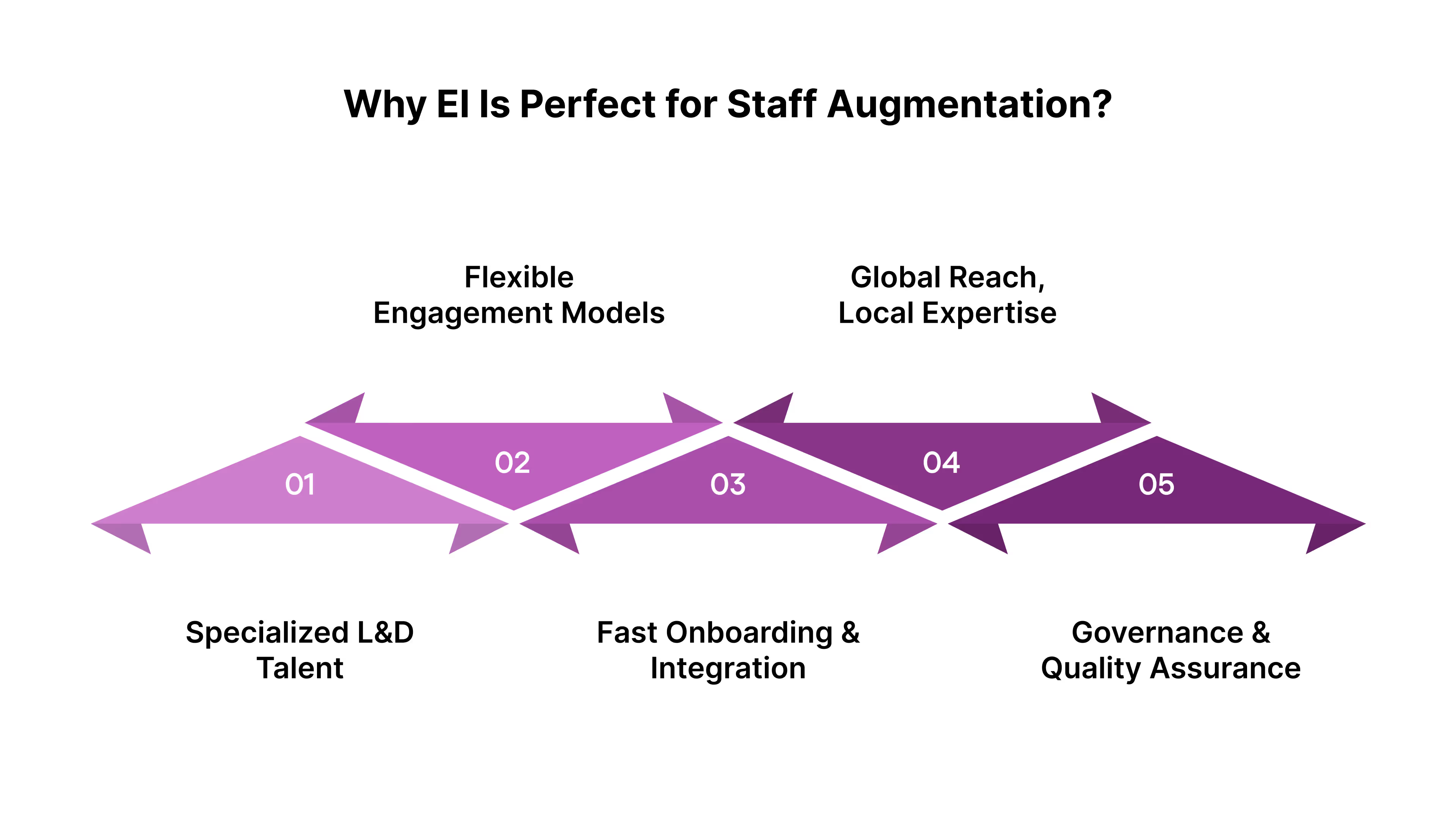
At EI, we make scaling your L&D function simple with:
- Specialized L&D Talent: From instructional designers and visual creators to technologists and learning consultants, our experts are ready to support ongoing or new projects.
- Flexible Engagement Models: Scale your team up or down instantly based on project scope, timelines, or business needs.
- Fast Onboarding & Integration: Our professionals quickly adapt to your tools, workflows, and brand standards so work starts smoothly.
- Global Reach, Local Expertise: Tap into a pre-vetted global network of L&D specialists who bring both domain knowledge and regional insights.
- Governance & Quality Assurance: Every engagement is backed by structured oversight to ensure consistency, accountability, and measurable success.
EI combines scalability, agility, and deep L&D expertise to help organizations strengthen their learning capacity, not just for today’s projects but for long-term growth.
Final Thoughts
Resource augmentation is a long-term strategy to build stronger, more capable teams. The future of resource augmentation goes far beyond simply adding people. It’s moving toward AI-driven talent matching, predictive workload planning, and performance analytics that help teams work smarter and faster.
Companies that start building this model now won’t just hit their project deadlines. They’ll shape an agile, future-ready L&D function that grows right alongside the business.
At EI Powered by MPS, we offer staff augmentation solutions that help L&D teams scale faster, tap into specialized talent, and deliver impactful learning programs, all without increasing headcount.
With decades of experience working with global organizations, we’ve developed flexible staffing models that enhance in-house capabilities, speed up delivery, and ensure complete control over quality and results.
Want to strengthen your L&D capacity with on-demand experts who blend seamlessly into your team? Get in touch with us today to learn more.
FAQs
Q1. How do you know when a project needs resource augmentation?
A1. Start by evaluating project scope, skill requirements, and delivery timelines. If your internal team lacks specific expertise or capacity to meet deadlines, that’s a clear sign it’s time to bring in external support.
Q2. Can resource augmentation work for hybrid or fully remote teams?
A2. Yes, with the right digital tools and clear communication channels, augmented professionals can collaborate just as effectively in remote or hybrid environments as they do on-site.
Q3. How long do resource augmentation contracts usually last?
A3. It varies, but most L&D augmentation projects run between three to nine months. The duration often depends on project complexity, delivery milestones, and how stable the internal workload is.
Q4. How do you maintain knowledge continuity after external professionals are offboarded?
A4. You need to have a structured handover in place. Document processes, lessons learned, and key deliverables before project closure so knowledge stays within the organization even after the engagement ends.
Q5. How can you ensure consistent quality when multiple augmented professionals are involved?
A5. Set clear quality standards from the start. Use shared review templates, defined benchmarks, and assign a single point of contact to coordinate feedback and maintain alignment across all contributors.

subscribing!
Related articles


.jpg)
.jpg)





.jpg)
