






.avif)

Unleash Potential: Innovative Learning For The Multigenerational Workforce


A multigenerational workforce brings together individuals from different backgrounds, experiences, and learning preferences. To fully leverage this diverse talent pool, it is crucial to create a culture of curiosity and innovation that fosters continuous learning and skill development.
Learning’s critical role in the workplace is generally understood. To create the strongest impact with your learning, and to harness the diversity of the multigenerational workforce, your learning strategy needs to account for how employees from different generations prefer to learn, interact with learning and are motivated by what comes from continuous learning and skill development. Brandon Hall Group™ Preferred ProviderEI Powered by MPS are experts at helping organizations navigate the challenges of multigenerational workforce learning needs.
The Brandon Hall Group™ research study, Building Personalized Learning at Scale, reveals that 82% of organizations consider alignment with learners’ personal and professional goals as important for effective personalized learning; 74% see that personalized learning journeys create greater confidence in performing work, which in turn opens new growth opportunities. The key is understanding what drives each of these groups in relation to work and learning. Once you understand that, you can tailor your strategies to capitalize on those unique motivations.
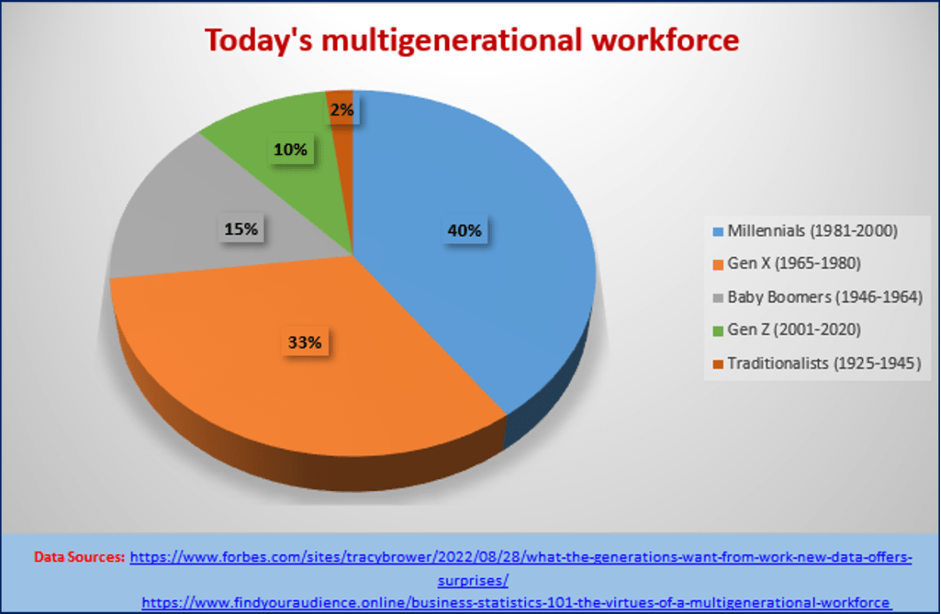
Generational Differences in Learning
The modern workplace is a tapestry of diverse generations, each with unique learning preferences and strengths. Understanding these differences and the recognition of diverse learner needs is crucial for creating a learning environment that empowers every employee to thrive.
Baby Boomers: Seasoned professionals who value in-person training and hands-on experiences. They appreciate face-to-face interactions and mentorship from experienced colleagues.
Gen Xers: Adaptable and tech-savvy, this generation prefers a blend of traditional and online learning. They value practical applications of knowledge and appreciate opportunities to learn from both formal training and on-the-job experiences.
Millennials: Digital natives who are comfortable with technology and prefer self-directed learning. They excel in collaborative environments and seek opportunities to learn through interactive platforms and social media.
Gen Z: The latest entrants to the workforce, Gen Z values visual and interactive learning methods. They are drawn to technology-driven learning experiences that engage their senses and provide immediate feedback.
Fostering a learning environment that accommodates these generational differences is key to unlocking the full potential of a multigenerational workforce. Like most preferences, these are not universal truths, which is why personalized learning approaches are so important for learning success. Multigenerational learning teams, where individuals from different generations collaborate and share knowledge, can enhance the learning experience for all. By leveraging the strengths of each generation and creating a culture of continuous learning, organizations can build a resilient and adaptable workforce that stays ahead.
A Culture of Curiosity
Fostering a culture of curiosity and continuous learning is foundational to driving innovation and continuous learning in a multigenerational workforce. Here are some strategies to nurture curiosity in the workplace:
- Encourage asking questions:
Create an environment where employees feel comfortable asking questions, regardless of their level of experience. Foster a “success = true” mindset where mistakes are seen as opportunities for growth rather than failures. - Provide learning resources:
Make a diverse range of learning resources easily accessible, including books, articles, online courses and workshops. Encourage employees to explore new subjects and share their findings with colleagues. - Host knowledge-sharing sessions:
Organize regular sessions where employees can share their expertise and knowledge on various topics. This promotes cross-generational learning and allows team members to learn from each other’s experiences. - Embrace diverse perspectives:
Encourage employees to seek out and listen to different perspectives. This fosters a culture of open-mindedness and helps break down generational silos, leading to more innovative ideas and solutions. - Reward curiosity:
Recognize and reward employees who demonstrate a genuine curiosity and willingness to learn. This positive reinforcement encourages others to emulate curious behavior and embrace lifelong learning.
By fostering a culture of curiosity, organizations can unlock the full potential of their multigenerational workforce, driving innovation and continuous learning across the entire organization.
Flexible Learning Strategy
Adopting a flexible learning strategy is crucial in catering to the diverse learning preferences of a multigenerational workforce. By providing multiple learning formats, such as online courses, workshops and on-the-job training, organizations can ensure that employees have access to the resources they need to succeed.
Encouraging peer-to-peer learning and mentorship programs fosters a collaborative learning environment, where employees can share their knowledge and experiences with each other.
Offering flexible learning schedules, such as allowing employees to take online courses during their own time or attend workshops on different days of the week, accommodates the busy schedules of employees with varying commitments.
Empowering employees to take ownership of their learning and development encourages them to identify their learning needs and seek out opportunities for growth.
Additionally, utilizing data and analytics to identify learning gaps and tailor training programs accordingly ensures that the learning strategy is effective in meeting the specific needs of the multigenerational workforce.
While it may seem like an extensive list of demands and anticipations to address, implementing simple adjustments in learning strategies can effectively customize the approach for individuals of all age brackets.
- Let the learner take the lead:
Empower individuals to define career goals, interests, and learning preferences. Enable learners to take charge of their learning journey. - Explain the benefits of learning:
Busy employees need a compelling reason to invest time in learning. Clarify the purpose behind learning initiatives. Design with the learner at the center of the learning experience to provide a holistic approach to value and participation. - Mentoring and reverse mentoring:
Bridging generational gaps fosters collaboration and mutual learning. Implement mentoring and coaching programs, including reverse mentoring — where younger employees teach digital skills to tenured employees. This creates a symbiotic exchange, ensuring knowledge transfer. - Learning through real business scenarios:
Theoretical learning gains depth when applied in real-world scenarios. It’s like learning to swim by (actually) diving into the pool. Encourage learners to manage actual projects, handle stretch assignments, or participate in temporary redeployments. These experiences solidify skills and prevent forgetting.
Enhancing Learning with Technology
Embracing technology is crucial for enhancing learning and development within a multigenerational workforce. Integrating technology into learning programs enables organizations to cater to diverse learning styles, create engaging experiences and facilitate continuous skill development. Consider where each of the following may best fit in your technology portfolio:
- Virtual reality (VR) and augmented reality (AR) technologies offer immersive learning experiences that can simulate real-life scenarios and provide hands-on training opportunities. VR and AR can be particularly effective in industries such as healthcare, manufacturing, and aviation, where employees need to develop practical skills in a safe and controlled environment. VR and AR are well suited to the preferences of the digital native generations and satisfy the hands-on-preference of the Gen-Z and Boomer populations.
- Gamification techniques can transform learning into a fun and interactive process. By incorporating game elements such as points, badges, and leaderboards, gamification enhances motivation and engagement, encouraging employees to complete learning modules and achieve their development goals. This appeals particularly well to those who are highly motivated by achievement and success.
- Online learning platforms provide employees with anytime, anywhere access to a wealth of learning resources. These platforms offer a diverse range of courses, tutorials, and assessments, allowing employees to learn at their own pace and on their preferred devices.
- Social and collaborative technologies can drive the interactive experience even deeper. These tools allow for the easy sharing of content in support of learning and create easy peer interactions. They are growing in popularity. In fact, 33% of respondents to the Brandon Hall Group™ 2023 Learning Benchmarking Survey indicated they were planning to buy Social/Collaborative learning technology in the next 12 months.
- Video conferencing tools facilitate virtual classrooms and real-time collaboration, enabling employees to connect with subject matter experts and peers from different locations. Video conferencing technology breaks down geographical barriers and fosters a sense of community, encouraging knowledge sharing and peer-to-peer learning.
- Learning in the flow of work, allowing easy access and opportunity to engage with learning when needed, can be a particularly effective tool. Not just tutorials or help guides, but microlearning content that answers a specific question when and where that answer is needed drives success and retention of knowledge.
By leveraging these technologies, organizations can create a dynamic learning environment that caters to the diverse needs of a multigenerational workforce. Technology-driven learning experiences enhance engagement, retention, and skill development, ultimately driving individual and organizational success.
Measuring Learning Effectiveness
Measuring learning effectiveness is essential for organizations to ensure their learning programs align with their goals and meet the needs of their learners. By evaluating the impact of their learning initiatives, organizations can make informed decisions, allocate resources effectively and continually enhance their learning and development strategies.
Data analytics plays a pivotal role in assessing the effectiveness of learning. Organizations can leverage learning management systems (LMS) and other data collection tools to track learner progress, completion rates and engagement levels. This valuable data provides insights into the effectiveness of specific learning modules, identifies areas for improvement and helps organizations understand how their learning programs contribute to achieving their overall business objectives.
Assessments serve as another valuable tool for measuring learning effectiveness. Pre- and post-training assessments can gauge learners’ knowledge and skill levels before and after participating in a learning program. This data helps organizations determine the immediate impact of training and identify areas where learners may require additional support.
Encouraging self-assessment and reflection empowers learners to take ownership of their learning journey and assess their progress. By regularly reflecting on their learning experiences, learners can identify areas for improvement and set goals for continuous growth. Organizations can facilitate self-assessment through journaling, surveys or dedicated reflection sessions.
Feedback from learners, peers and managers provides invaluable insights into the effectiveness of learning programs. Gathering feedback through surveys, interviews or observation allows organizations to understand how learners apply their knowledge and skills in real-world situations. Feedback also helps identify gaps between training and job requirements, enabling organizations to refine their learning programs accordingly.
By triangulating data from data analytics, assessments, self-assessment and feedback, organizations can gain a comprehensive understanding of learning effectiveness and break that down by generation as well. This data-driven approach empowers organizations to make informed decisions about their learning and development strategies, ensuring they meet the needs of learners and contribute to the overall success of the organization.
Final Thought
While expectations about the approach to learning will likely reflect a desire for speed, flexibility and control among the Millennial and Gen Z demographics, and a more formal structure for the others, it’s important to remember the science behind how adults learn. Continuing to refine personalized learning journeys to ensure they meet the goals of the business and ensure learners can meet their own goals for growth, promotion, and individual satisfaction is important. Companies must be able to draw a clear line between what a worker is expected to learn and how that learning will impact both personal and corporate success. The more that learning can be social and collaborative in nature and be minimally disruptive to an individual’s daily routine, the better.
You can learn more about the ways EI helps organizations tailor their learning strategies to their audience needs at their website: Futureproof Your Learning | EI Powered by MPS (eidesign.net).

subscribing!
Related articles


.jpg)
.jpg)




.jpg)
