




.avif)

A Gamified Learning Solution to Convert Dry Compliance Content into an Immersive Learning Experience


Some content is difficult to teach because it is complicated. Policy documentation is difficult to teach for the opposite reason. Guidelines and standards are usually clear enough on the page, and the problem is that nobody has a reason to read them closely. A course built directly on that material inherits the same problem, and learners work through it at the pace of an obligation.
One of the leading multinational pharmaceutical companies came to our team with that situation. They wanted to educate members of their IT training function about the policies governing training development and delivery, and the content was very dry, consisting of guidelines and standards. What they needed was a different approach that would motivate and engage the learners rather than simply present the rules again in a new format.
The Challenge
The audience made the problem sharper. These were people who build and deliver training for a living, which means they recognize a compliance module written to satisfy a requirement faster than almost any other group would. A conventional treatment of the material would have been read as exactly what it was.
So the requirement was not only to cover the policies accurately. It was to give an expert audience a reason to stay with content they already expected to be tedious.
How the Solution Was Built
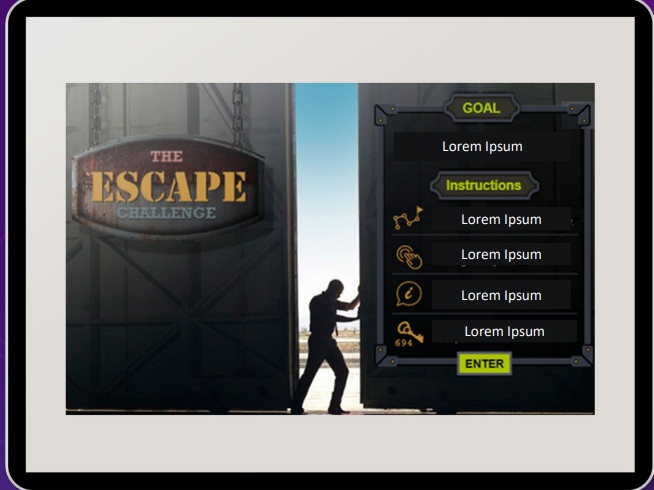
Our primary focus was to convert the dry content into engaging formats and activities, and to make the training impactful we adopted a gamified approach. The game mission and narrative were tied closely to the learners real lives, so the situations in the game were the situations these people actually encounter when developing and delivering training.
Challenges that arrive the way work arrives
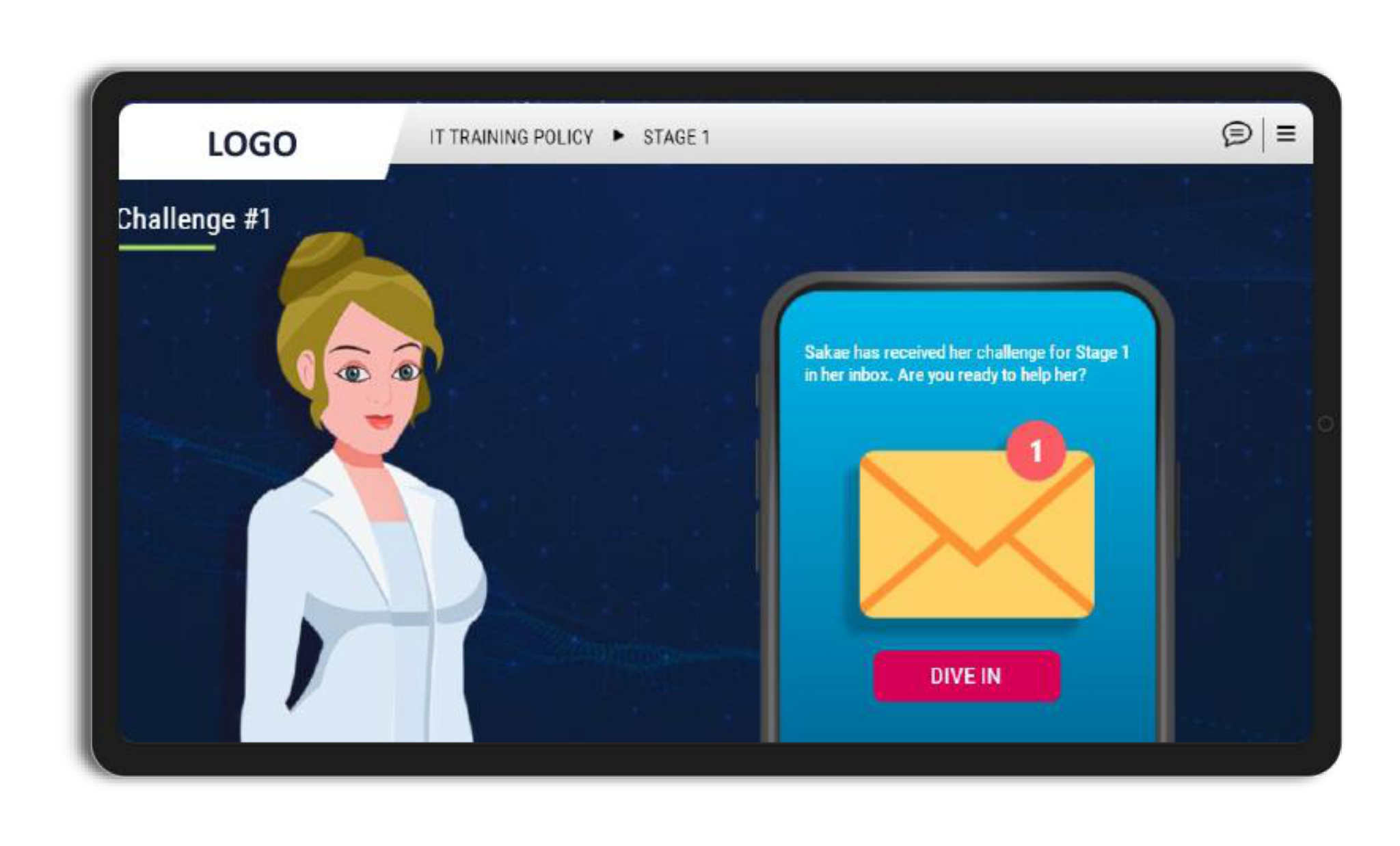
The program runs in stages, and each stage opens with a challenge. In the first one, the character has received her challenge for Stage 1 in her inbox, and the learner is asked whether they are ready to help her before diving in. Framing each stage as an incoming message rather than a chapter heading is a small choice with a useful effect, because it matches how a policy question actually reaches someone at work.
The challenges themselves were based on real-life scenarios, which is what allows learners to relate to the situations and apply them at work. A guideline read in isolation is abstract. The same guideline encountered as a decision inside a situation the learner recognizes has somewhere to attach.
An avatar that determines whose story you follow
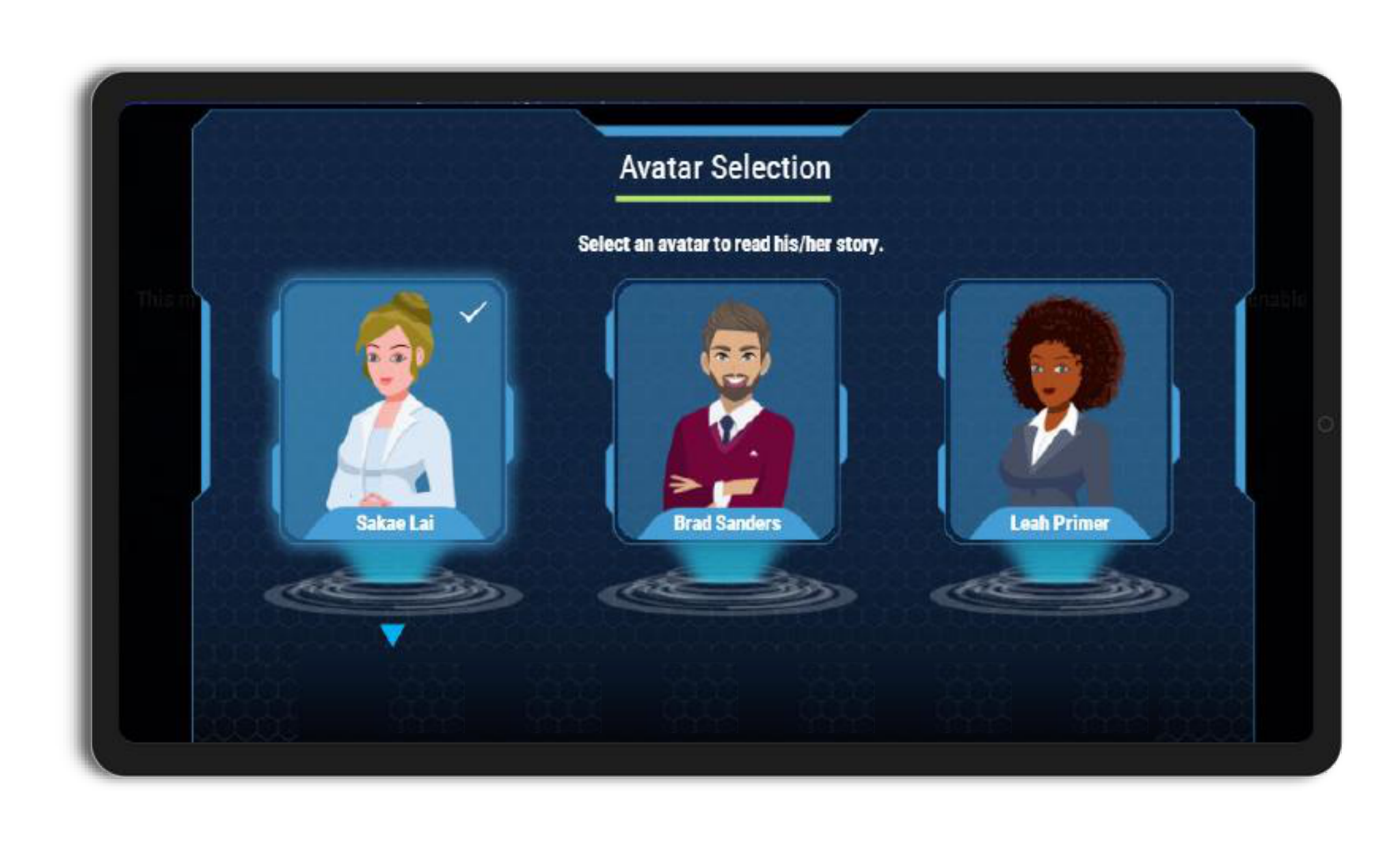
We included an element of personalization by allowing learners to choose an avatar for themselves. The selection screen presents three characters and invites the learner to select one to read his or her story, so the choice is not cosmetic. It determines the narrative the learner moves through and the perspective the challenges are framed from.
This is the difference between personalization that changes an image and personalization that changes the experience. Because the avatars carry different stories, two learners covering the same policies work through different situations to get there, and the choice made at the start continues to matter for the rest of the program.
Visual design and navigation as success factors
A modern illustrative visual approach and intuitive navigation were two additional success factors for the training. Both matter more than they usually get credit for on compliance projects, where design is often treated as decoration on top of the real content. For an audience of learning professionals, a course that looks and moves like current work is part of the argument that the material is worth their attention.
The Strategies Behind the Design
Five strategies power the solution.
- Game Based Learning
- Video Based Learning
- Personalization
- Activity Based Learning
- Immersive Learning
Delivery combined personalized learning and online learning served through the client LMS and LXP, which put the program alongside the rest of the learning estate rather than in a separate compliance system.
The Impact
Learners gave a very positive response, and the reason given is the one that matters for this kind of program. They were able to instantly relate to the game narrative and to the problems and situations discussed in the training, which is precisely what the decision to tie the mission to their working reality was intended to achieve.
The stakeholders acknowledged that the training was effective and appreciated by the learners. On a mandatory program, stakeholder confirmation that the audience valued the experience is a meaningful result in itself, since the usual outcome is completion without comment.
These are qualitative outcomes rather than quantified ones. For a policy awareness program the intended result is a change in how carefully people apply guidelines in their own work, which is difficult to isolate and slow to appear in reporting. What the feedback establishes is that the redesign removed the barrier that was preventing the content from landing at all.
Make Policy Training Something People Engage With
Dry content is not a reason to accept a dry course. This program worked because the mission was tied to what learners actually do, the challenges arrived as situations rather than as clauses, and the avatar choice gave each learner a story of their own to follow through the material. If your compliance and policy programs are being completed without being absorbed, Liberate can help you rebuild them. Get in touch to talk it through.

subscribing!
Related Case Studies