



.avif)

Giving Product Training a New Meaning – A Learning Solution That Skyrocketed a Cyber Security Product Sales


Technical product training for a sales audience has to solve a problem that neither pure technical training nor pure sales training faces. The material is genuinely complex and cannot be simplified away, and the people learning it are not engineers. They need to hold enough of it to speak with authority in a room where the customer may know more than they do.
This case study covers how one of the world’s largest cyber security companies trained its internal sales team and its channel partners on updates to a key product. The work won a Brandon Hall Group Gold award for Best Advance in Custom Content.
The background
The organization needed sales personnel to learn the various aspects of the product and internalize them well enough to deliver the sales numbers the business had forecast. The word internalize is the important one. Awareness of a feature list was not the outcome anyone wanted.
What the client asked for was training that would equip sales teams to articulate features and benefits confidently. The constraint was familiar: the learning had to be engaging and relevant enough to fit into schedules that were already full.
The design problem
Technical content resists the usual treatments. Cyber security product updates come with architecture, threat models, and capability detail that cannot be reduced to three bullet points without losing the thing that makes the product worth buying. Presented straight, that material is dense and quickly becomes monotonous, and monotony is fatal for an audience with no obligation to keep reading.
The channel partners made it harder still. Partners are not employees. They cannot be assigned training and chased for completion, they sell other vendors’ products alongside this one, and they will give their attention to whichever product is easiest to understand and explain. Training for that audience has to earn its place.
And the real test comes later. A salesperson does not need this knowledge during the course. They need it in a customer conversation weeks afterwards, which means the design has to work for recall as much as for comprehension.
How our team approached the solution
Mentors rather than a narrator
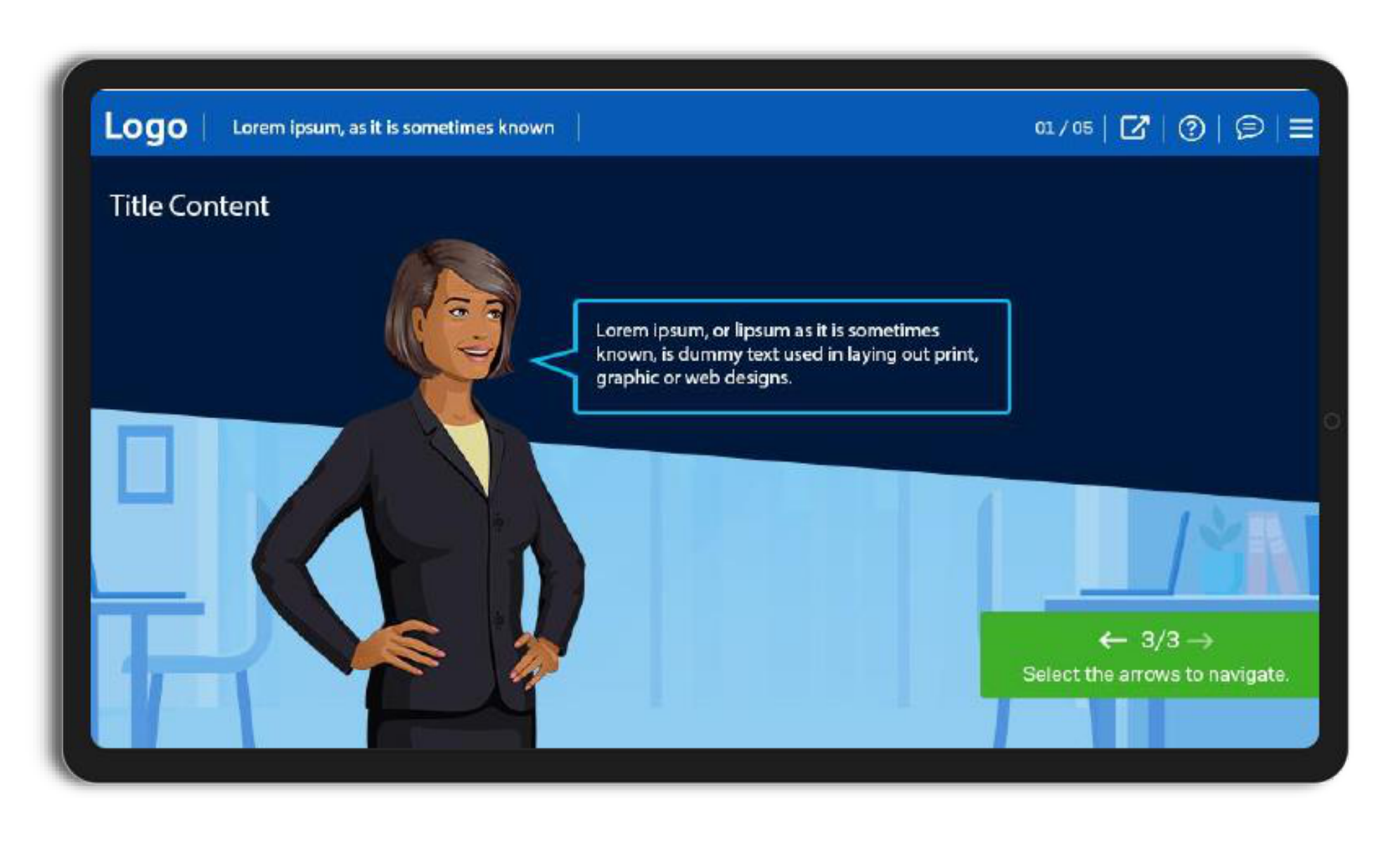
Our team built the program around a mentor-based approach, with two characters carrying the content between them. The conversational format was chosen specifically to break the monotony of highly technical material, and it does more than lighten the tone. A conversation can ask the question a learner is silently forming, and answer it in the order a person would actually ask.
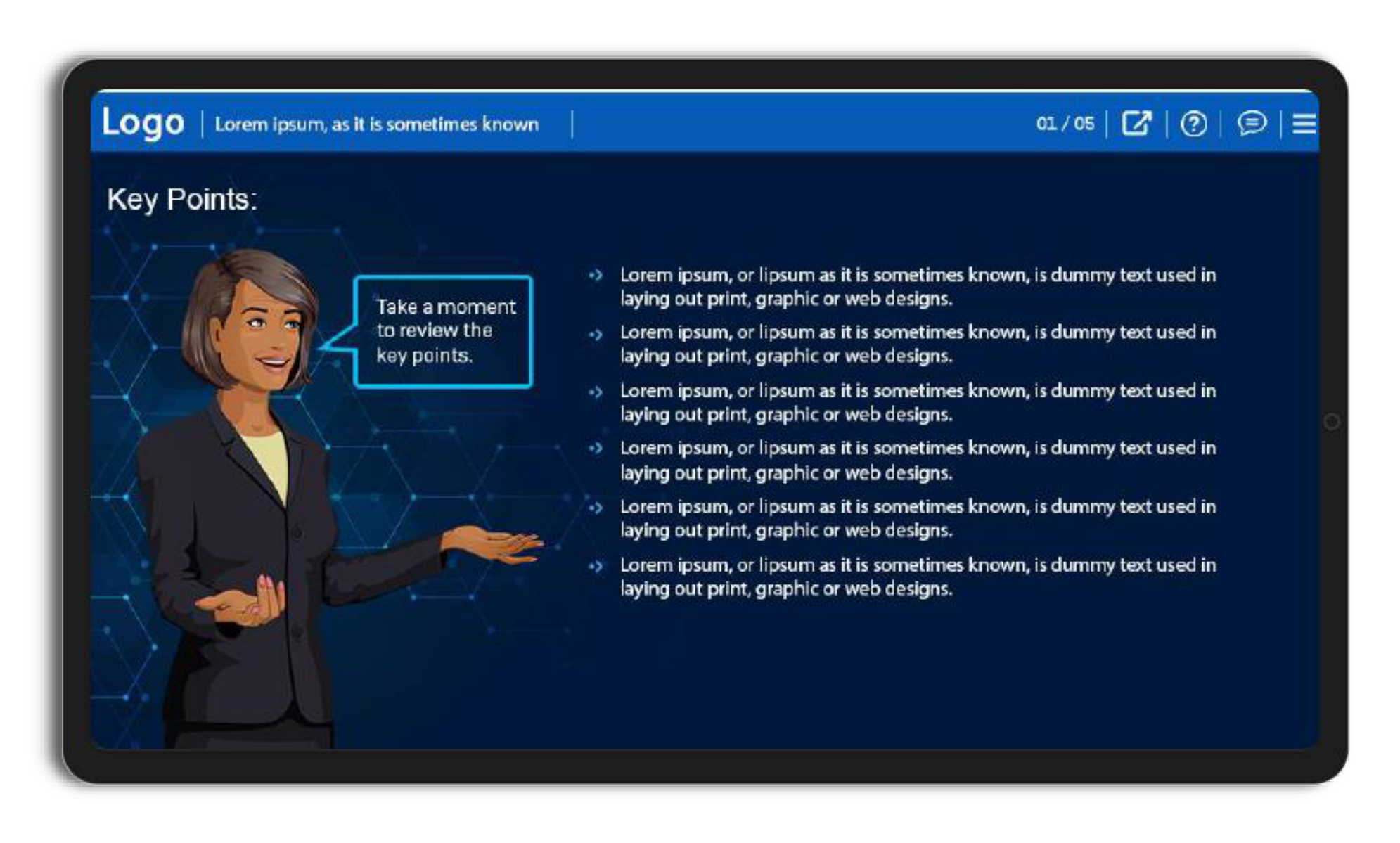
Short animated video for the technical detail
Short animated videos let learners take in the key facts efficiently and return to them as often as needed. Animation suits this subject better than screen capture or narration over slides, because much of what makes a security product distinctive is invisible, and an animated explanation can show a process that has no physical form.
Product features presented through real situations
Features were presented through real-life examples, with learners challenged at regular intervals rather than assessed only at the end. This is what separates the program from a feature tour. A salesperson who has seen a capability demonstrated in a customer situation can describe it in a customer situation, while one who has seen it on a specification sheet can only read the sheet aloud.
Reference guides for the sales call itself
Downloadable documents were provided as reference guides, alongside video for content that benefits from an audio-visual treatment, supporting learning on the go. For a sales audience this is the most-used part of any program. Nobody reopens a module before a customer meeting, but a one-page guide gets opened in the car park.
An illustrated visual design as the differentiator
Relevant, high-impact imagery built on icons and infographics in an illustrated visual design became the defining quality of this training. For technical content this is a substantive choice rather than a cosmetic one, since an illustrated system diagram communicates a security architecture in a way a paragraph of prose never manages.
Microlearning and mobile delivery
Delivery ran as mobile, microlearning, and personalized learning through the LMS and LXP, so a salesperson could take one piece at a time and partners could reach the material wherever they were working.
The impact
- 75 percent of learners said the training was of good quality and relevant.
- Sales personnel reported referring back to the training more often than they had before, finding it useful during live sales situations.
- The organization recorded a noticeable increase in product sales compared with the period before the training.
The middle result is the one that predicts the third. Sales teams returning to training material during actual sales conversations means the program crossed from being something completed to being something used, and that is the only form in which product training affects revenue.
What this case study shows
The instinct with technical product training is to simplify until it is easy. This design did something more useful, which was to keep the complexity and change how it was delivered. Two mentors talking through the material, animation for the invisible parts, examples set in real customer situations, and a reference guide for afterwards.
The channel partner audience is the part worth borrowing from. Training that has to survive without a completion mandate is held to a higher standard than training that does not, and designing for that standard tends to improve the experience for the internal audience as well.
If you are launching a technical product and need sales teams and partners who can explain it, Liberate can help you build training they will come back to before a customer call.

subscribing!
Related Case Studies