



.avif)

How a Global Banking Giant Triggered Behavioral Change and Improved Fire Safety Compliance Through Immersive Learning


Almost everyone has completed fire safety training and almost nobody could tell you where the second nearest exit to their desk is. The training covered the principles. It said to stay calm, not to use the lifts, and to proceed to the assembly point. What it did not do was answer the only question that matters at the moment it matters, which is where to go from here.
This case study covers how a global banking organization rebuilt fire and life safety training for one of its largest sites, and why the design started with the floor plan rather than the policy.
The background
Large banking operations concentrate very high numbers of staff in single locations, and this organization wanted employees at one of its biggest and busiest sites properly equipped on fire and life safety.
The objective was specific. Employees needed to know where and how to find help during a crisis. Beyond that, the organization wanted steady behavioral change, with safety established as a habit rather than an annual obligation, in order to minimize disruption to the business when something does happen.
The design problem
Safety training fails in a particular way. It is universally completed and poorly retained, because the content is generic while the emergency is entirely specific. Knowing that you should use the nearest available exit is of no help if you have never identified which one that is from where you sit.
A site of this size makes the gap wider. A building with multiple basement levels, mezzanines, and upper floors has different routes, different assembly arrangements, and different equipment depending on where you happen to be, and none of that survives a single generic module delivered to everyone.
There is also the matter of when the knowledge is needed. Nobody consults a course during an evacuation. Whatever the training achieves has to already be in place, which means the learner has to have walked the route in some form before the day arrives.
How our team approached the solution
Active learning rather than a policy read
Our team concluded that active learning, with hands-on interaction and learning by doing, was the right strategy for this mandate. Interactive learning and simulated real-life scenarios became the mechanism for seeing how learners would actually respond in a crisis, which is a different and more useful thing than checking whether they can recall a procedure.
A virtual tour of the actual location
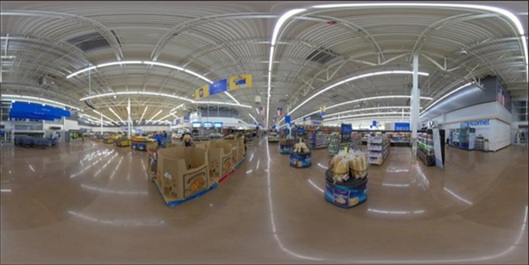
The central decision was to build an exploratory view of the real building. Rather than illustrating a generic office, the program let learners move through their own workplace and locate the fire safety points, equipment, and procedures where they genuinely are.
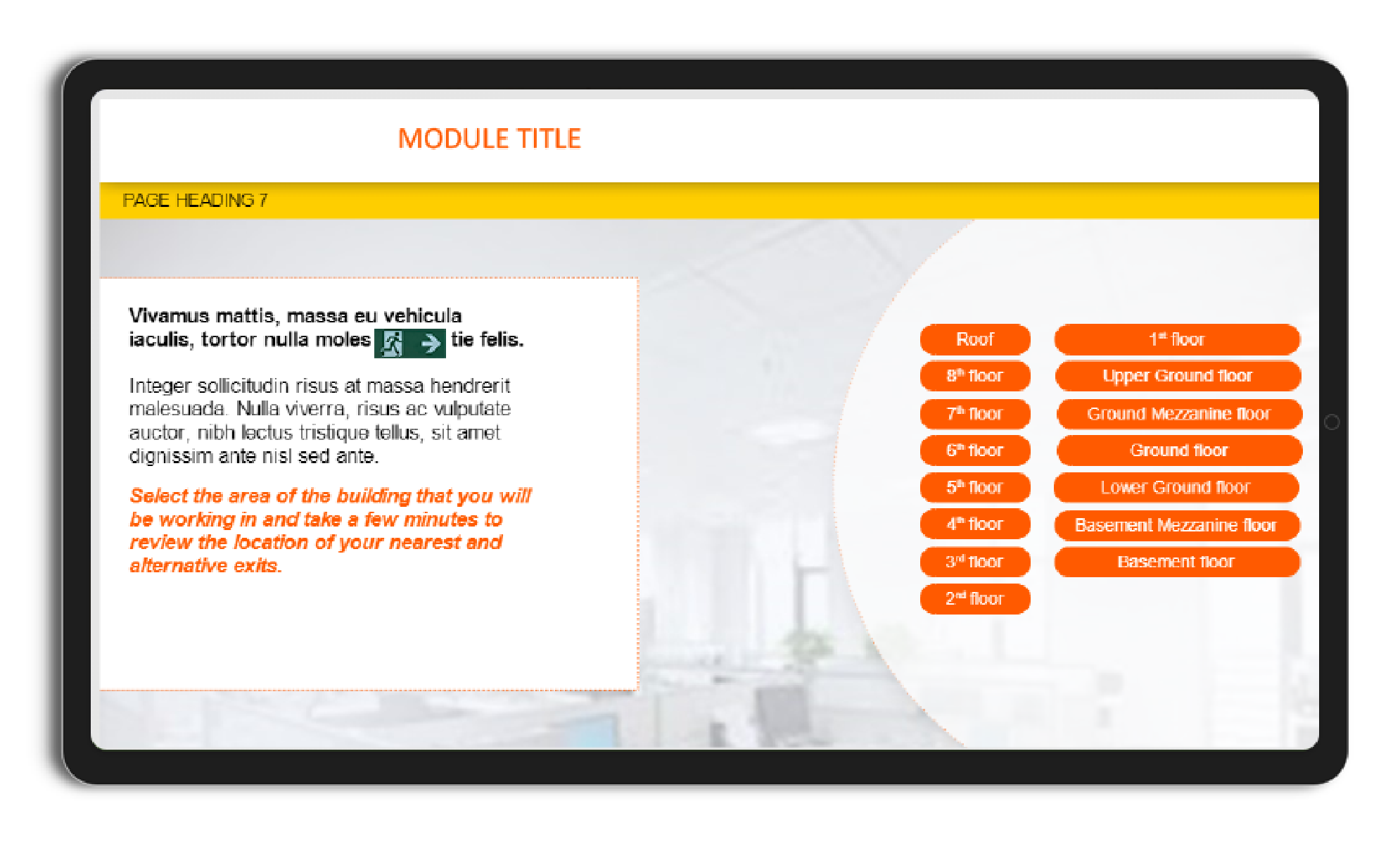
Learners begin by selecting the part of the building they work in, from the basement levels up through the mezzanines and the upper floors, and then take a few minutes to review the nearest and alternative exits from that area. That instruction is the whole program in one line. It moves safety training from something you are told to something you check for yourself.
Walking the space rather than reading about it
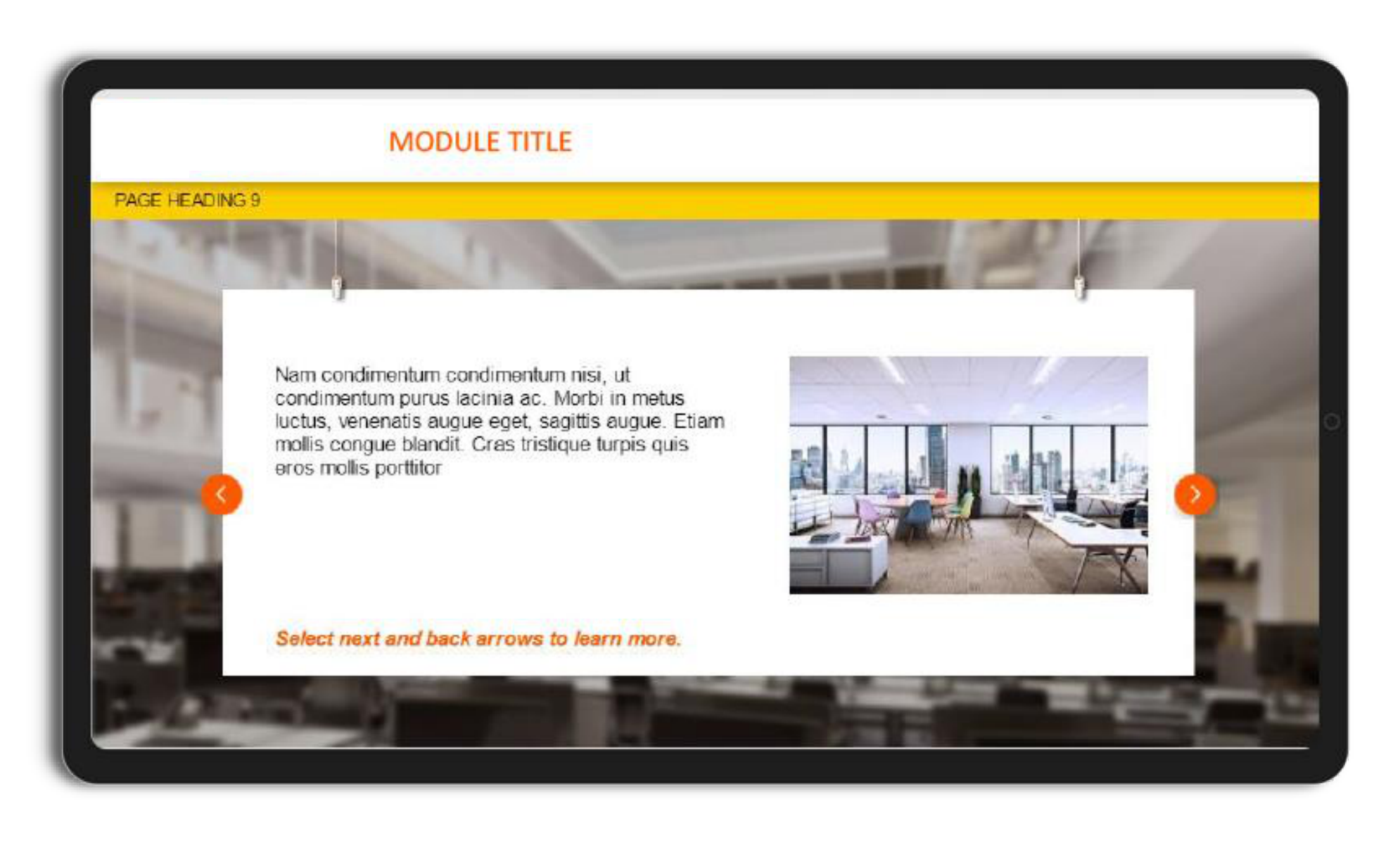
Within each area, learners move through the environment step by step, with images of the real spaces alongside the detail that applies to each one. Seeing the actual corridor, the actual stairwell, and the actual equipment placement does something a floor plan diagram cannot, which is build the recognition that lets someone act without thinking on a day when thinking is difficult.
Available on mobile at the moment of need
The complete training was made available on mobile devices through the LMS and LXP, so an employee could check the exits near a meeting room in a part of the building they rarely visit, rather than only encountering the material once a year at their desk.
The impact
- Post-training feedback showed learners found this training useful in comparison with previous versions of safety training.
- Learners demonstrated higher compliance with the organization’s safety norms, reducing potential hazards.
- Following the success of the pilot locations, the training was adopted across a series of sites globally.
The first result is more pointed than it looks. Employees comparing this favorably with previous safety training is a judgment from people who have sat through many versions of the same subject, and it is the group least likely to be impressed by a new one.
What this case study shows
Safety training is usually built to be reusable, which is precisely what stops it working. A module that can be sent to every site in the group is a module that cannot tell anyone where their exit is. Building this one around one real building cost more and made it useful, and the global rollout that followed suggests the organization reached the same conclusion.
The wider point holds for any training that has to work under pressure. What people need in an emergency is not information they can retrieve. It is familiarity they already have, and familiarity comes from having moved through a space, even a represented one, before the day they have to.
If you have safety or emergency training that everyone completes and nobody could act on, Liberate can help you build it around the places your people actually work.

subscribing!
Related Case Studies