



.avif)

How a Global Retail Company Improved Application of Learning on the Job with an On Demand Learning Solution


Ask a subject matter expert to teach what they know and most of them will do the same thing. They will stand at the front and explain, thoroughly and at length, because explaining is what being an expert has always looked like. It takes a particular kind of training to convince someone that the room learns more when the expert talks less.
This case study covers how a global retail company solved that problem for volunteer trainers running in-person sessions for warehouse and similar staff, and why the design deliberately kept itself out of the way. The program was recognized with a Brandon Hall Group Gold award.
The background
A leader in global retail used volunteer subject matter experts to deliver in-person training for several groups of warehouse and comparable staff. These were not professional trainers. They were people who knew the work and had agreed to teach it, and the company was struggling to get them to stop lecturing and start facilitating.
The brief was for sustainable, on-demand training the volunteers could reach at their moment of need. It also came with an unusual instruction about tone. The training was to be built in the most simple manner possible, so that trainers could relate to it and, in the client’s words, accidentally learn in the process.
The design problem
That instruction is harder to satisfy than it sounds. The audience was made up of volunteers who already have a full job and who did not sign up to be students. A program that arrived looking like a formal course in instructional technique would have signaled that they were doing it wrong, which is the fastest way to lose a volunteer.
There was also an obvious trap. Training people to facilitate rather than lecture, by lecturing at them about facilitation, fails on contact. The program had to demonstrate the behavior it was asking for, which meant showing situations and letting trainers work out the answer rather than presenting a list of techniques.
How our team approached the solution
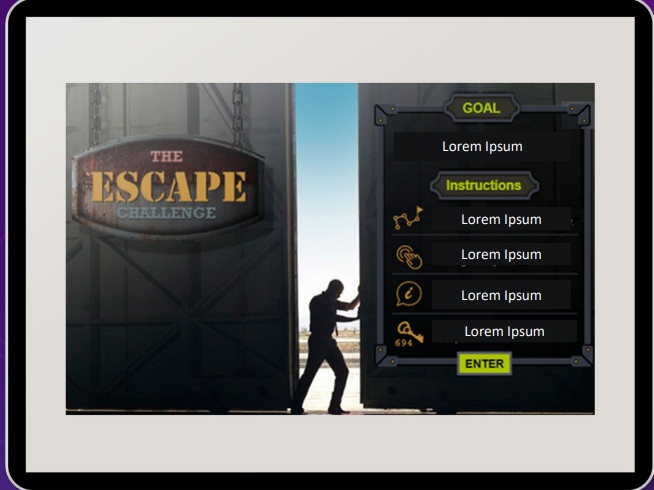
Scenarios taken from what happens in the room
The main objective was to give the volunteers enough understanding and enough practice to build both skill and confidence. Our team built numerous scenarios drawn from real situations these trainers would meet during their in-person deliveries, which is what made the learning relatable. A volunteer recognizing a moment they have already lived through engages differently from one reading a principle about learner engagement.
Practical characters and a deliberately minimal design
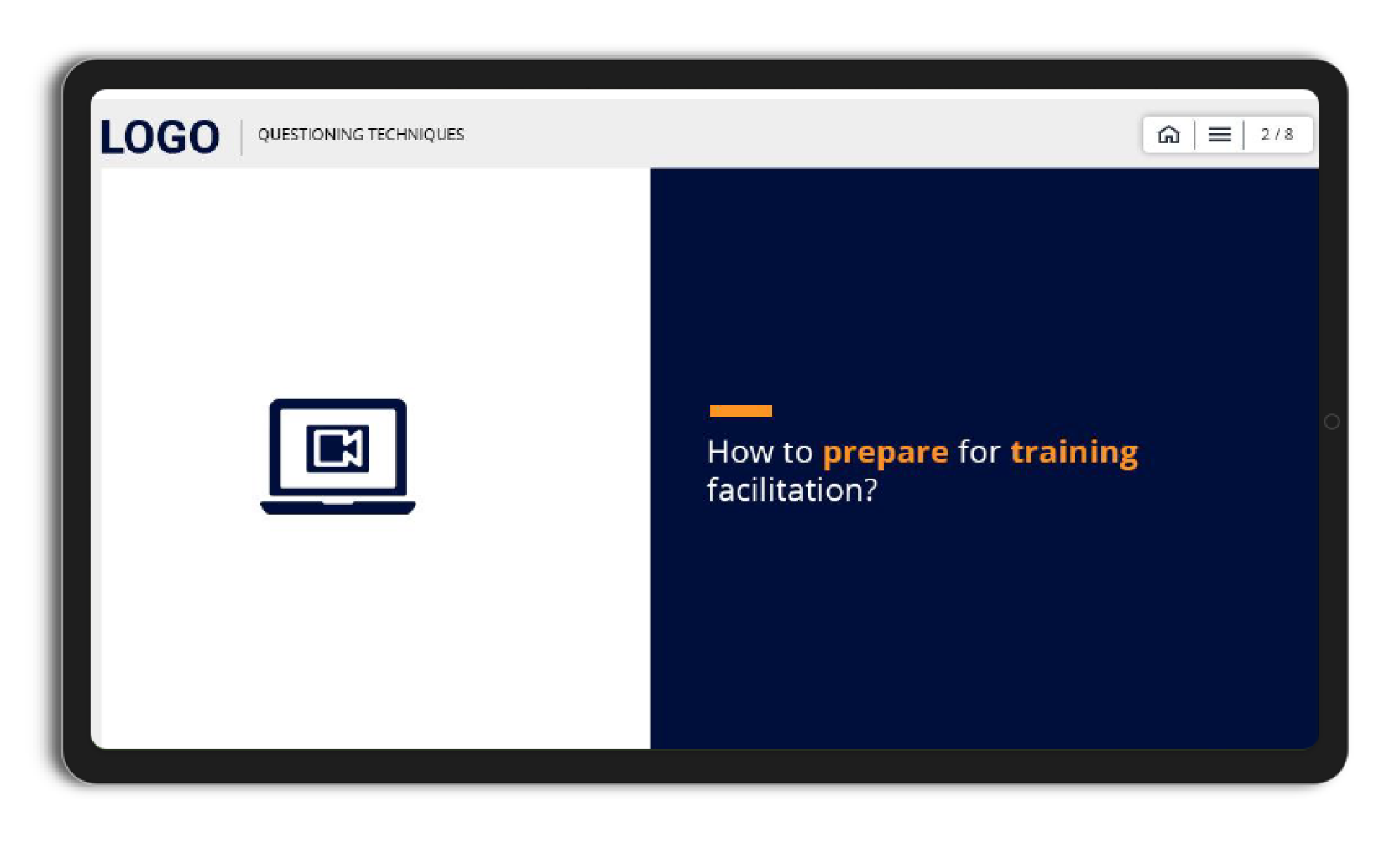
Practical characters, strong imagery, and a minimalist design approach became the defining quality of this training. The screens carry one idea at a time, with a question framed plainly and nothing competing for attention around it. That restraint is doing real work here. It keeps the program feeling like a quick reference a colleague put together rather than a course someone has been enrolled in.
Activities that force the judgment call
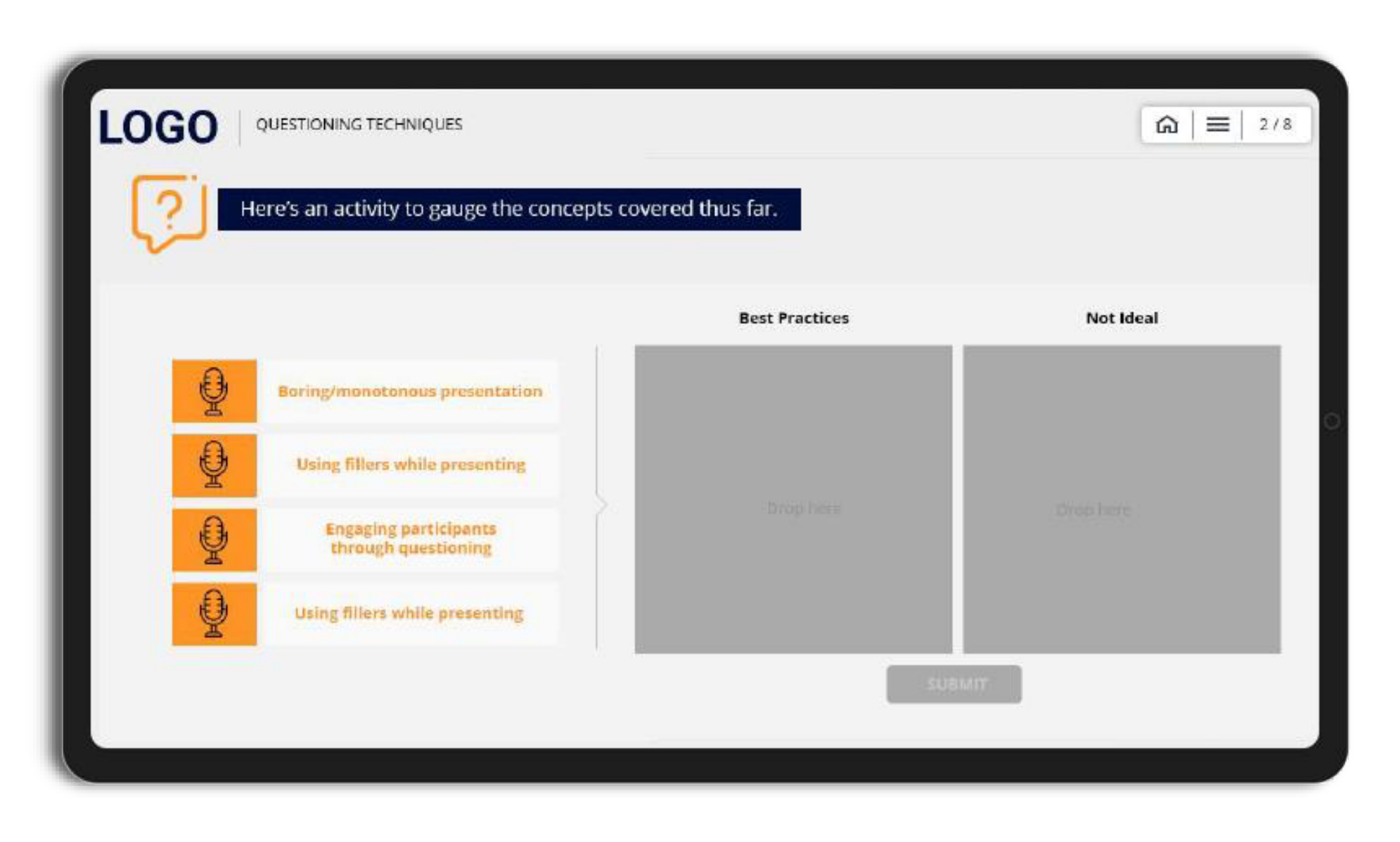
Short activities check the concepts as they accumulate, asking trainers to sort facilitation behaviors into what works and what does not. Sorting is a better fit than a quiz for this subject, because the difficulty with facilitation is rarely knowing the right answer in the abstract. It is recognizing which category your own habit falls into, and a sorting task makes that judgment explicit.
Downloadable performance support
Several performance support materials were provided as downloadable documents the trainers could use when needed. This is the part that matters most for a volunteer audience. Nobody revisits a module before a session, but plenty of people will open a one-page prompt sheet in the ten minutes before they walk into the room.
Microlearning through the LMS and LXP
Delivery ran as microlearning through the LMS and LXP, so a trainer could take one piece before a session rather than finding time for the whole program at once.
The impact
- The major gain for learners was an increase in overall confidence about facilitating a live session.
- Trainers were able to apply what they had learned directly in their own sessions.
- Following the success of the program, the organization began considering similar training globally.
Confidence is the right thing to have measured here. A volunteer trainer who is unsure of themselves falls back on the lecture, because reading from prepared material is the safest thing to do in front of a room. Raise their confidence and the facilitation follows without anyone needing to enforce it.
What this case study shows
The instruction to keep the design simple was the most important thing in this brief, and it would be easy to read it as a budget constraint. It was not. Volunteers are not a captive audience, and anything that feels like an obligation gets abandoned. The design had to earn its way in, which is a genuine constraint and produced a better program than a more elaborate treatment would have.
It also shows the value of getting performance support right when the audience only needs the material at one specific moment. For these trainers, that moment is just before a session, and a downloadable prompt sheet serves it better than any amount of well-built eLearning they will never reopen.
If you rely on subject matter experts or volunteers to deliver training, Liberate can help you build something they will actually use before they step into the room.

subscribing!
Related Case Studies