



.avif)

How a Tobacco Manufacturing Company Improved Workforce Efficiency and Cost Savings with a Learning in the Moment of Need Solution


Software rollouts fail quietly. The platform goes live, the training is delivered, and then people carry on doing the job the way they did before, using whichever corner of the new system most resembles the old one. Nobody records that as a failure, and the organization pays for it in productivity for as long as the tool is in place.
A leading tobacco manufacturing company came to our team needing employees to get hands-on experience with a new data governance tool. They wanted simulation-based learning that would produce better trained staff in less time and at lower cost, tailored to what the tool actually required of each job role, and delivered in short pieces that people could reach at the moment they needed them.
The Challenge
Software training runs into a problem that other subjects avoid. Reading about an interface teaches almost nothing, because the knowledge that matters is procedural. What people need is the sequence of actions, and the only reliable way to acquire that is to perform it.
The role requirement made it harder. A data governance platform presents a large surface area, and the parts of it a given employee will ever touch are a small fraction of the whole. Training everyone on everything wastes most of the time spent and buries the part each person actually needs.
The moment of need requirement added a third constraint. Content had to be short and specific enough to be useful when someone hit a problem mid task, which is a different design brief from a course delivered before the tool goes live.
How the Solution Was Built
Our team built a self-contained personalized training module around a watch, learn, and practice model. The complete content was converted into microlearning nuggets made up of videos, simulations, practice quizzes, and job aids, so a learner could take the piece that suited the situation rather than working through a course to reach it.
Guided simulations that walk through the actual task
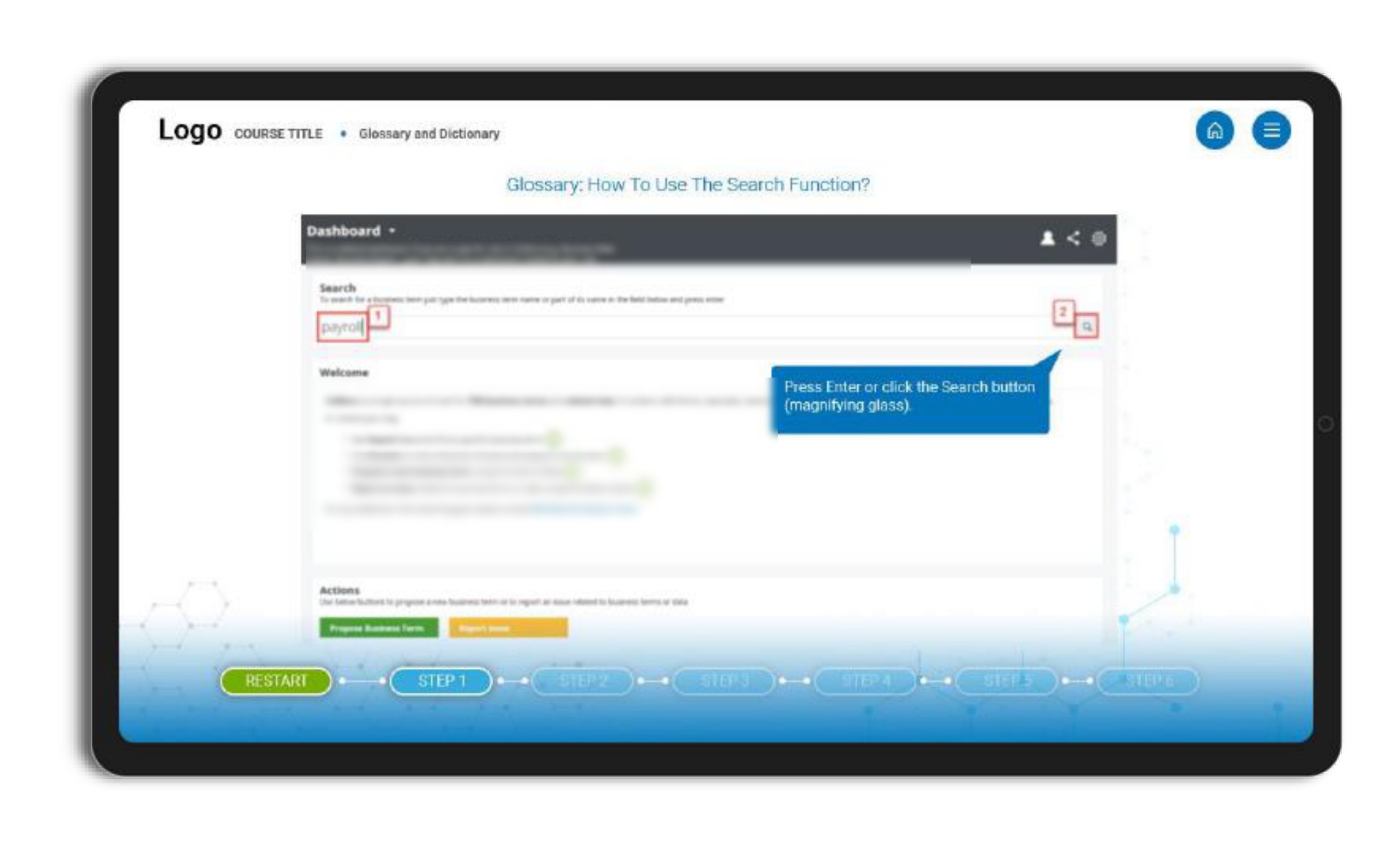
The simulations reproduce the tool interface and step the learner through a real procedure. One walks through using the glossary search, with the field highlighted, the search control numbered, and a prompt explaining what to do next. A step track runs along the bottom showing which step the learner is on, how many remain, and offering a restart at any point.
This is what distinguishes a guided simulation from a screen recording. The learner performs the action inside a replica of the tool, in the order the task requires, and gets corrected in the moment rather than afterward. What they take away is the sequence rather than a description of it.
Role-based selection so people practice what they use
Content selection is driven by role, so learners practice the aspects of the tool most relevant to the work they do. That single decision addresses both the time problem and the relevance problem at once, because it removes the material a given employee will never need instead of asking them to skip past it.
Watch, learn, and practice as the structure
The three-part model gives each nugget the same shape. Video introduces the task, the simulation lets the learner attempt it, and practice quizzes and job aids consolidate it and leave something behind that can be consulted later. The job aids matter most for the moment of need requirement, since a person stuck partway through a procedure needs a reference rather than a course.
The Strategies Behind the Design
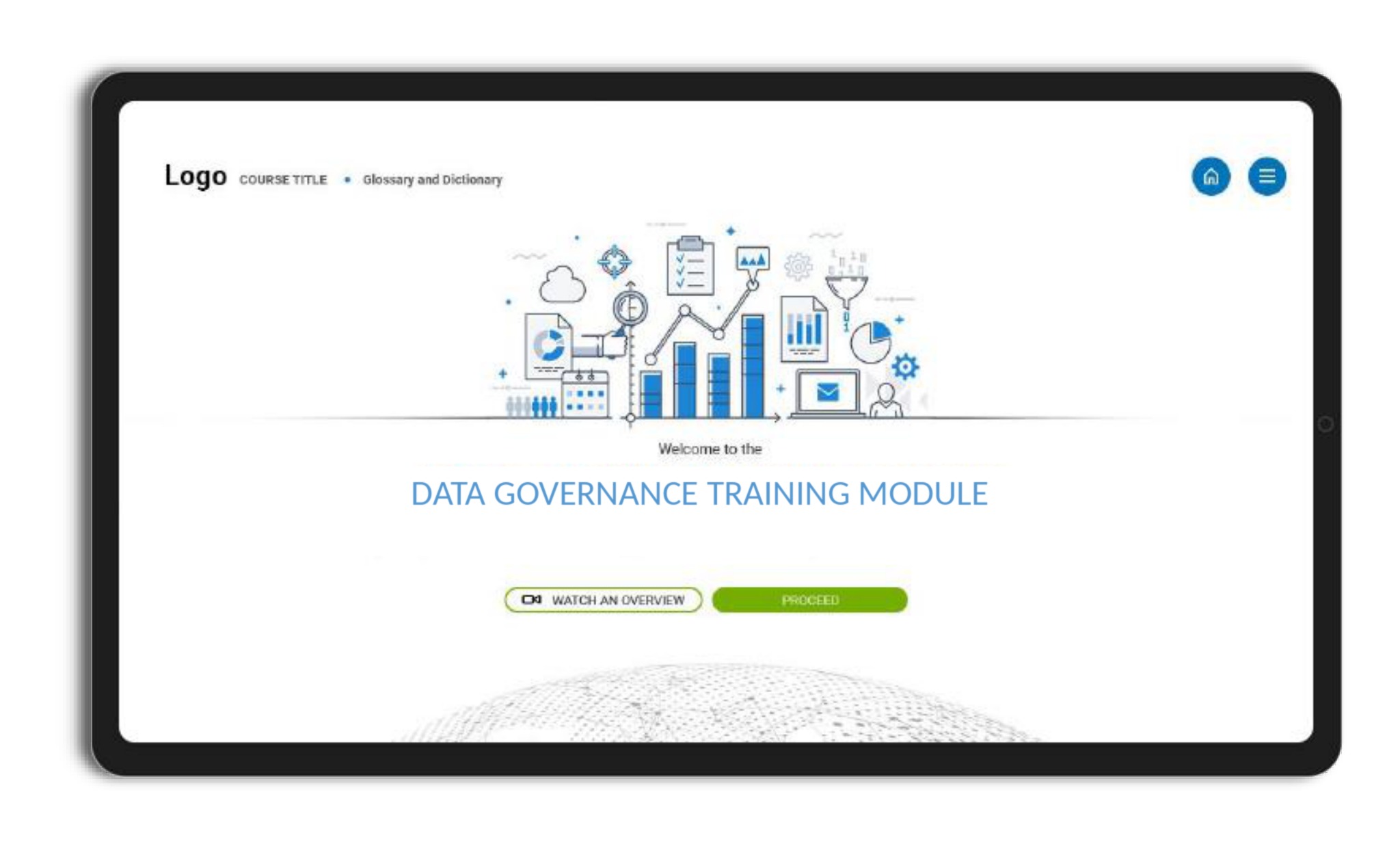
Five strategies power the solution.
- Personalized Learning
- Microlearning
- Video Based Learning
- Branching Simulations
- Just-in-time Learning
Guided simulations and performance support tools sit behind these, with delivery combining personalized learning and microlearning served through the client LMS and LXP.
The Impact
Learners responded strongly to the relatable design, which for software training means the training looked and behaved like the tool they were about to use rather than like a course about it.
The practice quizzes and job aids let people work through real tasks and challenges, preparing them for the situations they would meet on the job. Practicing the actual procedure before encountering it live is the mechanism by which this kind of program produces a shorter ramp.
The role-based experience allowed learners to practice the aspects of the tool most relevant to their job, improving their efficiency. That is the outcome the organization was after, and it follows directly from the decision to cut each learner path down to the work they do.
Train People on the Tool, Not About It
Adoption is decided by whether people can perform the tasks, not by whether they attended the training. This program worked because learners practiced inside a replica of the tool, because each role got only the parts it needed, and because job aids stayed available for the moment someone got stuck. If you have a platform rollout ahead and want people productive on it quickly, Liberate can help you build the training. Get in touch to talk it through.

subscribing!
Related Case Studies