

.avif)
How a Prestigious Business School Transformed Video Lectures into a Blended Learning Experience for Their Learners

Most organizations sitting on a library of recorded lectures reach the same conclusion eventually. The recordings are valuable, the faculty who gave them are the reason students enrolled, and yet almost nobody watches them the way they were meant to be watched. A camera pointed at a lecture produces an artifact of the lecture, not the experience of attending one.
This case study covers how a prestigious business school rebuilt its recorded lecture library into the asynchronous track of a high-touch collaborative online program, and what had to be true of the design before accomplished faculty would agree to it. The work was recognized with a Brandon Hall Group Silver award for Best Use of a Blended Learning Program.
The background
The school needed world class training created for its high-touch collaborative online learning program, part of a larger blended learning curriculum. The specific ask was to make effective use of recorded lecture videos from reputed faculty, and to convert them, along with other supporting materials, into genuine learning assets.
The standard the work had to meet was set externally. The output had to be seamless and high-end, matching or exceeding what a comparable league of business schools was already offering. Students choosing between institutions at this level compare the online experience the way they compare the campus.
The design problem
A recorded lecture is a monologue. It has no pause for a question, no moment where the student has to commit to an answer before the expert reveals one, and no way of knowing whether the person watching has understood anything. Played back at speed on a laptop, an hour of it asks for a kind of sustained attention that the format itself does nothing to earn.
There was also a constraint that had nothing to do with instructional design. The faculty were the subject matter experts, they were accomplished, and the material was theirs. Any redesign that treated their lectures as raw footage to be cut up was going to stall before it started.
How our team approached the solution
Establishing credibility before touching the content
The first step in the project was not a design step. Our team set out to establish credibility with the faculty and to collaborate with them directly on the overarching learning plan for each subject. Working with the professors on the plan, rather than presenting a finished treatment of their lectures for approval, is what made the rest of the project possible.
Designing the asynchronous track for experiential learning
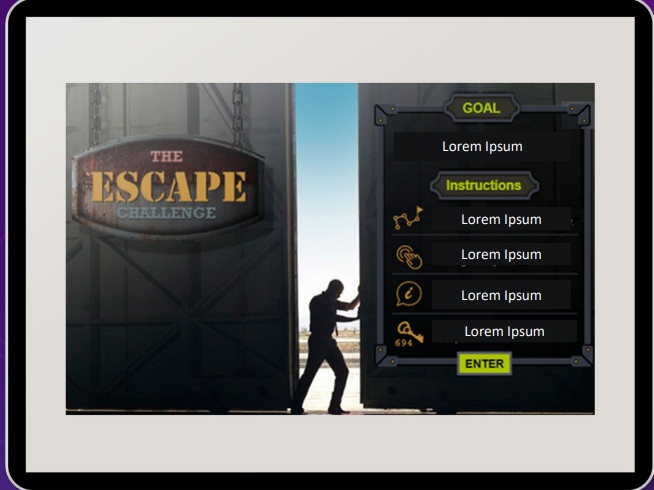
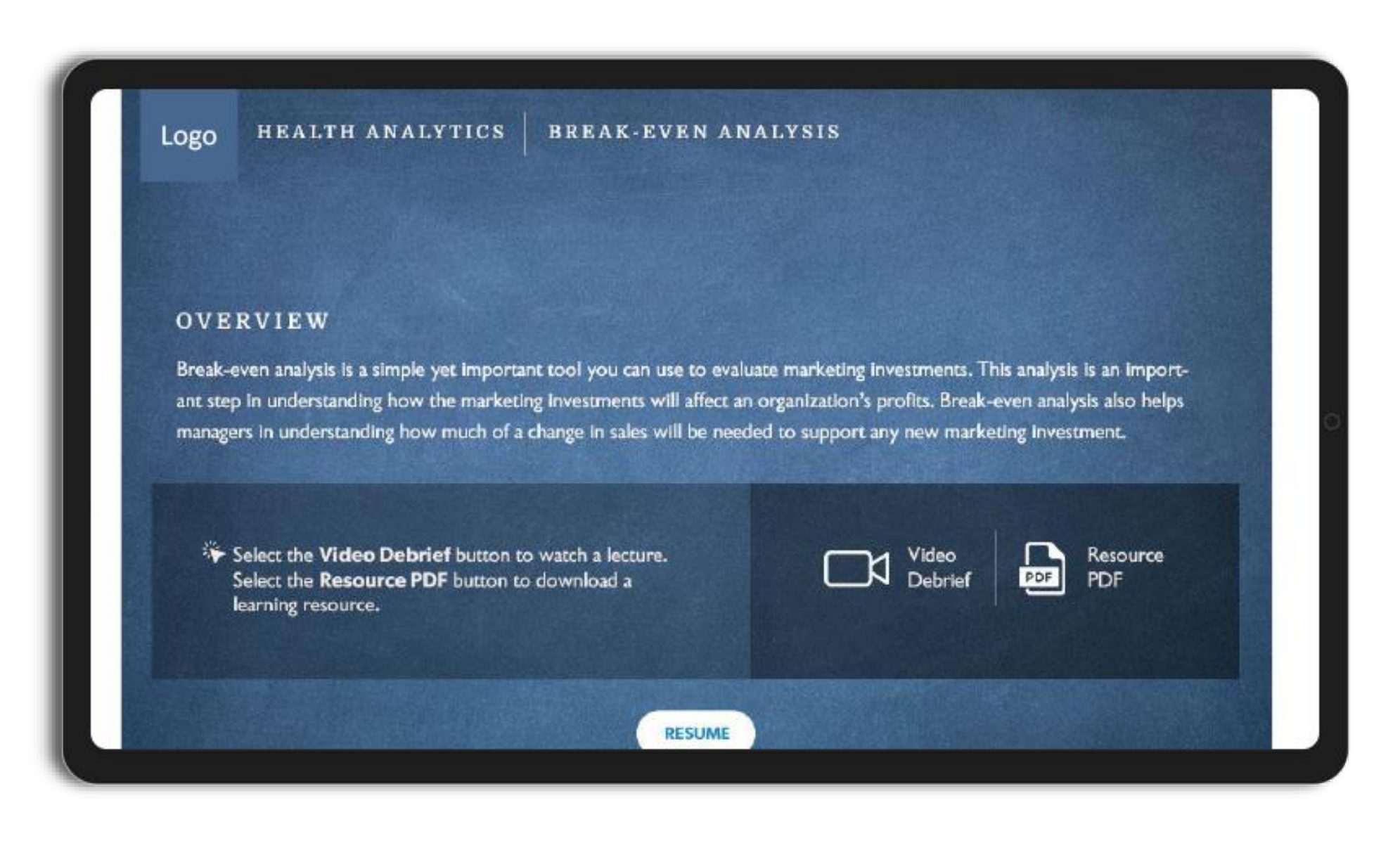
The asynchronous content was then designed for experiential learning rather than for viewing. Each topic opens with a short framing of the concept and a clear route through it, with the lecture available as a video debrief and a downloadable resource alongside it. The student arrives at the video knowing what it is for, which is the difference between watching a lecture and using one.
Turning the monologue into an interactive medium
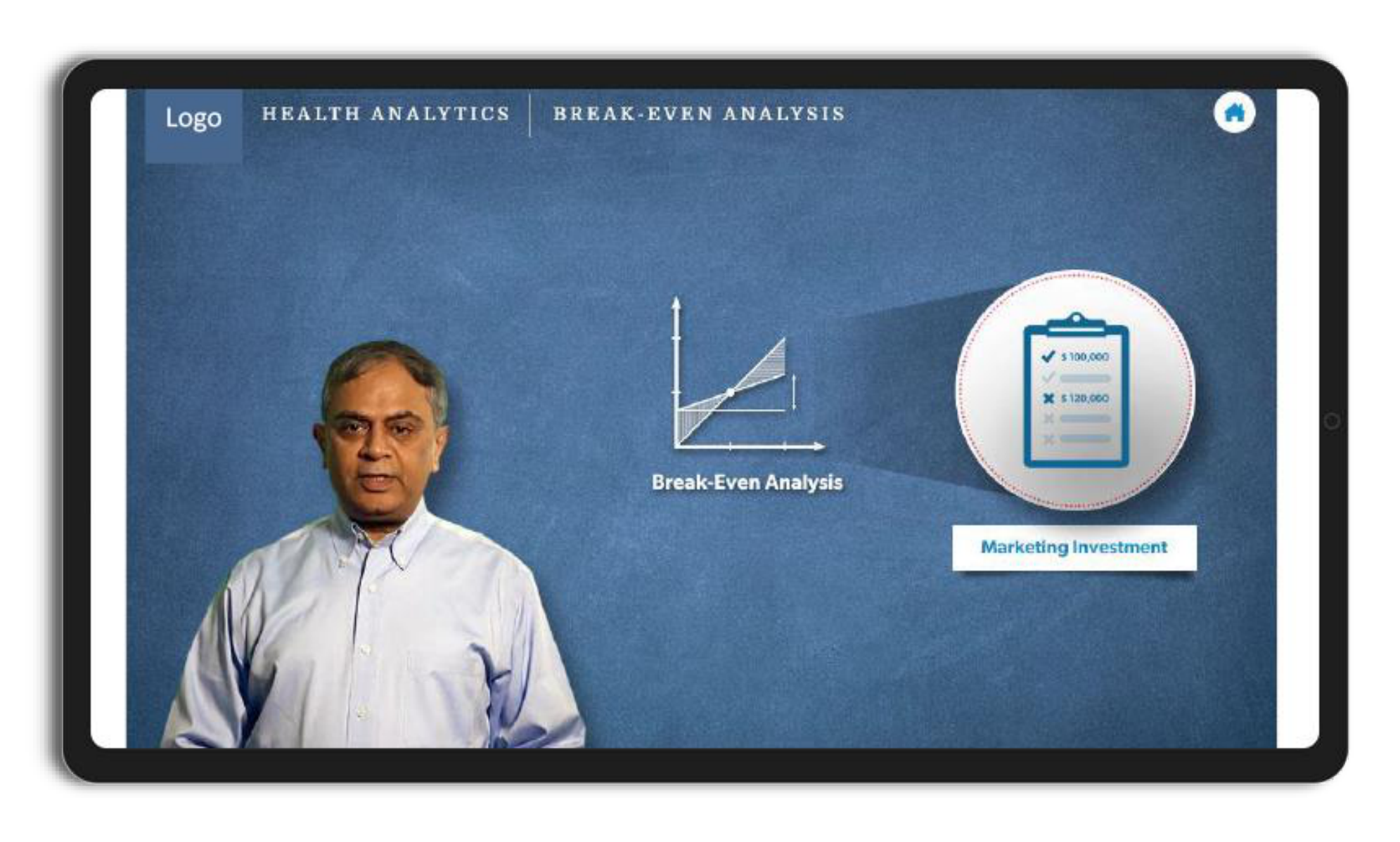
The lectures themselves became enhanced versions of the live sessions, with the professor amalgamated with relevant interactivities and animations. Concepts that a professor would have drawn on a board are built and animated as the explanation unfolds, so the visual does the work the gesture used to do. The result keeps the faculty presence, which is the reason students are there, and adds the layer that a camera could never capture.
Supporting resources and assessment in several formats
Well-crafted supporting resources and assessments in a range of formats completed the learning journey. Performance support material sat alongside each topic as a downloadable resource, which matters for a business school audience that will meet these concepts again in a live session and then again at work.
Delivered as virtual and mobile learning through the LMS and LXP
Delivery ran as virtual training and mobile learning through the LMS and LXP, with responsive design across devices. For a cohort program with live collaborative sessions, the asynchronous track has to fit around whatever the week looks like, which usually means it gets taken on a phone at least some of the time.
The impact
- Increased engagement and immersion from students who expect rich learning suited to their preferences.
- Higher cognition for complex concepts that had been hard to gauge through recorded lecture videos alone.
- Enhanced evaluation results for the pilot term, which encouraged the university to continue with subsequent terms in the same fashion.
The third result is the one that settles the argument. A pilot term at an institution of this kind is scrutinized closely, and continuing in the same fashion is a decision that has to survive faculty review as well as student feedback.
What this case study shows
There is a version of this project that treats existing lecture recordings as a cost saving and a version that treats them as an asset. The second is harder, because it means accepting that the recording is the starting point and not the deliverable, and that the work is everything built around it: the framing before, the interactivity within, the resources beside it, and the assessment after.
It also shows where the risk sits in academic projects. The instructional design was not the hardest part. Earning the confidence of faculty who had every reason to protect their material was, and it was addressed first rather than worked around.
If you have a library of recorded lectures or virtual sessions that is not doing what you hoped, Liberate can help you rebuild it into learning your audience will actually finish.

subscribing!
Related Case Studies