






.avif)

5 Ways To Use Microlearning In Compliance Training


Summary
Learn how microlearning can transform mandatory compliance training into an engaging and impactful learning experience. Explore 5 practical approaches using videos, infographics, scenario-based learning, reinforcement assets, and gamification to improve learner retention, engagement, and compliance outcomes.
Compliance training is mandatory and crucial for organizations. However, although it is essential and cannot be avoided, no employee loves it. In this article, I showcase how you can use microlearning to make your compliance training engaging.
Microlearning In Compliance Training: 5 Possible Approaches With Examples
Policies, procedures, and guidelines (from government and regulatory bodies) are typically the reasons to have compliance training. The training is crucial for organizations and needs 100% conformance.
However, even though it is a mandatory training, employees have no intrinsic motivation to take it. Also, more often than not, the compliance trainings are rendered in a rather obvious (preachy), prescriptive (boring) format.
But, this should not be the case. There are several ways to create an engaging compliance training using immersive learning strategies and supplement the primary compliance training with additional measures that will keep the learners cued in. Increasingly, microlearning-based techniques are being used to enhance the impact of compliance trainings.
In this article, I show you how the usage of microlearning in compliance training can provide you a wide range of options that can help you meet your mandate.
What Is Microlearning, And Why Is It the Flavor Of The Season?
Microlearning based training is the flavor of the season and for several reasons.
- It uses bite-sized learning nuggets (between 2-5 mins long and normally not exceeding 7 mins).
- However, microlearning is not just eLearning lite (it is not just having shorter pieces instead of a longer run length course), but each microlearning nugget is designed to meet a specific learning outcome.
Microlearning would have the following key characteristics:
- It provides learners the flexibility to consume content across devices (ranging from desktops/laptops to smartphones and tablets).
- It can be rendered as a stand-alone nugget, but is more often a part of a learning path.
- It uses rich media formats (notably videos), and different nuggets in a given learning path can have different formats that can present the content more effectively.
- It is action-oriented and encourages the usage of varied formats to learn, practice, solve a problem, and apply the learning on the job.
How Can Usage Of Microlearning In Compliance Training Add Value To The Compliance Mandate?
Microlearning can be used in compliance training to effectively provide following offerings:
- Higher engagement.
- Higher completion rates (within the stipulated time).
- Long-term retention.
- Triggers to behavioral change (leading to the right behavior, in line with the compliance mandate).
Specifically, the benefits it offers to the learners are:
- Flexibility to take the training on the go.
- Flexibility to take the training across devices and on the device of their choice.
The compliance teams can use the microlearning-based approach to create higher impact trainings through the following two approaches:
For the main compliance courses: Use the diversity of available formats in microlearning to offer courses that are engaging and create sticky learning experiences.
Support/supplement the main compliance courses: Use the core strength of the microlearning technique to:
- Connect with the learners prior to the formal compliance training (create awareness of the significance of the compliance training and their role in meeting the mandate, and so on).
- Provide room for reinforcement or practice (post the formal compliance training).
- Create “communities of compliance practice” to sustain the compliance focus and keep the learners cued in (rather than the discrete connections through annual compliance trainings).
How Can You Uplift The Compliance Training Mandate?
At EI Design, our compliance practice is over 16 years old, and till date, one in six courses we build is for a compliance mandate.
We have adopted an integrated approach to compliance training to create higher impact, as shown here:
- Adopt strategies that create a sticky learning experience: Over the years, we have worked closely with the compliance teams of our customers in creating engaging courses that feature learning strategies including gamification, scenario-based learning, storytorials, and so on. These approaches have helped us create highly sticky learning experiences.
- Supplement the formal compliance training through microlearning: One of the aspects we have used extensively is the usage of microlearning to support the compliance program (pre- or post-formal training). This includes campaigns that include newsletters, posters, and teaser videos prior to the formal training, as well as reinforcements post the formal training program that keeps the learners connected to the compliance mandate.
- Redesign the formal compliance training in the microlearning format: Increasingly, the compliance programs are being designed as a learning journey featuring multiple microlearning nuggets.
Here Is A List Of 5 Possible Approaches That Show You How You Can Use Microlearning In Compliance Training:
Example 1: Microlearning In Compliance Training
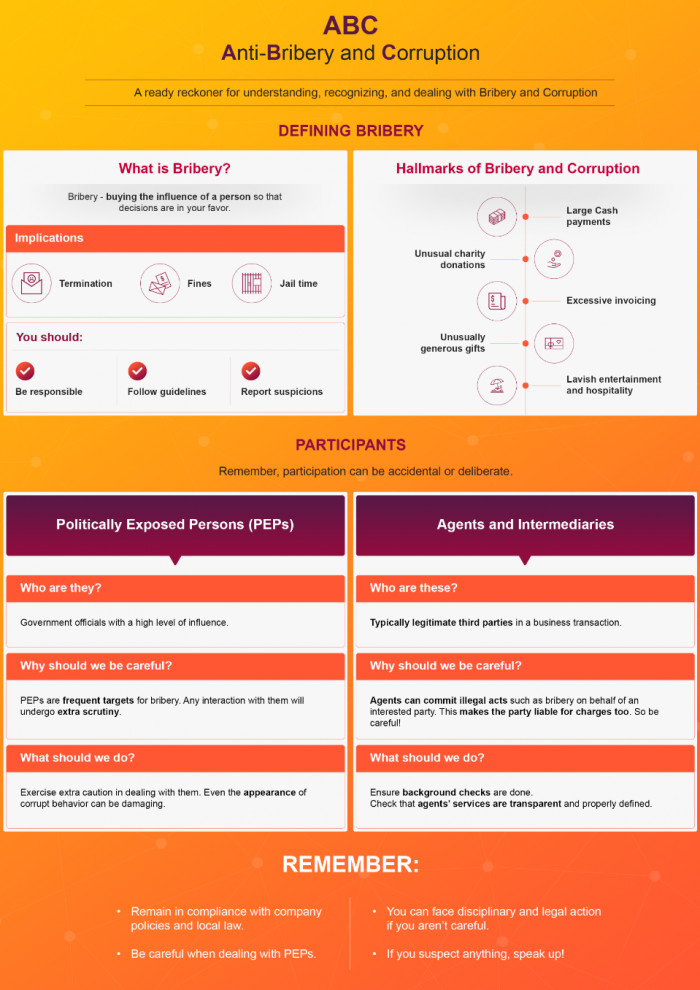
An integrated approach to compliance training - This is a case study where we used various formats of microlearning at various stages of the training lifecycle to instill the spirit of compliance into learners.
- Prior to the training, we used an animated video format to introduce the compliance mandate and build awareness.
- During the training, we used short scenario-based nuggets like “Choose the right path” where the learner was put into a situation and had to make choices, which made learning more experiential.
- Post training, short learning summaries were shared with the learners in the form of sharp infographics that provide key takeaways from the training.
a. Animated video: Introduction to the concept

b. Online course: Overview with a focus on “Doing it the right way”

c. Poster: Sharp summary
Pre-Formal Training (Assets To Support The Formal Compliance Training)
Example 2: Microlearning In Compliance Training
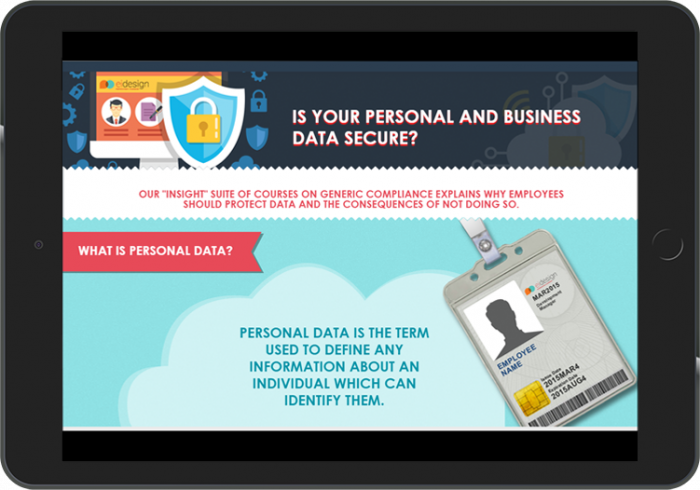
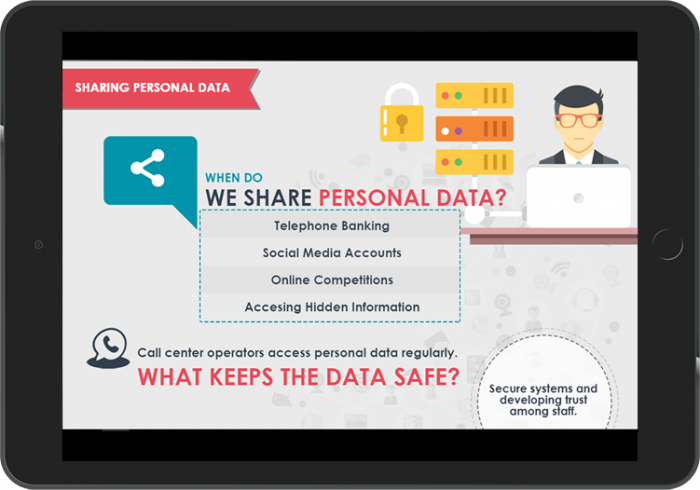
Using infographics - Infographics can serve as a great microlearning asset to provide training overviews before the formal training commences.
This example of training on data security shows how we used relevant infographics in a scrollable webpage format to generate interest and provide a prelude to the actual training.
Example 3: Microlearning In Compliance Training
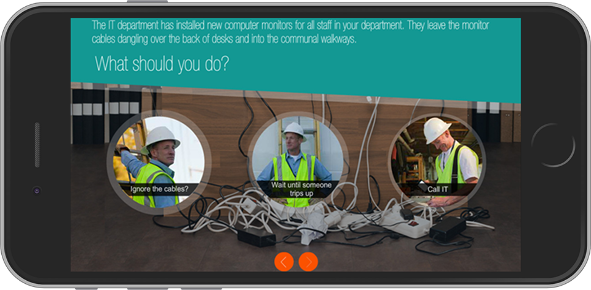
Using videos - Videos are a very high-impact medium, and they can be used to support compliance trainings in many ways (as teasers prior to key programs and as reinforcement post the main program).
This example was a training on workplace safety, and it was important for the participants to understand the adverse consequences of non-compliance. An animated video that presented real-life situations and crisp messages to draw attention was used to drive the learners to take the right action.

Post-Formal Training (Assets To Support The Formal Compliance Training)
Example 4: Microlearning In Compliance Training
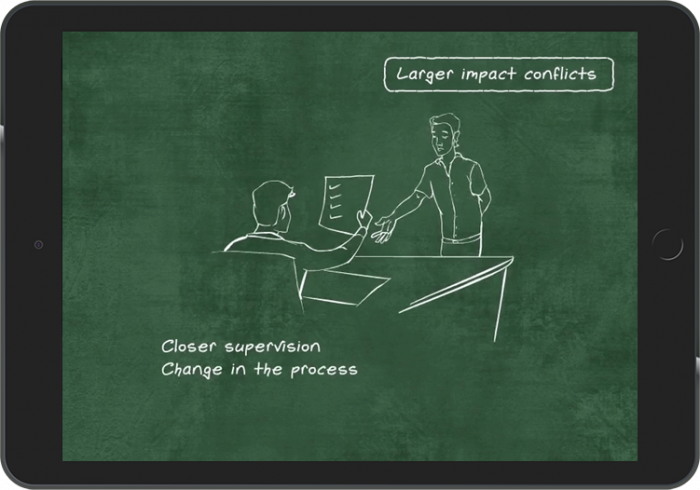
Reinforcement video - Featuring the whiteboard animation technique
Post-training refreshers are critical to helping learners retain the key takeaways of the training better. Microlearning helps us do this in various formats, significantly through the use of videos.
Here, we used a whiteboard animation video approach that uses hand-drawn graphics animated with synced audio. It helped provide novelty to the whole viewing experience of this short nugget on the key takeaways of a “Conflict at workplace” training.
Example 5: Microlearning In Compliance Training
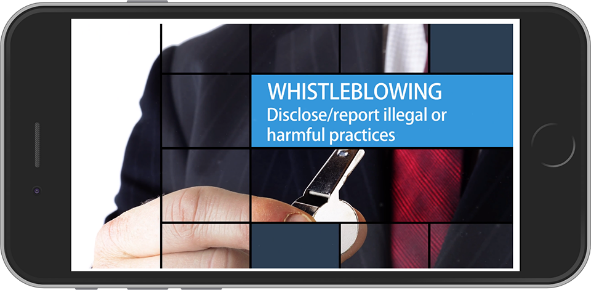
Cheat sheets - Featuring the kinetic text-based technique
Cheat sheets in the form of checklists, best practices, and guidelines can serve as great takeaways from any compliance training course. These short microlearning nuggets can be in the form of infographics, simple text, and supporting image formats or animation videos.
This is an example of a cheat sheet that shows a checklist using the kinetic text-based animation video approach that the learners can access on their smartphones (in line with the compliance mandate).
I hope this article provides insights on how you can use microlearning for compliance training. As the featured examples show, you can use microlearning to support the primary compliance training. But this is not all; you can use the microlearning based approach to craft your primary compliance training too.
If you have any queries or need any specific support, do contact me at apandey@eidesign.net.
Read More:
- Free eBook: Strategies To Create Compelling And Immersive Compliance Training - Featuring 8 Examples
- Free eBook: Tips And Examples To Create Highly Engaging Online Compliance Training
- How To Use Gamification To Enhance Compliance Training - Featuring 4 Examples
- Case Study - Creating Highly Engaging Corporate Compliance Training With Gamification
- Strategies To Mitigate Key Challenges In A Compliance Training

subscribing!
Related articles


.jpg)
.jpg)






.jpg)
