



.avif)

AI in Training and Development: Driving Smarter Learning


Summary
AI is transforming training from a one-size-fits-all model into a personalized, adaptive journey. By debunking common myths and focusing on high-impact use cases like automated content creation and predictive analytics, organizations can create a scalable learning ecosystem that drives real behavior change and measurable ROI.
Are you still using a generic training program for everyone in your company? Today, L&D teams need to deliver training that’s both personalized and effective for every employee. However, traditional methods often can’t adapt to different learning styles, provide instant feedback, or show the effectiveness of the training.
That’s where AI-powered learning makes a difference. It helps personalize training for each employee, track their progress, identify skill gaps, and make learning more efficient and engaging.
In this blog, you’ll explore how bringing AI into training and development can help your organization increase engagement, efficiency, and get measurable results.
Key Takeaways:
- AI customizes training programs to match each employee’s skills and learning style, helping them stay engaged and achieve better results.
- Learners get real-time feedback through AI-powered systems, allowing them to correct mistakes and strengthen their skills on the spot.
- AI adapts training content to different languages, cultures, and regions, ensuring a consistent yet locally relevant learning experience.
- L&D teams can track learner performance and engagement easily, helping them refine training programs and measure what’s working.
- AI automatically updates compliance content, sends reminders, and tracks employee progress, making it easier to stay compliant across the organization.
AI Is Redefining Training and Development
The role of AI in training and development involves utilizing smart technology to enhance training by making it more personalized, efficient, and scalable. It includes tools like adaptive learning systems, automated content creation, and learning analytics that help design training programs suited to each learner’s needs.
Here’s how AI is redefining training and development:
- Personalized Learning Journeys: AI creates adaptive learning paths tailored to each employee’s role, learning style, and skill gaps, ensuring relevant content and improved engagement.
- Real-Time Feedback and Continuous Improvement: AI-powered systems provide instant feedback, helping learners correct mistakes and strengthen skills immediately.
- Scalability Across Geographies: AI platforms support multi-language content and adapt training to local cultural needs, enabling consistent and relevant learning across global teams.
- Performance Analytics and Data-Driven Decisions: AI continuously analyzes learner data to track engagement, identify skill gaps, measure effectiveness, and predict future training needs for more proactive learning programs.
- Cost and Time Efficiency in Content Creation and Delivery: AI reduces the time and resources needed to develop and update training materials, simplifies delivery, and minimizes reliance on in-person sessions.
As AI continues to transform the way learning occurs, it’s essential to look beyond the buzz and understand what this truly means for L&D.
Suggested Read: How to Use AI in Training for Personalized Learning and Measurable Results
The Truth Behind AI in Training and Development

AI in training and development has been creating quite a buzz lately. But like many new technologies, there’s often a big difference between all the excitement around AI and how it’s actually being used in real L&D programs.
1. Hype: AI Will Replace Human Trainers and Educators
Many people believe AI will completely take over the role of human trainers. The idea is that AI can design, deliver, and assess training all on its own, leaving no need for human input.
Reality: AI can handle certain tasks, such as creating content or providing instant feedback, but it can’t match the empathy, intuition, and real-world understanding that human trainers bring. The best results come when AI supports human expertise, not when it replaces it.
2. Hype: AI Will Instantly Solve All Learning Challenges
Some think that once AI is introduced, all training issues will disappear. They expect AI to automatically track progress, personalize learning, and improve performance across the organization with little effort.
Reality: AI requires careful setup, regular updates, and high-quality data to function effectively. If the data is poor or incomplete, it can lead to inaccurate insights or missed opportunities. AI is powerful, but it’s not a magic solution.
3. Hype: AI Will Deliver Results Without Human Oversight
There’s also a belief that once implemented, AI learning systems can run on their own, delivering results without any need for management or supervision.
Reality: Although AI can automate certain aspects of training, human oversight remains crucial. L&D teams must ensure that content remains accurate, relevant, and aligned with business objectives. Without proper guidance, AI programs can quickly go off track.
4. Hype: AI Will Provide Perfect Personalization for Every Learner
AI is often promoted as being able to instantly understand every learner’s needs and create perfectly customized training for each one.
Reality: AI can personalize learning to a great extent, but it depends heavily on the quality of data it receives. Incomplete or inaccurate data can lead to gaps. Human trainers still play a vital role in reviewing and refining AI-driven learning paths.
After understanding the real impact of AI in L&D, the next step is to see how these ideas are applied in everyday use.
5 Use Cases of AI in Training and Development (With Real-Life Examples)
AI is shaping training and development by making training more personalized, efficient, and impactful. Here are a few real-world examples that show how AI is being used in L&D and how it’s helping businesses improve results and support employee growth.
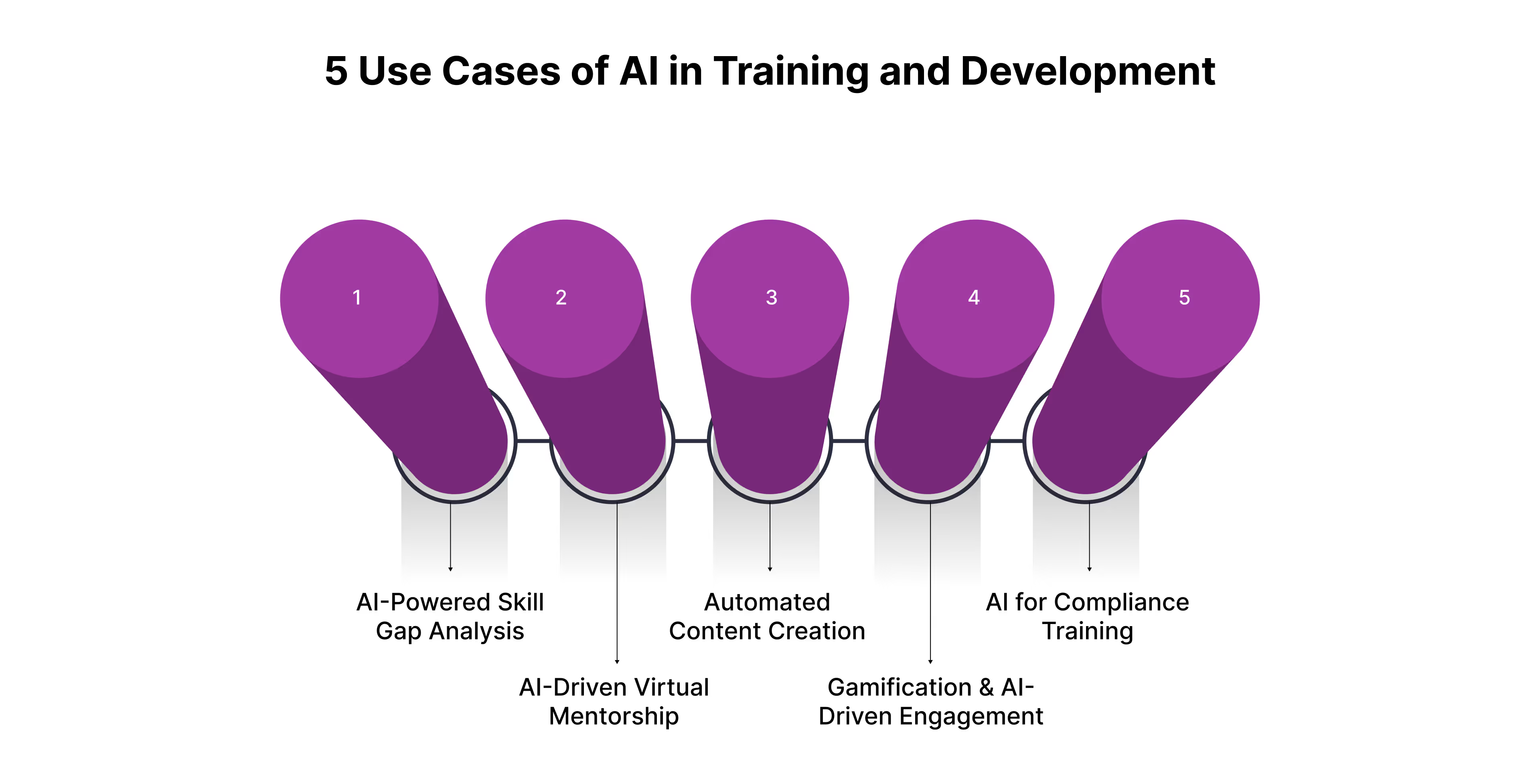
1. AI-Powered Skill Gap Analysis
AI helps companies identify skill gaps by studying employee performance data and recommending targeted learning programs. For instance, Deloitte uses AI to analyze the skills of its global workforce and tailor training to specific needs.
By reviewing data from performance reports, training history, and assessments, AI pinpoints areas for improvement and suggests personalized learning paths.
2. AI-Driven Virtual Mentorship
AI-powered virtual assistants serve as personal mentors, providing learners with instant feedback, guidance, and support. For instance, Unilever uses an AI chatbot to provide employees with personalized learning content and real-time mentoring.
The system uses natural language processing and machine learning to interact with users, recommend courses, answer questions, and track progress. This makes learning faster, more engaging, and accessible at any time.
3. Automated Content Creation
AI simplifies the process of developing training materials like quizzes, videos, and assessments. For example, Accenture uses AI tools to create and update custom learning content, ensuring that materials remain relevant in rapidly changing areas such as technology and compliance.
By scanning existing resources and industry trends, AI automates content creation, reduces manual work, and helps employees access the latest training without delays.
4. Gamification and AI-Driven Engagement
AI enhances engagement by adding gamified elements like points, challenges, and badges to learning programs. EI also makes corporate training engaging and effective through gamification, blending game principles like points, badges, and challenges with learning objectives.
These solutions help employees stay motivated, practice skills in a safe environment, and achieve learning outcomes in a fun, interactive way.
5. AI for Compliance Training
AI automates compliance training by keeping employees up to date with regulations and company policies. The system tracks completion rates, monitors regulatory changes, and ensures timely compliance without manual follow-up.
EI also makes compliance training more engaging by addressing common challenges, such as a lack of motivation, low engagement, and dull content. They offer interactive modules, real‑world scenarios, and personalized learning paths to transform training into an engaging, effective experience for employees.
Check Demo: Compliance Training
After exploring real-life examples, it’s easier to understand what steps organizations can take to successfully adopt AI in their learning programs.
Also Read: What Is Compliance Training and Why Does It Matter?
A Simple Roadmap to Bringing AI into L&D
Implementing AI in L&D is more than just adding new technology. It requires careful planning, alignment with business objectives, and a focus on ongoing improvement. Here’s a breakdown of the key phases and practical steps for bringing AI into learning and development.
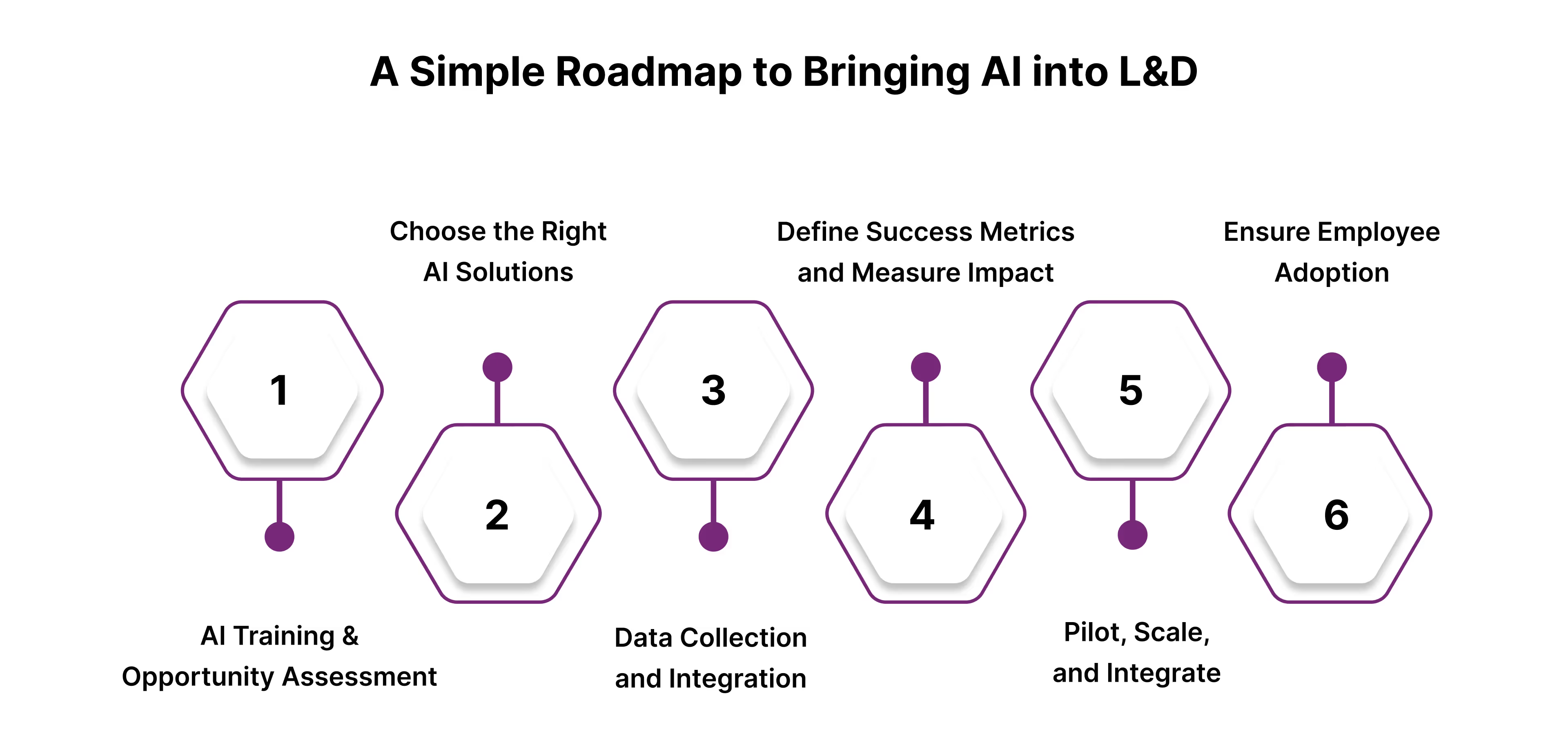
1. Assess Training Needs and Identify AI Opportunities
Conduct a training needs analysis to spot skill gaps, performance issues, and knowledge shortages. Then review existing processes to see where AI can add value through personalized learning, real-time feedback, or automated content.
Finally, define the business goals AI should support, whether it’s improving compliance, enhancing leadership development, or increasing engagement.
2. Choose the Right AI Solutions
Research platforms that offer adaptive learning, personalized content, and data-driven insights, and test them to evaluate both effectiveness and compatibility with existing systems.
Make sure the solution integrates smoothly with your LMS, HRIS, and other learning technologies to create a smooth experience for teams and employees.
3. Data Collection and Integration
AI relies on clean, structured data to deliver personalized learning. Gather historical data on performance, engagement, and past training, and integrate it with your existing systems to get a complete view of employee learning and progress.
4. Define Success Metrics and Measure Impact
Set clear metrics to track the success of AI-driven learning programs. Use KPIs like engagement, completion rates, and impact on productivity or retention, and leverage AI analytics to monitor these in real time.
5. Pilot, Scale, and Integrate
Begin with a pilot group to test the AI solution, gather feedback, and make improvements before scaling. Once successful, roll it out across departments, regions, or the entire organization, ensuring smooth integration with existing systems.
6. Ensure Employee Adoption and Continuous Learning
Guide employees on how AI enhances learning and offers real-time support, while promoting a culture of continuous development. Encourage collaboration with AI tools, such as virtual mentors or analytics dashboards, to strengthen skills and make learning an ongoing part of their growth.
Even with a well-defined roadmap, organizations often face a few hurdles when putting AI into practice.
Common Roadblocks of Using AI in L&D and Ways to Overcome Them
As AI continues to transform Learning and Development (L&D), many organizations struggle to fully adopt and utilize AI-powered solutions. Below are the common challenges of using AI in L&D and their effective solutions.
Once you understand the challenges of using AI in L&D, it becomes easier to identify practical ways to make it work more effectively.
Must Read: AI-Powered Learning Management Systems: Features, Benefits, and How to Choose the Best
5 Smart Tips for Making AI Work Better in L&D
Integrating AI into L&D can enhance training programs, but, like any new technology, it requires careful planning and execution to succeed. To help organizations maximize the benefits of AI in L&D, here are some practical tips for optimizing AI tools to ensure smooth adoption and enhance their impact.
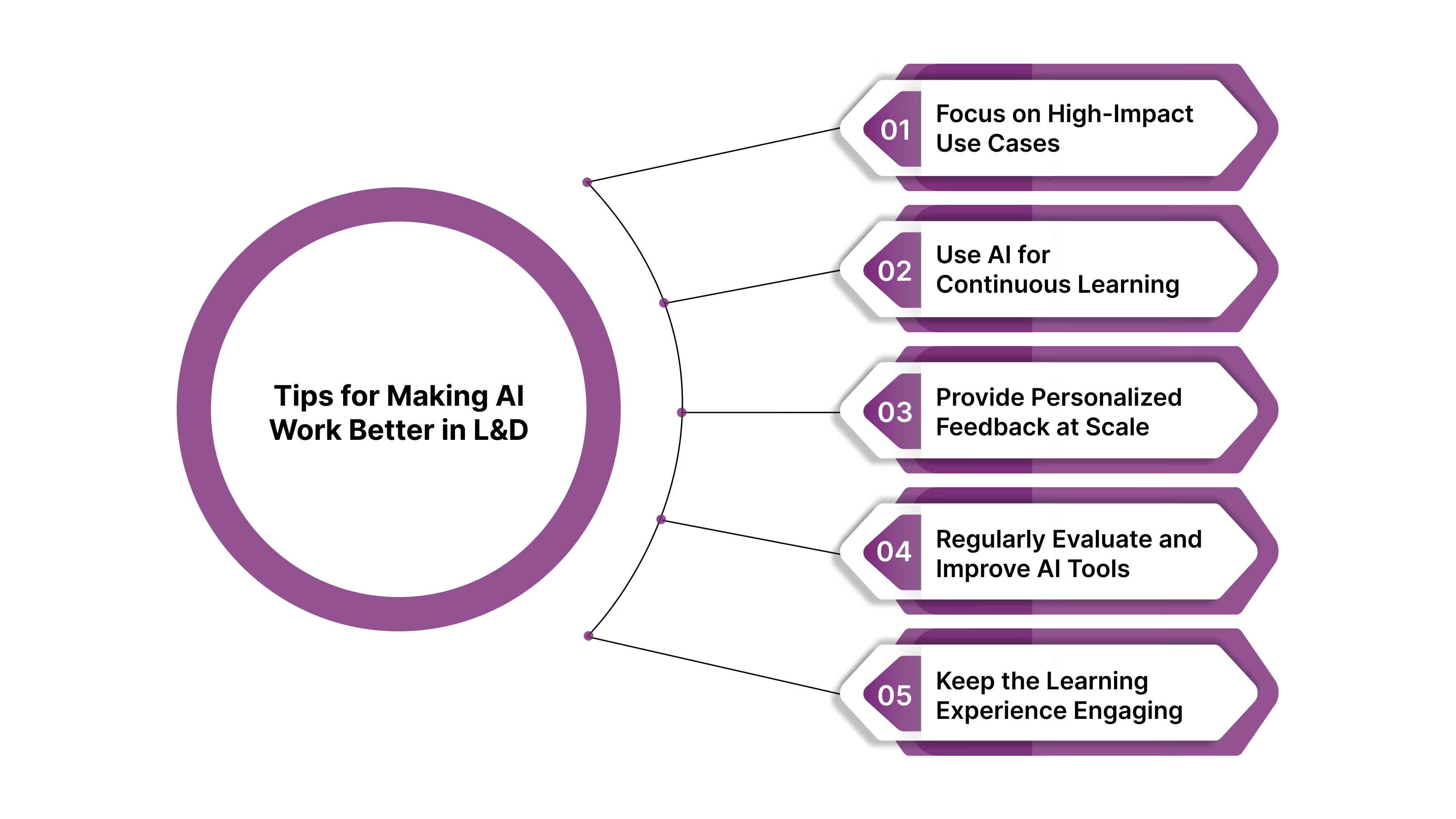
1. Focus on High-Impact Use Cases
Identify where AI can make the biggest difference, such as personalized learning paths or content automation. Start with one or two high-priority areas to show value before scaling across the organization. Target use cases that align with key business needs, such as leadership development or compliance training.
2. Use AI for Continuous Learning
Offer on-demand content that employees can access whenever needed, supporting a culture of ongoing development. Encourage regular engagement with AI tools, as they can recommend relevant courses and track progress, bridging the gap between formal training and daily work.
3. Provide Personalized Feedback at Scale
Use AI to give instant, personalized feedback based on each learner’s performance. AI tracks progress and highlights strengths and areas for improvement. Automated assessments can adapt to the learner’s level, ensuring feedback is relevant and actionable.
4. Regularly Evaluate and Improve AI Tools
Continuously measure AI effectiveness by tracking engagement, learning outcomes, and employee feedback. Use analytics to understand learner behavior and identify areas needing adjustment. Regular updates based on performance data keep AI tools relevant and effective, optimizing the learning experience over time.
5. Keep the Learning Experience Engaging
Use gamification and interactive content to maintain learner interest. AI can offer challenges, rewards, and adjust difficulty based on progress, keeping training motivating and engaging. This approach sustains attention and improves learning retention and overall effectiveness.
EI is the Perfect Partner for AI-Powered Training and Development

Many L&D programs struggle to create real behavioral change. Employees may complete courses, but the learning often doesn’t stick. That’s why organizations are moving beyond routine training to deliver experiences that are engaging, relevant, and immediately applicable.
At EI, we combine creativity, behavioral science, and advanced technology to create training that is truly impactful and measurable. Key features of EI’s AI-powered training solutions include:
- GenAI Content Studio that speeds up content creation by up to 60 %, producing consistent, customized modules, storyboards, and assessments.
- Adaptive Delivery Engine that uses machine learning to adjust content in real time based on learner behavior and performance, keeping training relevant and effective.
- Conversational Learning Bots that provide on-the-job, natural-language support and microlearning, so learners can access guidance exactly when they need it.
- Predictive Analytics Hub that offers dashboards to forecast skill gaps, monitor engagement, and measure the business impact of training investments.
- Immersive Experience Engine that uses scenario-based learning and behavioral AI with realistic simulations for deeper understanding and long-term retention.
- Integrated AI Learning Ecosystem that delivers a modular, scalable framework for global deployment, smooth system integration, and real-time analytics.
With EI’s AI-driven, learner-focused approach, you can turn traditional training into personalized, scalable learning journeys that drive behavior, improve performance, and deliver real business results.
Final Thoughts
As AI continues to shape the future of L&D, its impact extends far beyond personalization and scale. The real strength of AI in training and development lies in how it keeps improving training programs by learning from real-time data and adapting to new business needs.
When you bring AI into your L&D strategy, you’re preparing your workforce for the future. At EI, we use AI to create learning and development programs that are personalized, engaging, and truly effective, helping employees learn in a way that sticks.
With years of experience in shaping L&D strategies, we turn traditional training into an adaptive, ongoing process that evolves with both employees and business goals. Our AI-powered platforms enable organizations to scale learning across diverse teams while tracking performance and growth in real-time.
Ready to transform your L&D approach with AI? Get in touch with us today!
FAQs
Q1. How can AI in L&D make training programs more engaging for employees?
A1. AI makes learning more interesting by personalizing each employee’s training journey. It adds fun elements like games, interactive activities, and instant feedback to keep employees motivated and involved throughout the program.
Q2. How does AI support continuous learning after the first round of training?
A2. AI helps employees continue learning even after the main training has ended. It suggests bite-sized lessons, quick learning resources, and skill-building activities whenever needed.
Q3. Can AI help employees build soft skills, too?
A3. Yes, AI tools can simulate real-life situations where employees can practice communication, teamwork, leadership, or emotional intelligence. These interactive sessions help them handle real-world challenges better.
Q4. How can AI in L&D help global companies with diverse teams?
A4. For global teams, AI makes training easier and more inclusive. It can translate and adapt content to suit different languages and cultures while maintaining consistent quality.
Q5. How can AI-based learning systems make compliance training easier?
A5. AI can automate most compliance training tasks. It updates learning modules whenever new rules come in, sends reminders to employees, and tracks who has completed their sessions.

subscribing!
Related articles


.jpg)
.jpg)




.jpg)