






.avif)

What is Self-directed Learning – Featuring 7 Strategies


What is Self-directed Learning – Featuring 7 Strategies
Self-Directed Learning is a ‘must have’ strategy for learners, L&D teams, and businesses in today’s hybrid workplace. This article explores the significance of investing in Self-Directed Learning (SDL) and provides actionable strategies for its implementation.
What is Self-Directed Learning?
In simple terms, the self-directed learning approach is all about transferring the onus of learning to the learner rather than the instructor/teacher. Particularly in the context of corporate learning, SDL empowers employees to determine their learning paths, including what, how, and when they learn. This approach contrasts with traditional methods where learning is instructor-driven and often follows a prescribed path.
Key Characteristics of Self-Directed Learning
- Learner Autonomy: SDL revolves around giving learners the freedom to make choices about their learning.
- Personalization: It caters to individual learning preferences and styles, offering various learning assets to suit different needs.
- Continuous Learning: Encourages ongoing learning and skill development, keeping learners up to date with industry trends and knowledge.
Characteristics of a Self-Directed Learner
A self-directed learner typically exhibits:
- Elevated levels of motivation and engagement.
- Ability to set personal learning goals and pursue them independently.
- Proficiency in identifying and sourcing relevant learning materials.
- Capacity for self-assessment and reflection on their learning journey.
How Does Self-Directed Learning Work?
Self-directed learning operates through a structured but learner-controlled process. According to the four-step SDL model, learners:
- Diagnose their learning needs – identifying knowledge or skill gaps.
- Set goals and plan learning paths – creating timelines and choosing resources.
- Implement their learning strategies – engaging with content, tools, and communities.
- Evaluate outcomes – reflecting, applying feedback, and adjusting learning strategies accordingly.
This cyclical process encourages deeper engagement, reflection, and practical application, all while fostering learner ownership.
What Are the Benefits of Self-Directed Learning?
In today’s evolving hybrid work environment, SDL presents multi-faceted benefits for learners, L&D teams, and businesses:
- For Learners:
- Enhanced Autonomy and Control: SDL empowers learners with greater autonomy over their learning, allowing them to choose what, when, and how they learn.
- Increased Flexibility: Aligns learning with individual work styles and schedules.
- Learner-Centricity: Promotes a learning culture focused on the learner’s needs and interests.
- Ownership and Responsibility: By taking control of their own learning path, individuals become more invested and find the process more rewarding.
- For L&D Teams:
- Catalyst for Efficiency: Frees up time from traditional learning management tasks, allowing focus on evaluating feedback and improving learning experiences.
- Strategic Value Addition: Shifts the role of L&D from managing to strategically enhancing learning experiences.
- For Businesses:
- Fosters Continuous Learning Culture: Encourages a culture of continuous skill development, reskilling, and upskilling.
- Promotes Specialization: Motivates employees to specialize in their roles through deeper learning.
- Improves Overall Performance: A knowledgeable workforce leads to enhanced business performance and better return on investment in learning programs.
In essence, SDL is a key driver in adapting to and excelling in the new dynamics of the workplace, benefiting individual learners, L&D teams, and the broader organizational ecosystem. By strategically emulating successful strategies of SDL, businesses ensure better learning outcomes from their investment dollars. This leads to better ROI from SDL programs.
Why Should You Invest in Self-Directed Learning?
There are multitudes of reasons why employers should seriously consider investing in SDL. However, the front-runners for why SDL is a ‘must have’ strategy include the following:
- Learner perspective: Today, learners wish to have more autonomy over when what, where, and how they learn. A recent LinkedIn Workplace Learning Report concluded that more than 40% of Gen-Z, and a similar percentage of Millennial employees, preferred self-directed workplace learning. For Gen-X and Boomers, that percentage was 33%. As work shifts from the “work primarily at the office” model to the “work from anywhere” (a.k.a. ‘Work from Home – WFH’) paradigm, hybrid learners can only succeed in an SDL environment. That’s because, like self-regulated hybrid working – where employees regulate their own work schedules based on organizational priorities – SDL empowers learners to set their own learning goals and craft a logical path to accomplish them.
- L&D team perspective: With training budgets under constant review, L&D teams are continually looking to bring value-add to their services. SDL is a way for training teams to move away from mundane, micromanaging learning while enabling them to focus on vision, strategy, and learning effectiveness.
- Organizational perspective: SDL is imperative in the new hybrid workplace. To respond to dynamically changing business environments, businesses need a learning strategy focused on continuous learning and rapid and effective reskilling or upskilling. SDL delivers to that objective.
In the new hybrid work paradigm, employers should not underestimate the importance of learner autonomy. Because employees embracing the WFH model are now more self-reliant in when and how they work, they expect similar levels of flexibility in workplace learning. In delivering those objectives, SDL increases motivation, improves performance, and fosters talent retention.
And there’s science behind why employers must invest in SDL too. The payback, for making such an investment, may be summed up in one word: Motivation! Human motivation expert, Daniel Pink, advances a theory highlighting 3 aspects of motivation – Autonomy, Mastery, and Purpose, which workplace SDL programs could potentially leverage.
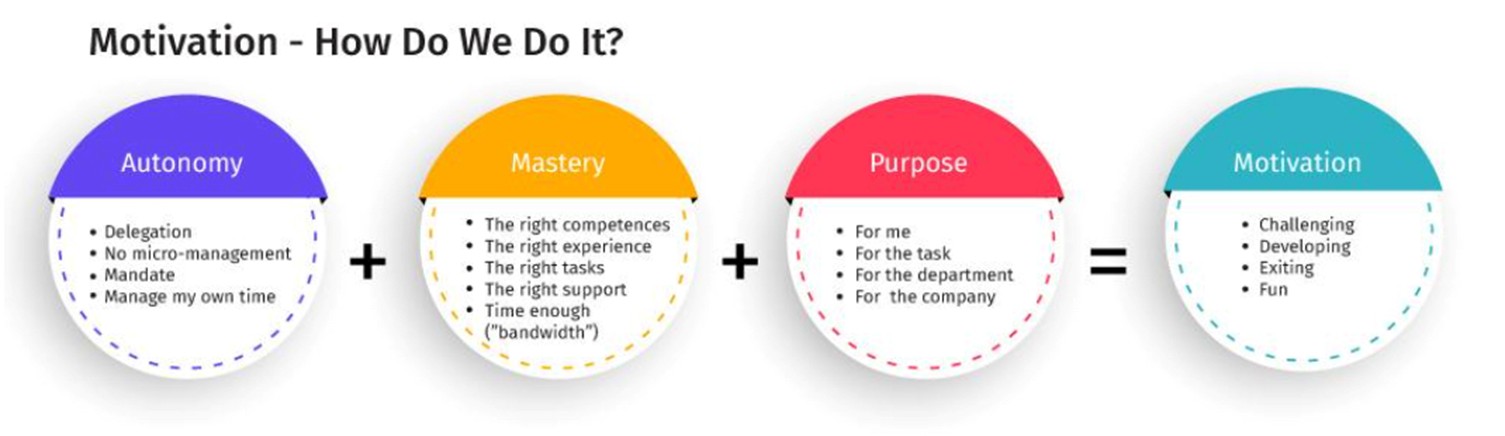
There are several strategies of SDL that cement it as a learning modality that delivers all three of those motivational aspects. It does so by:
- Giving learners the freedom (Autonomy) to choose their own learning paths.
- Promising the reward of enhanced performance (Mastery) at the end of that path.
- Empowering them with a sense of satisfaction and accomplishment (Purpose) once they apply that learning and excel at what they do.
Unlike strictly regulated learning, SDL delivers on all three aspects of Pink’s motivational model.
How Can SDL Support Continuous Learning in Hybrid Workplaces?
In a hybrid work model, SDL ensures learning continues without interruption. Key ways it supports ongoing upskilling:
- Anytime, anywhere access to resources.
- Integration with Learning in the Flow of Work (LIFOW) tools.
- A robust support system, including tools for on-the-job performance and blended learning touchpoints.
- Encouragement of social and peer-led learning even in distributed teams.
The flexibility SDL provides is essential for developing resilient, future-ready teams in a decentralized workforce.
What Tools and Technologies Support SDL in the Workplace?
Effective SDL programs are backed by a robust tech ecosystem. Key enablers include:
- Learning Experience Platforms (LXPs) for content discovery and personalization.
- AI-enabled content curation tools for intelligent recommendations.
- Digital learning assistants (chatbots, voice bots) for nudging and guidance.
- Collaborative tools like forums, discussion boards, and virtual communities.
- Immersive learning environments (VR/AR) for practical application.
These tools create a dynamic and supportive learning environment for autonomous learners.
Self-Directed Learning in the Workplace
SDL in the workplace entails creating a culture where employees are encouraged and supported to take charge of their professional development. It involves providing resources, tools, and opportunities for employees to learn in a manner that aligns with their individual career goals and the organization’s objectives.
Strategies for Fostering SDL in the Workplace
- Create awareness about the benefits of SDL for both the individual and the organization.
- Establish a focus group to drive and manage SDL initiatives.
- Invest in learning portals and platforms that provide relevant and curated information, as well as avenues for social and collaborative learning.
- Encourage knowledge sharing through forums and discussions.
- Recognize and reward employees who actively engage in and contribute to SDL.
Implementing SDL in the Workplace: A Multi-Part Strategy
Part 1: Get the basics right.
Successful SDL depends on 3 pillars that provide a solid foundation for all other elements of the strategy:
- Understanding today’s learners’ needs and preferences – As the previously referenced LinkedIn survey indicates, unlike the homogenous learning environment of the past, today’s learners have different learning needs and preferences. Ignore those needs at your peril!
- Choosing the right enabling tools and technologies to support today’s learner needs – In today’s hybrid work environment, learning technology plays a critical role in determining the success of any Self-Directed Learning initiatives. In fact, choose this building block incorrectly, and your entire SDL strategy may collapse!
- Building learning environments that motivate, support, and empower learners to embrace SDL – Appropriate learning content, delivery modes, learning technology, and user support all form a part of an organizational learning and performance (L&P) ecosystem. A well-integrated L&P ecosystem is essential for a successful SDL program.
Part 2: Provide for learning, practice, and ongoing performance support.
- With the basics in place, it’s critical to focus on creating opportunities where learning can take place, and which provides a safe place for learners to practice what they’ve learned, and receive ongoing performance support. Strategies of Self-Directed Learning support include job aids, Learning in the Flow of Work (LIFOW) support, and performance support tools.
- Organizations must also invest in immersive learning content, including practice 3D-simulation environments, branching scenarios, Virtual Reality (VR) content, how-to videos, templates, and interactive guides. These help learners acquire new knowledge and apply that knowledge to enhance on-the-job performance.
Part 3: Checkpoint for feedback and evaluation.
- Blended learning/social learning for coaching and mentoring – In a virtual workplace, like we have today, it’s important to establish multiple checkpoints along a learners’ SDL path. The use of virtual and blended training options is a great way to engage self-directed learners to receive and provide feedback. Organizations can also leverage social learning to deliver coaching and mentoring experiences to hybrid employees.
- Provide feedback to steer learners in the right direction – Sound strategies of Self-Directed Learning feedback mechanisms include using tactics such as Polling, Surveying, Data Analysis, and other feedback loops to measure and assess the effectiveness of learning and performance ecosystems. Appropriate suggestions, recommendations, and additional/alternative learning pathways can then steer learners toward desired learning goals.
7 Strategies to Drive Self-Directed Learning
There is no one-size-fits-all strategy to implementing a successful org-wide SDL program. Businesses must customize their strategies according to organizational culture and tailor their strategy for the best fit. Consider the Following Strategies for Driving Self-Directed Learning:
- Content curation: Rather than casting a broad net of content, consider the use of AI-enabled tools to make learning recommendations and for content curation.
- Digital learning assistants: Use Chatbots, Voice bots, and Machine Learning digital assistants to nudge, remind, and steer learners on their path to Self-Directed Learning.
- Learning awareness: Use targeted and timed mailer notices, info sessions, and push notifications – including email, text, and IM – to publicize learning opportunities.
- Communities and forums: Create online forums and communities (both moderated and self-moderated) of learners to share experiences, exchange ideas, and propose learning pathways to members.
- Learning portals: Establish an online (cloud-based) learning portal, where learners may access relevant, curated, and up-to-date content and learning resources 24×7. It’s essential to continuously enhance and refresh the portal so learners keep coming back for more.
- Enriched content: In addition to internal content, use a wide variety of other third-party resources to deliver high-quality learning experiences. Some strategies of Self-Directed Learning content resources include YouTube, TEDx, HBR, and popular microblogging sites related to your specific industry.
- Learner-driven approach: Leverage social media platforms, such as Facebook, Instagram, and LinkedIn, as part of your SDL strategy. This approach must also include member-organized/hosted learning events and encouraging learner-generated content to stimulate peer-learning opportunities.
The best SDL programs are ones that learners across the organization fully embrace. And for that to happen, your approach to Self-Directed Learning must include constant encouragement and rewards to those who make use of your SDL investment.
Parting Thoughts
Traditional instructor-led training or self-regulated (mandated by organizations but managed by individual learners) learning models fall short in today’s hybrid work environment. Today, Self-Directed Learning – where learners chart, discover, and fulfill their own learning destiny – is the best approach to learning effectiveness. It delivers real-world benefits to learners, L&D teams, and businesses at every level.
FAQs
- Is Self-Directed Learning suitable for all types of learners?
While SDL favors learners with intrinsic motivation and goal orientation, it can benefit all learners when combined with the right support systems, such as mentorship and feedback loops. - Can Self-Directed Learning replace all forms of structured training?
Not entirely. SDL works best when complemented by instructor-led or mandatory training for compliance, onboarding, or foundational knowledge. - What role does leadership play in promoting SDL?
Leadership must champion SDL by fostering a culture of trust, providing access to resources, and recognizing learning efforts. - How do organizations track progress in SDL initiatives?
By using analytics from learning platforms, self-assessments, feedback mechanisms, and performance reviews tied to learning outcomes. - What are some barriers to successful SDL adoption?
Common challenges include lack of awareness, insufficient tech infrastructure, and a culture that doesn’t support autonomy or exploration.

subscribing!
Related articles


.jpg)
.jpg)






.jpg)
