



.avif)

Building a Strong L&D Strategy That Actually Drives Business Growth


Summary
A successful L&D strategy must move beyond "tick-the-box" training to become a driver of business performance. By aligning learning paths with corporate goals, leveraging modern methods like gamification and VR, and measuring impact through clear KPIs, organizations can build a resilient, future-ready workforce.
What if your L&D efforts aren’t delivering the results you hoped for? Many companies invest a significant amount in training, but without a clear strategy, these programs often fall short and fail to create a meaningful business impact.
L&D leaders today face the challenge of aligning training with business goals while keeping employees genuinely engaged and motivated to grow. In this blog, you’ll explore the key components of a successful L&D strategy and share practical tips to help you improve your approach.
Key Takeaways:
- L&D programs help close skill gaps and align employee growth with business goals, bringing overall organizational success.
- Investing in employee learning improves engagement and retention, showing that the company values career development and helps reduce hiring costs.
- A mix of programs, like onboarding, compliance, leadership, technical, and soft skills, supports well-rounded employee development.
- Modern training methods such as e-learning, microlearning, and gamification make learning interactive and keep employees motivated.
- Strong L&D strategies align with business objectives, use regular feedback, and use technology to track progress and measure real impact.
A Quick Overview of L&D and Why It Matters
Learning and Development (L&D) is all about helping employees grow their skills, knowledge, and capabilities in ways that benefit both employees and the organization. It covers programs and initiatives that improve performance, support career growth, and ensure individual strengths align with the company’s goals.
L&D typically includes a mix of training courses, workshops, mentoring, and hands-on learning opportunities. These programs help employees acquire new skills, refine existing ones, and stay current with industry trends, tools, and processes specific to their company. Here’s why L&D matters:
1. Brings Business Growth
Many organizations struggle to align employee development with business goals, which can create skill gaps that slow performance and growth. L&D helps employees gain the skills and knowledge they need to meet these goals by directly supporting business growth.
2. Improves Employee Engagement and Retention
Investing in L&D shows employees that the organization values their growth and career development. Employees who feel supported through learning opportunities are more likely to stay. This reduces recruitment costs and maintains stability.
3. Prepares the Workforce for Future Challenges
Businesses need employees who are adaptable and ready for new challenges. A proactive L&D approach enables continuous learning. It ensures employees remain skilled and agile. They are better prepared to take on new roles or adapt to changes in business models, technology, or regulations.
4. Increases Efficiency Through Automation and AI
AI and automation can significantly simplify L&D by reducing time spent on administrative tasks and content creation. AI-powered tools enable automated content delivery, personalized learning, and real-time feedback, making programs more efficient and effective.
After understanding why L&D matters, it’s easier to see how different types of programs work together to achieve those goals.
Suggested Read: AI Trends in L&D – 2025
Different Types of L&D Programs You Should Know
Learning and Development programs are essential for supporting employees, developing their skills, and driving business success.
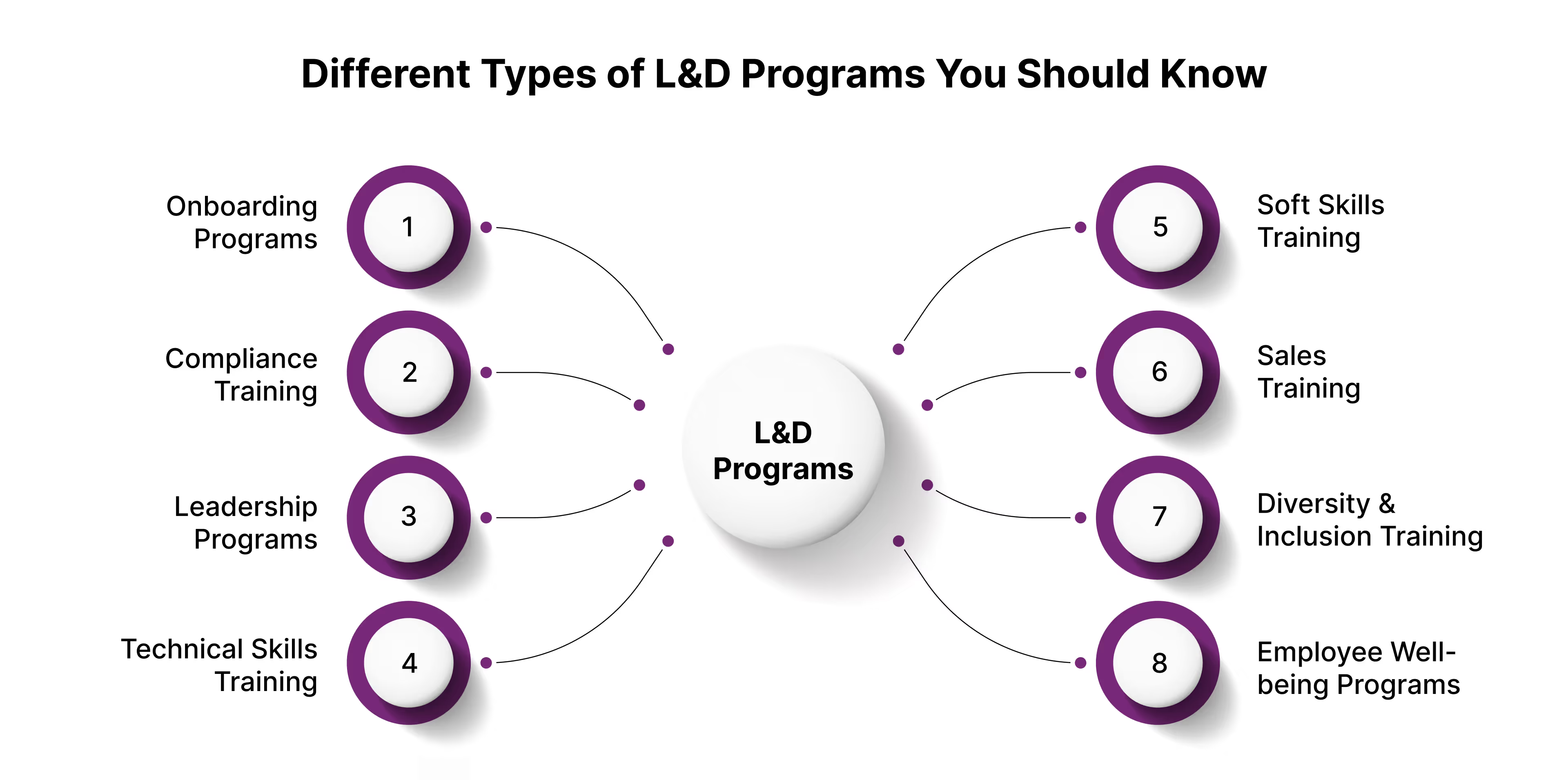
1. Onboarding Programs
Onboarding programs help new employees settle into the company by introducing them to its culture, values, and job responsibilities. These programs establish clear expectations and provide new hires with the necessary tools to perform effectively and confidently. This helps employees connect with company goals early and feel engaged.
EI makes induction and onboarding training effective and flexible by moving beyond traditional face-to-face sessions. Their blended and fully online programs deliver bite-sized, mobile-friendly learning that employees can access anytime, anywhere.
2. Compliance Training
Compliance training educates employees about the legal and regulatory requirements applicable to their roles. It reduces business risks and ensures the organization complies with industry standards. When employees stay informed, they contribute to building a culture of honesty, accountability, and compliance throughout the workplace.
3. Leadership Development Programs
Leadership development programs prepare employees to take on management roles by building skills like strategic thinking, decision-making, and team leadership. These programs provide participants with real-world learning experiences and access to mentorship that speeds up their growth.
4. Technical Skills Training
Technical skills training enhances employees’ expertise in specific tools, technologies, or processes, whether it involves data analysis, software proficiency, or specialized industry techniques. This training helps employees stay updated with the latest developments in their field, work more efficiently, and bring innovation.
5. Soft Skills Training
Soft skills training develops interpersonal strengths such as communication, teamwork, problem-solving, and emotional intelligence. When employees communicate better and handle challenges constructively, it improves teamwork, reduces conflicts, and enhances overall workplace harmony.
6. Sales Training
Sales training programs enhance the skills of sales teams by focusing on product knowledge, customer engagement, and negotiation techniques. Employees learn how to connect with customers, handle objections, and effectively close deals. This brings revenue growth and supports business success.
7. Diversity and Inclusion (D&I) Training
D&I training helps employees understand the value of diversity and inclusion in the workplace. It raises awareness about unconscious bias and teaches ways to build respect and understanding among team members.
8. Employee Well-being and Wellness Programs
Well-being and wellness programs support employees’ physical, mental, and emotional health through stress management workshops, fitness activities, and work-life balance support. These programs show employees that their well-being matters, leading to happier, more motivated teams.
After identifying the main types of L&D programs, the next step is to see how these programs are implemented through various training methods.
8 Popular Training Methods in L&D That You Can Use
Effective training methods are essential for helping employees build the skills they need to perform well and contribute to business success. These methods focus on improving employee performance, confidence, and career progression while aligning their growth with business goals.
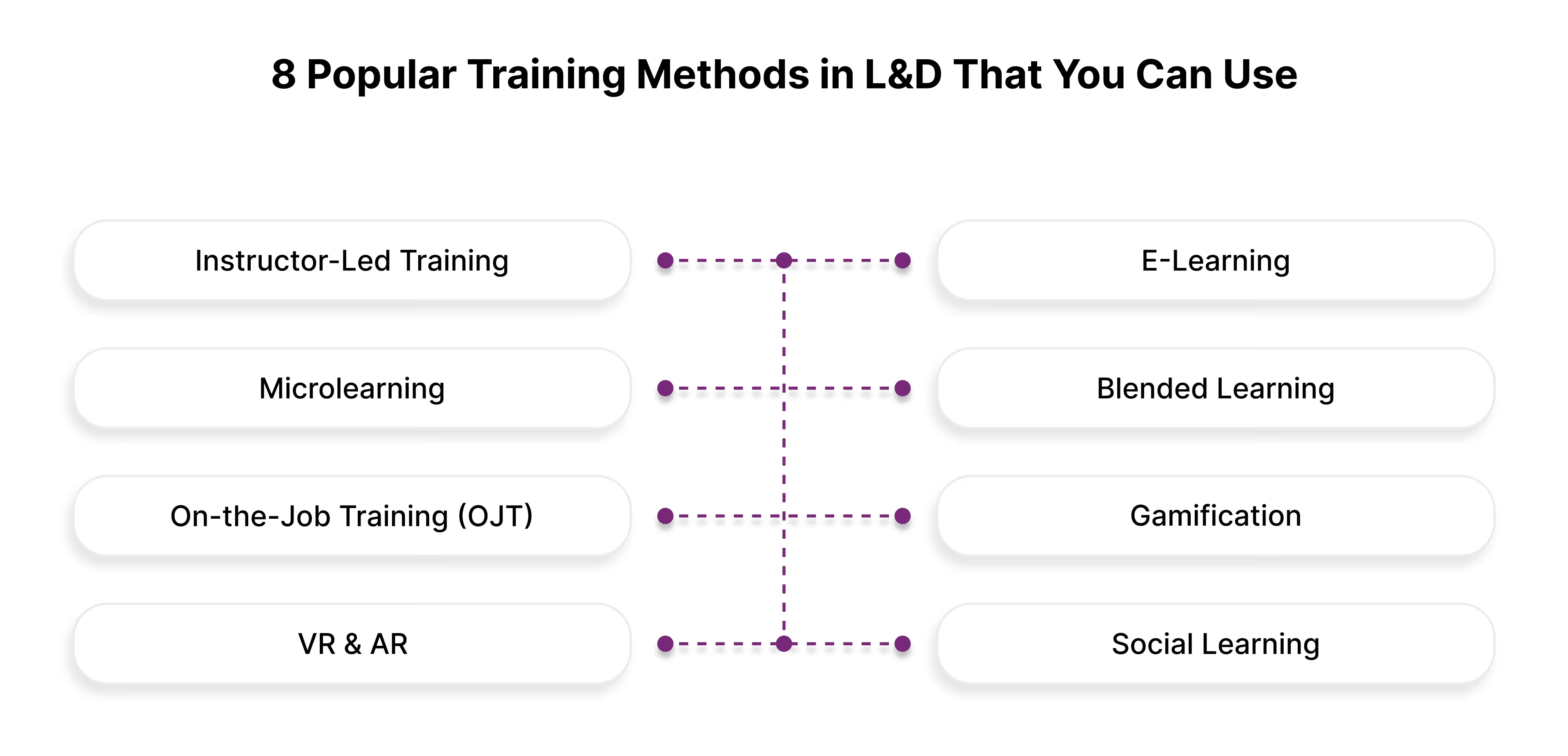
Here’s a look at some of the most widely used and effective training methods in L&D today.
1. Instructor-Led Training (ILT)
Instructor-Led Training (ILT) occurs through live sessions, either in-person or online, where an expert guides employees through the material. It works best for complex topics that need interaction or hands-on practice. Learners can ask questions, get instant feedback, and discuss ideas in real time, which makes understanding much easier.
Also Read: Instructor-Led Training Explained: Benefits, ROI, and Strategies
2. E-Learning (Online Training)
E-learning gives employees the freedom to learn online at their own pace. It’s flexible, convenient, and perfect for large or remote teams. Employees can revisit lessons anytime, track their progress easily, and complete modules whenever it fits their schedule.
3. Microlearning
Microlearning offers short, focused lessons that take only a few minutes to complete. Each session covers one specific skill or concept, making it ideal for busy employees. It’s great for quick learning during work breaks and helps employees apply new skills right when they need them.
4. Blended Learning
Blended learning mixes online lessons with live sessions led by an instructor. Employees can first go through the basics at their own pace and then join live discussions or workshops to apply what they’ve learned. This mix keeps training flexible while also making it more interactive and practical.
5. On-the-Job Training (OJT)
On-the-job training lets employees learn directly while doing their actual work. It’s hands-on and helps build practical skills through real experience. Employees get to practice tasks under supervision, gain confidence, and receive immediate feedback to improve their performance.
6. Gamification
Gamification makes learning fun by adding game-like elements such as points, badges, and leaderboards. It keeps employees motivated and engaged as they earn rewards and complete challenges. This approach turns training into an enjoyable and goal-driven experience.
EI enhances eLearning engagement through gamification by using game principles such as points, badges, leaderboards, and challenges. These elements make learning interactive, motivate employees to complete courses, and help reinforce key concepts in a fun, memorable way.
Check Demo: Examples of Gamification in eLearning
7. Virtual Reality (VR) and Augmented Reality (AR)
VR and AR create immersive learning experiences where employees can safely practice tasks in realistic environments. VR offers full virtual simulations, while AR adds digital features to real-world settings. Both are especially useful for training employees in high-risk or technical jobs without real-world risks.
8. Social Learning
Social learning happens through interaction and collaboration among employees. It encourages people to share experiences, ask questions, and learn from each other. This approach builds teamwork, strengthens relationships, and promotes a culture of continuous learning within the organization.
Once you’re familiar with the training approaches that work best, the next step is designing a strategy that makes learning truly impactful.
5 Tips to Build an Effective L&D Strategy
Creating a successful Learning and Development (L&D) strategy is essential for creating a skilled, motivated, and future-ready workforce. A well-designed strategy aligns employee growth with business objectives, ensuring that every learning initiative supports performance improvement and organizational success. Here’s how to build a successful L&D strategy:
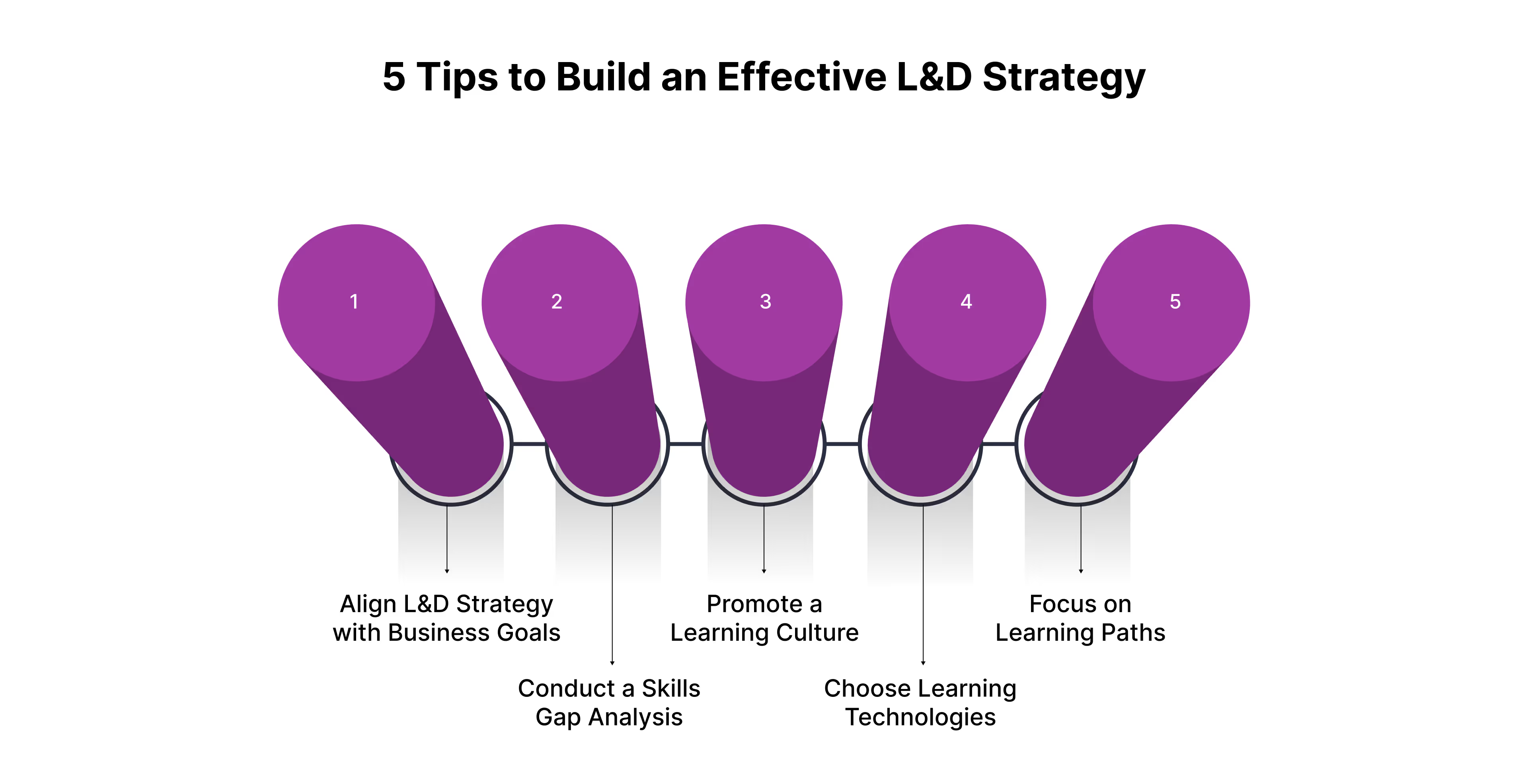
1. Align L&D Strategy with Business Goals
Work closely with senior leadership to make sure L&D initiatives support the company’s strategic objectives. Regularly review business needs and adjust training programs to target key performance areas like sales, customer service, or productivity. Make learning outcomes measurable and tied to business results.
2. Conduct a Skills Gap Analysis
Start by gathering feedback from managers, employees, and other stakeholders to identify skill gaps across the organization. Use data-driven insights to pinpoint where training is needed most. Once gaps are clear, prioritize programs that address these critical areas, equipping employees to meet current and future challenges.
3. Promote a Learning Culture Across the Organization
Encourage leaders at every level to model continuous learning and actively support development opportunities. Promote knowledge sharing to encourage employees to collaborate and exchange ideas. Regularly organize lunch-and-learns, learning days, or peer mentoring, to make learning an integral part of daily work life.
4. Choose the Right Learning Technologies
Select scalable, easy-to-use platforms that meet the needs of a global workforce. Use AI-driven learning systems to deliver personalized training and track employee progress. Ensure that these technologies integrate smoothly with existing HR and performance systems to create a cohesive learning experience.
5. Focus on Personalized Learning Paths
Design personalized learning experiences for each employee based on their skills and career goals. Use AI to suggest modules and content that match individual needs. Encourage employees to take charge of their learning paths, making the experience more engaging and aligned with their career growth.
Once a solid L&D strategy is in place, the next step is to evaluate how effectively it drives learning and performance outcomes.
Must Read: Impact of Gamification in Corporate Learning and Development
6 Ways to Measure the Impact of L&D On Organizational Success
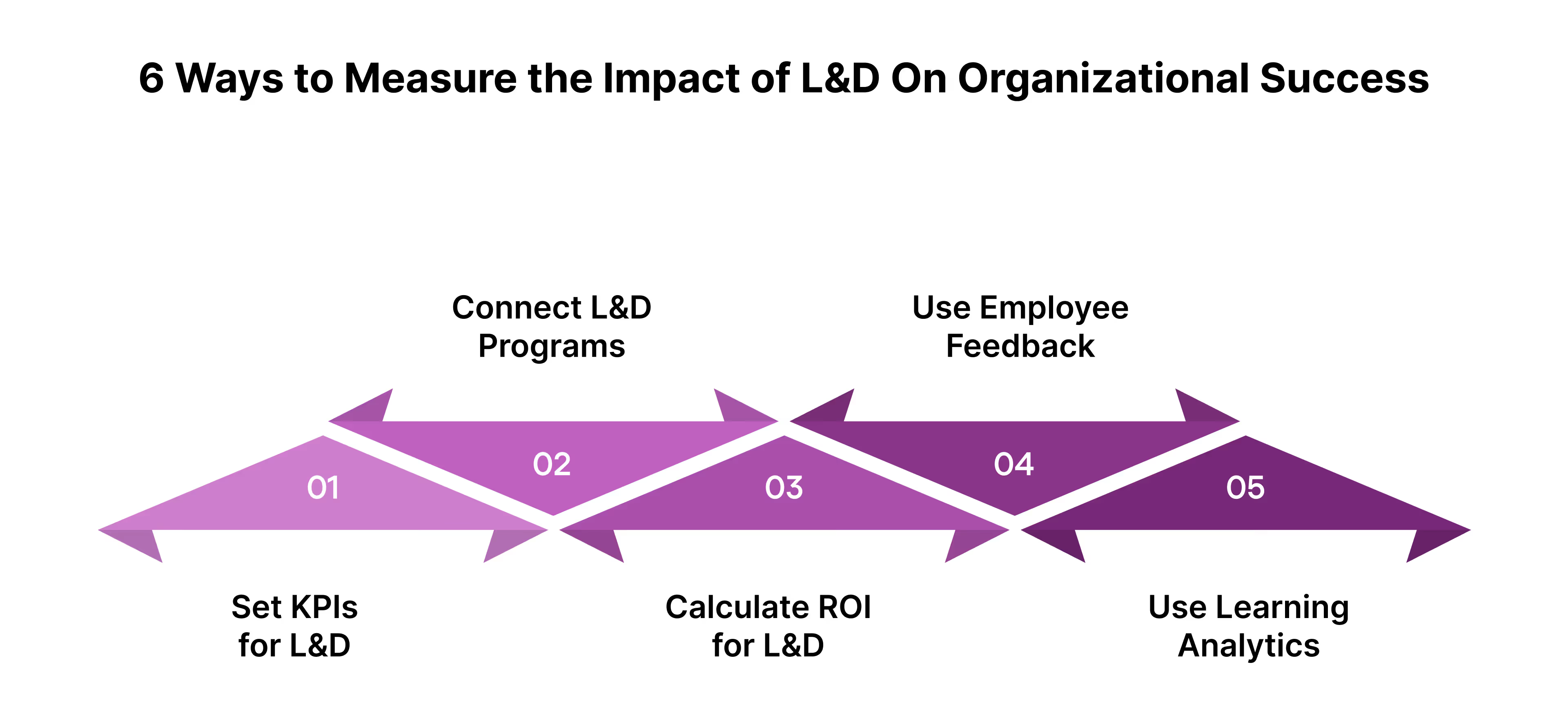
Measuring the impact of L&D helps you see how training actually contributes to performance and business growth. It’s about finding out whether employees are applying what they’ve learned and how that learning shows up in real results.
Here’s how you can measure the impact of L&D on organizational performance.
1. Set Key Performance Indicators (KPIs) for L&D
Start by defining clear KPIs such as engagement levels, course completion, and skill development to see how well employees are learning and applying new skills. Keep an eye on these numbers through analytics tools to make sure training stays aligned with business goals.
2. Connect L&D Programs to Business Outcomes
Tie your training programs directly to business goals like higher revenue, better customer satisfaction, or improved productivity. These insights help you fine-tune future programs and make a stronger case for continued investment in training.
3. Calculate Return on Investment (ROI) for L&D
To understand the financial value of your training, compare program costs with the benefits they bring, such as improved performance, reduced turnover, or increased efficiency. Regular ROI checks give a clear picture of what’s working and whether your learning investments are paying off.
4. Use Employee Feedback and Learning Experience Surveys
Ask employees what they think about their training experiences through short surveys or feedback sessions. Their input helps you spot what’s engaging, what’s not, and what needs improvement. Listening to employees ensures that your programs stay useful, enjoyable, and aligned with both business and learner needs.
5. Use Learning Analytics and Data-Driven Insights
Use learning analytics to monitor how employees are progressing and where they might be struggling. These insights make it easier to improve training materials and delivery methods so that they meet the organization’s goals more effectively. Continue to use this data to refine and strengthen your learning initiatives.
6. Monitor Employee Performance and Behavior Changes
Watch for visible improvements in how employees perform after training, whether it’s stronger teamwork, faster problem-solving, or better leadership skills. These real-world changes are a strong signal that your L&D programs are making a difference and contributing to business success.
Once you know how to measure results, it’s equally important to understand the obstacles that can affect L&D and how to overcome them.
Common L&D Challenges and Ways to Overcome Them
L&D teams face several challenges that can limit the impact of their training programs. Addressing these obstacles requires a strategic approach that combines the right technology, tailored learning experiences, and strong alignment with organizational goals. Below are some of the L&D challenges and effective ways to overcome them.
EI as the Ideal Partner for L&D
Many organizations struggle to develop learning and development (L&D) programs that have a meaningful impact and align with their business objectives. Traditional training often fails to engage employees or deliver measurable results.
At EI, we combine innovative learning strategies, data-driven insights, and immersive technologies to create L&D solutions that improve performance and support organizational growth. Key features of EI’s L&D solution include:
- Customized Learning Paths tailored to each employee’s role and skill gaps, keeping learning relevant and engaging.
- Microlearning modules that simplify complex topics into short, focused lessons, enabling employees to learn at their own pace and improving retention and recall.
- Performance Support Tools that help employees apply new skills in real time, supporting continuous learning.
- Gamification with points, badges, and challenges that keep learners engaged and motivated, making training more interactive and enjoyable.
- Scenario-Based Learning places employees in real-world situations, helping them make better, more informed decisions under pressure.
- VR and AR Technologies recreate realistic learning environments, such as data breaches or ethical dilemmas, offering deeper experiential learning and risk-free practice.
- Comprehensive Reporting & Analytics that track performance and program effectiveness, making it easy to refine your L&D strategy for ongoing success.
- Mobile-First Design that allows smooth access anytime, anywhere, even offline, making it ideal for hybrid and frontline teams.
With a learner-focused approach, scalable solutions, and measurable results, EI helps organizations strengthen their L&D programs, drive business outcomes, and build a workforce ready for the future.
Final Thoughts
As L&D continues to grow and change, its real strength lies in building a learning culture that adapts to both your employees’ needs and your business goals. A strong L&D strategy encourages continuous learning, helping employees grow as your organization evolves.
At EI, we create L&D programs that are immersive, engaging, and effective, helping employees develop the skills and knowledge they need to drive organizational success.
With decades of experience across industries, we transform traditional training into personalized, data-driven learning journeys that inspire lasting behavior change and deliver measurable results.
Ready to enhance your L&D strategy with scalable, results-focused programs? Get in touch with us today!
FAQs
Q1. How can AI help scale L&D programs across multiple locations?
A1. AI-powered learning platforms enable the delivery of consistent, high-quality training anywhere in the world. They can translate and localize content for different regions, adapt lessons to local laws or cultures, and personalize learning for every employee.
Q2. How can organizations make sure they use AI ethically in L&D?
A2. To use AI responsibly, organizations must manage data carefully and ensure that their systems remain fair. This involves utilizing diverse data sets, regularly checking algorithms for bias, and maintaining human oversight.
Q3. Can AI track learning that happens outside formal training sessions?
A3. Yes, AI can track informal learning, such as teamwork, hands-on projects, or self-paced study. When connected to performance management systems, it provides a comprehensive view of an employee’s progress. This makes learning a natural part of everyday work, rather than something that occurs only in scheduled sessions.
Q4. How do AI-based L&D tools help retain employees?
A4. AI makes learning more personal and engaging, which helps employees feel supported and valued. AI also helps create clear learning paths and career growth opportunities, keeping employees motivated and connected to their roles.
Q5. How can L&D teams measure the long-term impact of AI in training?
A5. L&D teams can measure AI’s impact by tracking how training affects job performance, productivity, and overall business goals. Behavioral insights, performance data, and employee feedback can show what’s working and what needs improvement.

subscribing!
Related articles


.jpg)
.jpg)




.jpg)