


.avif)

6 Killer Examples of Gamification in eLearning (Updated in 2024)

Summary
Gamification leverages 8 core elements—including challenges, leaderboards, and instant feedback—to increase learner retention by up to 90%. By transforming compliance, sales, and DEI training into immersive experiences, organizations can achieve measurable increases in efficiency and cultural commitment.
Gamification has quickly become a powerful tool for engaging learners, proving its effectiveness in promoting serious learning outcomes. This article showcases 6 examples of how we have utilized Gamification to create immersive learning experiences including induction and onboarding, professional skills development, compliance, soft skills enhancement, and behavioral change programs.
Gamification in eLearning – Defined
The use of gaming principles and key elements to achieve learning objectives is what Gamification for learning, or more commonly, serious learning, is all about.
The value that Gamification brings in is summarized very effectively in the following statement:
“Games and Gamification both can lead to high levels of learner engagement and motivation.” – Karl Kapp
What Is the Value of Gamification in eLearning?
Learners embrace Gamification because it provides an enjoyable learning experience. However, L&D teams still have concerns regarding the value, impact, or ROI of Gamification expenditure. As we pitch for Gamification, we often come across the following questions on its value and impact:
- Will Gamification truly help learners learn?
- Gamification is all about having fun, but can it drive learner performance?
- Does Gamification offer tangible gain and value to the learners and business?
The fact remains that the success of any learning strategy is determined by the effectiveness of its application. If you craft a Gamification concept that can capture and retain the learner’s attention, challenge and engage them, and ensure they complete an effective learning journey, you will have high-impact training that will indeed deliver the desired outcome.
Well-designed Gamification-based trainings provide value to both organizations and learners at many levels as shown here.
Benefits to Learners
The following stats re-affirm the value of Gamification based learning from the learners’ perspective:
- 80% of learners claimed learning would be more productive if it were more game-oriented. (eLogic Learning)
- Learners tend to only recall 10% of what they read, and 20% from what they hear. But they can remember up to 90% of an interactive gamified task. (LinkedIn)
- Students who were educated with challenge-based Gamification raised their performance by up to 89.45% compared to those who only received lectures (ScienceDirect).
Benefit to Organizations
The use of Gamification for learning provides several benefits to L&D teams:
- Gamification is a very engaging learning strategy and the right gamified approach will enable L&D teams to meet the learning outcomes (similar to other strategies used in traditional eLearning).
- As Gamification for learning offers a more engaging and immersive learning experience, it translates to higher completion rates. The gain is also reflected in better recall or retention.
- Gamification can be used for various levels of learning, including learning acquisition, practice, performance improvement, upskilling, and application in the workplace.
- Gamification, combined with spaced repetition, can effectively influence thinking and behavior changes over time.
How Can You Create the Desired Impact Through Gamification in eLearning?
At EI, we have a well-established Gamification practice, and since inception, our focus has been on using techniques that enable us to create the following value:
- Enhance learner engagement.
- Implement an immersive approach.
- Enable high recall.
- Enhance retention though sticky learning.
- Improve application of the acquired learning on the job.
- Provide a reinforcement boost.
- Offer Challenges that stimulate a refresh or review of primary learning resources.
- Encourage practice and proficiency.
- Trigger change in thinking.
- Influence behavioral change.
To meet these gains, a majority of our solutions under the Gamification for learning category use the following 8 elements.
To better understand how these 8 elements help you meet the learning goals, I highlight the value of each element by mapping it to the equivalent technique in traditional eLearning.
- Challenges:
These map to the learning objectives or learning goals. - Levels:
These map to the learning journey, and as the learner goes through each level, it signifies a step up in proficiency. - Instant feedback:
This helps learners know how they are faring against their learning goals, and based on this, they can adopt the necessary measures to level up their performance. - Scores:
They are indicators of their performance and are closely aligned to offering gratification as well as a sense of accomplishment. - Badges:
As the learners go through the learning path and clear certain levels, they are given badges. These reflect affirmations for their significant achievements. - Leaderboards:
These are dashboards that are used to provide a pictorial view of the overall progress (including against others). The analytics keep learners connected to the learning journey and aligned to meeting their terminal objectives. - Competition:
This can be leveraged effectively, as it helps learners assess where they stand against other peers or competing teams. - Collaboration:
This feature not only facilitates team building but also enables learners to leverage the support of peers or guidance from experts to meet their goals.
Gamification in eLearning: 6 Killer Examples
The following examples from our repository demonstrate the many ways in which Gamification can add value to corporate training programs, ranging from better recall and retention to application on the job.
- Product Sales Training for Call Center Representatives
A well-known Telecommunications company sought to train its Sales Representatives in adopting a ‘consultative’ sales approach with customers.
We designed a gamified module with 5 progressive levels that a learner had to successfully pass to become certified as the ‘Product Ambassador.’
Each level featured scenario-based challenges, accompanied by tips and best practices provided through feedback, as well as:
- Personalization was achieved by allowing learners to select their name and avatar.

- A variety of gamified activities, including scorecards, timers, and progress scales/meters, were incorporated to avoid monotony.
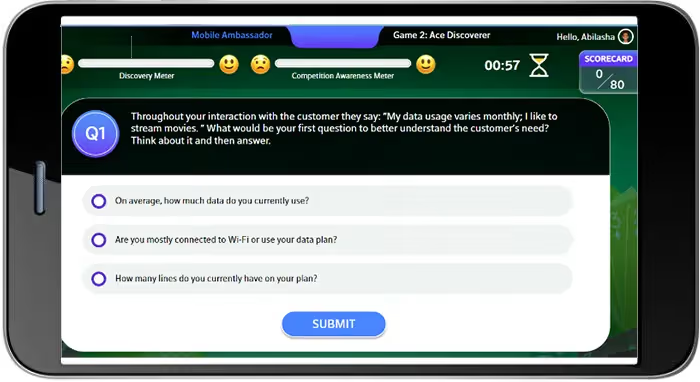
- Limited clues/hints were provided within the module to guide learners in making informed decisions.
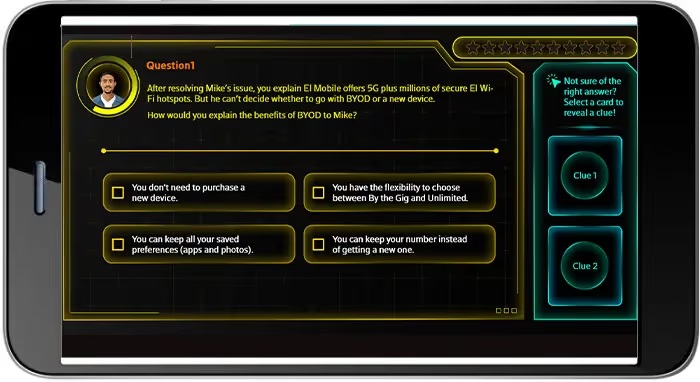
The Impact: The company observed a significant increase in sales rates within 90-120 days of implementing the training module.
- A Cybersecurity Escape Room Experience for Office Employees
As part of its Compliance mandate, a multinational construction company wanted a creative spin on its current cybersecurity training.
Our team conceptualized an escape room experience with a time-travel theme to maximize engagement.
The solution included:
- An exciting mission with contextual challenges, such as earning points to enhance cybersecurity, accompanied by a leaderboard to encourage competitiveness.
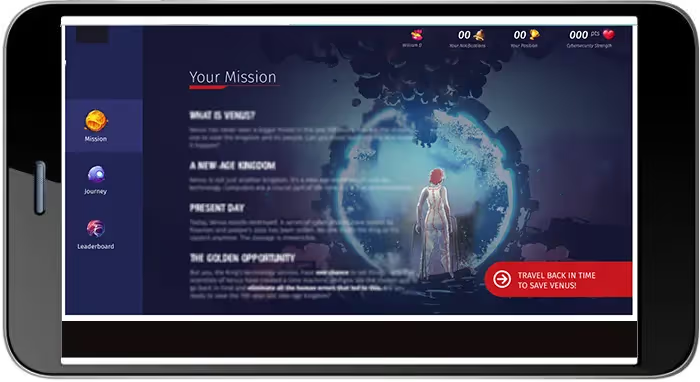
- Realistic scenario-based activities with time constraints to simulate the urgency of real-life cybersecurity situations.
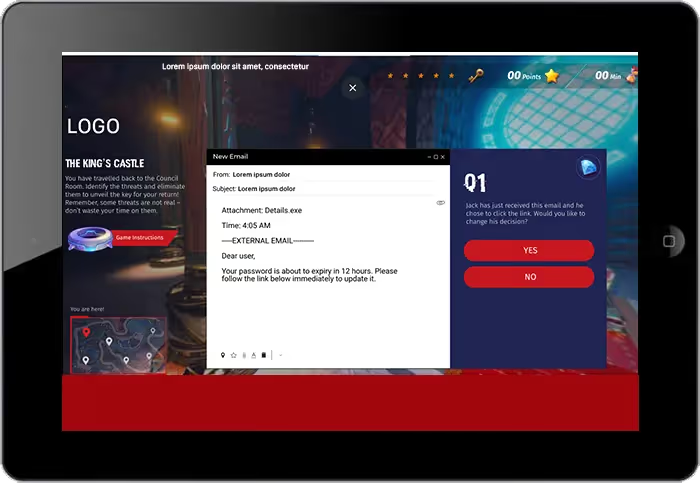
The Impact: The organization reported improved compliance and reduced inefficiencies as a result of the enhanced training.
- Office Safety Training for Energy Employees
Due to the rising number of safety incidents, a leading energy company needed a solution to enhance office safety for its employees. The implemented strategy involved gamified situational learning, requiring learners to identify and address various safety issues.
- Learners must click on various visual elements that pose a safety risk to earn points.
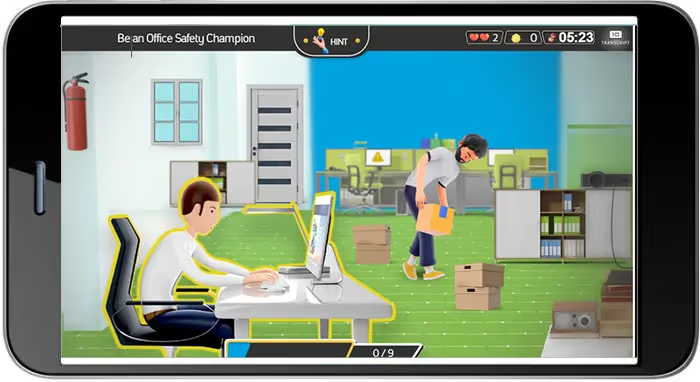
- Use of ‘lifelines’ adds significant replay value (i.e., it encourages learners to continue playing.)

The Impact: High learning retention attributed to the just-in-time learning format, with Gamification driving ongoing motivation for employees.
- DEI Training for Professionals
There was a growing need to equip our employees with the skills to identify and address biases in the workplace.
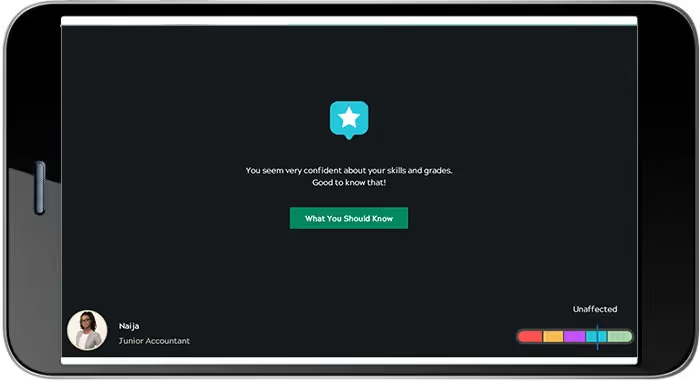
We designed a gamified simulation where learners step into the role a job applicant, making decisions along the way. Participants earn the title of ‘DEI champion’ by making all right decisions.
To help learners get the most out of the training, we added:
- A ‘sensitivity’ meter to display the impact of decisions and demonstrate the current level of awareness.
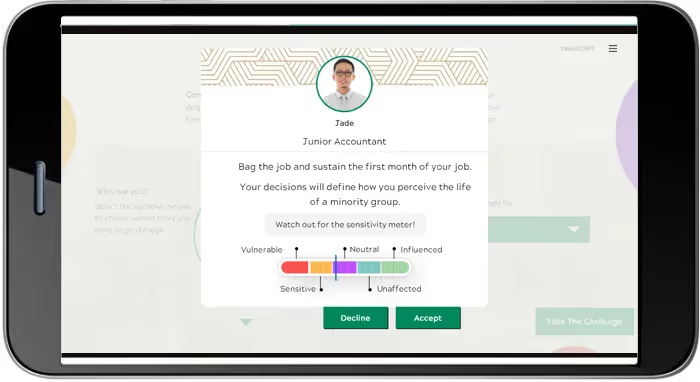
- Instant feedback to help learners make better decisions in subsequent scenarios. Furthermore we included ‘teach’ content to raise awareness of the actual reality.
The Impact: As a result, both leadership and delivery teams demonstrated increased commitment to fostering a more inclusive culture.
- Walkathon for Insurance Employees
The HR department of a global insurance company aimed to gamify its employee engagement initiative focused on the importance of walking.
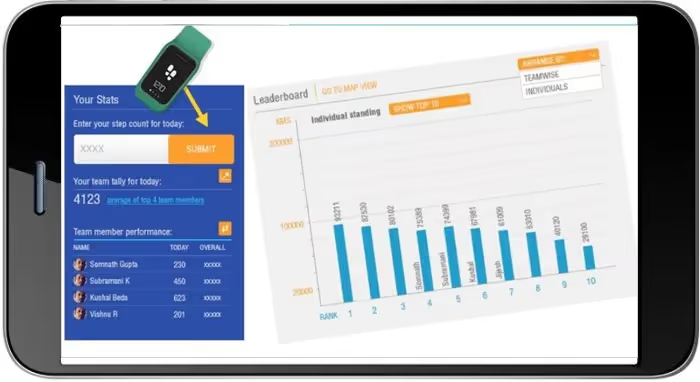
We ideated a gamified walkathon portal where employees could virtually walk between office locations and participate in team-building activities.
Here are a few highlights of the portal:
- Employees could record their daily steps using the Fitbit devices provided to them.
- They could view the top 4 walkers in the team and the leaderboard, which could be sorted by team or individual performance.
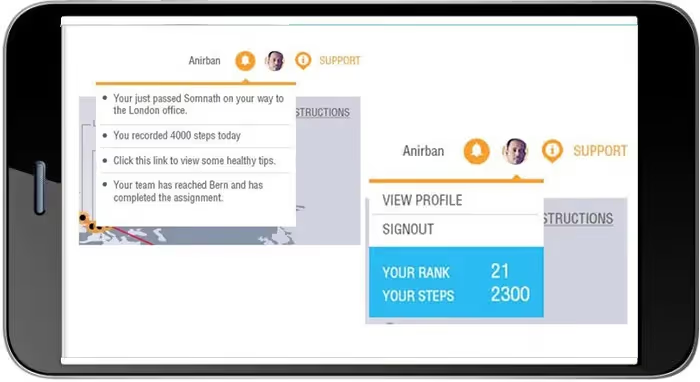
- They also received regular progress notifications and tips released as ‘nudges’ to sustain the momentum.
The Impact: The impact included a significant increase in employee engagement and heightened awareness of health issues.
- Logistics Training for Supply Chain Professionals
In a bid to meet the growing demand for its products, a multinational food company wanted a high-impact solution to help supply chain professionals identify and fix bottlenecks in the manufacturing and distribution process.
Our gamified simulation placed learners in the role of a restaurant manager tasked with efficiently managing operations for three days. It consisted of:
- Realistic tasks requiring critical thinking and problem-solving skills.
- Scoring parameters aligned with mission objectives, enabling learners to keep track of their progress (completed orders, time management, ingredient availability, etc.)
- Dynamic twists and turns to avoid predictability, thereby keeping learners on their toes.
The Impact: The impact included a measurable increase in efficiency within supply chain management processes and improved decision-making skills, as reported by learners.
Parting Thoughts
As you have noted in the featured examples, Gamification is a great strategy to provide an immersive learning experience. It is an extremely versatile approach, and its application will help you improve learning, application on the job, and the tougher mandate of behavioral change.

subscribing!
Related articles
.jpg)



.jpg)