






.avif)

A Strategic Framework to Measure and Improve Employee Performance

Summary
Improving employee performance requires more than tracking output—it demands clear expectations, continuous learning, effective feedback, and support embedded into daily work. A strategic performance framework helps organizations identify skill gaps, remove workflow friction, and connect employee development more directly to measurable business outcomes.
Employee performance has become harder to sustain. Teams are dealing with shifting priorities, new tools, information overload, and ongoing skill gaps. Work moves fast, but support systems don’t always keep up. When expectations aren’t clear, guidance is scattered, or training isn’t connected to real work, even capable employees struggle to deliver consistently.
It’s a challenge that many organizations are feeling. Engagement levels are low across industries, and only 35% of employees feel fully engaged at work, directly affecting productivity, morale, and business results.
The path forward is not about pushing people harder. It’s about giving them the clarity, development, and support structure they need to perform at their best. In this blog, you’ll learn what drives strong employee performance, how to measure it effectively, and practical ways to improve it in a changing workplace.
TL;DR
- Employee performance is more than output; it includes quality, efficiency, behavior, and how well employees contribute to team and business goals.
- Performance issues usually stem from unclear expectations, fragmented systems, poor training, or workflow friction, not lack of talent.
- Measuring performance requires a combination of approaches, KPIs, goal tracking, 360-degree feedback, and continuous behavioral insights.
- Improvement comes from clarity, ongoing development, better tools, recognition, and a supportive work environment, not one-off reviews.
- L&D plays a central role, targeted upskilling, hands-on practice, and well-designed learning experiences (like those Liberate Global creates) directly strengthen performance and confidence.
What Is Employee Performance?
Employee performance is the level at which an individual consistently delivers on their responsibilities, meets expectations, and contributes to broader team and business outcomes. It reflects more than output: it includes the quality of work, reliability, problem-solving, collaboration, and ability to adapt and grow.
Strong performance is built on clarity, capability, and support. When clear goals, structured information, efficient processes, or development opportunities are missing, performance drops — even for top performers.
Understanding what shapes performance is the first step toward improving it, which we’ll break down in the sections ahead.
Common Causes of Employee Performance Problems
Performance issues rarely appear out of nowhere. They build slowly, often caused by gaps in clarity, guidance, or support rather than a lack of capability. Understanding these root causes helps leaders fix what’s actually holding teams back.
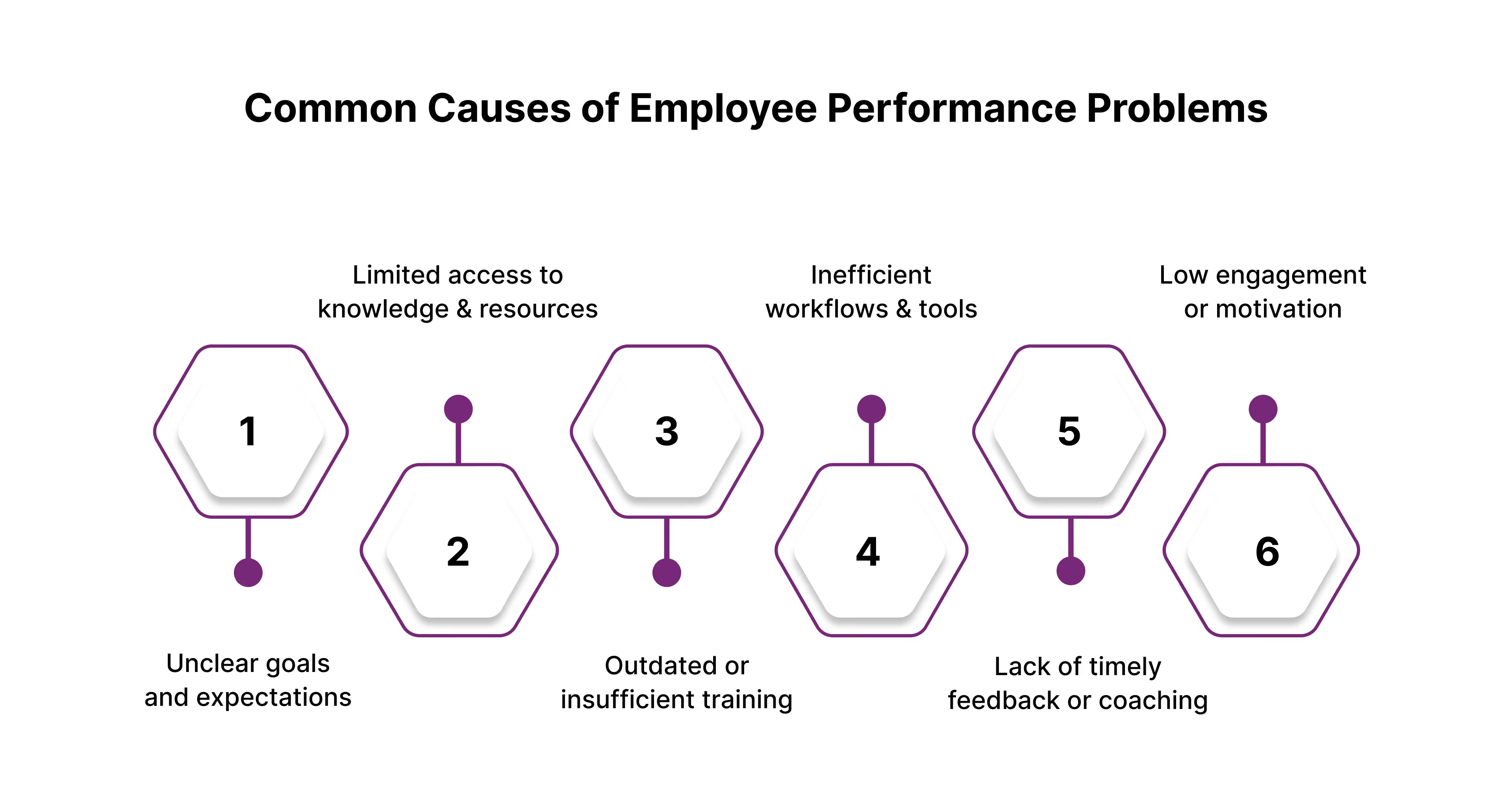
1. Unclear goals and expectations
When employees don’t know what success looks like, performance becomes inconsistent. Vague priorities, shifting targets, or limited communication make it difficult for people to focus on what truly matters.
2. Limited access to knowledge and resources
Information scattered across tools, folders, or teams makes everyday tasks harder than they need to be. Without quick access to answers or best practices, employees lose time, confidence, and momentum.
3. Outdated or insufficient training
Traditional training doesn’t match how people work today. When learning is one-time, generic, or disconnected from real workflows, employees are left to figure things out on their own, leading to errors and slow performance.
4. Inefficient workflows and tools
Cumbersome systems, manual steps, and confusing processes drain productivity. When tools don’t support the work, performance problems show up as delayed tasks, rework, and frustration.
5. Lack of timely feedback or coaching
Without ongoing feedback, employees don’t know what’s working or what needs improvement. Annual reviews alone can’t keep performance on track in a fast-moving workplace.
6. Low engagement or motivation
When people feel disconnected from their work or overlooked in development, engagement drops, and performance follows. This often stems from unclear growth paths or limited opportunities to build new skills.
Also Read: How to Drive Employee Performance with Microlearning
Key Metrics to Evaluate Employee Performance
Measuring performance effectively requires a balance of quantitative data and qualitative insight. The right metrics help leaders understand how consistently employees deliver, where they excel, and where support is needed.
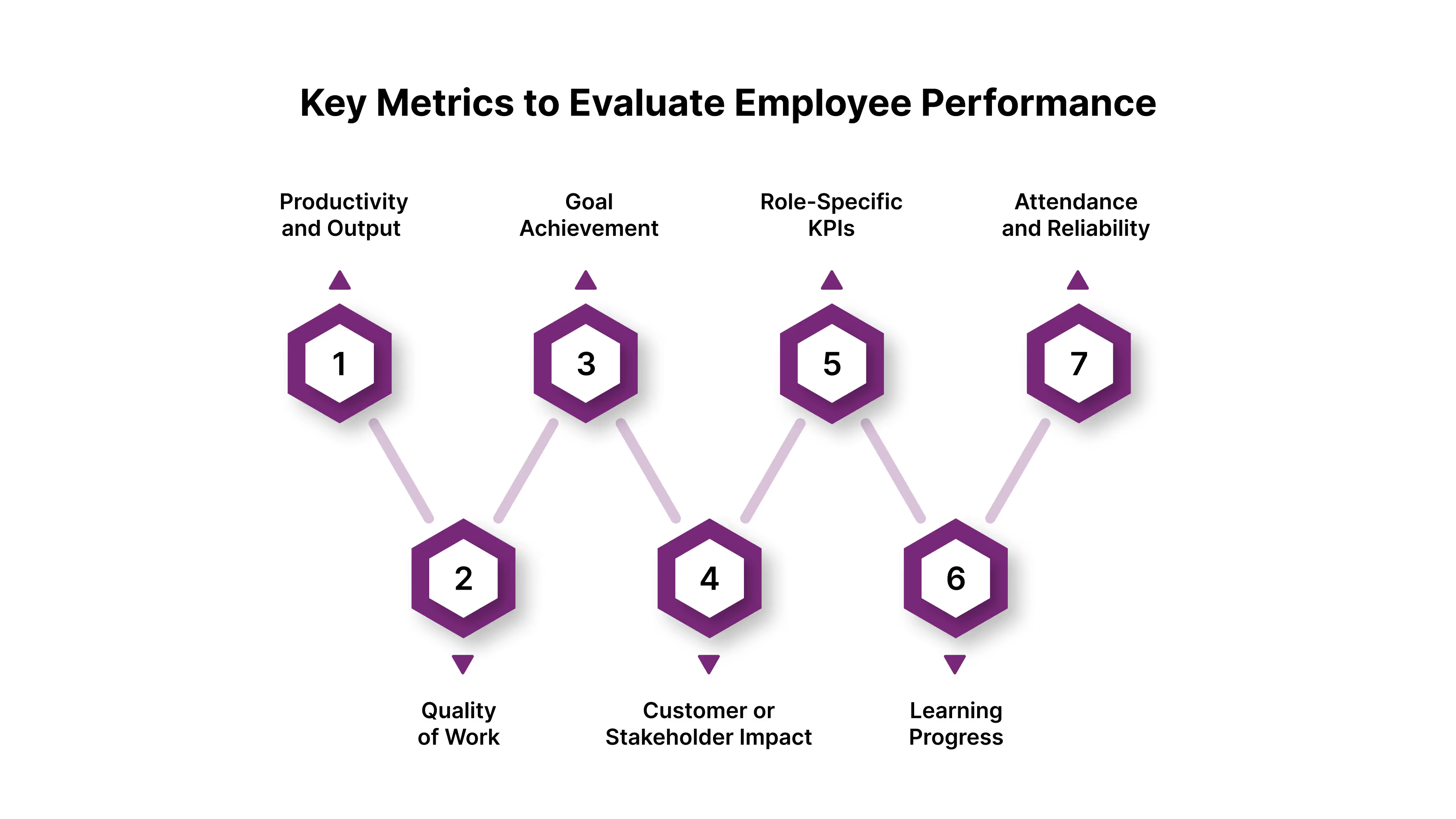
1. Productivity and Output
How much work is completed within a specific timeframe? This includes task completion rates, project delivery timelines, and overall output relevant to the role.
2. Quality of Work
Are deliverables accurate, complete, and aligned with standards? Quality metrics reveal patterns in errors, rework, and attention to detail, critical indicators of performance consistency.
3. Goal Achievement
Are employees meeting individual and team goals? Measuring progress against clearly defined objectives helps connect daily work to business outcomes.
4. Customer or Stakeholder Impact
How well does the employee support internal teams or customers? CSAT scores, feedback loops, or service turnaround times can signal strengths or gaps in performance.
5. Role-Specific KPIs
Each role has unique metrics, such as sales targets, case resolutions, production rates, and compliance adherence. These indicators help evaluate effectiveness within functional responsibilities.
6. Learning and Development Progress
Are employees building skills that matter? Training completion, demonstrated proficiency, and the application of new skills show readiness for evolving demands.
7. Attendance and Reliability
Is the employee dependable and consistent? Patterns in punctuality and availability directly influence team performance and output.
Combined, these metrics give a holistic view of performance, helping leaders support employees with precision, rather than assumptions.
Also Read: How to Use a Learning and Performance Ecosystem for Employee Development – Featuring a 4-Step Guide.
How to Improve Employee Performance

Improving employee performance starts with removing friction and giving people the clarity, skills, and support they need to do their best work. When performance dips, the strongest solutions focus on enablement, helping employees work with confidence, not pressure.
Step 1: Set Clear, Measurable Goals
Performance improves when employees know exactly what success looks like. Start by defining specific learning objectives tied to business KPIs. For example, reducing customer complaints, improving sales conversions, or increasing process accuracy.
Use gamification to make these goals visible and motivating:
- Create progress dashboards that allow learners to track their achievements in real time.
- Assign badges or milestones for completing training modules linked to performance outcomes.
- Use leaderboards to highlight top performers, encouraging healthy competition and peer learning.
When goals are transparent, measurable, and rewarding, employees stay aligned, focused, and inspired to perform better.
Step 2: Strengthen Communication and Regular Feedback
Employees improve more quickly when they receive timely, constructive feedback, not just once a year, but throughout their learning and performance journey. Consistent communication builds confidence, corrects behavior early, and reinforces what “good” looks like.
Make feedback continuous by using gamified learning touchpoints:
- Instant Feedback in Scenarios: Provide real-time responses (why an action was right or wrong) during simulations and branching dialogues to reinforce decision-making.
- Performance Heatmaps: Use dashboards that visually show strengths and gaps, helping employees focus on the right skills without feeling overwhelmed.
- Level-Up Notifications: Celebrate progress with encouraging messages when learners complete modules, beat previous scores, or unlock new competencies.
- Regular Manager Check-Ins: Equip managers with analytics reports so coaching conversations are grounded in data rather than assumptions.
When feedback becomes immediate, visible, and supportive, employees stay motivated, correct errors early, and build mastery with confidence, driving measurable improvements in job performance.
Step 3: Streamline Workflows and Remove Process Friction
Performance drops when employees spend more time navigating processes than applying their skills. Slow systems, repetitive steps, and hard-to-find information drain motivation and make even strong performers less effective.
Use gamification and learning design to eliminate friction and enable faster, error-free work:
- Embed Just-In-Time Performance Support: Add quick-access job aids, tip cards, and decision guides within workflows so employees get help in the moment of need.
- Gamified Micro-Tasks: Break large tasks into smaller challenges and reward completion to make routine work feel more achievable and productive.
- Progress Indicators: Show employees how close they are to completing a process to reduce cognitive fatigue and maintain momentum.
- System Walkthroughs and Guided Practice: Use simulation-based onboarding to help employees master tools and processes before they perform them live.
- Automation Where Possible: Remove manual repetition so employees can focus on high-value tasks rather than grunt work.
When workflows are smooth and intuitive, employees spend less time getting work done and more time performing at their best, leading to faster turnaround times, fewer errors, and higher workplace satisfaction.
Step 4: Use Technology to Support Daily Work
Employees perform better when the tools they rely on simplify rather than complicate their tasks. The right technology reduces manual effort, minimizes errors, and accelerates routine work.
Use digital tools to strengthen daily performance:
- Automate repetitive or rule-based steps to free up time.
- Provide unified platforms so employees don’t switch between multiple systems.
- Offer mobile-friendly tools for teams that work in the field or across locations.
- Use templates and digital forms to streamline documentation and reporting.
When technology removes friction, employees gain more bandwidth, accuracy, and efficiency in their day-to-day work.
Step 5: Provide Continuous Learning and Real-World Practice
Employees perform better when they can learn in ways that match how they work. Short, focused training, scenario-based practice, and personalized learning paths help people build the exact skills their roles require, without overwhelming them.
Use modern learning approaches to make this possible:
- Deliver microlearning in short, focused bursts that fit into daily schedules.
- Use scenario-based practice to strengthen real-world decision-making.
- Personalize learning paths based on skill levels and role requirements.
- Provide refreshers or spaced learning to reinforce long-term retention.
When learning is continuous and job-aligned, employees apply skills more effectively and perform with greater consistency.
Step 6: Offer Guidance in the Flow of Work
Employees are most successful when support is available exactly when and where they need it. Guidance in the flow of work reduces errors and improves confidence, especially in complex or high-pressure tasks.
Use in-the-moment support tools:
- Add in-app prompts, tooltips, and guided steps within core systems.
- Provide searchable job aids and checklists that can be accessed instantly.
- Embed microlearning into platforms employees use every day.
- Use AI-driven suggestions to guide next steps or troubleshoot issues.
When support is accessible on demand, employees stay productive without waiting for help or leaving their workflow.
Step 7: Recognize Progress and Build Motivation
Recognition reinforces positive behavior and keeps employees engaged. When progress is acknowledged, big or small, motivation increases, and performance becomes more consistent.
Use recognition to sustain motivation:
- Highlight achievements through dashboards and progress summaries.
- Award badges, certificates, or digital rewards for milestones.
- Celebrate team accomplishments to foster shared success.
- Encourage peer-to-peer recognition to strengthen the community.
When employees feel seen and appreciated, they stay committed and perform at a higher level.
Step 8: Prioritize Employee Well-Being and Balance
Well-being is directly tied to performance. Employees who feel supported, rested, and balanced bring more energy, attention, and resilience to their work.
Use well-being practices to support performance:
- Promote balanced workloads and help employees prioritize effectively.
- Encourage flexible work practices and regular recovery breaks.
- Offer resources for mental health, stress management, or wellness.
- Train managers to spot early signs of burnout and intervene proactively.
When well-being is protected, performance improves naturally and sustainably.
Step 9: Leverage L&D as a Performance Enabler
Performance improves when learning is connected directly to business needs. Liberate Global helps organizations design learning experiences that build role-specific skills, close gaps quickly, and improve performance in measurable ways.
Use strategic learning design to drive performance:
- Build training that targets actual workflow challenges.
- Use immersive simulations to build confidence in high-stakes tasks.
- Personalize learning journeys based on goals and skill assessments.
- Link learning outcomes to measurable business results.
Through human-centered learning design, immersive solutions, and personalized learning journeys, teams get the support they need to perform with confidence.
Step 10: Use Data to Guide Decisions and Drive Improvement
Data reveals what’s working, where employees struggle, and which processes need attention. Leaders can then take proactive action long before performance issues escalate.
Use data to refine performance:
- Track trends in productivity, skill mastery, and engagement.
- Identify recurring bottlenecks or areas of high error rates.
- Use insights to update training, improve workflows, or redesign systems.
- Share performance dashboards with managers for more informed coaching.
When decisions are data-driven, improvements become continuous, targeted, and more impactful.
Also Read: Top 8 Benefits of Personalisation of eLearning
Why Measuring Employee Performance Is Important

Measuring employee performance gives leaders a clear view of how work is happening, where teams need support, and which areas are driving results. Without measurement, decisions rely on assumptions, and performance issues often surface only after they’ve already affected outcomes.
- Creates Clarity and Alignment
Measurement helps employees understand what success looks like. When expectations are transparent and progress is visible, performance becomes more focused and consistent.
- Identifies Skill Gaps Early
Performance data highlights where employees struggle, making it easier to design targeted development and avoid productivity dips.
- Improves Decision-Making
Leaders can make better calls when they have reliable insights into workload, bottlenecks, and capability gaps. It also supports more objective evaluations and fairer performance conversations.
- Strengthens Accountability and Transparency
Clear metrics reduce ambiguity. Everyone, including employees, managers, and stakeholders, knows how performance connects to goals and business priorities.
- Supports Continuous Improvement
Insights into performance help teams refine workflows, adjust processes, and improve systems. Over time, this leads to stronger output and a more confident workforce.
- Connects People Development to Business Outcomes
Measuring performance helps show how learning, coaching, and improved workflows translate into real impact, productivity, customer satisfaction, and overall growth.
Ready to Improve Performance With Learning That Works?
Employee performance is shaped by clarity, the right tools, meaningful training, and support at critical moments, not effort alone. When these elements work together, performance becomes consistent, scalable, and aligned with business goals.
As work continues to evolve, organizations need learning strategies that keep employees skilled, confident, and adaptable. That means moving beyond traditional training toward immersive, personalized, and real-world experiences.
Liberate Global helps make this possible. Our human-centered approach gives employees the guidance, learning pathways, and performance support they need to build lasting capability and deliver stronger outcomes.
Get in touch with Liberate Global ’s learning and performance experts to explore how thoughtful learning design can elevate performance across your organization.
FAQs
1. What is the most effective way to improve employee performance?
The most effective way is to give employees clarity, continuous learning, and support in the flow of work. When people understand expectations, have access to the right skills, and can get help when they need it, performance improves naturally and sustainably.
2. How often should employee performance be assessed?
Regular check-ins work better than yearly reviews. Monthly or quarterly conversations help catch issues early, guide development, and keep performance aligned with changing priorities.
3. Which performance metrics matter most?
The most valuable metrics reflect both the quality and quantity of work, productivity, accuracy, goal achievement, collaboration, customer satisfaction, and progress in learning or skill development.
4. How does learning and development support performance?
L&D helps employees build the skills they need for their roles and adapt to changing responsibilities. When learning is relevant, engaging, and ongoing, employees perform with more confidence and consistency.
5. What causes performance problems even in skilled employees?
Performance dips often stem from unclear expectations, outdated processes, scattered information, or limited guidance, not from a lack of ability. Removing these barriers usually leads to significant improvement.

subscribing!
Related articles


.jpg)
.jpg)






.jpg)
