






.avif)

Training and Change Management: How to Equip Your Workforce for Successful Transformation

Summary
Successful transformation depends on how well employees are prepared to adopt new tools, processes, and ways of working. This guide explores how training supports change management by reducing resistance, building confidence, and helping organizations drive lasting adoption across the workforce.
Organizational change isn't failing because the strategy is wrong. It's failing because people aren't prepared for it. When a new system, workflow, or structure rolls out, employees often find themselves piecing together instructions, interpreting vague emails, or trying to make sense of shifting expectations on their own. Research from Gartner shows that only 32% of leaders globally succeed in getting employees to adopt new ways of working in a healthy, lasting way.
That means failure is not rare; it's the likely outcome if change isn't managed through people-centered learning. Emails, slide decks, or top-down directives rarely convert into confident action. What turns uncertainty into adoption is training that gives people clarity, builds competence, and supports them through the shift.
This article explains how training fits into change management, the different types of training organizations need, and how to design learning that supports successful transition.
TL;DR
- Change management fails when employees aren't equipped to adopt new processes, tools, or ways of working. Training closes this gap by building clarity, confidence, and capability.
- Resistance isn't about attitude; it's about uncertainty. Well-designed training reduces fear, increases buy-in, and helps people understand what's changing and why it matters.
- Different roles require different training, from leaders who set direction to managers who coach teams to employees who must adapt their day-to-day work.
- Blending formats like eLearning, live workshops, simulations, and performance-support tools creates a continuous learning ecosystem that sustains change, not just launches it.
- Organizations that embed structured training into their change initiatives see faster adoption, fewer disruptions, and stronger business outcomes.
Why Training Matters in Change Management

Training is not a "support activity" in change. It is the mechanism through which change becomes real for employees. Without the right learning strategy, even the best-intentioned change efforts falter.
1. Communication Alone Isn't Enough
Most organizations rely on announcement emails and leadership updates, assuming clarity will translate into adoption. But knowing that something is changing is very different from understanding:
- What exactly is changing
- How it impacts day-to-day work
- What employees need to do differently
- How success will be measured
Training bridges this gap by translating strategic change into actionable behaviors.
2. Training Reduces Resistance and Builds Confidence
Resistance isn't defiance, it's uncertainty. When people don't feel equipped, friction naturally follows. Good training:
- Explains the "why" behind the change
- Shows employees what's expected
- Builds competence through guided practice
- Helps employees see personal value ("What's in it for me?")
When employees feel capable, resistance drops.
3. Training Minimizes Disruption During Transitions
Without training, productivity inevitably dips. Errors increase, workflows slow down, and teams create their own interpretations of processes. Training helps:
- Reduce adoption time
- Standardize behaviors
- Improve first-time accuracy
- Prevent rework and operational delays
Training is the stabilizer that keeps the business moving while transformation is underway.
4. Training Ensures Change Actually Sticks
Employees often revert to old workflows not because they resist the change, but because they never developed enough proficiency to operate confidently in the new system. Training, especially reinforced, contextual learning, gives people the repetition, reminders, and support needed to sustain new behaviors long-term.
With a clear understanding of why training matters, the focus shifts to the types of training required to enable successful change.
Also Read: Types and Importance of Corporate Training Programs
Types of Training Needed for Change Management
Not all training during change serves the same purpose. Effective transformation requires two distinct categories of learning, each aimed at a different audience.
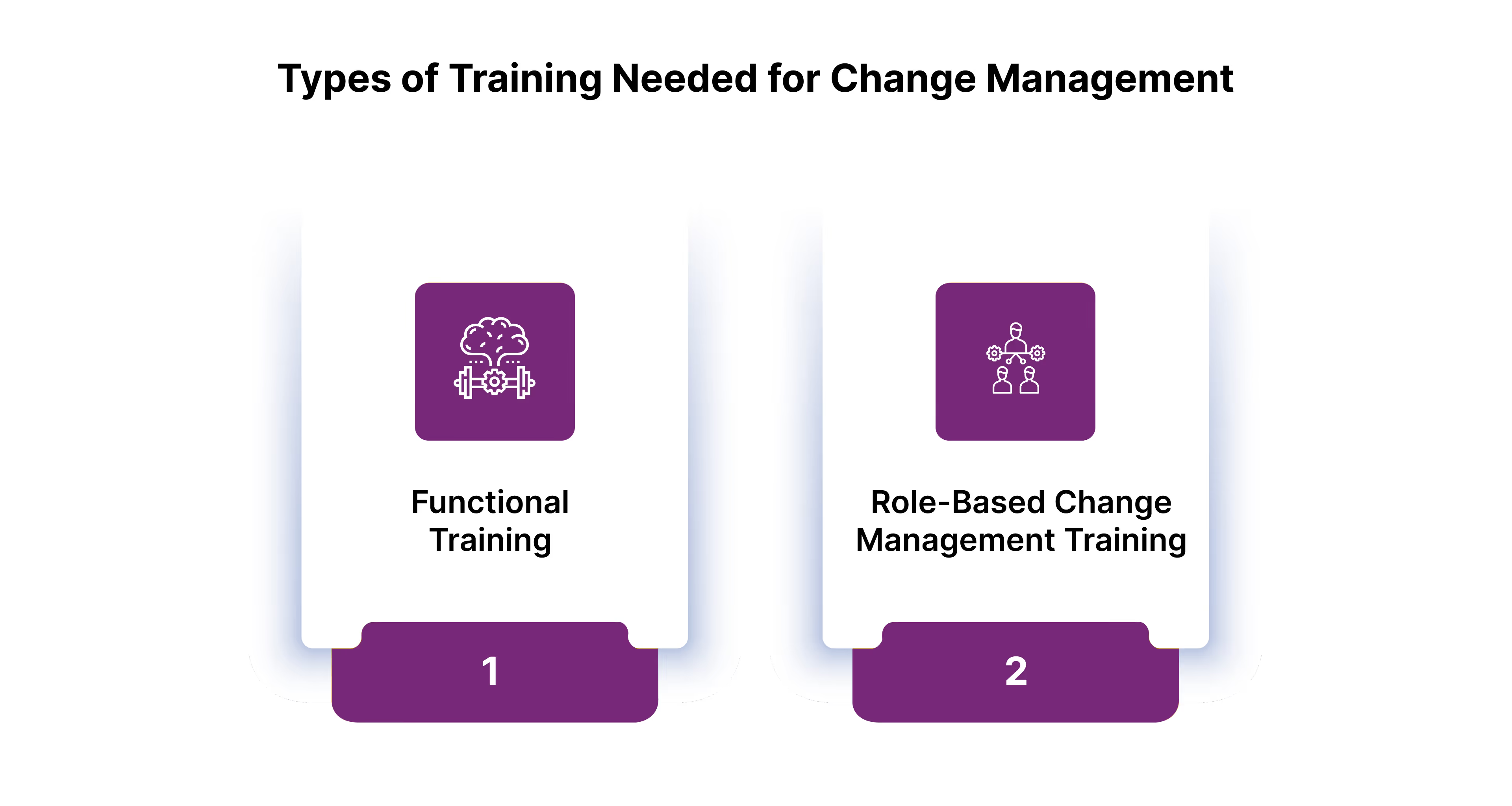
1. Functional Training (for End Users)
This is the "how do I do my job now?" training. It equips employees to adopt new tools, processes, and expectations.
Functional training includes:
- System or software training
- Process changes and workflow updates
- New policies or compliance rules
- Role-specific task training
- On-the-job guides and performance support
This type of training is essential for minimizing operational friction and ensuring employees can perform confidently in the new environment.
2. Role-Based Change Management Training (for Leaders and Managers)
Functional training alone isn't enough. Organizations also need leaders who understand how to guide people through change.
Role-based training equips:
- Sponsors and Executives — To communicate vision, remove barriers, and champion the change.
- People Managers — To coach teams, handle resistance, and maintain morale.
- Project Teams and Change Practitioners — To plan, execute, and reinforce change using proven methodologies.
- HR, L&D, and Enablement Teams — To provide ongoing learning support and measure behavior change.
When both groups, end users and leaders, are trained, the organization becomes far more resilient and aligned.
Once the types of training are clear, the next step is understanding what makes the training itself effective during change.
Key Components of Effective Change Management Training
📷 IMAGE HEREURL: Alt: Key Components of Effective Change Management Training

Training that supports change isn't just about teaching new steps; it helps people understand what's happening, what is expected of them, and how to succeed in the new environment. Effective programs focus on six core components that prepare employees at every level.
1. A Clear Understanding of Change and How It Works
Every change initiative starts with helping people understand what the change is and why it's happening. Practical training explains:
- What is shifting and what stays the same
- Why the change matters
- How it affects employees, customers, and daily work
Grounding people in the basics gives them context, reduces uncertainty, and helps them see the purpose behind the transition.
2. Training Designed for Different Roles
Change affects everyone differently, so training should match what each group needs:
- Executives learn how to sponsor the change, communicate consistently, and remove roadblocks.
- Managers learn how to guide their teams, answer questions, and address concerns.
- Project teams and change practitioners learn how to plan, coordinate, and support adoption.
- Employees and end users learn what they need to do differently and how to perform new tasks.
This role-based approach ensures every layer of the organization understands its part in making the change work.
3. Building Practical Skills for Leading and Adapting to Change
Beyond understanding the change itself, people need the skills to navigate it well. Training should focus on skills such as:
- Communicating clearly during transitions
- Helping teams work through uncertainty
- Responding to resistance in a productive way
- Engaging the right stakeholders at the right time
These skills help organizations manage both the emotional and operational challenges that come with any change.
4. Access to Helpful Tools and Resources
People adopt change faster when they have the right support materials. Effective programs include resources such as:
- Step-by-step guides
- Checklists
- Templates
- Short videos or walk-throughs
- Job aids for new tasks
Hands-on activities or practice opportunities help employees build confidence before changes take effect.
5. Opportunities to Practice and Get Feedback
Training should give people time to try new behaviors or processes before they are required in real work. This may include:
- Simulated scenarios
- Group exercises
- Practice sessions with coaching
- Quizzes or short assessments to check understanding
These activities help employees identify gaps early and feel more prepared for the transition.
6. Continued Support After the Change Goes Live
Most change challenges appear after launch. Ongoing support ensures progress doesn't fade. This can include:
- Coaching or follow-up sessions
- Refresher modules
- On-demand help articles or videos
- Manager check-ins
- Opportunities to ask questions and share feedback
Continued reinforcement helps new habits stick and prevents teams from slipping back into old ways of working.
With clarity on what effective training includes, the next step is connecting it to real organizational challenges through a simple use case.
Also Read: 12 Cutting-Edge Approaches to Learning Evaluation Methods
Practical Use Case: Training for a New System Rollout
📷 IMAGE HEREURL: Alt:
Imagine an organization rolling out a new CRM system. Without structured training:
- Employees continue using old spreadsheets
- Data quality declines
- Sales cycles slow down
- Leaders lose visibility into the pipeline
- Adoption varies across teams
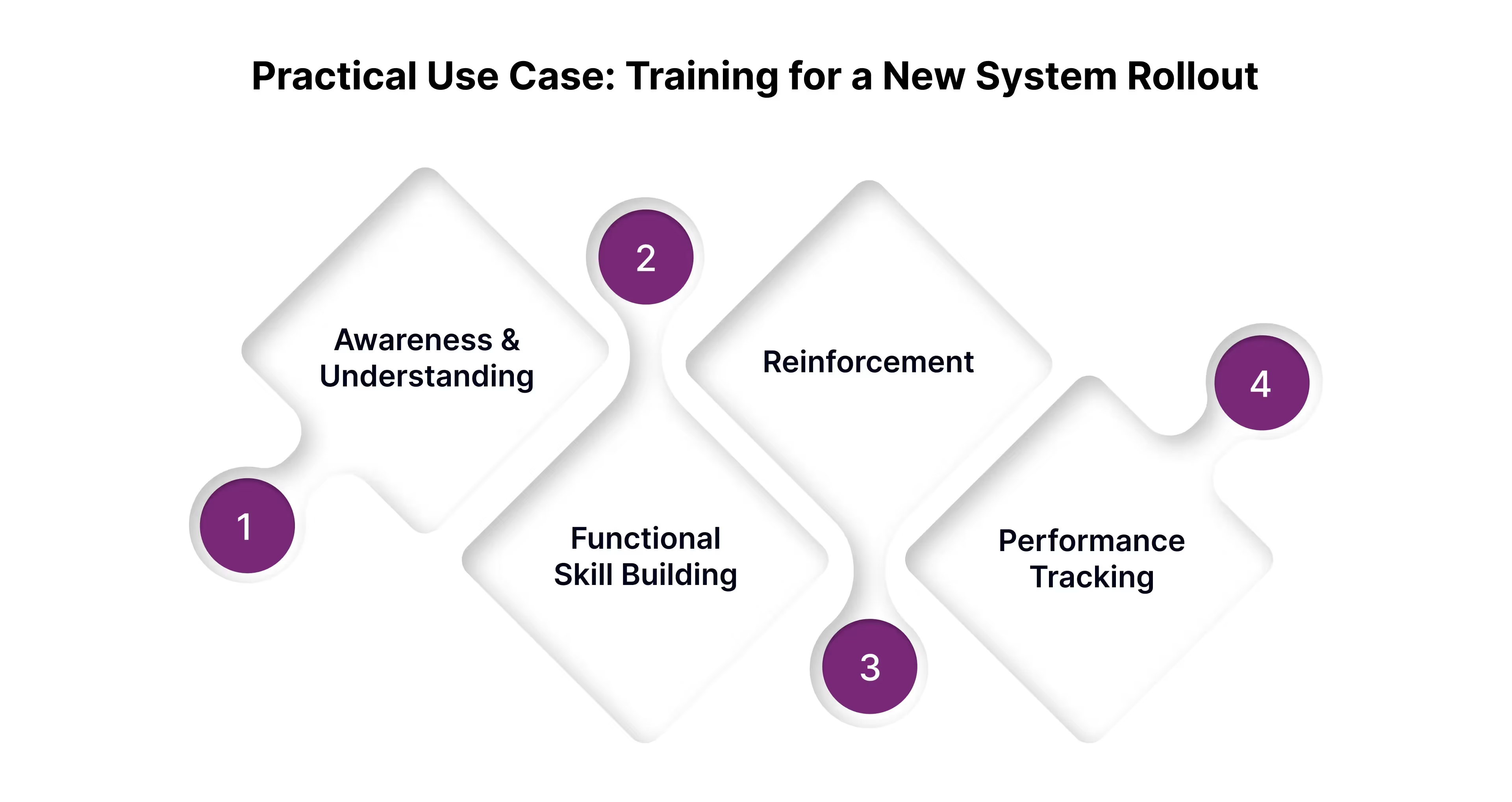
Now consider the same rollout with a structured change training plan:
Phase 1: Awareness and Understanding
Employees learn why the CRM is being introduced, what improvements it brings, and what success looks like.
Phase 2: Functional Skill Building
Role-based modules teach sales reps, managers, and operations teams how to perform their tasks in the new system through simulations and in-app support.
Phase 3: Reinforcement
Job aids, microlearning, and manager check-ins ensure behaviors strengthen over time.
Phase 4: Performance Tracking
Leaders monitor adoption metrics, identify lagging areas, and provide targeted support.
The result? Faster adoption, better data hygiene, increased productivity, and significantly fewer operational disruptions.
This approach works for system rollouts, process changes, reorganizations, compliance updates, and more.
Conclusion
Change fails when employees are left to figure things out on their own. Effective training, tailored, practical, and reinforced, is what transforms new processes into confident performance.
EI specializes in designing emotionally intelligent, human-centered learning experiences that reduce resistance, accelerate adoption, and help teams perform at their best through change.
If you're preparing for an upcoming organizational shift and want to ensure your people are ready, supported, and confident, get in touch with EI's learning and change experts today!
FAQs
1. Why is training important in change management?
Because people cannot adopt what they do not understand. Training builds clarity, competence, and confidence — all essential for successful change.
2. Who needs change management training?
Everyone impacted by the change: leaders, managers, project teams, and end users. Each group requires role-specific training.
3. Does communication replace training?
No. Communication informs; training enables. Both are required for adoption.
4. How do you measure the effectiveness of change training?
Metrics include adoption rates, time-to-proficiency, completion data, performance outcomes, and employee sentiment.
5. What makes change management training successful?
Clear goals, practical skill-building, hands-on practice, role-based content, reinforcement, and tools that support ongoing learning.

subscribing!
Related articles


.jpg)
.jpg)






.jpg)
