






.avif)

How to Choose the Right e Learning Company to Maximize Training ROI


Summary
Choosing the right eLearning company is critical to improving learner engagement, closing capability gaps, and driving measurable business outcomes. The best partners go beyond course creation by aligning learning strategy, technology, and performance goals to deliver scalable programs that improve employee performance and maximize training ROI.
The way organizations build skills and drive performance has changed dramatically. Your teams are learning in shorter bursts, across devices, and at a pace that traditional training methods simply can’t keep up with. Static courses, inconsistent content quality, and scattered resources aren’t just frustrating; they slow down growth, widen skill gaps, and reduce training ROI.
That’s why choosing the right e-learning company has become a business-critical decision. The right partner doesn’t just develop digital courses; they help you solve real capability challenges, boost engagement, and create learning experiences that actually change behavior. The wrong one leaves you with generic content, low adoption, and wasted budgets.
In this blog, you’ll get a clear, practical guide to choosing an e-learning partner who understands your people, your goals, and the performance outcomes you’re trying to achieve
TL;DR
- Choosing the right eLearning company directly impacts learner engagement, capability building, and business performance.
- The best partners offer custom solutions, strong learning design, modern technology, and measurable outcomes, not just course development.
- EI leads the list with emotionally intelligent, learner-centered, and performance-focused learning solutions.
- Evaluation should go beyond features: look for scalability, agility, consulting depth, innovation, and the ability to tie learning to KPIs.
- Red flags include template-based content, lack of data, weak learner experience, hidden costs, and poor collaboration practices.
Why Choosing the Right E-Learning Company Matters More Than Ever
Today’s workforce is distributed, diverse, and constantly evolving. Employees must learn faster, unlearn often, and adapt continuously. Many organizations face challenges such as:
- Training that fails to engage learners
- Difficulty scaling learning across global teams
- Inconsistent content quality across business units
- Lack of measurable impact or ROI
- Skill gaps widening faster than internal teams can address
An effective e-learning partner doesn’t just deliver digital courses; they help organizations solve these problems. The right company understands context, behavior, and the emotional drivers of learning. They bring together learning science, technology, and design to create experiences that truly shift performance.
This is why choosing a partner is no longer just a procurement exercise; it’s a business-critical decision.
Key Criteria to Evaluate When Choosing an E-Learning Company
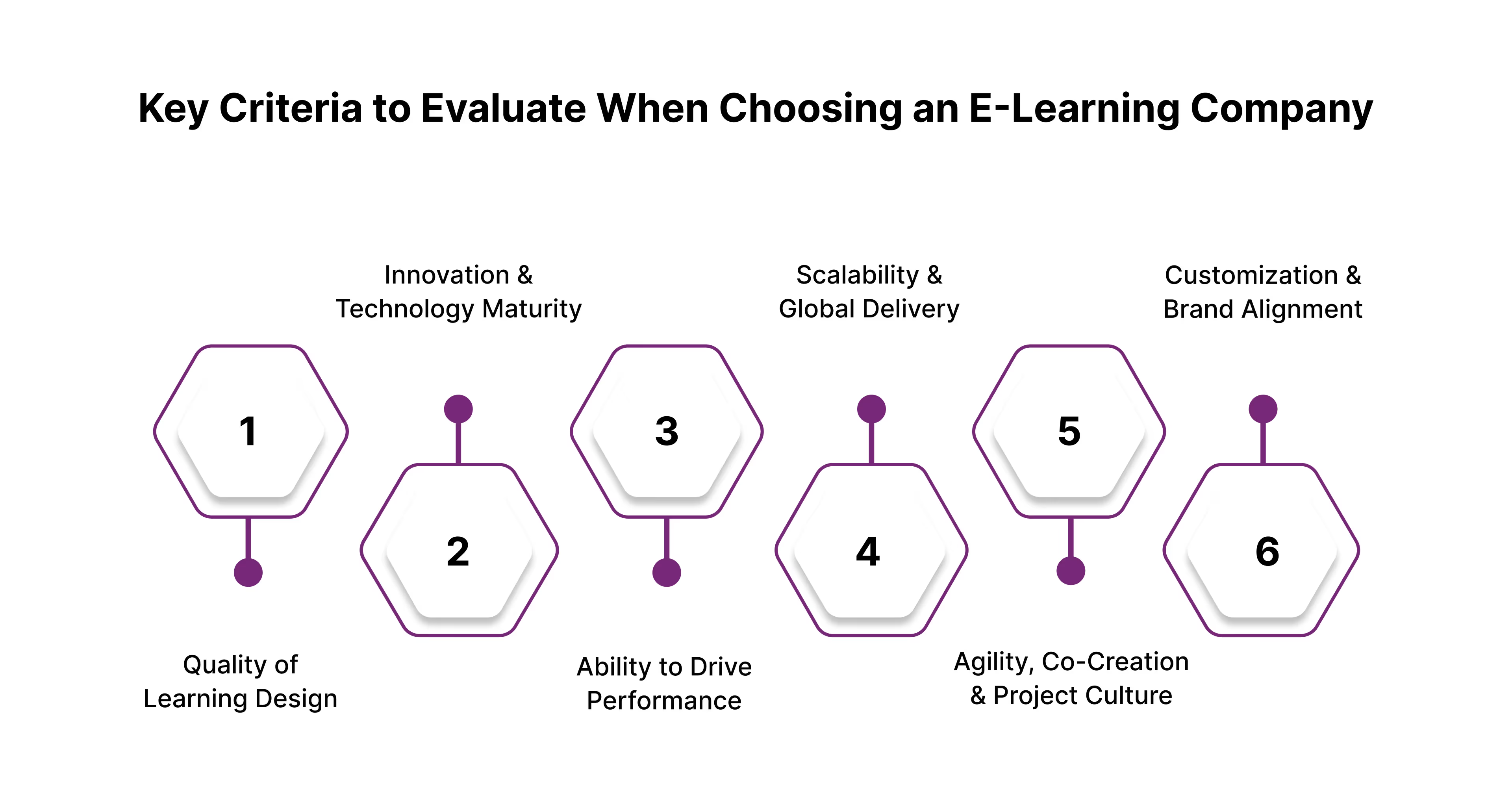
Finding the right e-learning partner is ultimately about choosing a team that can understand your context, solve real capability challenges, and translate performance goals into learning experiences people actually use.
Below are the criteria that matter most while choosing the right partner for you.
1. Quality of Learning Design
Good learning design goes far beyond visuals or interactivity. The right partner takes time to understand the decisions your employees need to make, the consequences of getting those decisions wrong, and the behaviors that lead to success. This requires curiosity, analysis, and a realistic sense of how your teams work.
A strong e-learning company will:
- Start with your business challenge, not a course outline
- Convert performance gaps into behavior-driven objectives
- Use real situations, not abstract examples
- Build learning paths that encourage practice, reflection, and reinforcement
This is where many vendors differ. Some will simply produce modules; others will actively help you diagnose the root problem and design around it. The latter delivers lasting results.
2. Innovation & Technology Maturity
AI tools, microlearning platforms, VR headsets, these look impressive, but tools only matter when they make learning stick, reduce time to competence, or make content easier to access.
Look for partners who can:
- Integrate seamlessly with your LMS/LXP
- Provide data that goes beyond completion rates
- Design for mobile and low-bandwidth scenarios
- Select formats based on the learning need, not the trend
The goal is to use technology as an enabler, something that simplifies the learner’s experience and helps your teams practice more effectively.
3. Ability to Drive Performance Outcomes
Any capable vendor can deliver a good-looking module. A strategic partner will measure what the learning has changed.
Ask potential partners:
- How do you link learning to business KPIs?
- What performance improvements have you delivered for similar clients?
- What data do you collect during and after learning?
- How do you refine programs based on what that data reveals?
If a provider cannot connect learning solutions to changes in behavior, speed, accuracy, or customer outcomes, you will struggle to justify the investment later.
4. Scalability & Global Delivery
E-learning has to serve varied groups: beginners and experts, managers and frontline, teams in different locations, and people with accessibility needs. Providers that scale well tend to have strong operational systems and experience working with large, diverse workforces.
Signs of a scalable partner include:
- Multi-language delivery that respects local context
- Consistent production quality across multiple modules
- A documented design system or content framework
Scaling isn’t just about producing more content; it’s about keeping quality and relevance intact as programs expand.
5. Agility, Co-Creation & Project Culture
The e-learning partner you choose will work closely with your L&D team, SMEs, leaders, and learners. A strong project culture removes friction, reduces rework, and accelerates delivery.
Pay attention to:
- How well they communicate
- Whether they ask thoughtful questions
- Their process for feedback and sign-offs
- The level of proactivity in identifying risks
- Their willingness to challenge assumptions when needed
Partners who work in a transparent, collaborative manner will save you more time and help you avoid avoidable mistakes than any tool or template can.
6. Customization & Brand Alignment
Training should feel like an extension of your organization, not something purchased off the shelf. A good partner learns your culture, writing style, brand personality, and daily work realities.
This includes:
- Scenarios that mirror actual interactions
- Visual storytelling that matches your brand
- Terminology aligned with your operations
- Content adapted to your learners’ environment
This relevance is what drives engagement and adoption, far more than flashy design.
Also Read: Top 10 Power Trends Shaping eLearning in 2025
How to Get the Most Value From Your E-Learning Partner
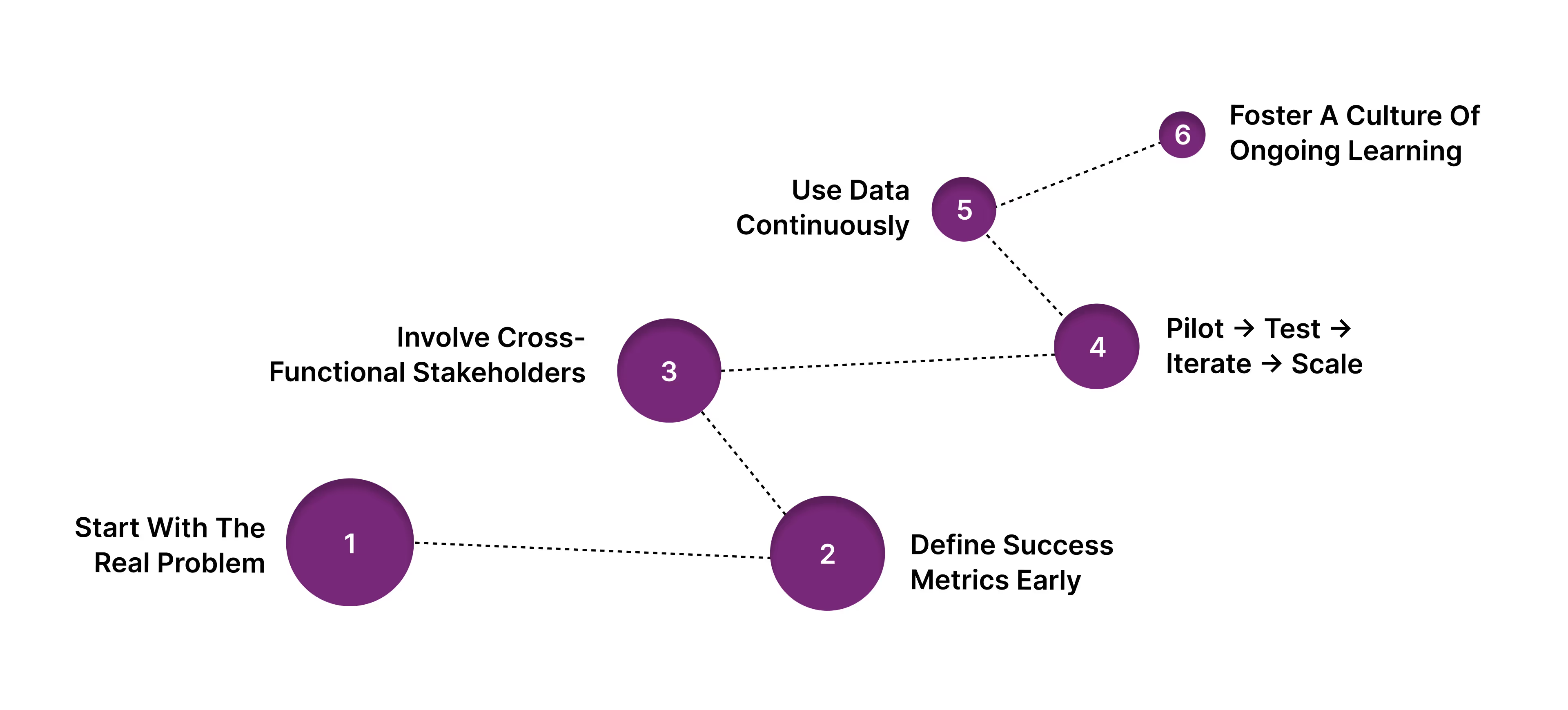
Even the best partner needs a strong collaboration model.
1. Start With the Real Problem, Not the Solution
Organizations often approach providers with a predetermined solution: “We need a 20-minute module on X.” But the real issue may be a process gap, inconsistent coaching, or unclear expectations. Give your partner access to data, call recordings, performance reports, or task walkthroughs so they can help you identify what truly needs to change.
When partners understand the problem behind the request, the solution becomes sharper and more impactful.
2. Define Success Metrics Early
Before any storyboard is created, agree on what “success” means. These metrics keep the project grounded and help you evaluate impact months after launch.
Examples might include:
- Faster onboarding time
- Improved accuracy in a key task
- Better compliance scores
- Fewer customer escalations
- Higher adoption of a new process or tool
When goals are clear, design is more focused, and stakeholders stay aligned.
3. Involve Cross-functional Stakeholders
SMEs, supervisors, and end-users hold knowledge that no vendor can guess. Their involvement ensures accuracy and practicality.
A productive model includes:
- SMEs validating real-world scenarios
- Supervisors providing examples of common mistakes
- Pilot users offering feedback on clarity and usability
- L&D ensuring consistency and quality
This cross-functional alignment prevents costly rework later.
4. Pilot → Test → Iterate → Scale
Pilots allow you to gather actionable insights before a full rollout.
A strong pilot answers questions like:
- Where do learners slow down or disengage?
- Which scenarios need more guidance?
- Are instructions clear?
- What misconceptions still persist?
Iterating after a pilot leads to stronger adoption and smoother enterprise-wide implementation.
5. Use Data Continuously
Learning impact unfolds over weeks and months. Work with your partner to analyze:
- Usage patterns
- Drop-off points
- Areas where learners struggle
- Supervisor feedback
- Post-training job performance
This data helps you refine programs, update content, and create reinforcement resources such as job aids, nudges, or short follow-ups.
6. Build Toward a Culture of Continuous Learning
E-learning works best when the partner understands your business environment over time. After the first project, share what worked, what didn’t, and what you want to improve. This builds a relationship where your partner learns your systems, culture, and preferences, making future work faster, more effective, and more aligned with your goals.
Long-term collaboration also allows you to:
- Standardize templates and design systems
- Create multi-year capability roadmaps
- Maintain consistency across initiatives
- Reduce costs through reusable components
Also Read: Rapid eLearning Solutions for Scalable, High-Impact Training
How EI Helps You Maximize Training ROI
Many organizations invest in e-learning that looks good but doesn’t change performance. Content feels generic, adoption drops, and leaders struggle to see impact. As skills evolve quickly and learning needs diversify, these gaps make it harder to achieve meaningful ROI.
EI addresses these challenges with e-learning built for relevance, behavior change, and measurable outcomes. Their approach prioritizes real performance needs, modern learning science, and scalable delivery.
Key Features
- AI-driven adaptive pathways that personalize learning
- Custom eLearning aligned to real workflows and decisions
- Microlearning and performance support for in-the-flow application
- Immersive learning (AR/VR & simulations) for hands-on practice
- Learning strategy and consulting to ensure alignment with business goals
- Measurement frameworks that connect learning to KPIs and ROI
At EI, we help organizations create e-learning that is engaging, scalable, and directly tied to measurable performance improvement.
Also Read: 5 Tips to Design eLearning to Match Different Learning Styles
Conclusion
Choosing the right e-learning company is not about finding the most popular vendor; it’s about finding a partner who understands your people, your goals, and your environment. A partner who blends learning science, empathy, and technology to create experiences that truly change behavior and drive performance.
When your e-learning strategy is built around business impact and human connection, training becomes more than content; it becomes transformation.
If you’re looking for a partner that brings together emotionally intelligent design, innovation, and measurable outcomes, EI is your starting point. Book a call with EI’s learning experts to streamline your organization's eLearning efforts.
Frequently Asked Questions (FAQs)
1. How do I know if an eLearning company will deliver measurable ROI?
Look for partners that define success metrics upfront, link learning objectives to business KPIs, and offer robust analytics. If a vendor cannot clearly explain how they measure impact, such as productivity, time-to-proficiency, compliance accuracy, or behavior change, it’s a red flag.
2. What’s the difference between custom eLearning and off-the-shelf training?
Custom eLearning is designed specifically for your roles, processes, and culture, which improves relevance and performance impact. Off-the-shelf content is faster and cheaper but typically generic. Most organizations use a mix, but custom solutions are essential when behavior change or strategic capability-building is the goal.
3. How long does it typically take to develop custom eLearning?
Timelines vary based on complexity, media requirements, and stakeholder involvement. Simple modules may take 4–6 weeks, while scenario-based, simulation-driven, or multimedia-rich programs can take 10–16 weeks or more. Partners with agile models can shorten timelines without sacrificing quality.
4. What technologies should a modern eLearning provider support?
Top providers support AI-driven personalization, microlearning ecosystems, LMS/LXP integration, analytics dashboards, mobile learning, AR/VR, and accessibility compliance (508/WCAG). They should adapt to your tech stack rather than forcing you into a rigid platform.
5. What’s the biggest mistake companies make when selecting an eLearning partner?
Focusing solely on cost or content production speed. The real value comes from strong learning design, understanding your business challenges, and creating experiences that drive performance. Choosing a low-cost vendor often results in generic content, low adoption, and poor ROI.

subscribing!
Related articles


.jpg)
.jpg)






.jpg)
