



.avif)

How to Create an Effective Employee Onboarding Plan That Drives Business Impact


Summary
A comprehensive 10-step blueprint for transforming onboarding from a static orientation into a strategic 90-day learning journey. By focusing on emotional intelligence, role-specific personalization, and measurable KPIs like "time-to-proficiency," organizations can significantly reduce attrition and accelerate business impact.
Is your onboarding process helping new employees succeed, or slowing them down before they even begin? Many organizations invest heavily in recruitment, but lose momentum when it comes to onboarding. This results in low engagement, delayed productivity, and early attrition.
According to a report by Gallup, only 12% of employees feel their organizations handle onboarding effectively. This gap highlights a missed opportunity for leaders who want to create lasting impact from day one.
A well-designed onboarding plan goes beyond orientation. It builds confidence, creates connection, and turns learning into performance.
In this article, we'll explore how to create an employee onboarding plan that not only welcomes new hires but also equips them to thrive, driving measurable value for both employees and the business.
TL;DR
- Start with Purpose: Onboarding isn't just orientation, it's a strategy to align new hires with your culture, values, and performance goals from day one.
- Personalize Learning: Ditch one-size-fits-all. Customize onboarding by role to boost relevance, engagement, and speed to productivity.
- Leverage Technology: Use AI-driven learning, microlearning, and digital tools to scale onboarding and make it data-driven.
- Build Belonging: Foster relationships, cultural integration, and emotional connection, vital for hybrid and remote teams.
- Measure What Matters: Track retention, time-to-proficiency, and engagement to prove onboarding's business impact.
What Is an Employee Onboarding Plan?
An employee onboarding plan is a structured strategy that helps new hires transition smoothly into their roles, teams, and the organization's culture. It's more than an administrative checklist; it's a carefully designed learning journey that integrates people into the company's ecosystem and prepares them to perform effectively.
A strong onboarding plan focuses on three key outcomes:
- Clarity – Helping employees understand their role, responsibilities, and performance expectations.
- Connection – Building alignment with the organization's values, culture, and purpose.
- Capability – Equipping employees with the tools, knowledge, and confidence to deliver results.
Unlike traditional orientation sessions that typically end after the first week, effective onboarding training extends over the first 90 days, or even up to a year, ensuring continuous learning and engagement. It combines structured training, guided experiences, and personalized support to help employees not just "fit in" but truly thrive.
For organizations, a well-crafted onboarding plan is a business enabler. It reduces ramp-up time, enhances retention, and strengthens the emotional connection between employees and the company, laying the foundation for long-term success.
Getting Started with the Onboarding Process
Building an effective employee onboarding plan begins with clarity and purpose. The goal is to help new hires feel connected, confident, and capable, right from day one.
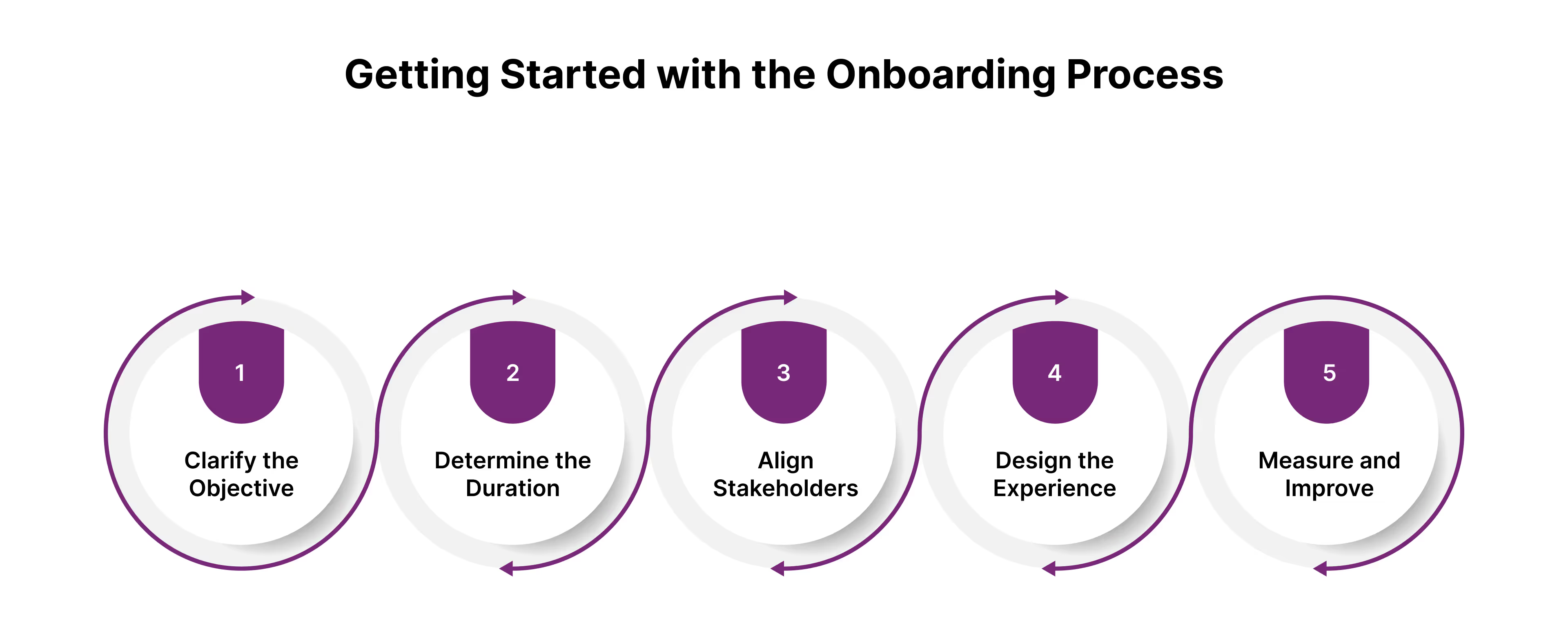
1. Clarify the Objective
Define what success looks like for both the employee and the business. Ask:
- What should new hires know and do by the end of onboarding?
- How will success be measured: retention, productivity, engagement?
Tip: Link onboarding goals directly to business outcomes such as faster ramp-up and stronger performance.
2. Determine the Duration
Onboarding isn't a one-day orientation. It's an ongoing journey that can last 3–12 months. Include key stages: Pre-boarding → Day 1 → Week 1 → 90 Days → 1 Year.
Tip: Space learning over time to avoid overload and improve retention.
3. Align Stakeholders
Success depends on collaboration between HR, L&D, managers, and mentors.
- HR: Handles compliance and culture.
- L&D: Designs the learning experience.
- Managers: Reinforce goals and track progress.
- Buddies: Support social integration.
Tip: Host a short kickoff meeting with all stakeholders to align on roles and outcomes.
4. Design the Experience
Go beyond checklists. Create experiences that make employees feel valued and connected. Examples: welcome videos, team introductions, or quick wins during the first week.
Tip: Focus on emotional impact, clarity, belonging, and confidence to drive engagement.
5. Measure and Improve
Track progress using meaningful metrics:
- Time-to-productivity
- Retention after 90 days and 1 year
- Employee feedback and engagement levels
Tip: Use pulse surveys or feedback loops at 30-, 60-, and 90-day intervals to refine the program.
How to Create an Onboarding Plan
An effective employee onboarding plan is more than a checklist. It's a structured, emotionally intelligent experience that transforms new hires into confident, engaged, and high-performing contributors.

Here's a step-by-step approach to help you create one that delivers measurable impact.
1. Start Early with Pre-boarding
The onboarding experience begins before day one.
Send a warm, personalized welcome email outlining what to expect, including the first-day agenda, work hours, key contacts, dress code, and login details. This simple step builds anticipation and eases first-day anxiety.
Provide early access to essential documents and policies through an onboarding portal. Automating administrative tasks saves time and allows the first day to focus on connection, not compliance.
Use digital platforms to share interactive welcome videos or virtual introductions from managers and peers to build engagement early.
2. Identify What Employees Need to Learn
Onboarding is fundamentally about learning. Determine what new hires need to know to succeed, separating core company knowledge from role-specific skills.
For all employees:
- Company values, mission, and culture
- Core processes and policies
- Communication norms and team structures
For role-specific hires:
- Tools, systems, and workflows
- Key performance metrics
- Responsibilities and success criteria
You can use adaptive learning paths that tailor content to role, experience, or skill level. This ensures learning remains relevant and immediately applicable.
3. Set Up for Success
First impressions create a lasting impact. Ensure that every new hire's physical or digital workspace is ready before they arrive, including equipment, software, access permissions, and meeting invites.
Assign a buddy or mentor to provide informal guidance, helping the new hire navigate team culture and day-to-day operations.
For remote teams, create a virtual "First Week Hub" with quick links, FAQs, and short videos to make the transition seamless.
4. Communicate Clearly and Consistently
Clarity drives confidence. Outline schedules, expectations, and resources in one accessible space. Provide a structured yet flexible learning plan that employees can follow without feeling overwhelmed.
Host an interactive orientation, either in-person or virtual, that tells your company's story, introduces leaders, and highlights your culture and values in an engaging, story-driven format.
Use storytelling and scenario-based microlearning to make values and mission memorable instead of procedural.
5. Reinforce Culture and Connection
Culture is what transforms employees from contributors to advocates. Help new hires experience your organiation's culture, not just read about it.
- Integrate microlearning modules that highlight values and leadership expectations.
- Encourage peer interaction through team lunches or virtual meetups.
- Create social "moments that matter", like a first-week celebration or leadership coffee chat.
Use digital communities or collaboration spaces to extend cultural engagement beyond location or department.
6. Clarify Roles, Goals, and Expectations
Performance clarity is one of the strongest predictors of engagement.
Managers should define clear 30-60-90-day goals and outline what success looks like in both qualitative and quantitative terms.
Use digital dashboards or learning management systems (LMS) to track goal completion and share regular feedback. Frequent check-ins build accountability and trust.
Frame early goals as learning milestones, not just performance metrics. This encourages growth and psychological safety.
7. Map Key Relationships
Relationships drive belonging and productivity. Create a "relationship map" of key people the new hire should meet, including managers, peers, cross-functional teams, and mentors. Schedule introductions strategically across the first few weeks to avoid overload.
Add social learning elements, such as team challenges, shadowing sessions, or collaborative projects, to deepen engagement through shared experiences.
8. Build a Structured Timeline
Structure brings consistency and transparency. Design a phased onboarding timeline that sets clear milestones and outcomes.
Example Framework:
- Pre-boarding: Complete documentation and share welcome resources.
- Day 1: Orientation, introductions, and tech setup.
- Week 1: Culture immersion and initial role training.
- 30 Days: Goal-setting and skill-building.
- 60 Days: Performance discussions and ongoing mentorship.
- 90 Days: Review outcomes and align on growth goals.
Automate reminders and check-ins through your LMS or performance support tools to ensure a consistent learner experience.
9. Provide Continuous Support and Feedback
Sustained support drives long-term engagement. Continue the onboarding journey through regular feedback, learning touchpoints, and performance conversations.
Conduct pulse surveys at 30-, 60-, and 90-day intervals to gauge engagement and adjust strategies.
10. Measure and Optimize
Measure onboarding success through data that connects learning to performance. Track metrics such as:
- Time-to-productivity
- First-year retention rates
- Manager and new-hire satisfaction
- Engagement scores and feedback sentiment
Combine quantitative metrics with qualitative insights to improve continuously.
Utilize analytics dashboards to connect onboarding outcomes with business KPIs, transforming onboarding into a measurable driver of ROI.
How Effective Onboarding Benefits You
Effective onboarding directly connects to measurable outcomes like performance, retention, and business ROI.
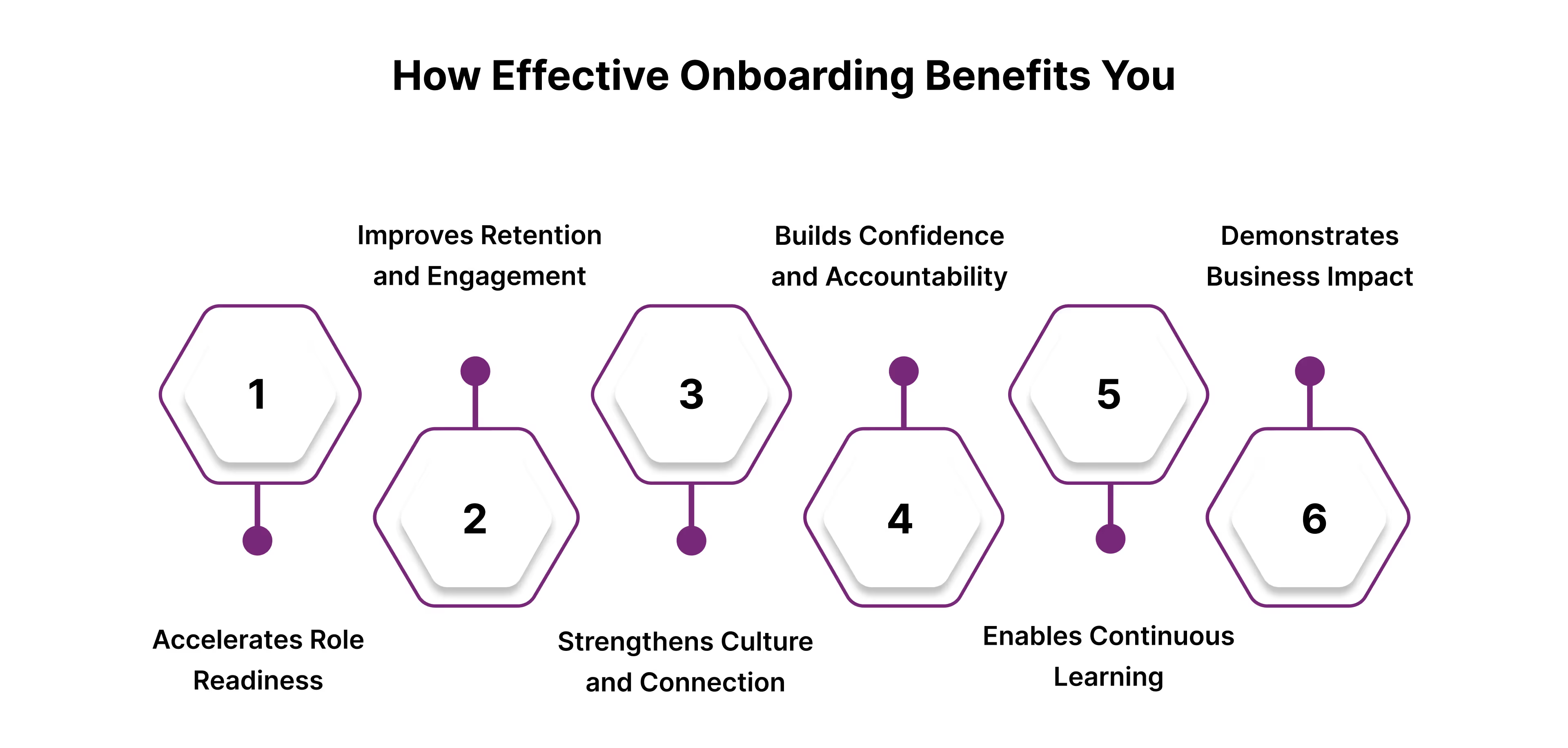
Here's how effective onboarding makes a difference.
1. Accelerates Role Readiness
Structured onboarding helps new hires understand their roles, responsibilities, and performance expectations more quickly. It reduces time-to-productivity and enables them to contribute faster to business goals.
L&D teams can enhance this through role-based learning, microlearning modules, and guided practice that connects knowledge to performance.
2. Improves Retention and Engagement
When employees feel supported and valued during onboarding, they are more likely to stay. Early engagement builds emotional connection and loyalty, lowering turnover and creating a more stable, motivated workforce.
This is especially critical in hybrid and global environments where early belonging drives long-term commitment.
3. Strengthens Culture and Connection
Effective onboarding immerses employees in the organization's culture, values, and behaviors from day one. It helps new hires understand not just how the company works but why it exists.
Story-based learning and social interactions help employees experience culture in action, creating alignment and trust across teams.
4. Builds Confidence and Accountability
Clear goals and structured feedback during onboarding help new hires gain confidence in their abilities. Setting measurable 30-, 60-, and 90-day objectives encourages accountability and performance ownership.
Regular check-ins from managers and mentors provide the guidance and reassurance new employees need to succeed.
5. Enables Continuous Learning
Modern onboarding extends beyond the first few weeks. Continuous learning touchpoints, microlearning, and AI-powered reinforcement keep employees developing well past their start date.
This ongoing support improves adaptability and prepares the workforce to evolve with changing business needs.
6. Demonstrates Business Impact
Effective onboarding delivers measurable results. Tracking key metrics such as time-to-proficiency, retention, and engagement allows L&D to demonstrate clear ROI and business alignment.
When onboarding outcomes are visible and data-driven, it positions learning as a strategic growth enabler, not just a support function.
Turn Onboarding into a Driver of Engagement and Performance with EI
Most onboarding programs stop at introductions and checklists, leaving new hires disengaged before they even start. The result is slow ramp-up, early turnover, and missed potential.
Now imagine onboarding that inspires confidence, builds connection, and drives performance from day one.
That's what EI helps you create. We partner with organizations to build emotionally intelligent onboarding experiences that connect people to purpose and performance.
How EI Helps You Succeed
- Align onboarding with business goals: Link learning outcomes to measurable performance metrics.
- Personalize at scale: Use AI-driven learning paths tailored to roles and learner profiles.
- Create immersive experiences: Engage new hires through story-based, gamified, and experiential learning.
- Enable continuous learning: Extend onboarding into long-term enablement and growth.
- Foster belonging: Strengthen culture, inclusion, and connection from the start.
When done right, onboarding becomes a strategic advantage that drives engagement, retention, and business impact.
Conclusion
An effective onboarding plan is more than a welcome process — it's the foundation of employee success and organizational growth. When thoughtfully designed, it drives engagement, accelerates performance, and builds lasting commitment.
For L&D leaders, the opportunity lies in transforming onboarding into a continuous learning experience that connects people to purpose and performance. With empathy, intelligence, and design thinking, onboarding can shape not just how employees start, but how they thrive.
Partner with EI to create onboarding that inspires, engages, and delivers measurable impact. Our team helps organizations build learner-centred onboarding programs powered by AI, immersive learning, and performance enablement tools, all designed to drive business results.
Let's help your people start strong and stay stronger. Talk to EI's Learning Experts
Frequently Asked Questions
1. Why is effective onboarding important for organizations?
Effective onboarding improves retention, engagement, and productivity. It helps employees connect with the organization's purpose, understand expectations, and perform faster, reducing ramp-up time and turnover costs.
2. How long should an onboarding process ideally last?
While the timeline varies by role and organization, effective onboarding typically extends beyond the first month. The most successful programs include ongoing learning and feedback touchpoints for at least 90 days to a year.
3. What makes an onboarding plan learner-centred?
A learner-centred onboarding plan focuses on the employee's needs, learning pace, and experience. It uses personalized learning paths, microlearning, and feedback loops to help employees learn, apply, and grow in context.
4. How can technology improve onboarding?
AI-powered learning platforms, immersive experiences (like AR/VR), and digital performance support tools make onboarding more adaptive, engaging, and measurable. They help personalize learning and provide real-time insights into progress.
5. How does EI help organizations improve onboarding?
EI partners with organizations to create emotionally intelligent onboarding experiences. Using data-driven design, microlearning, and AI-led personalization, EI helps accelerate readiness, strengthen engagement, and build long-term performance.

subscribing!
Related articles


.jpg)
.jpg)



.jpg)