






.avif)

Essential Practical Skills Every Employee Should Learn

Having technical know-how or a strong degree will help you land a job, but it’s not what guarantees long-term career success. What really makes employees stand out are their practical skills, the everyday abilities that help them communicate clearly, solve problems effectively, and adapt when things don’t go as planned. These skills aren’t tied to a single role or industry. They’re universal. Whether you’re a new graduate starting your first job or a seasoned professional looking to advance, mastering practical skills will give you an edge in today’s workplace. This guide walks you through the essential practical skills employers value most, why they matter, and how you can start developing them today.
What Exactly Are Practical Skills and Why Do They Matter?
Practical skills are the abilities employees use every day to get work done. They’re the bridge between technical knowledge and real-world performance. They fall into two categories:
- Hard skills: Concrete abilities such as data analysis, report writing, or proficiency with software tools.
- Soft skills: Interpersonal strengths like communication, adaptability, and teamwork that shape how you interact with others.
Here’s why they matter:
- They improve productivity and efficiency.
- They help employees collaborate across teams.
- They’re often the deciding factor in promotions and leadership opportunities.
Put simply, hard skills might help you get the job, but soft skills determine how far you’ll go.
Why Strong Communication Is a Game-Changer at Work?
Effective communication is at the core of every successful workplace. It ensures that ideas are shared clearly, feedback is understood, and teams work toward the same goals.
- Verbal communication: Express ideas confidently during meetings or presentations. Remember, tone and clarity are just as important as the words you use.

- Written communication: Craft professional, concise emails, reports, or proposals. Well-structured writing reduces confusion and shows respect for your reader’s time.

- Listening skills: Active listening builds trust. By paying attention to feedback and different perspectives, you strengthen collaboration and decision-making.

Employees who master effective communication tend to build stronger relationships and naturally emerge as leaders.
Problem-Solving: Turning Challenges Into Opportunities
No workplace is free of challenges. From handling customer complaints to improving internal processes, employees who can approach problems with confidence are invaluable.
- Analytical thinking: Break down complex issues into smaller parts and identify patterns or causes.
- Creative ideation: Generate multiple solutions instead of relying on one approach.
- Practical steps: Define the problem, collect information, weigh possible outcomes, and propose a solution.
Strong problem-solvers don’t just “fix” issues, they help organizations innovate and adapt.
Collaboration That Works: How to Thrive in a Team
Teamwork is about more than simply working side by side. True collaboration means combining strengths, supporting one another, and moving toward shared goals.
- Building interpersonal skills: Show empathy, respect differences, and resolve conflicts constructively.
- Why it matters: Effective collaboration leads to smoother projects, innovative ideas, and higher employee satisfaction.
Employees who excel at teamwork are often the ones others want on their projects, and those who stand out to leadership.
Mastering Time Management to Stay Ahead
Time management isn’t about working longer hours. It’s about working smarter.
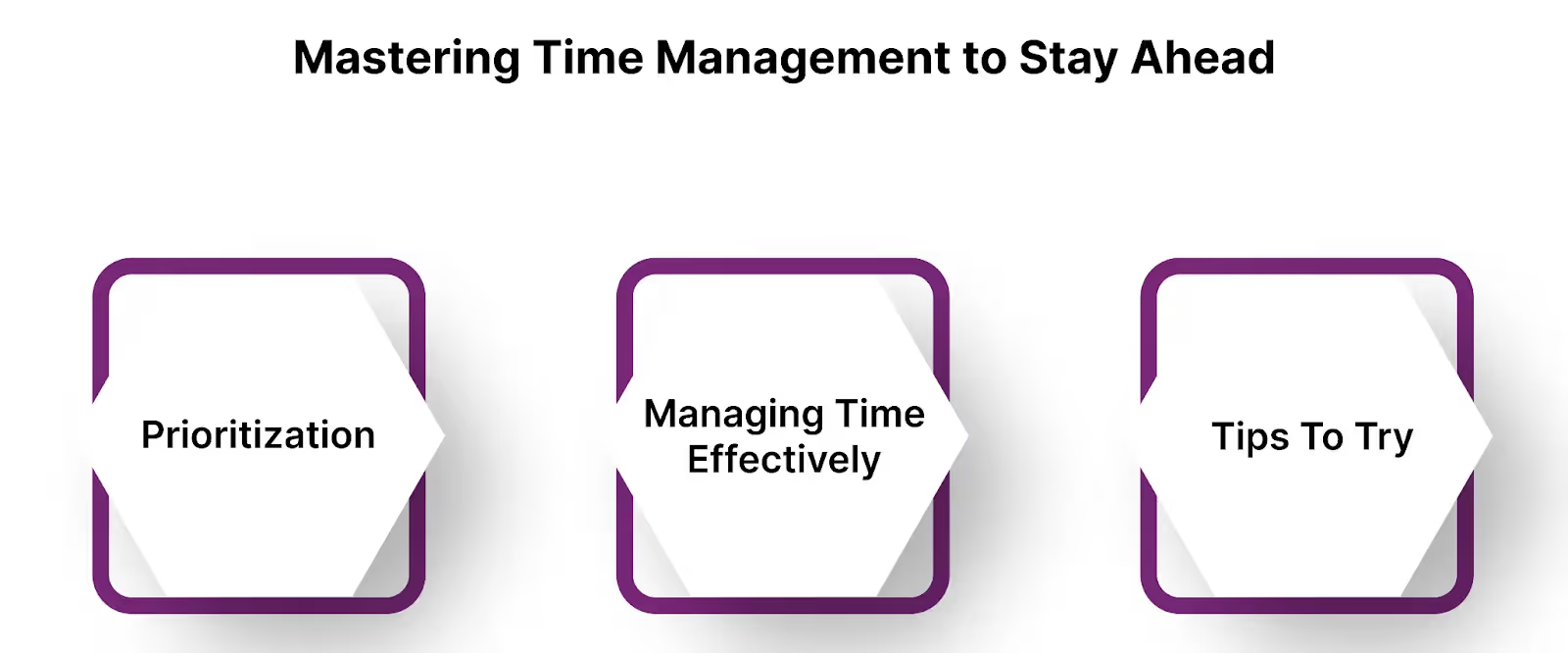
- Prioritization: Focus on the tasks that make the most impact. Tools like the Eisenhower Matrix can help distinguish between urgent and important tasks.
- Managing time effectively: Break projects into smaller steps, set realistic deadlines, and review progress regularly.
- Tips to try: Use digital calendars, block “focus time” for deep work, and incorporate short breaks to prevent burnout.
Good time management reduces stress, keeps projects on track, and builds a reputation for reliability.
Digital Literacy: The New Must-Have Skill
The modern U.S. workplace runs on digital tools. Whether you’re in healthcare, retail, finance, or tech, digital literacy is now a baseline requirement.
- Definition: Comfort with using computers, software, and online platforms.
- Core skills: Proficiency in word processing, spreadsheets, email communication, and presentation tools.
- Why it matters: Digital literacy ensures you can adapt quickly as new tools emerge, making you more competitive in the job market.
Investing in digital literacy keeps you relevant and positions you as a resourceful, adaptable professional.
Adaptability: Staying Relevant in a Changing Workplace
Change is constant, whether it’s new technology, shifting business strategies, or evolving customer expectations. Employees who adapt quickly bring stability and resilience to their teams.
- Willingness to learn: Stay curious and open to new processes or perspectives.
- Adaptability in practice: Embrace change as an opportunity, not a threat.
- Growth mindset: View challenges as opportunities to develop skills, rather than obstacles to overcome.
Adaptable employees are often the ones who lead organizations forward during uncertain times.
Examples of Practical Skills in Action
To make this more concrete, let’s look at a few real workplace scenarios:
- A customer service representative actively listens to a frustrated client, then reframes the problem and finds a solution that satisfies both the client and the company.
- A project manager uses time management techniques to balance competing deadlines and keep the team on schedule.
- An office administrator embraces a new scheduling software, learns its features quickly, and trains the rest of the team, boosting productivity for everyone.
These everyday examples show how practical skills directly impact performance and relationships at work.
How Employers Evaluate Practical Skills?
Employers don’t just assume you have these skills, they actively look for them during the hiring process. Common ways include:
- Behavioral interviews: Questions like “Tell me about a time you managed conflicting priorities” assess problem-solving and adaptability.
- Group exercises or case studies: Used to evaluate teamwork and collaboration in action.
- Written tasks: Often included to test clarity in communication.
In the U.S., employers increasingly value practical skills just as much as technical ones because they know these are the traits that help employees thrive long term.
Ways to Develop Practical Skills
The good news is that practical skills aren’t fixed. You can strengthen them at any stage in your career. Here are a few strategies:
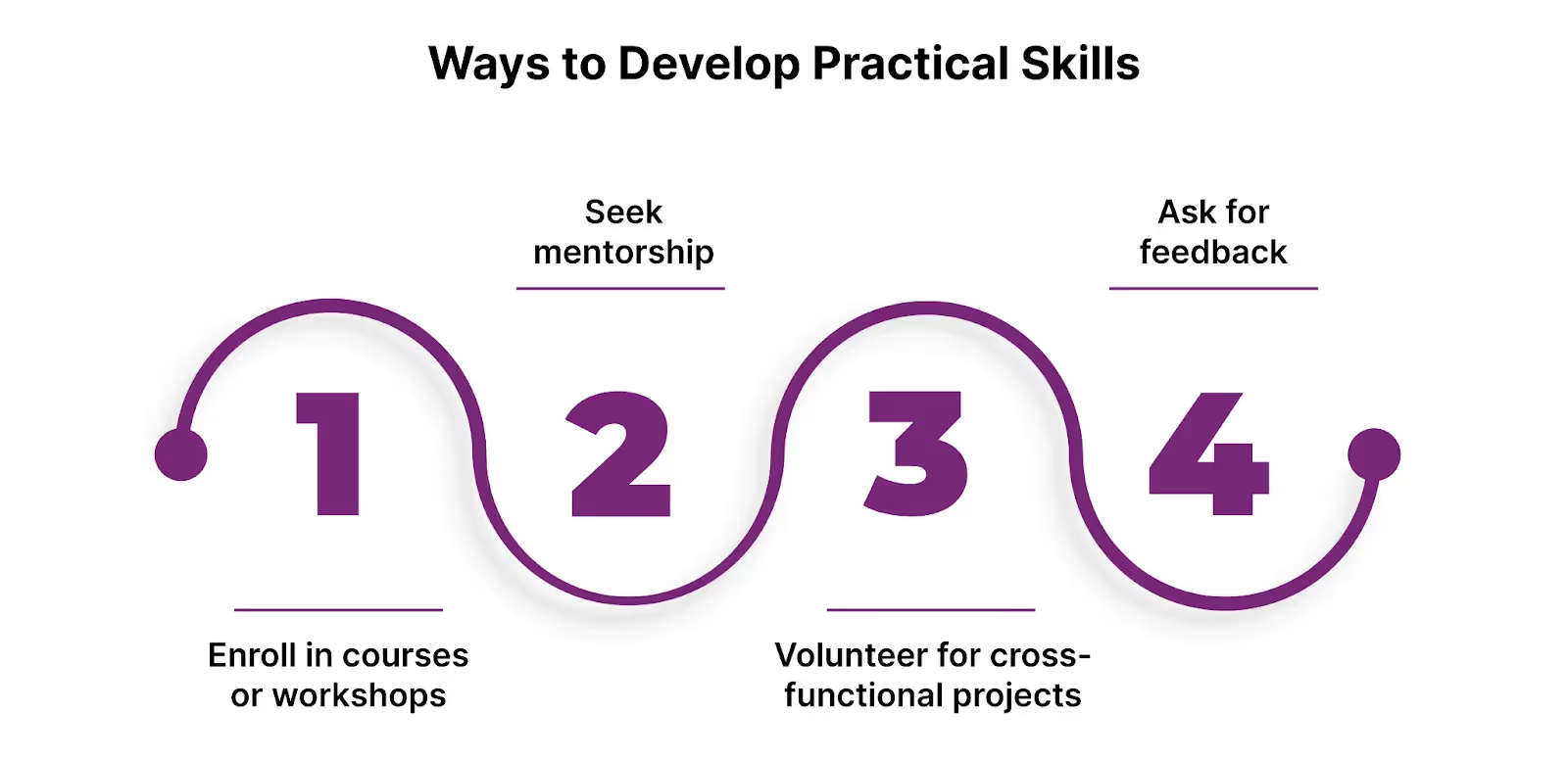
- Enroll in courses or workshops focused on communication, leadership, or digital tools.
- Seek mentorship from senior colleagues who model the skills you want to develop.
- Volunteer for cross-functional projects to practice collaboration and adaptability.
- Seek feedback from managers and peers to identify areas for growth.
Consistent practice and reflection are key to turning these skills into habits.
The U.S. Context: Why Practical Skills Matter More Than Ever?
The American workplace has seen rapid shifts in the last decade. Remote work, digital transformation, and an increased focus on inclusivity have all raised the bar for employees.
- Remote work and hybrid teams make communication and digital literacy essential.
- Fast-paced industries like tech and healthcare demand adaptability and problem-solving daily.
- Diverse workplaces require collaboration and cultural sensitivity to succeed.
Practical skills are no longer optional. They’re what ensure you stay competitive in a changing landscape.
Conclusion
Practical skills are more than career add-ons; they’re the foundation of long-term success. From clear communication and effective problem-solving to digital literacy and adaptability, these are the abilities that employers value most. If you’re ready to turn your practical skills into measurable business impact, let’s work together. At EI, we partner with forward-thinking organizations to build learner-centric training solutions, from soft skills like communication, problem-solving, and adaptability to digital literacy and professional skills, that drive engagement, performance, and real results. Get in touch with us today to explore how custom learning design, immersive training, and blended experiences can help you and your team stay ahead. Your growth begins here.

subscribing!
Related articles


.jpg)
.jpg)






.jpg)
