



.avif)

How to use Game-based Learning to Drive Learner Engagement and Motivation


Summary
Discover how game-based learning can improve learner engagement, motivation, and knowledge retention in corporate training. Explore effective game mechanics, workplace examples, and strategies that use gamification, immersive learning, and interactive experiences to drive better learning outcomes and ROI.
When it comes to engaging and motivating remote learners, traditional learning approaches have their limitations. Game-based learning can foster greater learner engagement, encourage better motivation, and deliver a higher return on investment (ROI) for organizations who embrace it.
What Is Game-based Learning?
Game-based learning (GBL) is the application of games to further learning objectives. The objectives can be accomplished by using tailor-made content – within a gaming environment. Alternately, third party game content can be leveraged for this purpose. The result is the same – to engage and motivate learners to acquire new skills, enhance existing ones, or modify unwanted behavior.
What Are the Benefits of Game-based Learning?
Game-based training benefits broad commercial applicability across industries as wide-ranging as Healthcare, Hospitality, Retail, Manufacturing, and Construction. Its benefits also accrue equally to commercial, industrial, and government sectors.
And, because of its unique approach to training (“learn by playing and having fun”), Game-based learning endears itself to employees across the generational spectrum. Unlike the typical de-stressing or entertainment value that games provide, when used in a game-based learning context – games:
- Encourage strategic thinking.
- Provide an opportunity for practice learning.
- Enhance learner motivation among disengaged learners.
- Promote healthy competition.
- Improve self-direction and independent thinking.
- Foster a sense of team building, collaboration, and competitiveness.
- Afford a safe environment for learning through experimentation and trial-and-error.
- Help develop a spirit of patience and persistence among learners.
- Facilitate broader inclusion in the workplace by changing mindsets and overcoming biases.
- Offer faster and constructive feedback as a mechanism, promoting learner engagement.
- Appeals to a multigenerational workforce.
Game-based learning is ideally suited for eLearning applications to “repackage” existing learning content in ways that not only leads to learner engagement but also promotes critical thinking. For example, healthcare entities might adapt their health and safety protocols into a game-based learning environment, or industrial organizations may benefit from training employees on Good Manufacturing Practices (GMPs) using game-based scenarios. Given that mobile learning is a raging trend today, it makes sense to include game-based learning strategies as part of any organization’s L&D plans.
What Are the Different Types of Game Mechanics You Can Add in Game-Based Learning in the Workplace?
- Points System: A scoring mechanism that rewards learners for completing tasks, achieving goals or demonstrating desired behaviors.
- Levels and Progression: Different stages or levels in training materials that learners progress through, often becoming progressively challenging.
- Badges and Achievements: Visual or symbolic rewards given for specific accomplishments, encouraging a sense of accomplishment and recognition.
- Leaderboards: Rankings that display the top performers, fostering a sense of competition and community among learners.
- Challenges and Quests: Engaging tasks or missions that learners must complete, often incorporating real-life scenarios relevant to their job roles.
- Feedback and Rewards: Immediate and ongoing feedback on performance, often linked with rewards, to keep learners motivated and on track.
What Is the Difference Between Game-based Learning and Gamification?
Gamification consists of adding game-oriented features such as points, badges, leaderboards, or challenges within a non-gaming context like business or social settings. Its primary focus is to motivate, engage, and modify an individual’s behavior by bringing game techniques to everyday tasks or active learning. This strategy applies game design principles to make non-game activities more interesting and motivating. For example, in a corporate training event, employees might receive victory badges for successful performance, thereby fostering continued efforts through a competitive framework.
Game-based learning, on the other hand, focuses on the use of games, rather than integrating game elements in existing activities. This method seeks to achieve specific learning objectives through the immersive nature of games. The objective is to utilize the game’s inherent properties to facilitate learning. Game-based learning includes games that replicate real-world scenarios, such as simulation games, role-playing games, or video games that are tailored toward instruction or skill acquisition. For example, in the project management simulation game, employees are able to set schedules, allocate resources, and solve problems within a virtual environment that closely resembles real-life projects.
What Strategies/Techniques Can Drive Learner Engagement and Motivation with Game-based Learning?
Here are some useful strategies and techniques to consider as part of your game-based learning game-plan:
- Personalized journey versus prearranged trips: The best way to drive learner engagement is by enticing them to go on a personalized journey with you. Instead of following a pre-determined course through the game (for example, using templates), design your game-based learning to deliver learning experiences based on learner preferences. These could include personalized game paths, customized characters and avatars, and learner-selected difficulty levels.
- Stories versus brief narratives: How do popular video streaming services motivate their viewers to come back for more – week after week…month after month? They weave a compelling story each week! For maximum impact, design your game-based learning strategy around an inter-linked digital story with a purpose, as opposed to a multitude of disconnected single narratives.
- Learning versus winning/losing: Games produce winners or losers – Not when used in a GBL context! Make learning the primary objective of your game-based learning strategy – By allowing learners multiple opportunities to “lose” without the dreaded “game over” consequence. This encourages them to get back into the game with new strategies and different approaches. The objective of such a strategy is to learn from failure.
- Feedback versus result: There’s no better way to foster learner motivation than by promoting, encouraging, and guiding them continuously and instantly throughout their game-based learning Unlike end-of-game “win or lose” feedback, instant feedback enables learners to self-check and implement remedial action, while still “in the game.”
- Team gaming versus individual sport: Where possible, include team games, as opposed to individual events, as part of your game-based learning strategy. This not only fosters competition but also promotes collaboration.
Examples of Game-based Learning in the Workplace
To enhance training and engagement across various domains, we leveraged game-based learning techniques to create immersive and interactive solutions customized to specific needs.
- DEI Training for Professionals
There was a growing need to equip our employees with identifying and addressing biases in the workplace.
We designed a gamified simulation where learners are put into the shoes of a person trying to bag a job and make decisions. They win the title of ‘DEI champion’ if they get all decisions right.
To help learners get the most of out the training, we incorporated game-based learning elements:
- A ‘sensitivity’ meter that shows the impact of decisions to demonstrate current awareness level.
- Instant feedback to help learners make better decisions in the upcoming scenarios, along with ‘teach’ content that sheds awareness on the actual reality.
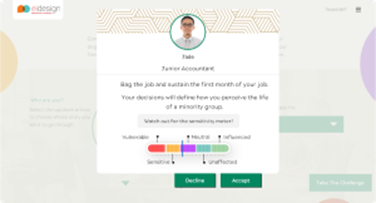

Impact: Increased commitment to creating a more inclusive culture was seen from the leadership and delivery teams.
- Walkathon for Insurance Employees:
The HR department of a global insurance company wanted its current employee engagement initiative on ‘importance of walking’ to be gamified.
We ideated a gamified walkathon portal where employees would be able to virtually walk between the various office locations and do some team-building activities.
Here are a few highlights of the portal.
- Users could enter their steps from the fit bit devices provided to them to record the steps they walked during the day.
- They could view the top 4 walkers in the team and the leader board (team wise or at individual level).
- They also got regular progress notifications and tips released as ‘nudges’ to sustain the momentum.
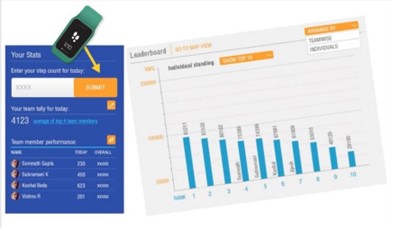
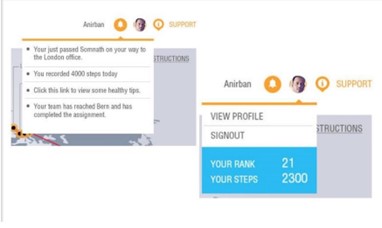
Impact: Observed a significant improvement in employee engagement and awareness on health issues
- Logistics Training for Supply Chain Professionals
A multinational food company, in a bid to meet the growing demand for its products, wanted a high-impact solution to help supply chain professionals identify and fix bottlenecks in the manufacturing and distribution process.
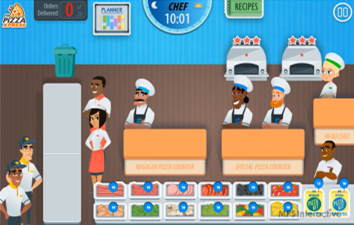
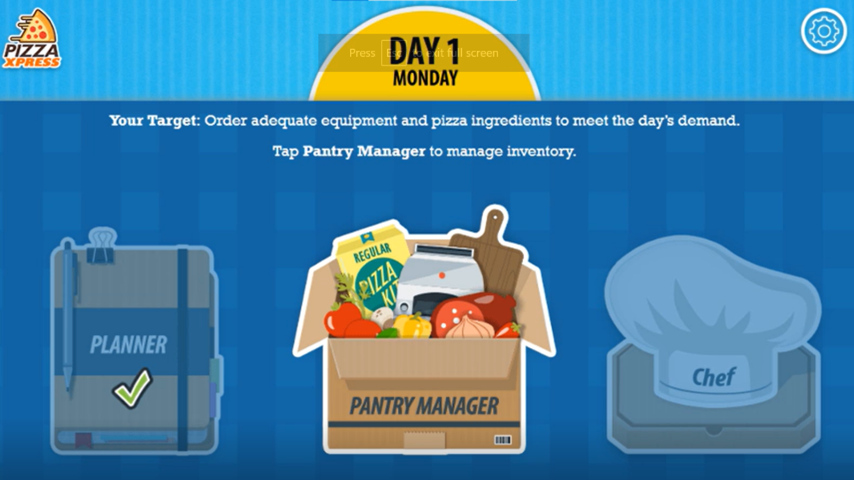
Our game-based learning simulation placed learners in the role of managing a restaurant efficiently for three days. It included:
- Realistic tasks that involved critical thinking and problem solving
- Mission-aligned scoring parameters that helped learners keep track of their progress (orders completed, timer, available ingredients, etc.)
- Dynamic twists and turns to avoid predictability, thereby keeping learners on their toes.
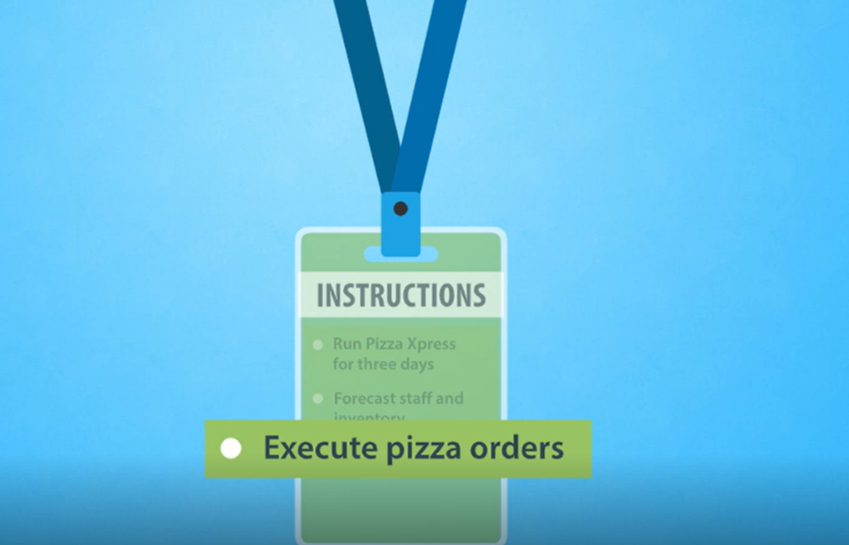
Impact: Increased efficiency in supply chain management and better aptitude for decision-making as reported by learners.
Future of Game-based Learning in Corporate Training
Game-based learning in corporate training will be all set to revolutionize employee development with the incorporation of AR, VR, and AI. These will create immersive simulations for realistic practice, and long-term interactive learning games will, in turn, engage employees through milestone-based progression and real-time feedback.
The rise of serious games and social media-centered learning games will enhance collaboration and engagement, supported by advanced analytics and versatile authoring tools. Overall, game-based learning will be dynamic in accomplishing better skills and performance improvement for the future workforce.
Parting Thoughts
L&D teams can’t fully replace traditional learning with game-based learning. However, integrating it into an overall training strategy yields huge payoffs. This would create better learner engagement, higher levels of motivation, greater learner retention and stickiness of learning, and more effective application and demonstrable behavioral change. When deployed appropriately, game-based learning has the potential to deliver enhanced returns on training investment compared to traditional training strategies.

subscribing!
Related articles


.jpg)
.jpg)




.jpg)